Chef Juliette
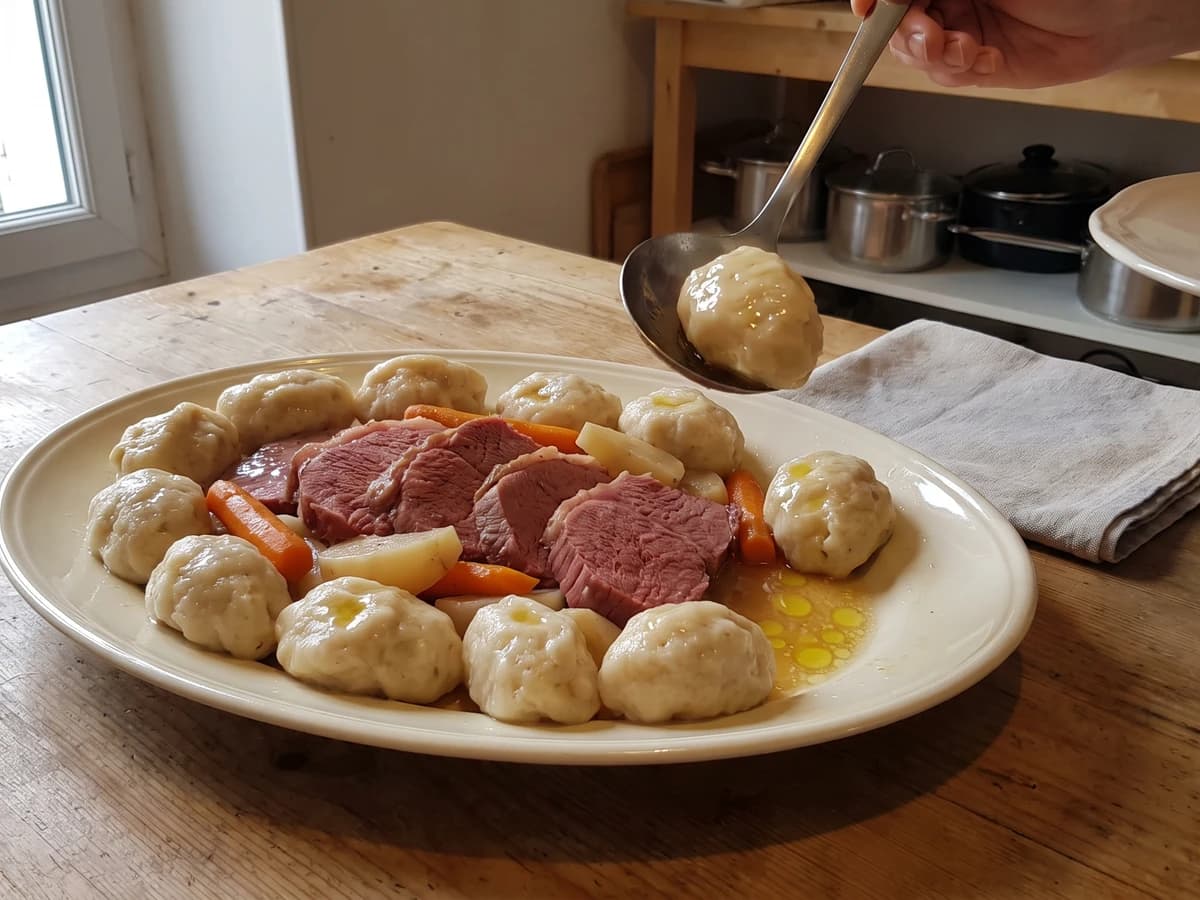
Suet Dumpling
Boulettes au suif, poached beside salt beef, turn equal weights of flour and finely chopped suet into tender, rich dumplings. Keep the beef liquor at a bare tremble and the old garnish works beautifully at home.
A cooking platform built around craft, culture, and the stories behind what we eat.
Created by Chef Juliette
Based on No. 2110, Chou-fleur au Gratin, from Le Guide Culinaire (1907) by Auguste Escoffier
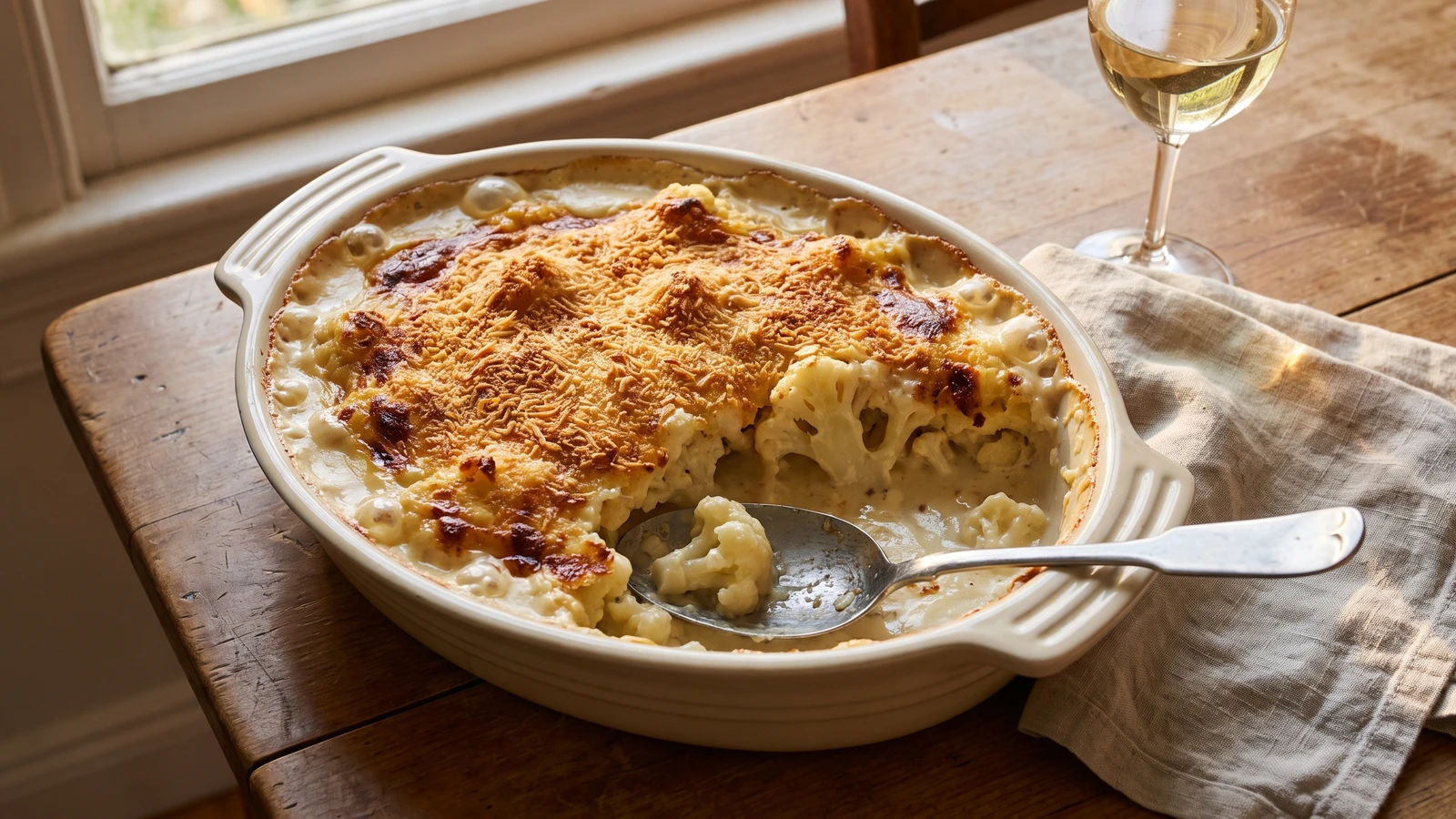
Chou-fleur au gratin proves that moisture, not complexity, decides a gratin: dry the cauliflower in butter, cloak it in Mornay, then give cheese and raspings fierce heat.
Chou-fleur au gratin (cauliflower under a browned cheese crust) teaches the governing rule of every vegetable gratin: the vegetable must be dry before the sauce touches it. Wet cauliflower loosens Mornay beneath the crust, leaving a puddle where there should be a rich sauce clinging to every floret.
The original kitchen assumed a saucier with Mornay already warm, brigade-sized dishes, and a salamander fierce enough to form the gratin at once. Your kitchen needs neither a stock kept hot nor another pair of hands. A prepared Mornay sauce, a wide skillet, a shallow gratin dish, and the broiler give the same result for four people. One cook, one stove, one evening.
The separate stations and oversized portions were scaffolding, so they go. Drying the cauliflower in butter, moulding it into a dome, covering it completely, and finishing it with cheese, raspings, and melted butter are the dish, so they stay. Drain patiently, blot thoroughly, then keep the cauliflower moving in butter until the pan holds no loose water. That is the step that decides everything.
Chou-fleur au gratin belongs to French cuisine bourgeoise, especially the Parisian family table, where cooked vegetables were enriched with a finished sauce and returned to fierce heat as a substantial accompaniment. Grand kitchens codified that household practice through Mornay sauce and the family of operations collected as Gratins (No. 268). Au gratin names the crust-forming finish, not merely the presence of cheese, and the bread raspings give that buttered crust its crisp edge.
Quantity
1 medium head (about 2 lb / 900 g)
trimmed into large florets
Quantity
1 tablespoon (15 ml / 18 g)
for the cooking water
Quantity
2 tablespoons (30 ml / 28 g)
for drying the cauliflower
Quantity
2 cups (475 ml / 500 g)
warmed gently
Quantity
1/2 cup (120 ml / 50 g)
finely grated
Quantity
1/3 cup (80 ml / 25 g)
Quantity
1 tablespoon (15 ml / 14 g)
melted
| Ingredient | Quantity |
|---|---|
| cauliflowertrimmed into large florets | 1 medium head (about 2 lb / 900 g) |
| fine sea saltfor the cooking water | 1 tablespoon (15 ml / 18 g) |
| unsalted butterfor drying the cauliflower | 2 tablespoons (30 ml / 28 g) |
| prepared Mornay saucewarmed gently | 2 cups (475 ml / 500 g) |
| Gruyèrefinely grated | 1/2 cup (120 ml / 50 g) |
| fine dry white-bread raspings | 1/3 cup (80 ml / 25 g) |
| unsalted buttermelted | 1 tablespoon (15 ml / 14 g) |
Bring a large pot of water to a boil and season it with the salt. Add the cauliflower and cook at a steady simmer for 6 to 8 minutes, until a thin knife enters the thick stems with slight resistance; the florets must be tender enough to eat but firm enough to survive moulding. Drain them crown-side down in a colander for 10 minutes, then spread them over a clean towel and blot every surface. Do not rinse them. Water carried into the pan is water that will later loosen the sauce.
Melt the 2 tablespoons of butter in a wide skillet over medium heat. Add the cauliflower in one layer and turn it gently for 4 to 6 minutes, until the florets glisten with butter and no liquid remains on the pan floor. You are drying the cauliflower, not browning it, so lower the heat if the crowns begin to colour. If a puddle gathers, do not carry it into the gratin. Ça se rattrape: lift out the florets, let the liquid boil away, then return them to the butter for another minute.
Heat the oven to 450°F (230°C) with a rack in the upper third. Spread 1/2 cup (120 ml / 125 g) of the warm Mornay sauce over the bottom of a shallow broiler-safe gratin dish. Arrange the cauliflower crown-side down in a 6-cup bowl, fitting the pieces together into a compact dome. Spoon 3 tablespoons (45 ml / 48 g) of Mornay into the spaces and press very gently to settle the florets without crushing them. Invert the bowl onto the sauced dish and lift it away. If a floret clings to the bowl, simply tuck it back into the dome.
Pour the remaining Mornay sauce over the cauliflower, working it down the sides until the dome is completely covered. The sauce should cling in an even coat. If it slides straight to the dish, pause before topping: return it to a saucepan and simmer gently until it naps the back of a spoon, then coat the cauliflower again. Mix the Gruyère with the bread raspings, scatter the mixture evenly over the sauce, and bedew the whole surface with the melted butter.
Bake for 10 to 12 minutes, until the Mornay bubbles thickly around the rim. Move the dish beneath a hot broiler for 1 to 3 minutes to complete the rapid finish described in Gratins (No. 268). Watch without wandering: the top should turn butter-gold with patches of hazelnut bronze, not black. If it colours unevenly, rotate the dish rather than leaving the pale side under prolonged heat. Rest for 5 minutes so the sauce settles around the florets, then serve directly from the gratin dish. À table!
1 serving (about 325g)
Culinary guides, cultural storytelling, and the editorial depth that makes cooking meaningful.
Discover Culinary ExplorerChef Juliette
Boulettes au suif, poached beside salt beef, turn equal weights of flour and finely chopped suet into tender, rich dumplings. Keep the beef liquor at a bare tremble and the old garnish works beautifully at home.

Chef Juliette
Bread, flour, frangipane, and rice become four cool, supple panades for binding forcemeats, each changing body and flavor while preserving tenderness. The finest Mousselines need none, and knowing that distinction is the lesson.

Chef Juliette
Panade au pain is bread, milk, salt, heat, and attention: stir until the paste releases cleanly, butter it against a skin, and you have the quiet binder behind tender French farces.

Chef Juliette
Panade de farine teaches the drying stroke behind pâte à choux: flour meets boiling buttered water, then stays over the fire until the paste gathers, smooths, and quits the pan cleanly.