Chef Juliette
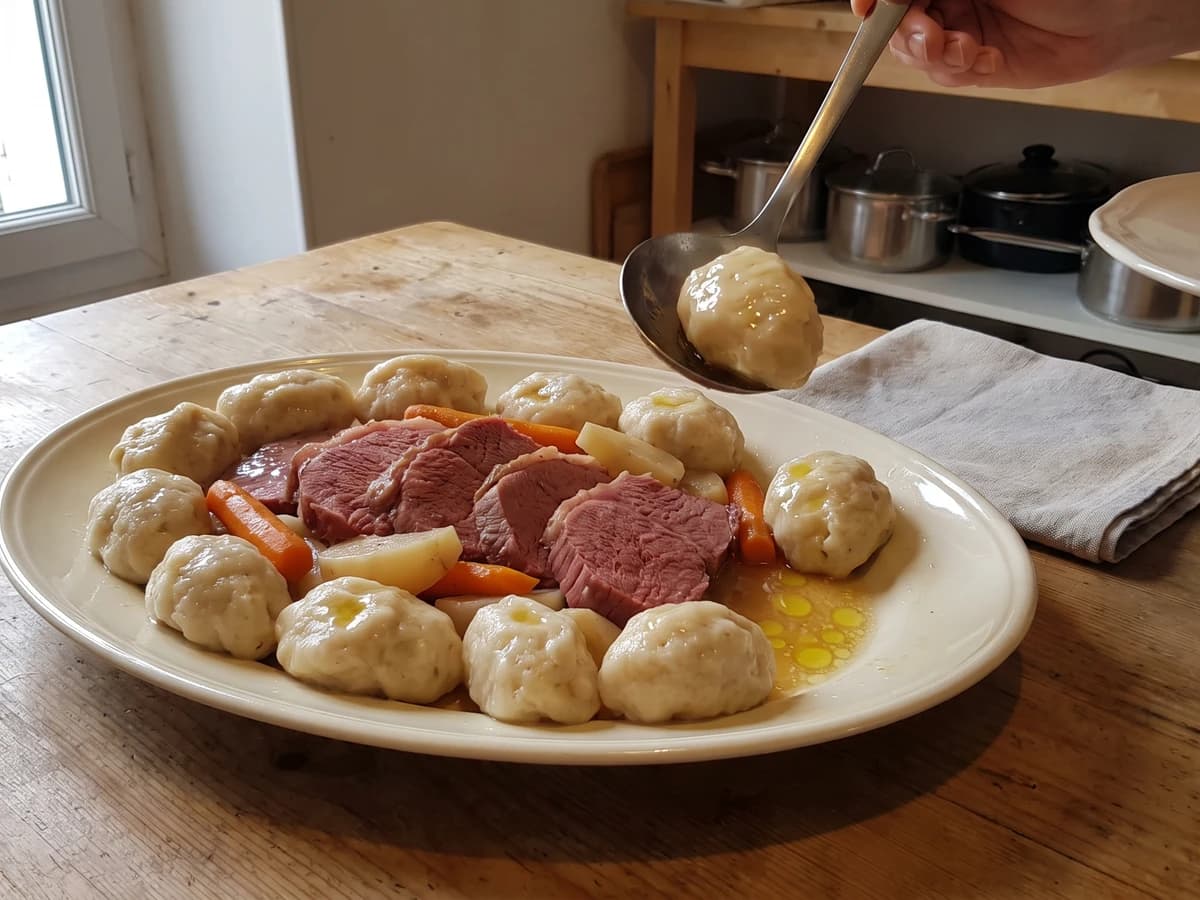
Suet Dumpling
Boulettes au suif, poached beside salt beef, turn equal weights of flour and finely chopped suet into tender, rich dumplings. Keep the beef liquor at a bare tremble and the old garnish works beautifully at home.
A cooking platform built around craft, culture, and the stories behind what we eat.
Created by Chef Juliette
Based on No. 2093, Chicorée à la Flamande, from Le Guide Culinaire (1907) by Auguste Escoffier
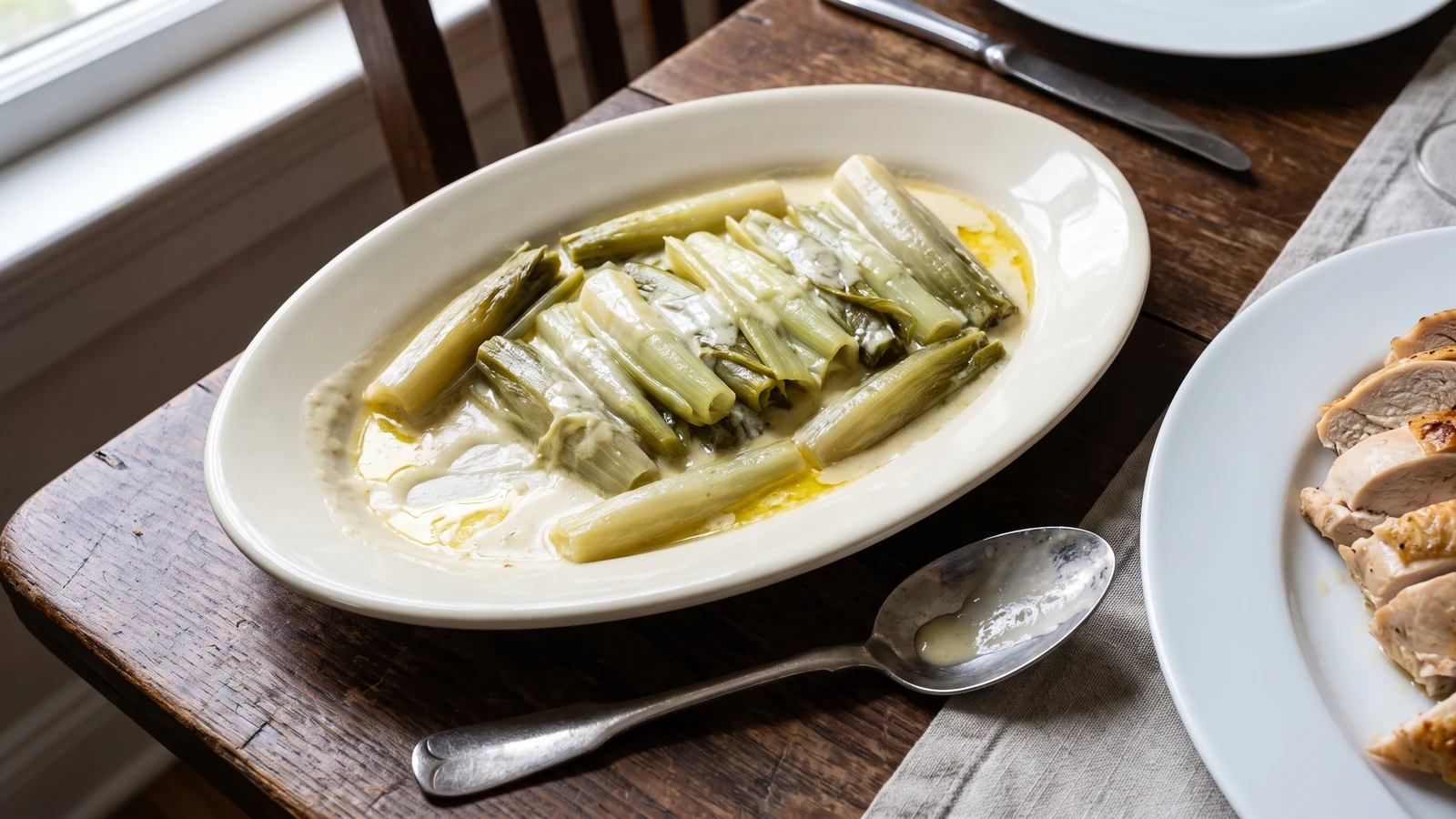
Chicorée à la Flamande keeps its long pieces and pleasing bitterness beneath a glossy cream finish, proving that careful draining, not chopping, lets tender chicory hold its character.
Chicorée à la Flamande (Flemish-style creamed chicory) teaches one true thing: water decides the sauce. The leaves are cut into two-inch lengths, parboiled, cooled, and pressed dry before they meet pale roux, consommé, cream, and butter. Leave excess water behind and the finish turns thin and weary; remove it properly and every length wears a glossy ivory coating while keeping its slight bitter bite.
The original directs a professional cook to Chicorée à la Crème (No. 2089), written for two pounds of chicory and a kitchen with a saucier, consommé always ready, and another saucepan waiting for the finish. For four people, the formula is halved and one covered oven-safe sauté pan does nearly everything. Good prepared consommé replaces the stockpot, and the separate finishing pan is brigade scaffolding that can go unless the sauce has caught. The ten-minute parboil, pale roux, covered braise, cream, and real butter are the dish itself. They stay. One cook, one stove, one evening.
Press firmly without grinding the leaves into paste, then loosen the lengths with your fingers. If they still drip when squeezed, they are not ready for the roux. That is the step that decides the dish, so settle it before you touch the pan.
Chicorée à la Flamande belongs to French Flanders, particularly the tables of Lille and the Nord, where pleasantly bitter greens meet a northern larder of butter, cream, and broth. The classical repertory carried that pairing into vegetable service through Chicorée à la Crème (No. 2089), but kept the leaves in long pieces rather than chopping them. Here, Flamande does not mean Belgian endive baked with ham and cheese; it means leafy chicory retaining its two-inch lengths through parboiling, braising, and the cream finish.
Quantity
½ scaled preparation Chicorée à la Crème (No. 2089), represented by the ingredients below
Quantity
1 large or 2 medium heads (about 1 lb / 450 g)
trimmed, washed, and cut crosswise into 2-inch / 5 cm lengths
Quantity
2 tbsp plus 1 tsp (35 ml / 32 g)
Quantity
¼ cup (60 ml / 32 g)
Quantity
2 cups (475 ml / 475 g)
preferably unsalted or low-sodium
Quantity
½ tsp (2.5 ml / 3 g), or to taste
Quantity
⅛ tsp (0.6 ml / 0.5 g)
Quantity
½ cup plus 1½ tbsp (140 ml / 140 g)
kept cold
Quantity
2 tbsp (30 ml / 28 g)
cool and cut into small pieces
| Ingredient | Quantity |
|---|---|
| canonical preparation reference | ½ scaled preparation Chicorée à la Crème (No. 2089), represented by the ingredients below |
| curly chicorytrimmed, washed, and cut crosswise into 2-inch / 5 cm lengths | 1 large or 2 medium heads (about 1 lb / 450 g) |
| unsalted butter for the pale roux | 2 tbsp plus 1 tsp (35 ml / 32 g) |
| all-purpose flour | ¼ cup (60 ml / 32 g) |
| clear prepared consommépreferably unsalted or low-sodium | 2 cups (475 ml / 475 g) |
| fine salt | ½ tsp (2.5 ml / 3 g), or to taste |
| granulated sugar | ⅛ tsp (0.6 ml / 0.5 g) |
| heavy creamkept cold | ½ cup plus 1½ tbsp (140 ml / 140 g) |
| unsalted finishing buttercool and cut into small pieces | 2 tbsp (30 ml / 28 g) |
Heat the oven to 300°F / 150°C. Bring a large pot of water to a full boil, add the chicory lengths, and parboil them for exactly 10 minutes. Keep the water moving freely around the leaves so they soften evenly. They will lose some volume and their green will mute, which is exactly right; the long braise, not a bright salad colour, is the intention here.
Drain the chicory and cool it immediately in plenty of cold water. Drain again, gather the leaves in a clean towel, and press firmly until no water runs from them, taking care not to grind the two-inch lengths into paste. Loosen the pressed pieces with your fingers. If they still shed water, put them in the dry sauté pan over low heat for a minute or two, turning gently until the moisture disappears. Ça se rattrape. Remove them before making the roux.
Melt the 32 g butter in the oven-safe sauté pan over low heat. Add the flour and stir steadily for 3 to 4 minutes, until the roux looks smooth and ivory and no longer smells raw, but has taken no brown colour. Add the chicory and turn the lengths gently until the pale roux clings in a thin film. This is where Chicorée à la Crème (No. 2089) governs the preparation: the roux must cohere with the vegetable before the consommé arrives.
Add the consommé in three additions, turning the chicory carefully after each so the roux disperses without tearing the lengths. Season with the salt and the pinch of sugar, then bring the liquid just to a simmer. Cover tightly and braise in the oven for 1 hour 30 minutes, turning the chicory once halfway through. If the sauce forms lumps when the consommé is added, lift out the chicory with tongs, whisk the liquid smooth, and return it. If the pan becomes dry before the leaves are tender, add 2 tablespoons of hot water or consommé. Keep the braise moist, not soupy.
Remove the pan from the oven. If the bottom has caught, transfer the chicory and clean sauce to another saucepan; otherwise keep the same pan and spare yourself the washing. Reserve 1 tablespoon of the cold cream, then fold in the rest and warm over low heat until the sauce is ivory, glossy, and thick enough to cling to every length. Do not boil it hard. Remove the pan from the heat and add the finishing butter piece by piece, turning gently until absorbed. If the sauce looks oily, stir in the reserved cold cream off the heat until it comes together again.
Taste and correct the salt, remembering that consommé can carry plenty of its own. Arrange the chicory in a warmed timbale, a deep serving bowl, keeping the lengths visible rather than mounding them into a paste. Spoon every trace of the cream sauce over the top and serve beside roast poultry, veal, or pork. We don't apologize for butter. À table!
1 serving (about 260g)
Culinary guides, cultural storytelling, and the editorial depth that makes cooking meaningful.
Discover Culinary ExplorerChef Juliette
Boulettes au suif, poached beside salt beef, turn equal weights of flour and finely chopped suet into tender, rich dumplings. Keep the beef liquor at a bare tremble and the old garnish works beautifully at home.

Chef Juliette
Bread, flour, frangipane, and rice become four cool, supple panades for binding forcemeats, each changing body and flavor while preserving tenderness. The finest Mousselines need none, and knowing that distinction is the lesson.

Chef Juliette
Panade au pain is bread, milk, salt, heat, and attention: stir until the paste releases cleanly, butter it against a skin, and you have the quiet binder behind tender French farces.

Chef Juliette
Panade de farine teaches the drying stroke behind pâte à choux: flour meets boiling buttered water, then stays over the fire until the paste gathers, smooths, and quits the pan cleanly.