Chef Juliette
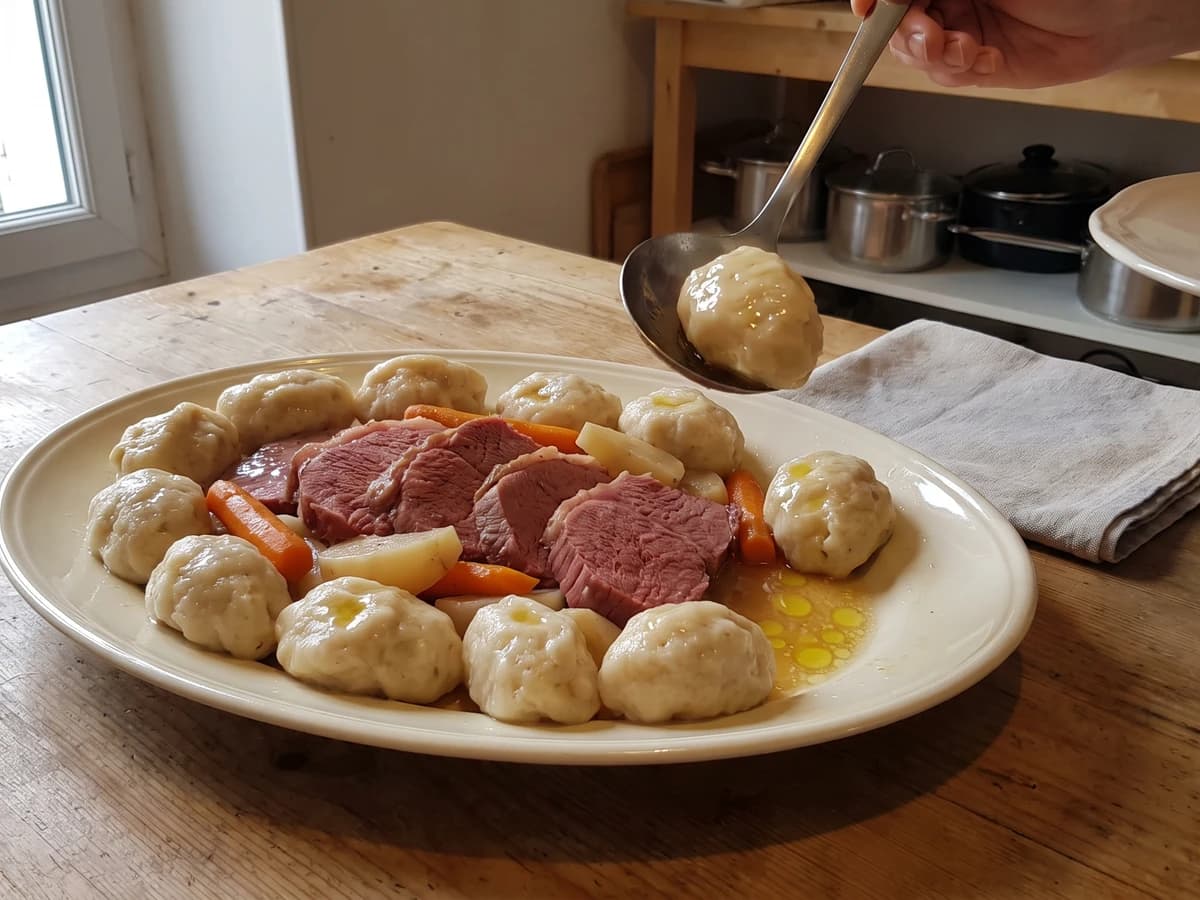
Suet Dumpling
Boulettes au suif, poached beside salt beef, turn equal weights of flour and finely chopped suet into tender, rich dumplings. Keep the beef liquor at a bare tremble and the old garnish works beautifully at home.
A cooking platform built around craft, culture, and the stories behind what we eat.
Created by Chef Juliette
Based on No. 2072, Champignons à la Crème, from Le Guide Culinaire (1907) by Auguste Escoffier
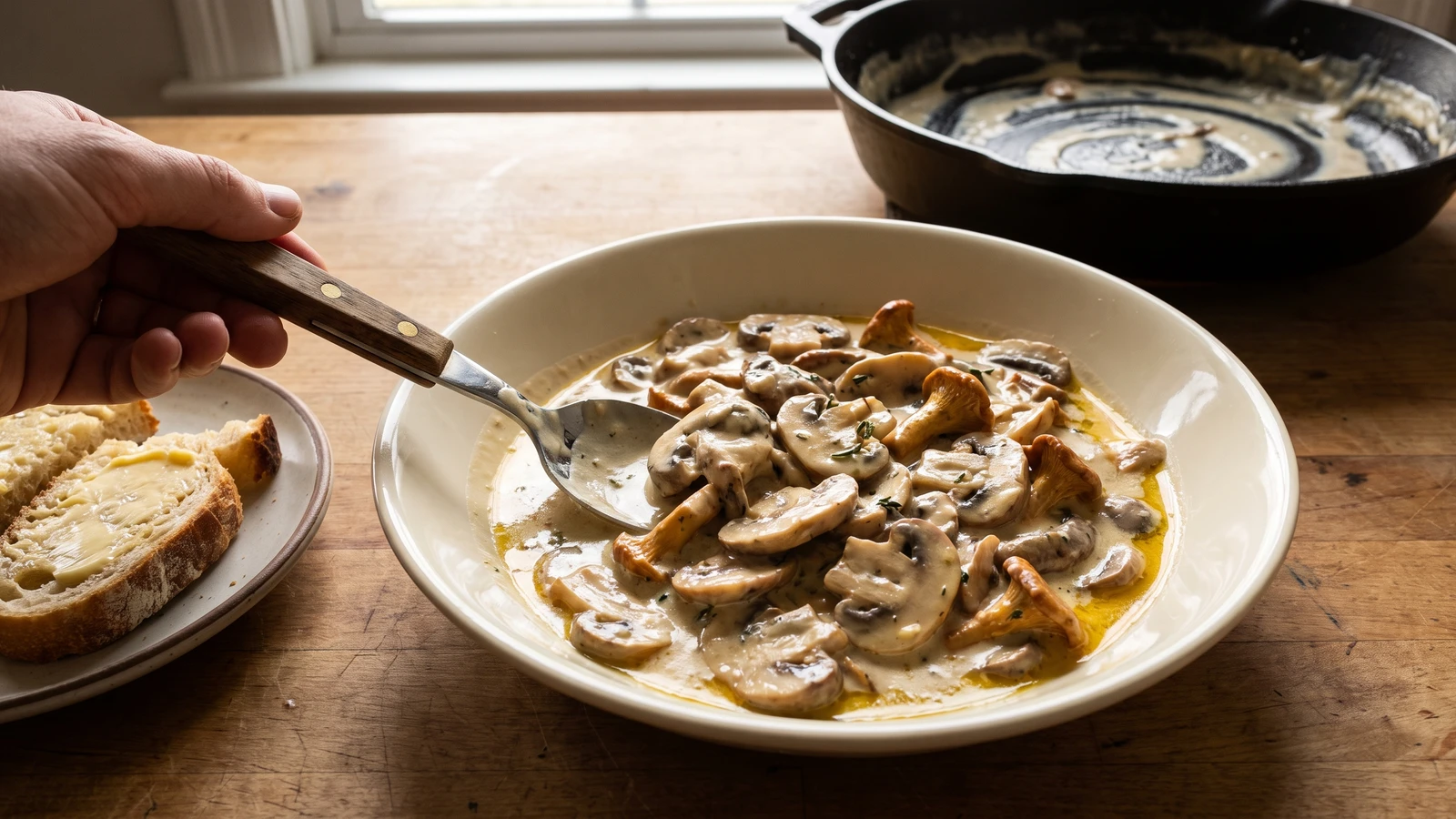
Cultivated mushrooms receive the cèpe treatment: butter, pale onion, and patient reduction, finished with light cream so the sauce clings in a glossy coat without burying the mushroom.
Champignons à la Crème (mushrooms in cream) teaches one true thing: the mushrooms must give up their water before the cream enters the pan. Drain them properly and the cream reduces into a glossy coat; carry their cooking liquid forward and you get mushroom soup.
The source sends the cook to Cèpes à la Crème (No. 2069), replacing seasonal cèpes with cultivated mushrooms while keeping the method intact. That kitchen assumed a saucier who could stew, drain, and reduce in parallel, then send the finished mushrooms out in a warmed timbale. At home, a small saucepan keeps the cream hot while one wide skillet handles everything else. The parallel pans and formal service are brigade scaffolding; the pale onion, the draining, and the complete reduction of the heavy cream are the dish and must stay. It needs neither stock nor salamander, and adding either would take us elsewhere. This version is scaled to one pound of mushrooms, four generous side portions, one cook, one stove, one evening.
When the Champignons à la Crème are right, each slice remains distinct beneath an ivory glaze, with a little butter-gold sheen at the edge. Watch the draining more closely than the clock. That is the step that decides the sauce before the cream ever touches the pan.
Champignons à la crème belongs to the cuisine bourgeoise of Paris and the wider classical French table, where cultivated champignons de Paris offered a dependable alternative to seasonal forest mushrooms. This formula deliberately follows Cèpes à la Crème (No. 2069), carrying its butter, pale onion, draining, and double-cream finish onto the cultivated mushroom. Despite the cream, the preparation is not specifically Norman; it is a national classical method, with no cider, Calvados, or regional garnish attached.
Quantity
6 cups (1 pound / 454 g)
trimmed and sliced 1/4 inch thick
Quantity
1 tablespoon plus 1 teaspoon (20 ml / 15 g)
finely chopped
Quantity
3 tablespoons (45 ml / 42 g)
divided
Quantity
1 1/4 cups (300 ml / 300 g)
Quantity
1/4 cup (60 ml / 60 g)
divided
Quantity
1/2 teaspoon (2.5 ml / 3 g)
divided
| Ingredient | Quantity |
|---|---|
| Cèpes à la Crème (No. 2069)method applied to cultivated mushrooms | 1 governing preparation |
| firm white button mushroomstrimmed and sliced 1/4 inch thick | 6 cups (1 pound / 454 g) |
| yellow onionfinely chopped | 1 tablespoon plus 1 teaspoon (20 ml / 15 g) |
| unsalted butterdivided | 3 tablespoons (45 ml / 42 g) |
| heavy cream | 1 1/4 cups (300 ml / 300 g) |
| light creamdivided | 1/4 cup (60 ml / 60 g) |
| fine saltdivided | 1/2 teaspoon (2.5 ml / 3 g) |
Follow Cèpes à la Crème (No. 2069) as the governing preparation, using cultivated mushrooms in place of cèpes. Collop, the book's word for broad, even slicing, the cleaned mushrooms about 1/4 inch thick so they cook at the same rate. Heat the heavy cream in a small saucepan until bubbles gather around the edge, then hold it hot over the lowest heat without letting it boil away.
Melt 1 tablespoon of the butter in a wide skillet over low heat. Add the chopped onion and a small pinch of the salt, then cook for 3 to 4 minutes, stirring, until soft and translucent without colouration. If the edges begin to gold, add 1 teaspoon of water and lower the heat at once. Ça se rattrape while the onion is only pale gold; once it is brown, that toasted flavour cannot be removed.
Add the remaining 2 tablespoons butter, the sliced mushrooms, and half the remaining salt. Turn everything through the butter, cover, and cook over medium-low heat for 8 to 10 minutes. Stir once or twice, but do not fry them for colour. They should collapse gently and release a generous pool of liquid; if they begin browning before that happens, lower the heat and replace the lid.
Tip the mushrooms and onion into a sieve set over a bowl and leave them for 3 minutes, turning them once without pressing. Wipe the skillet dry. The draining is not discarded brigade fuss: it removes the water that would prevent the cream from reducing into a close sauce. Keep the mushroom liquor for another soup or sauce if you wish, but do not return it to this dish.
Return the drained mushrooms to the skillet and pour over the hot heavy cream. Bring it to a gentle boil over medium heat and cook uncovered for 7 to 10 minutes, stirring more often as it thickens, until the cream appears almost completely reduced and clings closely to every slice. A spoon drawn across the pan should leave a clean trail for a moment. If beads of butterfat appear at the edge, lift the pan from the heat and stir in 1 tablespoon of the measured cold light cream until the sauce comes together. Ça se rattrape.
Lower the heat and stir in 3 tablespoons of the light cream, or the remainder if some was used to rescue the sauce. Add only enough of the final tablespoon to make the glaze supple and flowing; it should cling, not pool. Warm it through without returning it to a hard boil, taste, and add the remaining salt only if needed. Spoon the Champignons à la Crème into a warmed deep serving bowl and bring them straight to the table. À table!
1 serving (about 165g)
Culinary guides, cultural storytelling, and the editorial depth that makes cooking meaningful.
Discover Culinary ExplorerChef Juliette
Boulettes au suif, poached beside salt beef, turn equal weights of flour and finely chopped suet into tender, rich dumplings. Keep the beef liquor at a bare tremble and the old garnish works beautifully at home.

Chef Juliette
Bread, flour, frangipane, and rice become four cool, supple panades for binding forcemeats, each changing body and flavor while preserving tenderness. The finest Mousselines need none, and knowing that distinction is the lesson.

Chef Juliette
Panade au pain is bread, milk, salt, heat, and attention: stir until the paste releases cleanly, butter it against a skin, and you have the quiet binder behind tender French farces.

Chef Juliette
Panade de farine teaches the drying stroke behind pâte à choux: flour meets boiling buttered water, then stays over the fire until the paste gathers, smooths, and quits the pan cleanly.