Chef Juliette
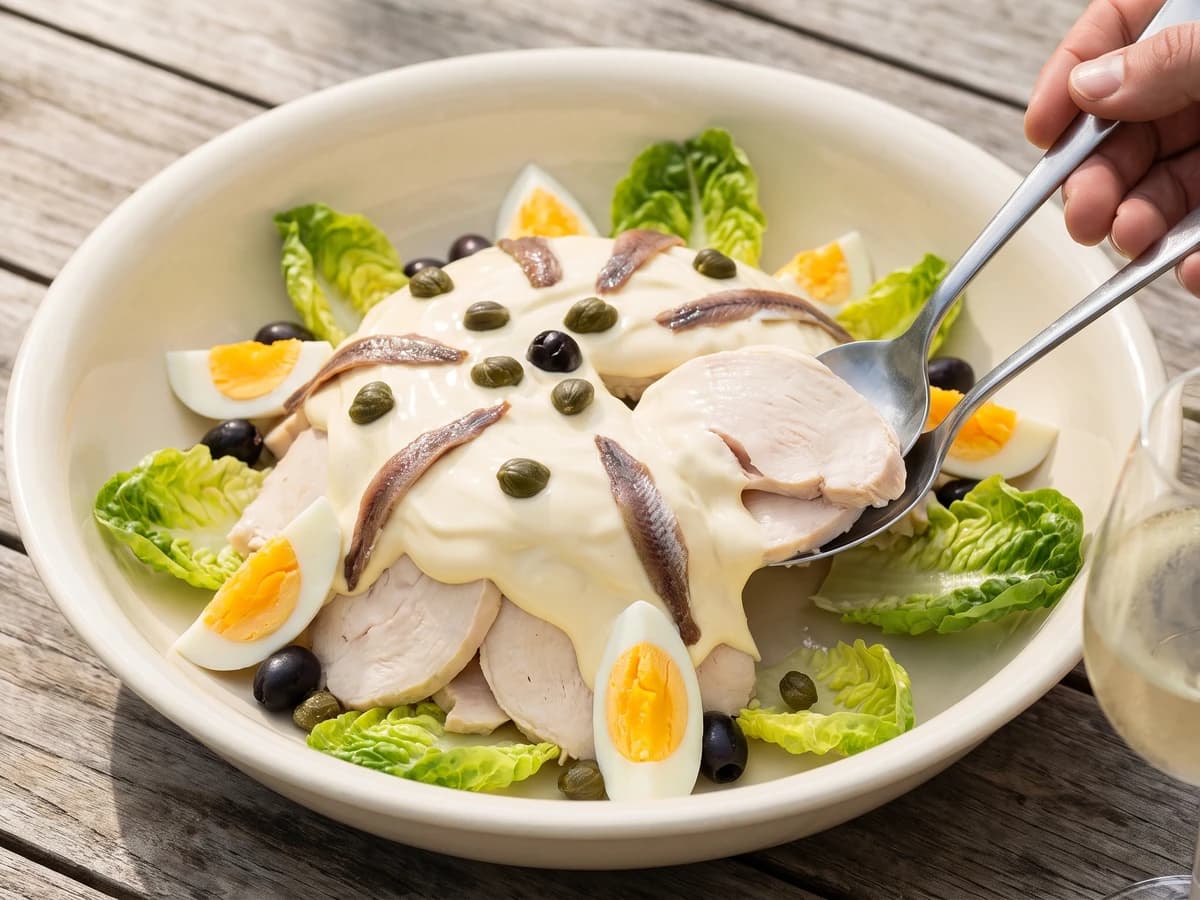
Mayonnaise de Volaille
Cold roast chicken, ciseled lettuce, and a shining coat of homemade mayonnaise, arranged with capers, olives, anchovies, eggs, and lettuce hearts, then tossed at the table as the canon intends.
A cooking platform built around craft, culture, and the stories behind what we eat.

Created by Chef Juliette
Based on No. 2022, Salade Sicilienne, from Le Guide Culinaire (1907) by Auguste Escoffier
Equal dice, immediate lemon, and a light coat of oil turn four plain ingredients into Salade Sicilienne, a crisp, bright lesson in proportion and timing for the French cold table.
Salade Sicilienne (Sicilian-style composed salad) teaches proportion, but timing decides it. Celeriac, russet apple, tomato, and artichoke bottom enter in equal weight and equal dice, so no forkful belongs to one ingredient alone. The one true thing to know before you touch the knife is this: lemon must meet the raw celeriac and apple as soon as they are cut, not after the salad is assembled.
The old entry assumed a garde-manger, the cold station, with cooked artichoke bottoms ready, brigade quantities, and spare hands to make every cube alike. There is no saucier, stockpot, or salamander hiding behind this salad, only cold-kitchen scaffolding. For one cook, one stove, one evening, well-drained preserved artichoke bottoms replace the long trimming and cooking, and a kitchen scale keeps the four ingredients equal. The labor changed, not the ratio. The even dice and immediate lemon are the dish, and they stay.
When it is right, the salad is pale, red, and muted green, crisp at the celeriac, yielding at the artichoke, juicy but never wet. Have the lemon waiting before the first pale cube is cut. That is the moment that matters.
This Salade Sicilienne belongs to the French classical garde-manger rather than the domestic salad canon of Sicily; geographical names in the répertoire often suggested an ingredient profile rather than documenting a regional household dish. Its real home is the French cold table, where salades composées were governed by proportion, exact knife work, and assembly close to service. Artichoke, tomato, oil, and lemon point toward the Mediterranean, while raw celeriac and russet apple keep the composition firmly within the French larder and method.
Quantity
1½ cups (360 ml / 180 g)
peeled and cut into 1 cm dice
Quantity
1½ cups (360 ml / 180 g)
peeled, cored, and cut into 1 cm dice
Quantity
1¼ cups (300 ml / 180 g)
seeded and cut into 1 cm dice
Quantity
1⅓ cups (320 ml / 180 g; about 5 to 6 bottoms)
well drained and cut into 1 cm dice
Quantity
3 tablespoons (45 ml / 45 g)
divided
Quantity
5 tablespoons (75 ml / 68 g)
| Ingredient | Quantity |
|---|---|
| celeriacpeeled and cut into 1 cm dice | 1½ cups (360 ml / 180 g) |
| firm-tart russet applepeeled, cored, and cut into 1 cm dice | 1½ cups (360 ml / 180 g) |
| ripe but firm plum tomatoesseeded and cut into 1 cm dice | 1¼ cups (300 ml / 180 g) |
| plain canned or jarred artichoke bottomswell drained and cut into 1 cm dice | 1⅓ cups (320 ml / 180 g; about 5 to 6 bottoms) |
| freshly squeezed lemon juicedivided | 3 tablespoons (45 ml / 45 g) |
| mild olive oil | 5 tablespoons (75 ml / 68 g) |
Pour 2 tablespoons of the lemon juice into a large nonreactive bowl before cutting anything. Reserve the final tablespoon for the dressing. The acid must be waiting for the celeriac and apple, because their exposed flesh begins darkening at once.
Cut the peeled celeriac into 1 cm slabs, then batons, then even dice. Weigh out 180 g and fold it immediately through the lemon juice. Dice the peeled apple to the same size, weigh out 180 g, and add it at once. If an interruption leaves the edges beginning to tan, add a teaspoon of the reserved lemon and toss immediately. Ça se rattrape: the acid won't bleach away color already formed, but it will stop the browning from deepening.
Blot the drained artichoke bottoms dry, then cut them into matching 1 cm dice and weigh out 180 g. Halve the tomatoes, remove the loose seed gel, and dice the firm flesh to the same size, weighing 180 g after trimming. Add both to the bowl and fold gently so the artichoke and tomato keep their shape.
Whisk the remaining lemon juice with the olive oil until cloudy and lightly thickened. This is an émulsion temporaire, a temporary emulsion, and it needs only enough whisking to help the oil coat rather than pool. Pour it over the salad and fold from the bottom with a broad spoon. If liquid gathers beneath the dice, don't bury it with more celeriac. Ça se rattrape: lift the solids into a dry bowl, whisk the pooled dressing again, then return only enough to leave every cube lightly glossy.
Cover and chill the salad for 15 minutes, just long enough for the lemon and oil to travel across every cut surface. Fold once more and spoon it loosely into a shallow serving bowl, carrying over only the dressing that clings to the dice. Serve cool rather than icy, while the tomato still tastes alive and the celeriac still answers the teeth. À table!
1 serving (about 208g)
Culinary guides, cultural storytelling, and the editorial depth that makes cooking meaningful.
Discover Culinary ExplorerChef Juliette
Cold roast chicken, ciseled lettuce, and a shining coat of homemade mayonnaise, arranged with capers, olives, anchovies, eggs, and lettuce hearts, then tossed at the table as the canon intends.

Chef Juliette
Cold roast or poached chicken with fine ribbons of lettuce, dressed at the final moment with oil and vinegar: a composed salad whose freshness depends entirely on timing.

Chef Juliette
Five leaves, one living rule: laitue, romaine, chicorée, mâche, or pissenlit must be washed, dried, and dressed only as they go to the table, while every leaf still carries its light vinaigrette.

Chef Juliette
Salade de Betteraves proves that baking, not boiling, is the whole argument: concentrated garnet sweetness, tender baked onion, sharp mustard, and herbs cut into a weeknight salad worth making ahead.