Chef Juliette
Mayonnaise de Volaille
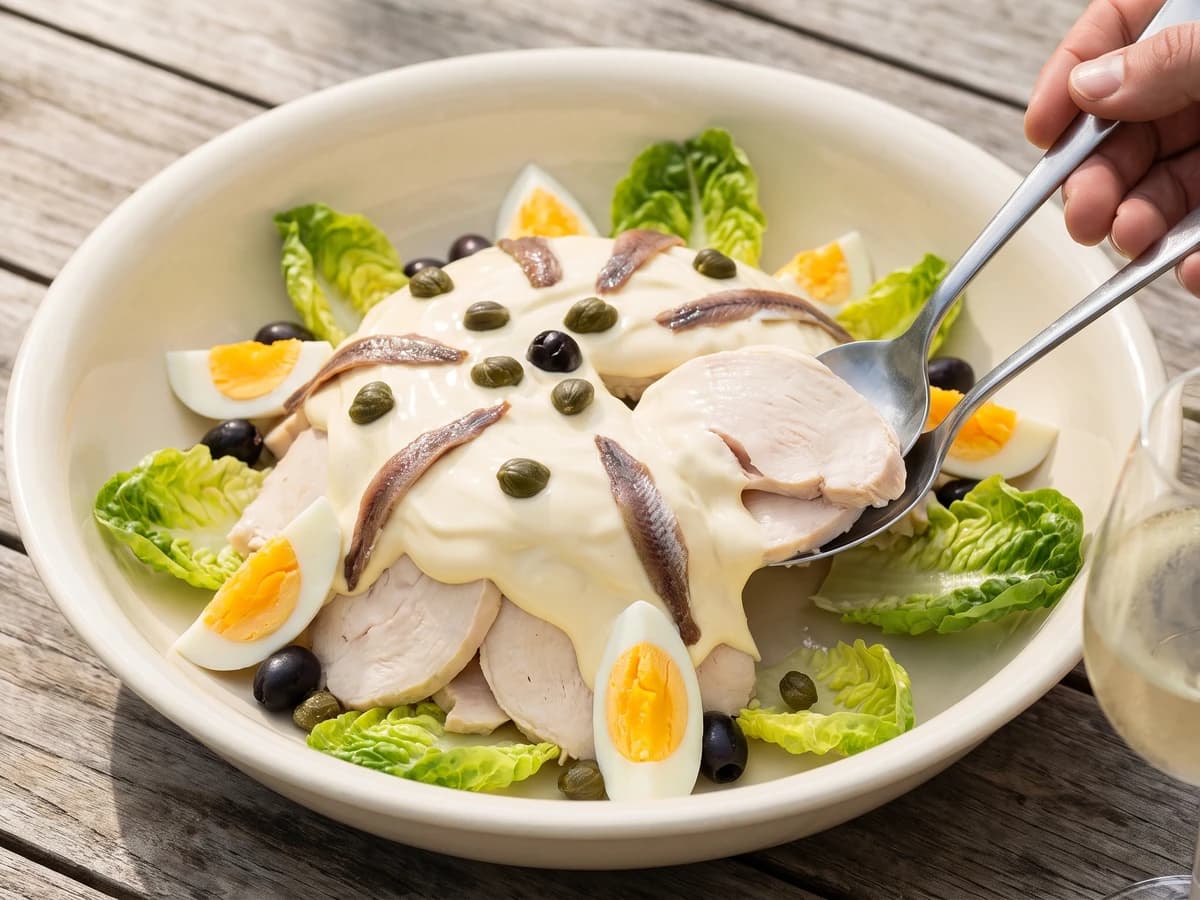
Cold roast chicken, ciseled lettuce, and a shining coat of homemade mayonnaise, arranged with capers, olives, anchovies, eggs, and lettuce hearts, then tossed at the table as the canon intends.
A cooking platform built around craft, culture, and the stories behind what we eat.
Created by Chef Juliette
Based on No. 2010, Salade Lacmé, from Le Guide Culinaire (1907) by Auguste Escoffier
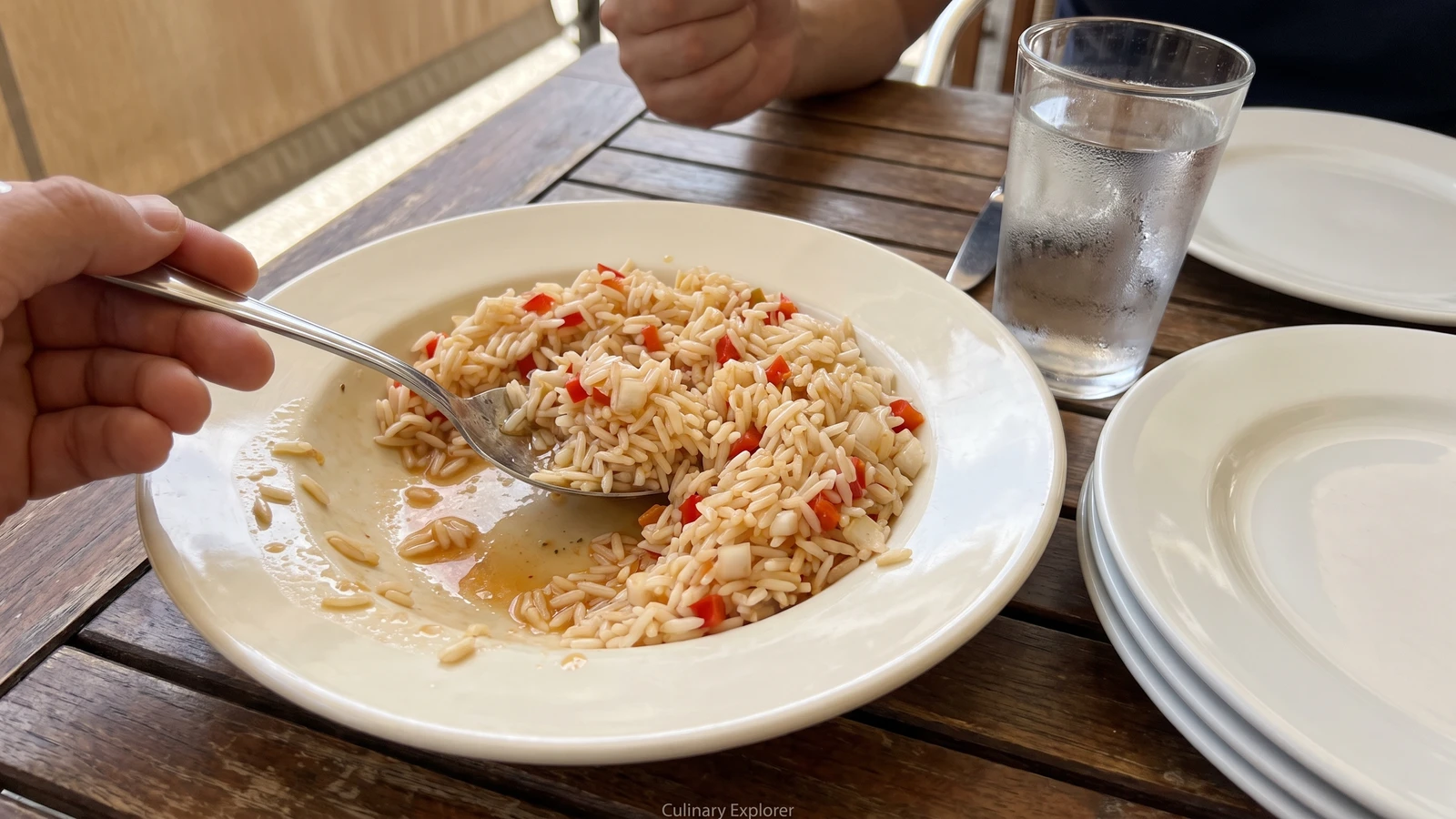
Salade Lacmé keeps every white grain distinct beneath a light curry vinaigrette, with equal measures of red capsicum and tomato sauce, plus onion washed and pressed until crisp rather than sharp.
Salade Lacmé (curried white-rice salad with red capsicum and tomato sauce) teaches separation. The rice must be cooked plain, rinsed cold, spread wide, and allowed to lose its surface moisture before dressing. Fold warm or wet rice into the salad and the grains cling together; begin with cold, dry rice and each one stays itself.
The original entry assumed a garde-manger, the cold-pantry station, reaching for boiled rice already chilled, red capsicums peeled beneath a salamander, and tomato sauce sent over by a saucier. At home, the broiler blisters the pepper, a saucepan handles the rice, and a good thick plain tomato sauce needs no professional batch behind it. The brigade's tubs of prepared components are scaffolding and can go. The equal measures of capsicum and tomato sauce, the very white rice, the ciselé onion washed and pressed, and the curry-seasoned oil and vinegar are the dish and must stay. What changed is the batch size and equipment, not the proportions or intent. One cook, one stove, one evening.
The finished salad is cool, lightly glossy, and pleasantly sharp, with sweet red pepper against restrained curry and onion that gives texture without shouting across the table. Before anything else, clear space on a tray: spreading the rice wide until it is cold and dry is the step that decides the dish.
Salade Lacmé belongs to the Parisian grand-kitchen repertory rather than to a provincial French larder. Its name follows the classical custom of borrowing titles from the Paris stage, while curry powder gives the dish a French, highly filtered echo of India rather than making it an Indian preparation. From the garde-manger it traveled naturally to hotel buffets and bourgeois cold tables, where prepared vegetables, distinct rice, and sharp seasoning suited outdoor lunches and meals assembled ahead.
Quantity
1 cup (240 ml / 185 g)
Quantity
2 quarts (1.9 L / 1.9 kg)
for boiling
Quantity
1 large (about 8 oz / 225 g whole), yielding ¾ cup (180 ml / 125 g)
roasted, peeled, and diced
Quantity
¾ cup (180 ml / 185 g)
chilled
Quantity
⅓ cup (80 ml / 50 g)
ciselé
Quantity
3 tablespoons (45 ml / 41 g)
Quantity
1½ tablespoons (22 ml / 22 g)
Quantity
1 teaspoon (5 ml / 2 g)
Quantity
1 tablespoon (15 ml / 18 g)
divided
Quantity
¼ teaspoon (1.25 ml / 0.5 g)
| Ingredient | Quantity |
|---|---|
| uncooked long-grain white rice | 1 cup (240 ml / 185 g) |
| waterfor boiling | 2 quarts (1.9 L / 1.9 kg) |
| red capsicumroasted, peeled, and diced | 1 large (about 8 oz / 225 g whole), yielding ¾ cup (180 ml / 125 g) |
| thick plain tomato saucechilled | ¾ cup (180 ml / 185 g) |
| yellow onionciselé | ⅓ cup (80 ml / 50 g) |
| neutral oil, such as grapeseed or sunflower | 3 tablespoons (45 ml / 41 g) |
| red wine vinegar | 1½ tablespoons (22 ml / 22 g) |
| mild curry powder | 1 teaspoon (5 ml / 2 g) |
| fine sea saltdivided | 1 tablespoon (15 ml / 18 g) |
| ground white pepper | ¼ teaspoon (1.25 ml / 0.5 g) |
Set the red capsicum beneath a hot broiler and turn it as each face blisters and blackens, about 12 to 15 minutes altogether. Enclose it in a covered bowl for 10 minutes, then peel away the skin, remove the stem and seeds, and wipe off any stubborn black flecks without rinsing away the sweet juices. Dice the flesh and let it drain in a sieve. Measure ¾ cup only; if the pieces still shed liquid, press them gently between clean towels so they cannot water the salad.
Rinse the rice under cold water until the runoff is nearly clear. Bring the measured water to a full boil with 2½ teaspoons of the salt, scatter in the rice, and stir once so nothing catches. Boil uncovered for 10 to 12 minutes, tasting early; drain the instant the grains are tender but still intact. Rinse thoroughly under cold water, shake the sieve firmly, then spread the rice in a thin layer across a rimmed tray. Leave it until completely cold and surface-dry, about 20 minutes. If the grains begin clinging together, rinse them briefly again, drain harder, and spread them back out. Ça se rattrape.
Cut the onion ciselé, in fine, short crosswise pieces reminiscent of a chaff-cutter's cut. Put it in a fine sieve, wash it thoroughly beneath cold running water, then wrap it in a clean towel and press firmly until dry. Washing removes the harsh surface compounds without taking away the onion's crispness; pressing matters just as much, because trapped water weakens the vinaigrette.
Measure exactly ¾ cup of the drained red capsicum and ¾ cup of the chilled tomato sauce. The source gives these in equal quantity, and that proportion stays. The sauce should mound softly on a spoon rather than run like juice; if yours is loose, drain it in a fine sieve until thick, then measure it again.
Whisk the vinegar with the curry powder, white pepper, and remaining ½ teaspoon salt. Let it stand for 5 minutes so the curry hydrates, then whisk in the oil gradually to make a loose vinaigrette. Whisk in the tomato sauce until smooth. This emulsion need not hold forever, but it should be even when it meets the rice; if it separates while waiting, whisk it once more.
Put the cold rice in a wide bowl and loosen it gently with a fork. Add the pressed onion and diced capsicum, then pour over the tomato-curry vinaigrette. Fold from the bottom with a flexible spatula, turning the bowl as you work, until the seasoning is evenly distributed. Stop as soon as it is combined. Stirring hard breaks the grains and turns their surface pasty. If a little dressing collects at the bottom, leave the salad for 10 minutes and fold once more; the rice will take it up.
Cover and refrigerate the salad for 30 minutes so the curry settles into the tomato and oil. Bring it out 10 minutes before serving, fold it once, and taste; it should be cool rather than numb, gently curried, and cleanly acidic. Serve from a broad shallow bowl with no ornamental garnish. The red capsicum is colour enough. À table!
1 serving (about 245g)
Culinary guides, cultural storytelling, and the editorial depth that makes cooking meaningful.
Discover Culinary ExplorerChef Juliette
Cold roast chicken, ciseled lettuce, and a shining coat of homemade mayonnaise, arranged with capers, olives, anchovies, eggs, and lettuce hearts, then tossed at the table as the canon intends.

Chef Juliette
Cold roast or poached chicken with fine ribbons of lettuce, dressed at the final moment with oil and vinegar: a composed salad whose freshness depends entirely on timing.

Chef Juliette
Five leaves, one living rule: laitue, romaine, chicorée, mâche, or pissenlit must be washed, dried, and dressed only as they go to the table, while every leaf still carries its light vinaigrette.

Chef Juliette
Salade de Betteraves proves that baking, not boiling, is the whole argument: concentrated garnet sweetness, tender baked onion, sharp mustard, and herbs cut into a weeknight salad worth making ahead.