Chef Juliette
Mayonnaise de Volaille
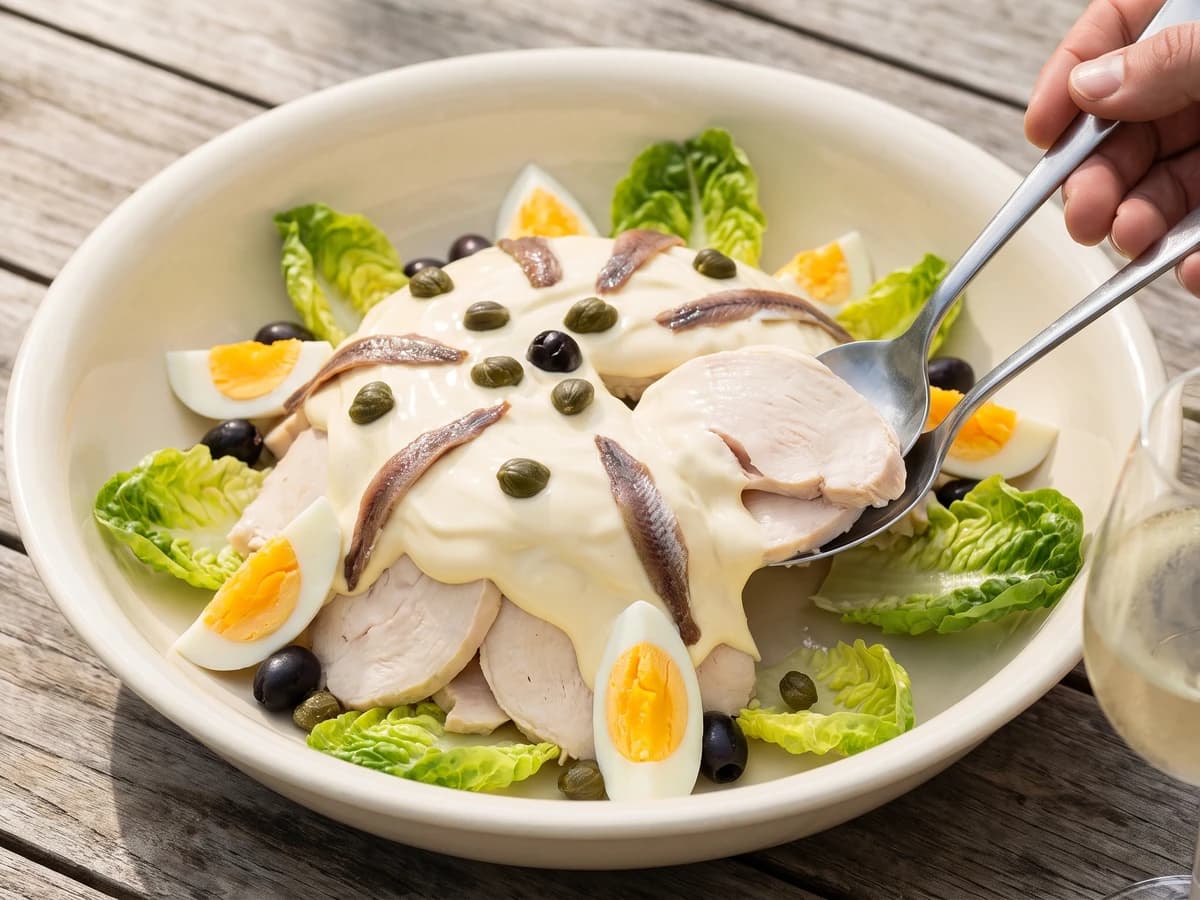
Cold roast chicken, ciseled lettuce, and a shining coat of homemade mayonnaise, arranged with capers, olives, anchovies, eggs, and lettuce hearts, then tossed at the table as the canon intends.
A cooking platform built around craft, culture, and the stories behind what we eat.
Created by Chef Juliette
Based on No. 1992, Haricot Beans and Lentil Salads, etc., from Le Guide Culinaire (1907) by Auguste Escoffier
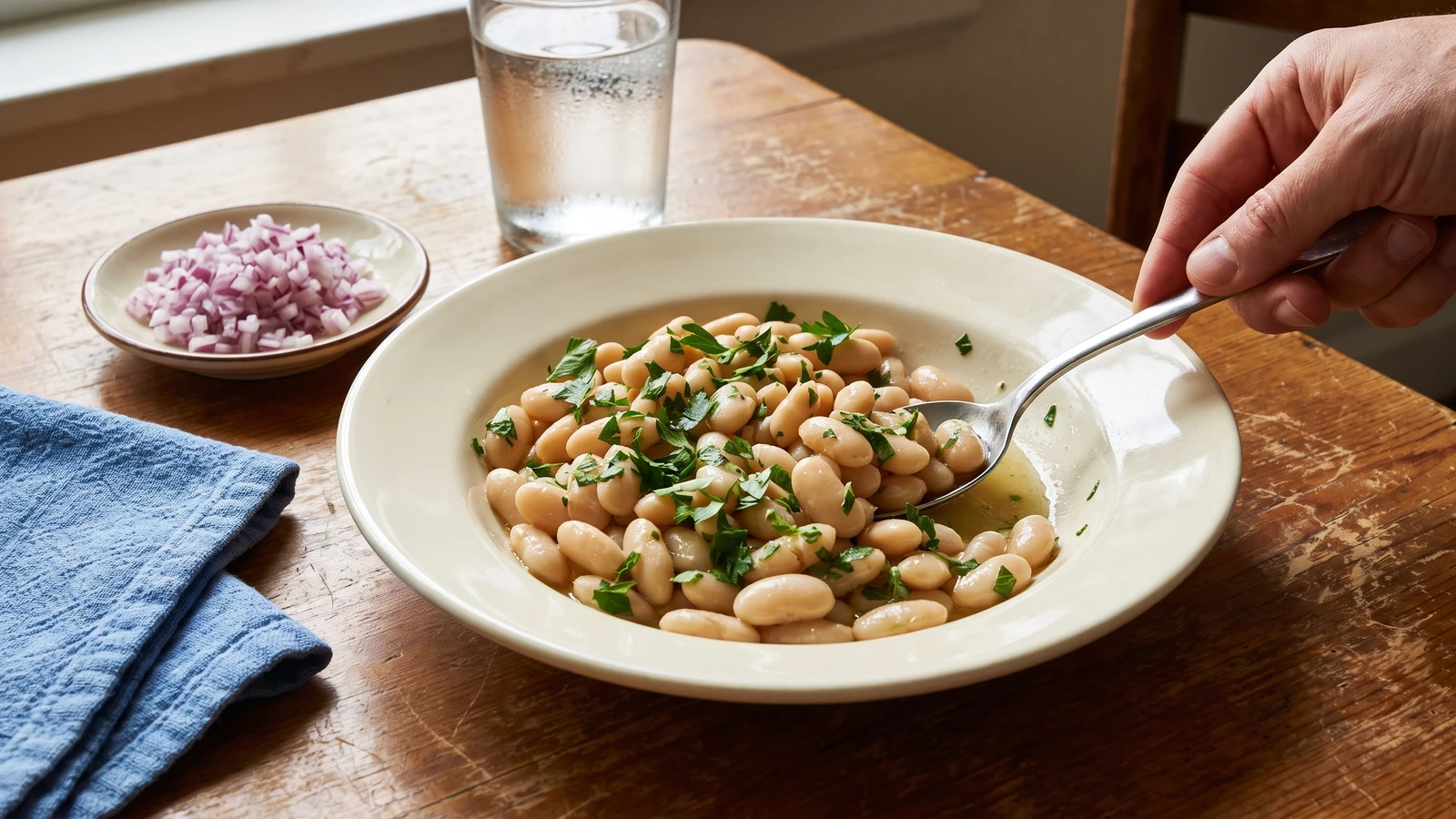
A lesson in restraint: thoroughly drained haricot beans or lentils, a sharp vinaigrette, green parsley, and onion cut cisel and kept apart so every diner chooses the bite.
Salade de haricots ou de lentilles (bean or lentil salad) teaches one uncompromising thing: drainage is the dish. The vinaigrette (oil-and-vinegar dressing) should cling in a bright film around each bean or lentil, not dilute itself in a puddle at the bottom of the bowl. Get the legumes dry before you dress them, and this modest salad has clean edges, green parsley, sharp vinegar, and the quiet richness of good oil.
The source entry begins with the vegetable already cooked, whatever its kind, because a brigade kept prepared legumes ready for service. That mise en place was scaffolding. For one cook, two cans of haricots or a bowl of home-cooked lentils are the honest equivalent, scaled to four; a fine sieve and clean towel replace the draining station. Only the scale and source of the cooked legumes have changed. The draining, oil, vinegar, parsley, and onion served apart are the dish itself, so none of them goes.
The onion is cut cisel, into very fine crosswise slices, then washed and pressed dry so it brings crisp bite without flooding the salad. Dress the legumes only when a clean towel comes away dry. If they still weep moisture, give them five minutes more. Ça se rattrape, and that patient draining is the step that matters most.
Salades de légumes secs sit at the French cuisine bourgeoise table and among the plain hors-d'œuvres of Parisian bistros, where cooked haricots or lentils become a fresh first course through careful draining and sharp seasoning. The classical repertory treats this as a method rather than a single regional formula: oil, vinegar, parsley, then onion cut cisel, washed, pressed, and offered apart. Serving the onion separately is not an affectation; it protects the clean legume salad while letting each diner choose the raw bite.
Quantity
2½ cups (600 ml / 500 g)
choose one; cooled and thoroughly drained
Quantity
3 tablespoons (45 ml / 41 g)
Quantity
1 tablespoon (15 ml / 15 g)
Quantity
½ teaspoon (2.5 ml / 3 g), plus more only if needed
Quantity
¼ cup (60 ml / 15 g)
chopped
Quantity
½ small (about ⅓ cup / 60 g)
peeled
| Ingredient | Quantity |
|---|---|
| fully cooked white haricot beans or green or brown lentilschoose one; cooled and thoroughly drained | 2½ cups (600 ml / 500 g) |
| mild olive oil | 3 tablespoons (45 ml / 41 g) |
| wine vinegar | 1 tablespoon (15 ml / 15 g) |
| fine salt | ½ teaspoon (2.5 ml / 3 g), plus more only if needed |
| flat-leaf parsley leaveschopped | ¼ cup (60 ml / 15 g) |
| yellow onionpeeled | ½ small (about ⅓ cup / 60 g) |
Choose haricots or lentils rather than combining them, so the salad keeps one clear texture. If using canned haricots, rinse them briefly to remove the thick canning liquor. Leave the legumes in a fine sieve for 10 minutes, then spread them over a clean towel and blot gently. They must be cool and dry before the vinaigrette touches them. If the towel still picks up obvious moisture, leave them for another five minutes. Ça se rattrape; patience now prevents a watery bowl later.
Put the vinegar and salt in the mixing bowl and whisk until the salt dissolves. Add the oil in a thin stream, whisking until the vinaigrette looks cloudy and lightly joined. It will separate if left standing, which is its nature rather than a failure; whisk it once more immediately before adding the legumes. Taste it now. It should seem a little sharper than necessary because the legumes will soften its edge.
Add the drained legumes and chopped parsley to the vinaigrette. Fold gently with a broad spoon until every piece carries a light gloss, taking care not to crush tender lentils or strip the skins from the beans. Leave the salad for 15 minutes so the seasoning enters the legumes. If dressing collects in a watery pool, lift the salad into a clean bowl with a slotted spoon, rewhisk the liquid, and return only enough to coat it. The salad should gleam, not swim.
Cut the onion cisel, meaning into the finest crosswise slices you can manage, like short pieces passing through a chaff cutter. Rinse the slices thoroughly under cold water, then wrap them in a clean towel and press firmly until dry. Washing tempers the raw sulfurous bite; pressing keeps that water out of the salad. If the onion remains fiercely sharp, soak it in cold water for five minutes, drain, and press again. Keep it in a separate little dish.
Taste the salad after its rest and add only enough salt to make the vinegar and parsley distinct. Serve cool or at room temperature in a shallow dish, with the washed and pressed onion beside it so each diner adds as much as desired. If the salad has been chilled, let it stand out for 20 minutes first; cold mutes the vinaigrette and stiffens the oil. One cook, one bowl, one evening. À table!
1 serving (about 160g)
Culinary guides, cultural storytelling, and the editorial depth that makes cooking meaningful.
Discover Culinary ExplorerChef Juliette
Cold roast chicken, ciseled lettuce, and a shining coat of homemade mayonnaise, arranged with capers, olives, anchovies, eggs, and lettuce hearts, then tossed at the table as the canon intends.

Chef Juliette
Cold roast or poached chicken with fine ribbons of lettuce, dressed at the final moment with oil and vinegar: a composed salad whose freshness depends entirely on timing.

Chef Juliette
Five leaves, one living rule: laitue, romaine, chicorée, mâche, or pissenlit must be washed, dried, and dressed only as they go to the table, while every leaf still carries its light vinaigrette.

Chef Juliette
Salade de Betteraves proves that baking, not boiling, is the whole argument: concentrated garnet sweetness, tender baked onion, sharp mustard, and herbs cut into a weeknight salad worth making ahead.