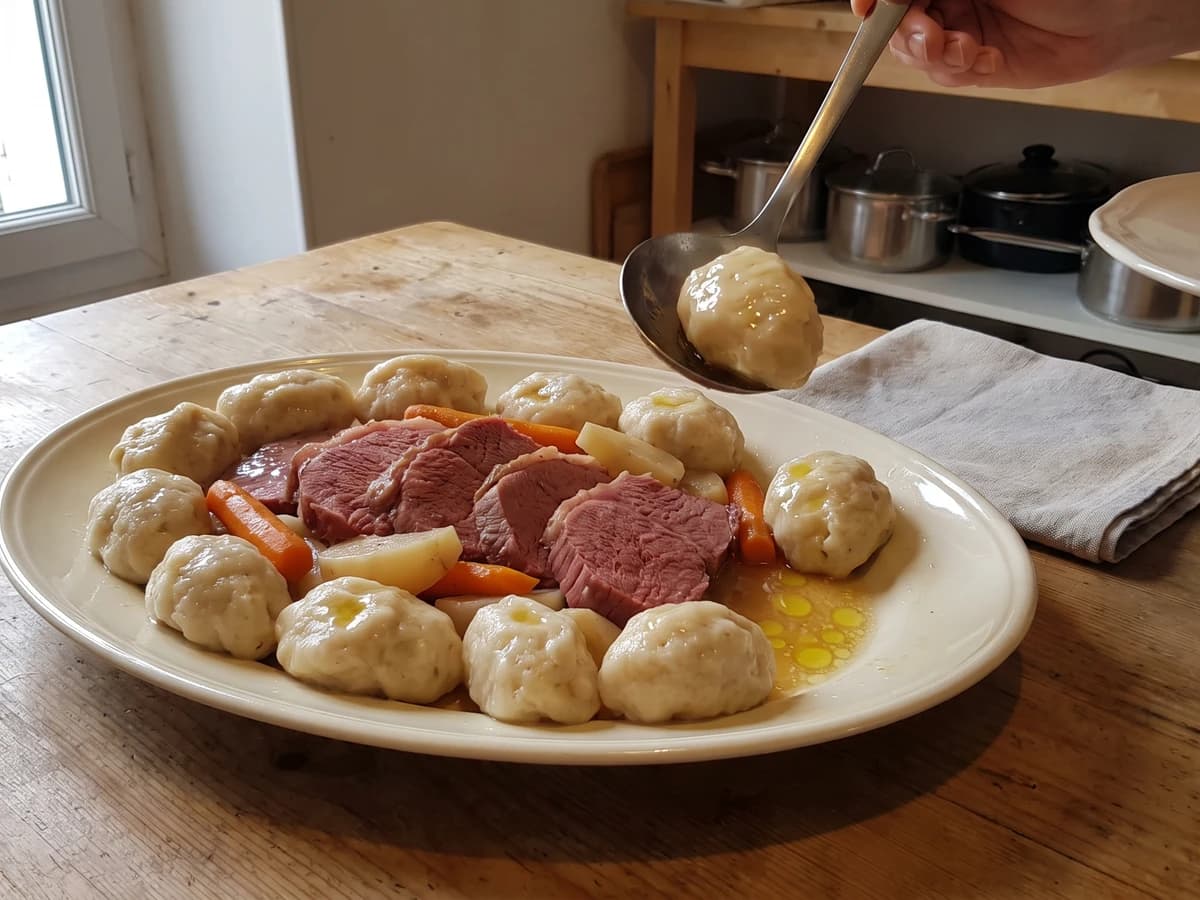
Chef Juliette
Suet Dumpling
Boulettes au suif, poached beside salt beef, turn equal weights of flour and finely chopped suet into tender, rich dumplings. Keep the beef liquor at a bare tremble and the old garnish works beautifully at home.
A cooking platform built around craft, culture, and the stories behind what we eat.
Created by Chef Juliette
Based on No. 198, Veal Forcemeat with Fat or Godiveau, from Le Guide Culinaire (1907) by Auguste Escoffier
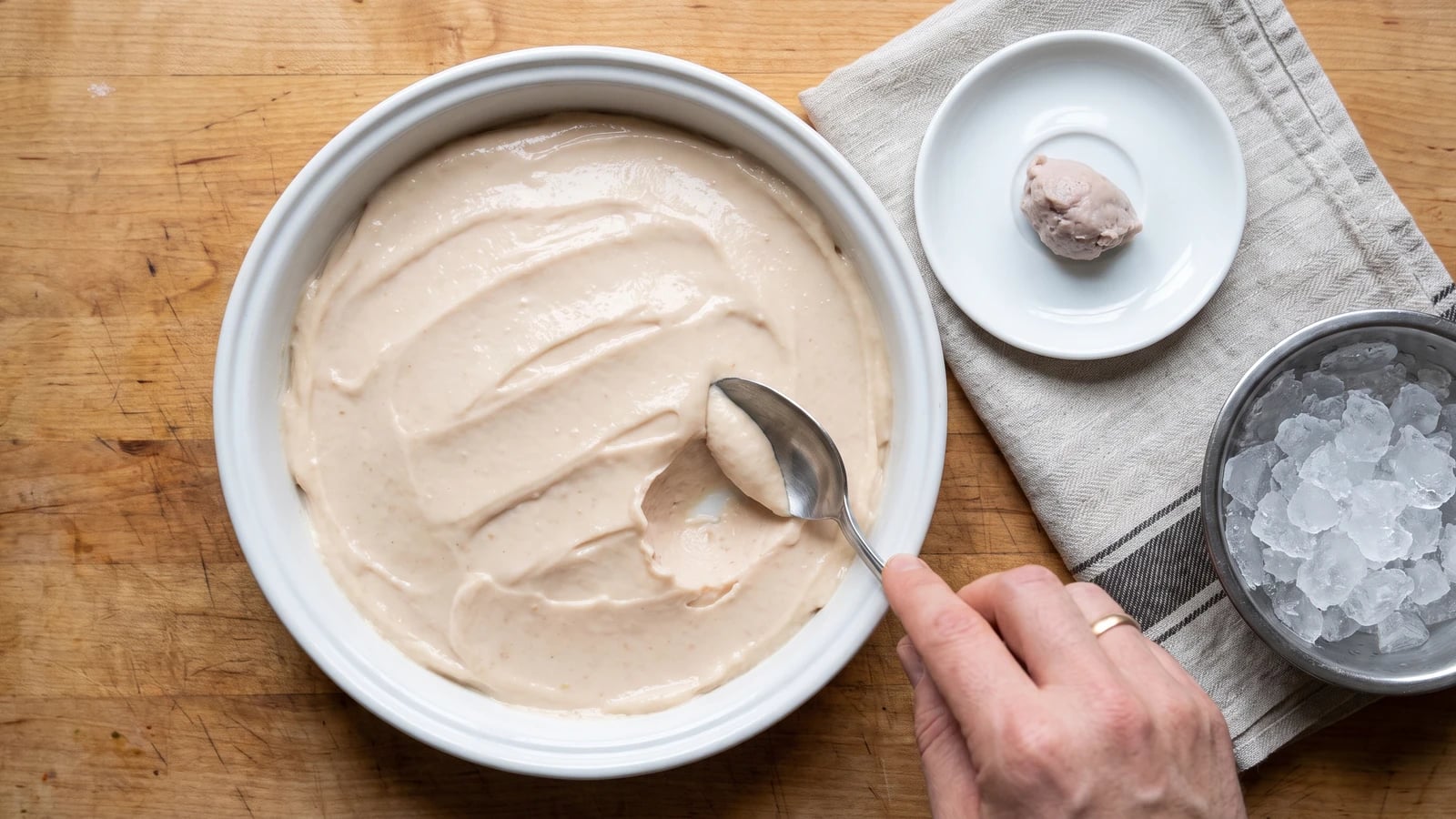
Cold is the craft in Godiveau: veal, dry beef kidney fat, egg, and ice worked into a supple forcemeat, rested overnight, then corrected by one small test poach before it goes to the table.
Godiveau (veal forcemeat with beef kidney fat) teaches the first law of forcemeat: temperature is texture. Keep the veal, suet, bowl, blade, egg, and water cold, and the mixture binds into a pale, supple mass that poaches light. Let them warm, and the fat smears while the paste turns heavy. Before you touch a pan, make room in the refrigerator.
The original assumed a mortar, three pounds of meat and fat, a bed of ice, and hands free to pound the mixture twice. A home kitchen needs none of that scaffolding. This version keeps precisely one quarter of the book's proportions and uses short pulses in a chilled food processor. The separate chopping, staged egg, overnight rest, gradual ice, and test poach remain, because those steps are the dish. One cook, one stove, one evening to begin, then a few minutes the next day.
The test poach is your judgment, not a ceremonial nibble. It tells you whether the paste needs more moisture or more binding before an entire preparation is committed. Add the prescribed ice slowly and keep the mixture cold. That is the step that decides the Godiveau.
Godiveau belongs to the working repertoire of the French classical table, especially Parisian cuisine bourgeoise and the grand kitchen, where it filled pastry cases and supplied delicate meat quenelles and composed garnishes. Its name describes a preparation rather than a finished dish, which is why classical collections send the cook onward to a separate formula for shaping and poaching. Unlike a cream-based mousseline, Godiveau gains its richness from beef kidney fat and its lightness from egg, pounding, and nearly the veal's own weight in ice.
Quantity
¾ cup loosely filled (4 oz / 113 g)
all tendons removed, cut into ¾-inch cubes
Quantity
1½ cups loosely packed (8 oz / 227 g)
skin and filaments removed, diced
Quantity
¾ teaspoon (3.7 ml / 3.5 g)
Quantity
⅛ teaspoon (0.6 ml / 0.3 g)
Quantity
1 small pinch, about 1/16 teaspoon (0.3 ml / 0.1 g)
Quantity
1 large (3 tablespoons / 50 g without shell)
well chilled
Quantity
About ¾ cup small ice pieces (3½ oz / 100 g), or scant ½ cup iced water (100 ml / 100 g)
ice broken into small pieces
Quantity
Up to 2 tablespoons (30 ml / 30 g)
for correcting a firm test portion
Quantity
1 large (2 tablespoons / 30 g)
lightly beaten, for correcting a loose test portion
Quantity
4 cups (1 L / 1 kg)
for the test poach
Quantity
1 teaspoon (5 ml / 5 g)
for the poaching water
Quantity
As needed from this batch
for shaping and poaching the finished Godiveau
| Ingredient | Quantity |
|---|---|
| veal filletall tendons removed, cut into ¾-inch cubes | ¾ cup loosely filled (4 oz / 113 g) |
| very dry beef kidney suetskin and filaments removed, diced | 1½ cups loosely packed (8 oz / 227 g) |
| fine salt | ¾ teaspoon (3.7 ml / 3.5 g) |
| finely ground white pepper | ⅛ teaspoon (0.6 ml / 0.3 g) |
| freshly grated nutmeg | 1 small pinch, about 1/16 teaspoon (0.3 ml / 0.1 g) |
| large eggwell chilled | 1 large (3 tablespoons / 50 g without shell) |
| very clean ice or ice-cold waterice broken into small pieces | About ¾ cup small ice pieces (3½ oz / 100 g), or scant ½ cup iced water (100 ml / 100 g) |
| additional clean ice or ice-cold water (optional)for correcting a firm test portion | Up to 2 tablespoons (30 ml / 30 g) |
| large egg white (optional)lightly beaten, for correcting a loose test portion | 1 large (2 tablespoons / 30 g) |
| waterfor the test poach | 4 cups (1 L / 1 kg) |
| fine saltfor the poaching water | 1 teaspoon (5 ml / 5 g) |
| Forcemeat Balls or Quenelles (No. 205) (optional)for shaping and poaching the finished Godiveau | As needed from this batch |
Refrigerate the food processor bowl, blade, veal, suet, and egg for at least 30 minutes. Trim every tendon and strip of silverskin from the veal. Pare the suet just as carefully, removing its membrane, skin, and stringy filaments, then pat both ingredients dry and cut them into small cubes. Cold, dry ingredients cut cleanly; warm fat smears before the binding has even begun.
Pulse the veal alone until it resembles a fine, even mince, then scrape it into a chilled bowl. Pulse the suet separately until finely chopped, stopping before it becomes greasy. Return the veal, add the salt, pepper, and nutmeg, and process in short bursts until the two become a homogeneous, tacky mass. If the bowl loses its chill or free fat glistens around the blade, stop at once and refrigerate everything for 15 minutes. Ça se rattrape if you catch the warmth before the suet melts.
Beat the chilled egg just enough to combine the white and yolk. With the processor pulsing, add it in three small portions, allowing each portion to disappear completely before the next goes in. Scrape the bowl between additions and keep the pulses brief. The old quantity accepted four eggs one after another; at this home scale, dividing a single weighed egg preserves that same gradual binding.
Spread the Godiveau about ½ inch thick in a shallow chilled dish, press parchment directly against the surface, cover, and refrigerate for 12 to 24 hours at 40°F / 4°C or colder. The rest firms the suet and gives the salt time to draw out the proteins that hold the paste together. Do not omit it. This is the dish, not brigade scaffolding.
Return the cold mixture to the chilled processor and pulse it briefly to loosen it. Add the 3½ ounces / 100 grams of ice or iced water in six to eight small additions, processing only until each is absorbed before adding more. The Godiveau should become paler, lighter, and supple enough to hold a soft mound. If it turns oily or grainy, stop. Chill it for 15 minutes, then resume with a teaspoon of the measured ice water; forcing a warm mixture only separates it further.
Bring the water and poaching salt to a boil, then lower the heat until bubbles rise steadily without tossing the food. Drop in a rounded teaspoon of Godiveau and poach it until cooked through, about 3 to 4 minutes, or until its centre reaches 160°F / 71°C. Let it cool for half a minute, then cut and taste it. It should hold its shape while remaining tender and light. If it is too firm, beat in additional ice or iced water 1 teaspoon at a time. If it is flimsy or breaks apart, beat in the egg white 1 teaspoon at a time. Test again after either correction. Ça se rattrape.
Use the corrected Godiveau at once, or cover it closely and refrigerate it at 40°F / 4°C or colder until later the same day. For a shaped garnish or side dish, reach for Forcemeat Balls or Quenelles (No. 205) and use this batch as its finished forcemeat; its shaping and poaching remain in that separate preparation. When Godiveau is used as a stuffing, cook its centre to at least 160°F / 71°C, or 165°F / 74°C inside poultry. À table!
1 serving (about 123g)
Culinary guides, cultural storytelling, and the editorial depth that makes cooking meaningful.
Discover Culinary ExplorerChef Juliette
Boulettes au suif, poached beside salt beef, turn equal weights of flour and finely chopped suet into tender, rich dumplings. Keep the beef liquor at a bare tremble and the old garnish works beautifully at home.

Chef Juliette
Bread, flour, frangipane, and rice become four cool, supple panades for binding forcemeats, each changing body and flavor while preserving tenderness. The finest Mousselines need none, and knowing that distinction is the lesson.

Chef Juliette
Panade au pain is bread, milk, salt, heat, and attention: stir until the paste releases cleanly, butter it against a skin, and you have the quiet binder behind tender French farces.

Chef Juliette
Panade de farine teaches the drying stroke behind pâte à choux: flour meets boiling buttered water, then stays over the fire until the paste gathers, smooths, and quits the pan cleanly.