Culinary Explorer
A cooking platform built around craft, culture, and the stories behind what we eat.
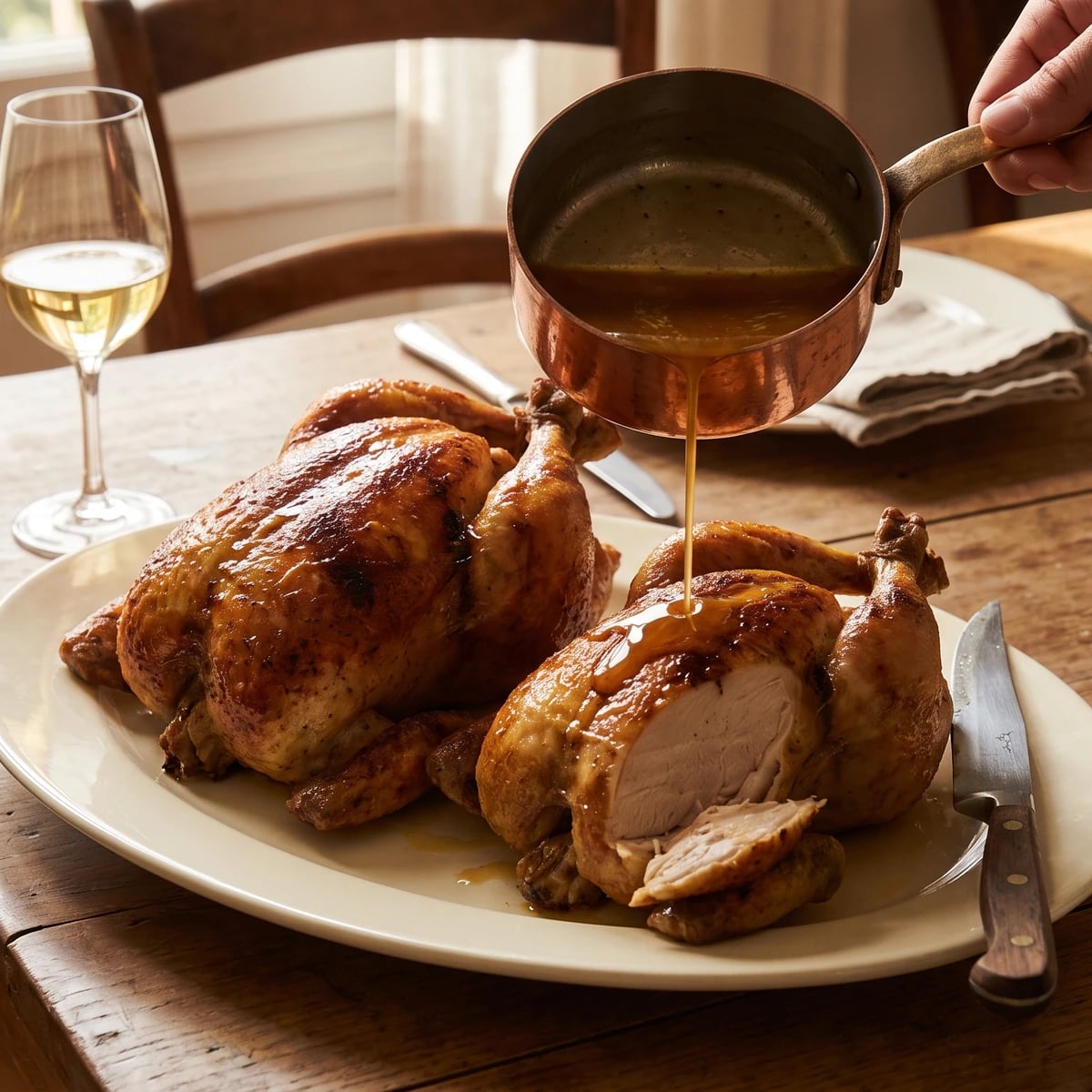
Chicken à la Reine and Spring Chickens
Created by Chef Juliette
A small pullet and spring chickens share one classical roasting grammar: real butter, steady basting, and turns through the oven, with doneness judged by pale juices and the thigh, never minutes alone.
Poulet à la Reine et Poussins Rôtis (roasted small chicken and spring chickens) teaches one true thing before you touch the pan: changing the size of the bird changes the cooking time, not the roasting method. Butter it, turn it, baste it, and read the juices at the thigh. C'est la même grammaire.
The book's entry is a cross-reference, not a new garnish or sauce. It assumes the pullet method is already known, with a turning spit and a cook free to baste while the bird revolves. Your honest equivalent is a shallow roasting pan, three deliberate turns, and an oven hot enough to bronze the skin. Formal trussing and separate hot holding are brigade scaffolding, so they go; turning, basting, resting, and judging doneness stay. One cook, one stove, one evening.
What comes to the table is beautifully plain: taut bronze skin, juicy meat, and a jus de rôti, the natural roasting jus, made from the brown film in the pan. A pullet feeds four when carved; two poussins are halved so each guest receives a generous piece. The decisive step is the last turn: pierce the deepest part of the thigh and look for clear to pale-white juice with no rose, then confirm the centre is safely cooked. Judge the thigh, not the clock.
Ingredients
small whole pullet or spring chickens
Quantity
1 pullet, 3 to 3½ lb (1.35 to 1.6 kg), or 2 spring chickens, 1¼ to 1½ lb (570 to 680 g) each
giblets removed
unsalted butter
Quantity
4 tablespoons (60 ml / 57 g)
softened and divided
fine sea salt
Quantity
2 teaspoons (10 ml / 12 g)
| Ingredient | Quantity |
|---|---|
| small whole pullet or spring chickensgiblets removed | 1 pullet, 3 to 3½ lb (1.35 to 1.6 kg), or 2 spring chickens, 1¼ to 1½ lb (570 to 680 g) each |
| unsalted buttersoftened and divided | 4 tablespoons (60 ml / 57 g) |
| fine sea salt | 2 teaspoons (10 ml / 12 g) |
Where cooking meets culture.
Culinary guides, cultural storytelling, and the editorial depth that makes cooking meaningful.
Discover Culinary Explorer