
Chef Juliette
John Dory (St. Pierre)
John Dory has the delicacy of sole and the firmness of turbot. A light flouring, a quick butter sauté, and nut-brown beurre noisette show exactly why looks never mattered.
A cooking platform built around craft, culture, and the stories behind what we eat.
Created by Chef Juliette
Based on No. 1937, Sarcelles (Teal), from Le Guide Culinaire (1907) by Auguste Escoffier
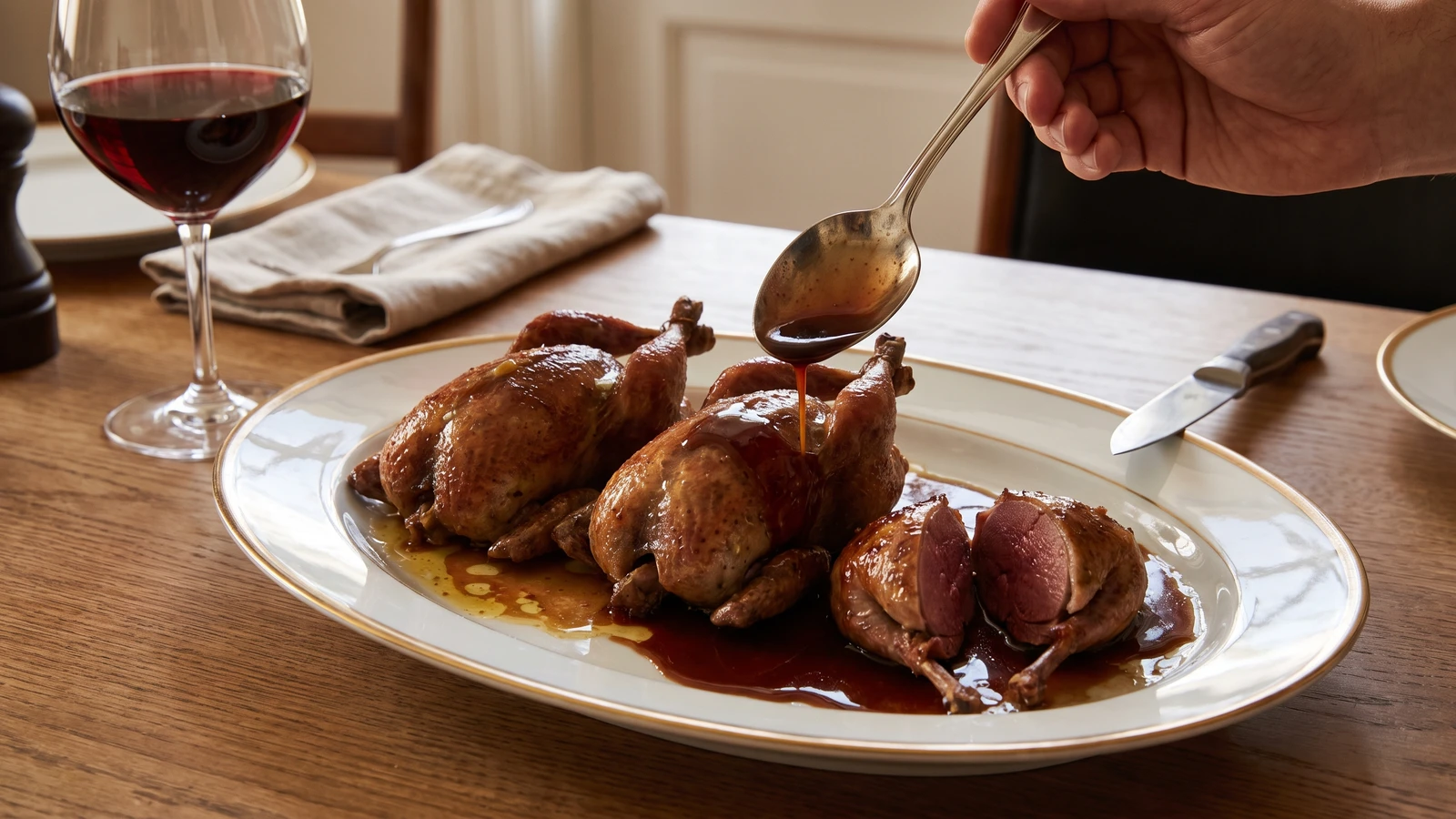
Sarcelles rôties teach the discipline of roasting by the minute: sweet little wild ducks, deeply bronzed outside and rosy within, served with a red-wine jus built from their own fond.
Sarcelles rôties au jus (roast teal with pan jus) teach the hardest lesson in roasting: stop before the bird looks finished. Teal are the smallest wild ducks and among the sweetest, with fine flesh that goes from rosy and yielding to grey and livery in the time it takes to open a bottle. The one true thing is this: roast for the breast, and keep it frankly underdone.
The classical entry gives roasting as the preferred treatment, while sending cooks who want a composed sauce toward separate salmis and Rouennaise preparations. Its kitchen assumed oven-ready game, a fierce roasting oven, a saucier beside the stove, and dark stock never off the fire. Here, four birds meet one ovenproof skillet, while good brown stock reduces on the neighboring burner. A brigade's separate roasting pan, sauce pan, and elaborate straining are scaffolding; the hard browning, brief roast, proper rest, and jus built from the fond are the dish and must stay. One cook, one stove, one evening.
The jus is deliberately short and direct, red wine reduced against the browned pan juices and finished with real butter. Begin checking the breasts earlier than seems reasonable. Two minutes decide this roast, and no handsome sauce can return moisture once it has left the bird.
Sarcelles belong to the game cookery of France's marsh and estuary country, with Normandy, Rouen, and the Seine wetlands giving small wild ducks a particularly secure place at the table. Their tenderness favored quick roasting, while birds held for service or carried into a second meal became salmis, their carved meat warmed in a concentrated sauce made from the roasting remains. The teal is not a miniature farmed duck: its delicacy comes from wild flesh and demands a shorter, franker roast.
Quantity
4, about 10 to 12 ounces (280 to 340 g) each
Quantity
1½ teaspoons (7.5 ml / 9 g)
Quantity
¾ teaspoon (3.75 ml / 1.5 g)
Quantity
4 tablespoons (60 ml / 56 g)
divided, with 2 tablespoons kept cold
Quantity
1 tablespoon (15 ml / 14 g)
Quantity
1, about 1½ ounces / 40 g
finely minced
Quantity
¾ cup (180 ml / 180 g)
Quantity
1½ cups (360 ml / 360 g)
Quantity
2 sprigs
Quantity
1
Quantity
1 teaspoon (5 ml / 5 g)
| Ingredient | Quantity |
|---|---|
| whole oven-ready teal | 4, about 10 to 12 ounces (280 to 340 g) each |
| fine sea salt | 1½ teaspoons (7.5 ml / 9 g) |
| freshly ground black pepper | ¾ teaspoon (3.75 ml / 1.5 g) |
| unsalted butterdivided, with 2 tablespoons kept cold | 4 tablespoons (60 ml / 56 g) |
| neutral oil | 1 tablespoon (15 ml / 14 g) |
| large shallotfinely minced | 1, about 1½ ounces / 40 g |
| dry red wine | ¾ cup (180 ml / 180 g) |
| unsalted brown chicken or game stock | 1½ cups (360 ml / 360 g) |
| thyme | 2 sprigs |
| bay leaf | 1 |
| red wine vinegar | 1 teaspoon (5 ml / 5 g) |
Take the teal from the cold 30 minutes before cooking. Inspect each bird carefully for pinfeathers, shot, and bone fragments, then remove any giblets from the cavities. Pat the skin and cavities thoroughly dry. Tie the legs loosely together and tuck the wing tips underneath, keeping the breasts fully exposed. Season inside and out with the salt and pepper. Heat the oven to 475°F (245°C), or 450°F (230°C) with convection.
Put the stock, thyme, and bay leaf in a small saucepan and boil steadily until reduced by half, about 10 to 12 minutes. You should have roughly ¾ cup (180 ml), with enough body to lightly cling to a spoon. Strain out the herbs and keep the reduction warm. This replaces the ready dark jus and the saucier that the classical kitchen kept at hand; making gallons of sauce for four little birds would be scaffolding without purpose.
Heat a heavy 12-inch ovenproof skillet over medium-high heat. Add the oil and 1 tablespoon (15 ml / 14 g) of the butter. When the butter foams and smells nutty, lay in the teal breast-side down. Brown for 90 seconds, then turn each bird onto one side for 45 seconds and the other side for another 45 seconds. Work in two batches if the birds touch. The skin should be deep bronze, and the pan floor should hold a brown fond, the fixed glaze that will become the jus. If the butter turns black, lift out the birds and pour away only the burnt fat, leaving the attached brown fond behind. Add a small piece of fresh butter and continue. Ça se rattrape.
Stand all four teal breast-side up in the skillet and transfer them immediately to the oven. Roast for 5 minutes, then begin checking through the side of the thickest breast with an instant-read thermometer. Remove each bird as it reaches 125 to 130°F (52 to 54°C) for the traditional rosy center, usually after 6 to 9 minutes in total. Rest the birds on a warm platter for 8 minutes, loosely covered; their temperature will rise several degrees. If a breast is below 120°F (49°C), return that bird to the oven for 2 minutes. If one has passed 140°F (60°C), carve its breast at once and later coat the slices with warm jus off the heat. It won't become rare again, but the buttered sauce will keep it generous.
While the teal rest, pour the loose fat from the skillet into a heatproof bowl, keeping every brown speck and settled meat juice in the pan. Set the skillet over medium heat, add the shallot, and cook for 1 minute without letting it scorch. Pour in the red wine and scrape the pan floor clean. Boil until the wine has reduced to about 3 tablespoons and no longer smells raw, then add the concentrated stock and any juices collected beneath the resting birds. Reduce until the jus lightly naps the back of a spoon, about 4 to 6 minutes.
Strain the jus through a fine-mesh sieve into the warm stock saucepan, pressing the shallot gently, then discard the solids. Add the vinegar and taste before adding more salt. Take the pan completely off the heat and monter au beurre, finish by whisking in cold butter, using the remaining 3 tablespoons (45 ml / 42 g) a little at a time. The finished jus should gleam and coat a spoon without becoming heavy. If the butter separates into oily beads, stop adding it and whisk in 1 teaspoon of cold water. Ça se rattrape: keep whisking off the heat until the emulsion returns.
Remove the twine and set one teal on each warmed plate, or bring all four to the table on a warm platter. Spoon the jus around the birds rather than over their breasts, so the bronzed skin remains itself, and pass the remaining sauce at the table. Remind guests eating genuinely wild birds to watch for the rare stray piece of shot. Serve at once. À table!
1 serving (about 210g)
Culinary guides, cultural storytelling, and the editorial depth that makes cooking meaningful.
Discover Culinary ExplorerChef Juliette
John Dory has the delicacy of sole and the firmness of turbot. A light flouring, a quick butter sauté, and nut-brown beurre noisette show exactly why looks never mattered.

Chef Juliette
Fresh haddock proves its delicacy in the meunière pan: a fine flour crust, moist pearly flakes, and beurre noisette sharpened with lemon and parsley, ready from one skillet in half an hour.

Chef Juliette
Éperlans à l’Anglaise turns small fish into a lesson in disciplined coating: boned smelts under a close, crisp crumb, pan-fried in clarified butter and finished with bright, half-melted maître d’hôtel butter.

Chef Juliette
Tiny smelts, shallot, mushrooms, white wine, gratin sauce, and fine bread raspings meet a fierce oven, where the fish must turn tender in the same breath the buttered crust bronzes.