
Chef Juliette
John Dory (St. Pierre)
John Dory has the delicacy of sole and the firmness of turbot. A light flouring, a quick butter sauté, and nut-brown beurre noisette show exactly why looks never mattered.
A cooking platform built around craft, culture, and the stories behind what we eat.
Created by Chef Juliette
Based on No. 1870, Crépinettes de Perdreaux, from Le Guide Culinaire (1907) by Auguste Escoffier
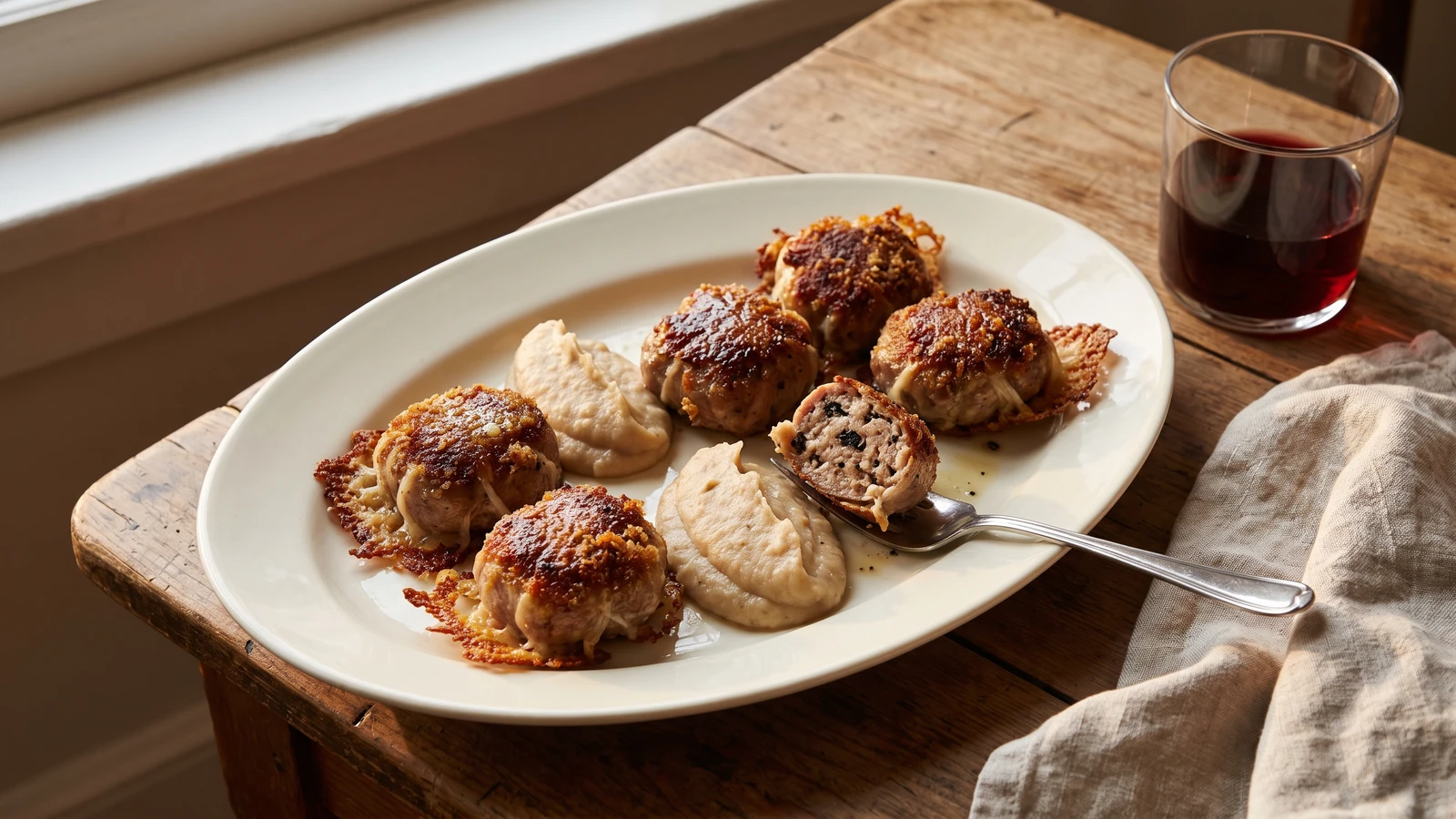
Partridge, fresh bacon, black truffle, and caul prove that gentle grilling is control: twelve bronzed crépinettes with crisp lacy edges, juicy centers, and light chestnut purée.
Crépinettes de perdreaux (caul-wrapped partridge patties) teach the discipline of gentle grilling: the caul must have time to melt into its lacy crust before the lean game dries. Start too hot and the crumbs blacken while the fat stays rubbery; keep the pan calm and the forcemeat remains succulent beneath a bronzed shell.
The book's kitchen assumed a game larder, partridges already stripped of tendon, soft caul at hand, and a grill watched through service. For four at home, I halve the reference batch to one pound of mince, keeping equal weights of partridge and raw unsmoked fresh bacon, two eggs, and the full three ounces of truffle per pound. A heavy cast-iron griddle replaces the tended grill. The formal crown, saucier, permanent stockpot, and salamander are brigade scaffolding here; this entry needs none of them.
What must stay is the dish: cold forcemeat, the book's truffle ratio, caul, melted butter, fine crumbs, and patient cooking. Shape twelve small crépinettes, three per person, and serve them with light chestnut purée. Before you touch the pan, remember the one true thing: gentle heat renders the caul before the partridge dries.
Crépinettes take their name from crépine, pig's caul, and belong first to the charcutier's counter and bourgeois table across France, not to the crêpe pan. Crépinettes de perdreaux sit in the Parisian classical game repertoire: the formula borrows its binding and wrapping grammar from Crépinette de Ris de Veau (No. 1222), replacing sweetbread with young partridge and calf's udder with fresh bacon. Crépinettes Truffées (No. 1410) records the related sausage-meat preparation, while this entry keeps its distinct game forcemeat and customary chestnut or lentil purée.
Quantity
about 1½ cups (8 oz / 225 g), scaled from Crépinette de Ris de Veau (No. 1222)
skinless, boneless, cleared of every tendon, diced, and chilled
Quantity
about 1½ cups (8 oz / 225 g)
skin removed, diced, and very cold
Quantity
about ½ cup (3 oz / 85 g), with Crépinettes Truffées (No. 1410) retained as the related book preparation
finely chopped
Quantity
2 (about ½ cup / 100 g out of shell)
lightly beaten
Quantity
1¼ teaspoons (¼ oz / 7 g)
Quantity
⅛ teaspoon (0.01 oz / 0.3 g)
Quantity
1 large sheet (about 6 oz / 170 g before trimming), enough for twelve 6-inch squares
Quantity
2 tablespoons (1 fl oz / 30 ml / 30 g)
Quantity
¼ cup (2 fl oz / 60 ml / 57 g)
melted
Quantity
1½ cups (3 oz / 85 g)
Quantity
3 cups (24 fl oz / 710 ml / 700 g)
warmed for serving
| Ingredient | Quantity |
|---|---|
| young partridge meat from 2 birdsskinless, boneless, cleared of every tendon, diced, and chilled | about 1½ cups (8 oz / 225 g), scaled from Crépinette de Ris de Veau (No. 1222) |
| raw unsmoked fresh pork belly (fresh bacon)skin removed, diced, and very cold | about 1½ cups (8 oz / 225 g) |
| black trufflesfinely chopped | about ½ cup (3 oz / 85 g), with Crépinettes Truffées (No. 1410) retained as the related book preparation |
| large eggslightly beaten | 2 (about ½ cup / 100 g out of shell) |
| fine sea salt | 1¼ teaspoons (¼ oz / 7 g) |
| freshly ground white pepper | ⅛ teaspoon (0.01 oz / 0.3 g) |
| pig's caul | 1 large sheet (about 6 oz / 170 g before trimming), enough for twelve 6-inch squares |
| white wine vinegar | 2 tablespoons (1 fl oz / 30 ml / 30 g) |
| unsalted buttermelted | ¼ cup (2 fl oz / 60 ml / 57 g) |
| fine fresh white breadcrumbs | 1½ cups (3 oz / 85 g) |
| prepared light chestnut puréewarmed for serving | 3 cups (24 fl oz / 710 ml / 700 g) |
Place the caul in a large bowl of very cold water with the vinegar and leave it for 30 minutes. Rinse gently, spread it out, and pat it thoroughly dry; it should feel supple and almost translucent, never leathery. Cut twelve squares about 6 inches across, saving the scraps for patches, and keep them cold beneath a damp cloth.
Chill the food processor blade and bowl for 10 minutes. Pulse the partridge to a fine, even mince with a little grain remaining, then transfer it to a bowl set over ice. Pulse the fresh bacon separately until finely minced but not smeared, and add it to the partridge. Cold fat cuts cleanly and binds; warm fat coats the meat and leaves a greasy, loose forcemeat.
The parent method is Crépinette de Ris de Veau (No. 1222): for this entry, its equal-weight structure becomes 225 grams each of partridge and fresh bacon. Add the salt, white pepper, and beaten eggs, then mix firmly with a stiff spatula until the forcemeat becomes tacky and holds together. Fold in all the chopped truffles. Crépinettes Truffées (No. 1410) remains a separate related preparation; its sausage meat and truffle liquor do not enter here. Fry a teaspoonful until its center reaches 165°F (74°C), taste, and correct the seasoning if needed. If the mixture feels too soft to shape, don't add breadcrumbs to the interior. Chill it for 30 minutes. Ça se rattrape.
Weigh the forcemeat into twelve portions of 1¾ to 2 ounces (50 to 55 grams), keeping within the book's prescribed size. With damp hands, form each into a compact oval about 3 inches long and ¾ inch thick. Set one on a caul square, fold the sides over it, and trim away heavy overlaps before placing it seam-side down. One thin complete layer is enough. If the caul tears, cover the gap with a reserved scrap. Chill the wrapped crépinettes for 20 minutes so they hold their shape.
Brush each crépinette completely with melted butter, then roll it lightly in the fine breadcrumbs, pressing only enough to make an even coat. Shake off every loose crumb. This sequence stays exactly as the entry gives it: butter first, breadcrumbs second. If the coating slides, the caul is still wet or warm; pat the wrapped crépinettes dry and chill them again before recoating.
Warm a large flat cast-iron griddle over medium-low heat for 5 minutes. It is ready when a dropped breadcrumb sizzles quietly and turns gold in about 30 seconds. Arrange the crépinettes seam-side down without crowding and cook for 5 to 6 minutes, turn, and cook the second side for another 5 minutes. Turn them onto their edges for 1 to 2 minutes at a time, until the caul has rendered, the crumbs are evenly bronzed, and the centers register 165°F (74°C). Never press them. If the crust darkens before the centers are ready, lower the heat and slide the griddle partly off the burner; if necessary, finish them on a rack in a 325°F (165°C) oven. Gentle heat is the dish.
Rest the crépinettes on a rack for 5 minutes so the juices settle without softening the underside. If the chestnut purée has tightened, loosen it over low heat with a spoonful of water until it falls softly from the spoon. Set three crépinettes on each warmed plate beside a generous portion of purée. Lentil purée is the book's other customary accompaniment. No extra sauce or fussy garnish is needed. À table!
1 serving (about 360g)
Culinary guides, cultural storytelling, and the editorial depth that makes cooking meaningful.
Discover Culinary ExplorerChef Juliette
John Dory has the delicacy of sole and the firmness of turbot. A light flouring, a quick butter sauté, and nut-brown beurre noisette show exactly why looks never mattered.

Chef Juliette
Fresh haddock proves its delicacy in the meunière pan: a fine flour crust, moist pearly flakes, and beurre noisette sharpened with lemon and parsley, ready from one skillet in half an hour.

Chef Juliette
Éperlans à l’Anglaise turns small fish into a lesson in disciplined coating: boned smelts under a close, crisp crumb, pan-fried in clarified butter and finished with bright, half-melted maître d’hôtel butter.

Chef Juliette
Tiny smelts, shallot, mushrooms, white wine, gratin sauce, and fine bread raspings meet a fierce oven, where the fish must turn tender in the same breath the buttered crust bronzes.