
Chef Juliette
John Dory (St. Pierre)
John Dory has the delicacy of sole and the firmness of turbot. A light flouring, a quick butter sauté, and nut-brown beurre noisette show exactly why looks never mattered.
A cooking platform built around craft, culture, and the stories behind what we eat.
Created by Chef Juliette
Based on No. 1852, Faisan à la Bohémienne, from Le Guide Culinaire (1907) by Auguste Escoffier
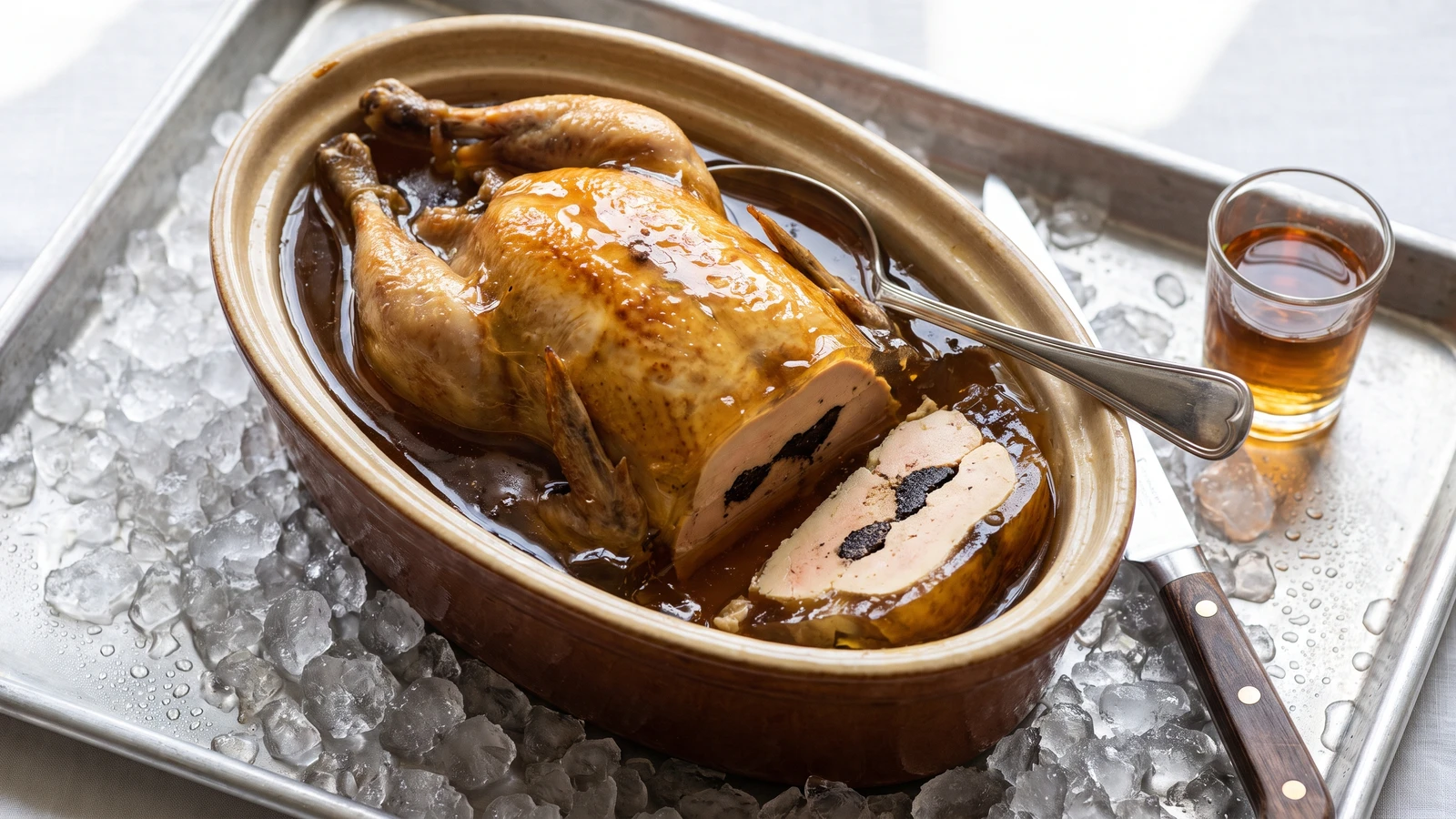
Whole pheasant filled with truffled foie gras, butter-cooked with Madeira and burnt brandy, then sealed in deeply savoury jelly: a cold centerpiece whose success rests on seasoning before chilling.
Faisan à la Bohémienne (cold pheasant in savoury jelly) teaches one true thing: the gelée, the savoury jelly, must taste complete before it sets. Cold mutes salt, Madeira, brandy, and game, so a timid warm stock becomes a silent jelly by dinner. Taste boldly now, then trust the refrigerator.
The original assumed a saucier on staff, game stock never off the fire, natural jelly ready by the potful, and enough hands to present the terrine incrusted in a carved block of ice. Your equivalent is honest: one small pheasant prepared as Faisan à la Bohémienne (No. 1831), one 3-quart terrine, deeply flavoured poultry or game stock strengthened with measured gelatin, and a shallow bed of ice beneath a chilled serving tray. One cook, one stove, one evening, followed by the day the dish needs to settle.
The butter-cooked bird, truffled foie gras, Madeira, burnt brandy, and reduced game gravy are the dish, and they stay. A perfectly clarified jelly and the ice plinth were brigade scaffolding, so they can go; flavour, a firm clean set, and rigorous chilling cannot. The step that decides everything is the freezer test before you fill the terrine. If the gelée tastes weak or refuses to set, fix it then. Ça se rattrape.
Faisan à la Bohémienne belongs to the Parisian grand-kitchen and formal banquet repertoire, where the title describes this composed treatment of pheasant rather than a dish from Bohemian home cooking. Its cold form carries the hot cocotte preparation into the tradition of pièces froides, whole birds presented in savoury jelly for a buffet or elaborate supper. The carved ice block provided both display and temperature control; refrigeration and a chilled tray preserve its practical purpose at the home table.
Quantity
1 recipe Faisan à la Bohémienne (No. 1831)
prepared in a 3-quart lidded terrine as directed in its own entry
Quantity
4 cups (950 ml / 950 g)
Quantity
2 tablespoons (30 ml / 21 g)
Quantity
up to 1 teaspoon (5 ml / 6 g)
Quantity
1 teaspoon (5 ml / 3.5 g)
reserved for rescue
Quantity
1 tablespoon (15 ml / 15 g)
for the gelatin rescue
Quantity
1/2 cup (120 ml / 120 g)
for removing the final surface fat
Quantity
about 8 cups (1.9 L / 1.2 kg)
for cooling and serving
| Ingredient | Quantity |
|---|---|
| Faisan à la Bohémienneprepared in a 3-quart lidded terrine as directed in its own entry | 1 recipe Faisan à la Bohémienne (No. 1831) |
| rich, clear, unsalted poultry or game stock | 4 cups (950 ml / 950 g) |
| unflavoured powdered gelatin | 2 tablespoons (30 ml / 21 g) |
| fine sea salt (optional) | up to 1 teaspoon (5 ml / 6 g) |
| additional unflavoured powdered gelatin (optional)reserved for rescue | 1 teaspoon (5 ml / 3.5 g) |
| cold water (optional)for the gelatin rescue | 1 tablespoon (15 ml / 15 g) |
| boiling waterfor removing the final surface fat | 1/2 cup (120 ml / 120 g) |
| ice cubesfor cooling and serving | about 8 cups (1.9 L / 1.2 kg) |
Reserve 1/2 cup (120 ml / 120 g) of the cold stock and sprinkle the 2 tablespoons (30 ml / 21 g) gelatin evenly over it. Leave it for 10 minutes to bloom. Bring the remaining 3 1/2 cups (830 ml / 830 g) stock to a lively simmer and reduce it to about 3 cups (710 ml / 710 g), concentrating its game flavour without making it salty. Remove the pan from the heat, whisk in the bloomed gelatin until completely dissolved, then pass the gelée through a fine strainer. Taste while warm. It should be distinctly savoury and slightly more seasoned than you want at the table, because chilling will quiet it.
Prepare the Faisan à la Bohémienne (No. 1831) exactly as its own entry directs, using the 3-quart earthenware terrine as the cooking vessel rather than a saucepan. Keep its seasonings, filling, butter-cooking, and sequence intact. Before the finish, verify that both the thickest part of the thigh and the centre of the filling have reached 165°F (74°C); if either is cooler, cover the terrine and continue cooking gently, checking every 5 minutes.
Hold the gelée at 105 to 115°F (40 to 46°C), warm enough to flow but not hot enough to melt unnecessary fat into the jelly. When the referenced preparation reaches its burnt-brandy finish, remove the excess cooking butter as directed there, apply the brandy, and immediately pour gelée slowly down the side of the terrine. Complete the prescribed addition of reduced game gravy, then add enough gelée to fill the vessel to within 1/4 inch (6 mm) of its rim. Tap the terrine gently against a folded towel to release trapped air. If the gelée begins setting in the saucepan, warm it gently until fluid again. Do not boil it.
Let the terrine stand for 10 minutes, then place it in a basin of cool water reaching halfway up its sides. Add the ice gradually so the earthenware isn't shocked, and replenish it as it melts. Once the terrine is no longer warm, within 2 hours, transfer it uncovered to the refrigerator. Cover when the surface has set, then leave it undisturbed for 24 to 48 hours. The gelée should become clear enough to show the burnished bird beneath and firm enough to cut cleanly.
Keep the terrine cold while you clean its surface. Lift away the solid cap of butter and fat with a spoon, taking shallow strokes so you don't gouge the jelly. Bring the 1/2 cup (120 ml / 120 g) water to a boil, spoon a tablespoon across the remaining greasy patches, then tilt the terrine and drain it off immediately. Repeat only where needed. These are quick scaldings, not a soak. If the gelée softens, stop and refrigerate it for 15 minutes before continuing. Carefully wipe the rim and outside of the terrine dry.
Set the wiped terrine on a chilled metal tray over a shallow bed of crushed ice. At the table, cut through the gelée around the bird, carve portions of breast and leg meat, then divide the truffled foie gras filling and spoon some savoury jelly beside each serving. The gelée should tremble on the plate, not collapse into liquid. Keep the terrine chilled whenever it isn't being served. À table!
1 serving (about 330g)
Culinary guides, cultural storytelling, and the editorial depth that makes cooking meaningful.
Discover Culinary ExplorerChef Juliette
John Dory has the delicacy of sole and the firmness of turbot. A light flouring, a quick butter sauté, and nut-brown beurre noisette show exactly why looks never mattered.

Chef Juliette
Fresh haddock proves its delicacy in the meunière pan: a fine flour crust, moist pearly flakes, and beurre noisette sharpened with lemon and parsley, ready from one skillet in half an hour.

Chef Juliette
Éperlans à l’Anglaise turns small fish into a lesson in disciplined coating: boned smelts under a close, crisp crumb, pan-fried in clarified butter and finished with bright, half-melted maître d’hôtel butter.

Chef Juliette
Tiny smelts, shallot, mushrooms, white wine, gratin sauce, and fine bread raspings meet a fierce oven, where the fish must turn tender in the same breath the buttered crust bronzes.