
Chef Juliette
John Dory (St. Pierre)
John Dory has the delicacy of sole and the firmness of turbot. A light flouring, a quick butter sauté, and nut-brown beurre noisette show exactly why looks never mattered.
A cooking platform built around craft, culture, and the stories behind what we eat.
Created by Chef Juliette
Based on No. 1800, Noisettes et Côtelettes de Chevreuil, from Le Guide Culinaire (1907) by Auguste Escoffier
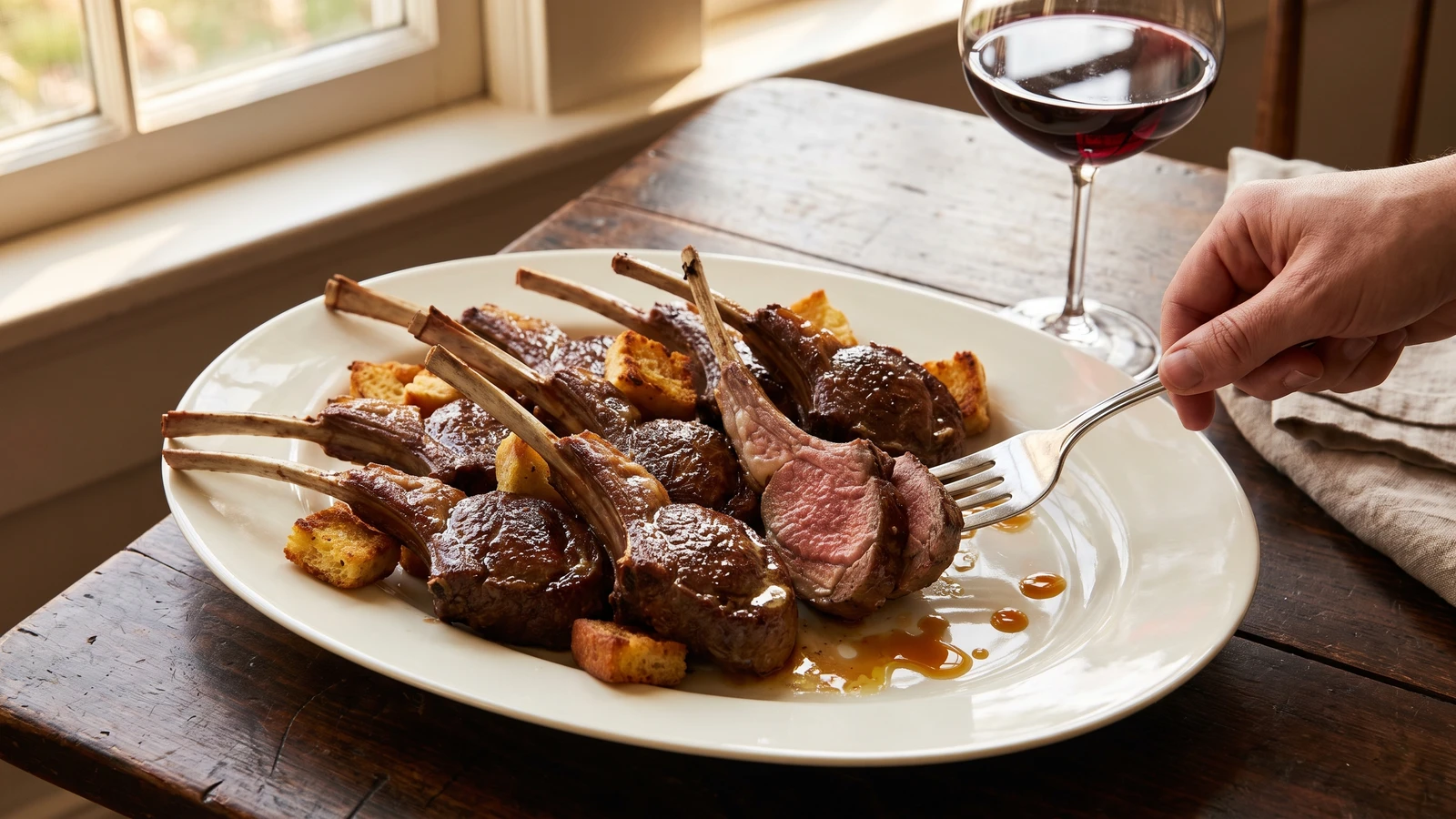
Lean venison, fierce heat, and no dawdling: fresh noisettes meet foaming butter, marinated cutlets meet smoking oil, then croûtons turn a fast sear into a generous classical platter.
Noisettes et Côtelettes de Chevreuil (venison loin medallions and rib cutlets) is a lesson in fierce, brief heat. Venison is lean, so the one true thing to know before touching the pan is this: a dry, evenly trimmed piece browns before its center overcooks; a wet or ragged one does not. The meat should leave the skillet bronzed outside, rosy within, and still yielding under a finger.
The original kitchen kept Cooked Marinade for Venison (No. 168) by the gallon, a saucier on staff, stock never off the fire, a salamander at hand, and enough cooks to fry croûtons while another watched the game. This entry actually calls for no sauce, stock, or salamander. At home, two cups of the finished marinade, one heavy skillet used in sequence, and a low oven to hold the butter-fried bread preserve the intent for four. The great vat and simultaneous hands were brigade scaffolding, so they go; exact trimming, truly dry meat, fierce fat, and immediate service are the dish, so they stay. One cook, one stove, one evening.
Choose the fresh method and the pieces cook in butter. Give them a moderate marinade and they go into smoking neutral oil, then onto clean absorbent paper at once. Cutlets form a crown, while noisettes sit on oval croûtons. Have the platter warm before you begin, because swift service after the sear is the step that matters most.
Noisettes et côtelettes de chevreuil belong to the formal game service codified in Parisian grand kitchens, where roe deer arriving from woodland hunting estates was trimmed into the neat forms already used for lamb. The dish carried game from the hunt table into the dining room by making the cut and arrangement as important as the sear: cutlets rose in a crown, while loin rounds sat on butter-fried croûtons. Noisette names the small round cut, not a hazelnut seasoning, and chevreuil traditionally means roe deer rather than every kind of venison.
Quantity
8 pieces, about 2 ounces (55 g) each
cut 1 inch (2.5 cm) thick; silver skin and excess surface fat removed
Quantity
2 cups (475 ml / about 475 g) Cooked Marinade for Venison (No. 168)
completely cold
Quantity
8 slices, about 6 ounces (170 g) total
crusts removed and cut into small ovals
Quantity
10 tablespoons (150 ml / 142 g)
divided; 4 tablespoons for the croûtons and 4 to 6 tablespoons for fresh venison
Quantity
3 tablespoons (45 ml / 41 g)
for marinated venison
Quantity
1 teaspoon (5 ml / 6 g)
divided
Quantity
1/2 teaspoon (2.5 ml / 1 g)
| Ingredient | Quantity |
|---|---|
| venison loin noisettes or small rib cutletscut 1 inch (2.5 cm) thick; silver skin and excess surface fat removed | 8 pieces, about 2 ounces (55 g) each |
| Cooked Marinade for Venison (optional)completely cold | 2 cups (475 ml / about 475 g) Cooked Marinade for Venison (No. 168) |
| pain de mie or firm white sandwich breadcrusts removed and cut into small ovals | 8 slices, about 6 ounces (170 g) total |
| unsalted butterdivided; 4 tablespoons for the croûtons and 4 to 6 tablespoons for fresh venison | 10 tablespoons (150 ml / 142 g) |
| neutral high-smoke-point oil (optional)for marinated venison | 3 tablespoons (45 ml / 41 g) |
| fine saltdivided | 1 teaspoon (5 ml / 6 g) |
| freshly ground black pepper | 1/2 teaspoon (2.5 ml / 1 g) |
Make every piece the same thickness so all eight finish together. Tie each noisette around its circumference with butcher's twine to hold a neat round; trim cutlets evenly and scrape the exposed bones clean. For the marinated method, lay the venison in a snug nonreactive dish, cover with the completely cold Cooked Marinade for Venison (No. 168), and refrigerate for 3 to 4 hours, turning once. That is a moderate marinade; much longer and the acid begins curing the surface. Lift out the meat, discard every drop of marinade that touched it, and press the pieces between clean towels until absolutely dry. For the fresh method, omit the marinade and dry the meat just as thoroughly.
Heat the oven to 200°F (95°C) and warm the serving platter inside. Cut the bread into eight ovals just wider than the noisettes. These are the croûtons: shaped pieces of bread fried in butter, not dry cubes. Melt 2 tablespoons of butter in the skillet over medium heat and fry four croûtons until deep gold on both sides, about 2 minutes per side. Repeat with another 2 tablespoons of butter, then hold the croûtons on a rack in the low oven. If the butter darkens before the bread colors, lower the heat and replace it; scorched butter will follow the bread to the table.
Use this step only for fresh venison. Wipe the skillet free of crumbs, set it over medium-high heat, and add 2 tablespoons of butter. Season four pieces with salt and pepper just before they meet the pan. When the foam subsides and the butter smells nutty but is not black, add the meat without crowding. Sear noisettes for 1 1/2 to 2 minutes per broad side; give cutlets 2 to 3 minutes per side, holding the fat edge against the pan briefly where needed. Remove them at 127 to 130°F (53 to 54°C) for medium-rare, then repeat with the remaining meat and fresh butter. If the butter blackens, move the venison to a plate, wipe out the pan, and begin again with clean butter. Ça se rattrape; burnt milk solids do not.
Use this step only for marinated venison. Wipe the skillet spotless, add the oil, and heat it over high heat until the first faint smoke appears. Add four thoroughly dried pieces and toss them quickly in the fierce heat, searing noisettes for 60 to 90 seconds per broad side and cutlets for 90 seconds to 2 minutes per side. Remove them at 127 to 130°F (53 to 54°C), then repeat with the second batch. Transfer each batch immediately to a rack lined with clean absorbent paper and blot away the surface oil without pressing out the juices. If liquid gathers in the skillet, lift out the meat, dry it again, pour off the liquid, and reheat the pan before continuing with fewer pieces.
Rest the venison for 4 minutes, uncovered, and remove any twine. Taste a marinated piece before adding salt, since the marinade already carries seasoning. For noisettes, place each round on an oval croûton and arrange them in a circle on the warm platter. For cutlets, stand them in an overlapping crown with one butter-fried croûton between each pair. Serve immediately. No sauce has been forgotten; the clean taste of the game, the seared surface, and the butter-rich croûtons are the preparation. À table!
1 serving (about 160g)
Culinary guides, cultural storytelling, and the editorial depth that makes cooking meaningful.
Discover Culinary ExplorerChef Juliette
John Dory has the delicacy of sole and the firmness of turbot. A light flouring, a quick butter sauté, and nut-brown beurre noisette show exactly why looks never mattered.

Chef Juliette
Fresh haddock proves its delicacy in the meunière pan: a fine flour crust, moist pearly flakes, and beurre noisette sharpened with lemon and parsley, ready from one skillet in half an hour.

Chef Juliette
Éperlans à l’Anglaise turns small fish into a lesson in disciplined coating: boned smelts under a close, crisp crumb, pan-fried in clarified butter and finished with bright, half-melted maître d’hôtel butter.

Chef Juliette
Tiny smelts, shallot, mushrooms, white wine, gratin sauce, and fine bread raspings meet a fierce oven, where the fish must turn tender in the same breath the buttered crust bronzes.