
Chef Juliette
John Dory (St. Pierre)
John Dory has the delicacy of sole and the firmness of turbot. A light flouring, a quick butter sauté, and nut-brown beurre noisette show exactly why looks never mattered.
A cooking platform built around craft, culture, and the stories behind what we eat.
Created by Chef Juliette
Based on No. 1795, Selle de Chevreuil à la Cumberland, from Le Guide Culinaire (1907) by Auguste Escoffier
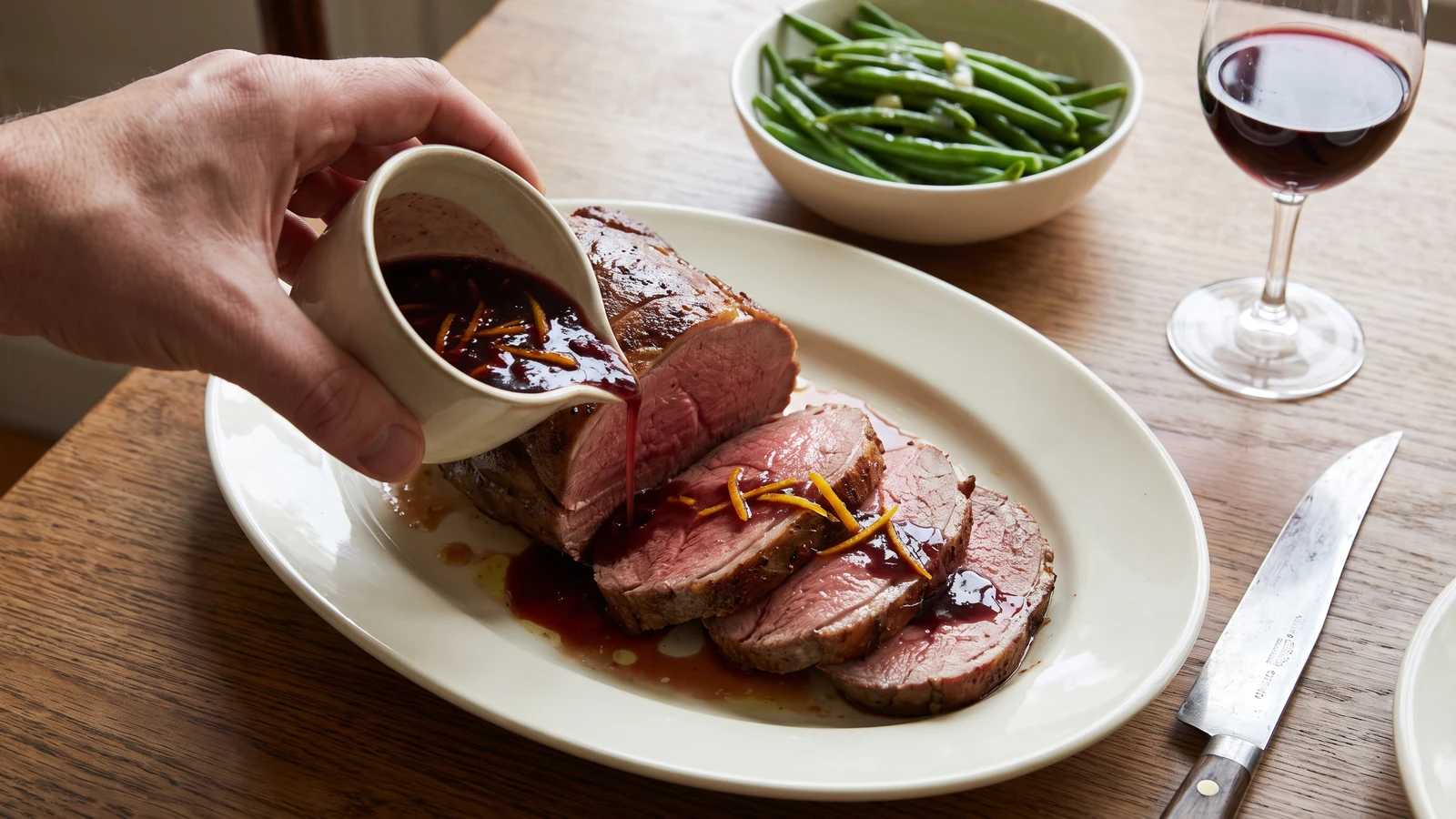
Rosy roast saddle, no marinade, with a cool port and red-currant sauce served apart and haricots verts shining with butter: a grand game roast scaled cleanly for four.
Selle de Chevreuil à la Cumberland (roast saddle of venison with Cumberland sauce) teaches the discipline of roasting lean game: temperature, not marinade, makes it tender. The source is emphatic about leaving the saddle unmarinated, so its clean, mineral flavor remains itself and the sweet-sharp sauce arrives separately. Your one true task is to pull the meat while the center is still rosy; venison has too little fat to forgive bravado.
The classical kitchen around this entry assumed a butcher-trimmed saddle, a roasting fire watched by several hands, a saucier ready with Cumberland Sauce (No. 134), stock never off the fire, and a salamander waiting overhead. This dish uses neither stock nor salamander, so they are brigade scaffolding and go. For one cook, one stove, one evening, a compact butcher-tied saddle, an ordinary hot oven, an instant-read thermometer, and a warm serving bowl for the beans do the work. The roast is scaled to four, and the silver timbale becomes that warmed bowl; the book's intent, no marinade, butter-bound beans, and sauce served apart, stays untouched.
The saddle comes out Maillard-bronzed at the edges and warm rose within, the haricots verts gleam under a thin butter emulsion, and the port, red currant, citrus, mustard, and spice of Cumberland Sauce (No. 134) cut through the richness. Trust the thermometer before the clock. That is the step that decides the dish.
Selle de chevreuil belongs to the French classical game table, where the saddle, the two loins carried on the backbone, was prized as the tender roasting cut and presented whole before carving. Cumberland Sauce (No. 134) comes from British game cookery, its red-currant jelly, port, citrus, mustard, ginger, and cayenne traveling into the French repertoire under its English name rather than being claimed by a French region. The book preserves a telling contrast: the sauce is directed toward cold venison in its own entry, yet Selle de Chevreuil à la Cumberland sends it separately beside a hot, unmarinated roast with buttered French beans.
Quantity
1 saddle (about 3½ lb / 1.6 kg)
chine bone removed and loins tied in place
Quantity
2 tsp (10 ml / 12 g)
Quantity
1 tsp (5 ml / 2 g)
Quantity
2 tbsp (30 ml / 28 g)
melted
Quantity
¾ cup (180 ml / 190 g) Cumberland Sauce (No. 134)
prepared as its own finished component and brought toward room temperature
Quantity
4 cups (1 lb / 450 g)
trimmed to even lengths
Quantity
1 tbsp (15 ml / 18 g)
Quantity
3 tbsp (45 ml / 42 g)
cut into small cubes
| Ingredient | Quantity |
|---|---|
| butcher-trimmed, bone-in saddle of venisonchine bone removed and loins tied in place | 1 saddle (about 3½ lb / 1.6 kg) |
| fine sea salt | 2 tsp (10 ml / 12 g) |
| freshly ground black pepper | 1 tsp (5 ml / 2 g) |
| clarified buttermelted | 2 tbsp (30 ml / 28 g) |
| Cumberland Sauceprepared as its own finished component and brought toward room temperature | ¾ cup (180 ml / 190 g) Cumberland Sauce (No. 134) |
| haricots vertstrimmed to even lengths | 4 cups (1 lb / 450 g) |
| fine sea salt for the bean water | 1 tbsp (15 ml / 18 g) |
| cold unsalted buttercut into small cubes | 3 tbsp (45 ml / 42 g) |
Take the saddle from the refrigerator 45 minutes before roasting. Set Cumberland Sauce (No. 134) out at the same time so its chill softens without warming it over heat. Pat the venison completely dry, season every surface with the salt and pepper, and leave it uncovered while the oven heats to 230°C (450°F). No wine, herbs, or marinade belong on the meat; that omission is the book's instruction, not a missing step.
Rub the saddle with the melted clarified butter and set it bone-side down in a low-sided roasting pan. Roast for 12 minutes at 230°C (450°F) to set a bronzed exterior, then lower the oven to 190°C (375°F). Baste with the butter and roasting juices, then continue for 18 to 28 minutes, basting once more and checking early with an instant-read thermometer. Pull the saddle when the thickest part of the loin reaches 60°C (140°F), away from the bone; carryover heat should bring it to 63°C (145°F) during the rest while the center remains pink. If the outside darkens before the center is ready, cover it loosely with foil and lower the oven to 170°C (340°F). If the temperature runs past its mark, stop cooking immediately, rest it, and carve more thinly. Ça se rattrape.
Transfer the saddle to a warm platter and tent it loosely with foil for 20 minutes, holding the final center temperature at 63°C (145°F) for at least 3 minutes. A tight wrapping traps moisture and softens the browned surface, so give it some air. Stir Cumberland Sauce (No. 134) until glossy and spoon it into a small sauceboat. Keep it cool to room temperature and separate from the roast; its clear fruit, citrus, mustard, and spice are meant to meet the warm venison on each diner's plate.
While the meat rests, drop the haricots verts into a large pot of rapidly boiling water seasoned with the measured salt. Cook for 4 to 6 minutes, until vivid green and tender with a little resistance at the center. Reserve 2 tbsp of the cooking water, then drain the beans thoroughly. Finish them liés au beurre, bound with butter: return them to the warm dry pan off the heat, add the cold butter and 1 tbsp of reserved water, then toss until the butter and water form a thin, shining emulsion around every bean. If the butter separates into greasy beads, add another teaspoon of hot bean water and toss firmly off the heat. Ça se rattrape. Transfer the beans to a warmed straight-sided serving bowl.
Run a long sharp knife closely along the backbone and ribs to release each loin in one piece. Slice the loins across the grain into pieces about ½ inch (1.25 cm) thick, then arrange them on the warm platter with any resting juices spooned over, never the fruit sauce. Bring the haricots verts alongside and pass Cumberland Sauce (No. 134) separately so each guest can take exactly as much sweet-sharp contrast as desired. Never apologize at your own table. À table!
1 serving (about 365g)
Culinary guides, cultural storytelling, and the editorial depth that makes cooking meaningful.
Discover Culinary ExplorerChef Juliette
John Dory has the delicacy of sole and the firmness of turbot. A light flouring, a quick butter sauté, and nut-brown beurre noisette show exactly why looks never mattered.

Chef Juliette
Fresh haddock proves its delicacy in the meunière pan: a fine flour crust, moist pearly flakes, and beurre noisette sharpened with lemon and parsley, ready from one skillet in half an hour.

Chef Juliette
Éperlans à l’Anglaise turns small fish into a lesson in disciplined coating: boned smelts under a close, crisp crumb, pan-fried in clarified butter and finished with bright, half-melted maître d’hôtel butter.

Chef Juliette
Tiny smelts, shallot, mushrooms, white wine, gratin sauce, and fine bread raspings meet a fierce oven, where the fish must turn tender in the same breath the buttered crust bronzes.