
Chef Juliette
John Dory (St. Pierre)
John Dory has the delicacy of sole and the firmness of turbot. A light flouring, a quick butter sauté, and nut-brown beurre noisette show exactly why looks never mattered.
A cooking platform built around craft, culture, and the stories behind what we eat.
Created by Chef Juliette
Based on No. 1583, Ailerons of Chicken, from Le Guide Culinaire (1907) by Auguste Escoffier
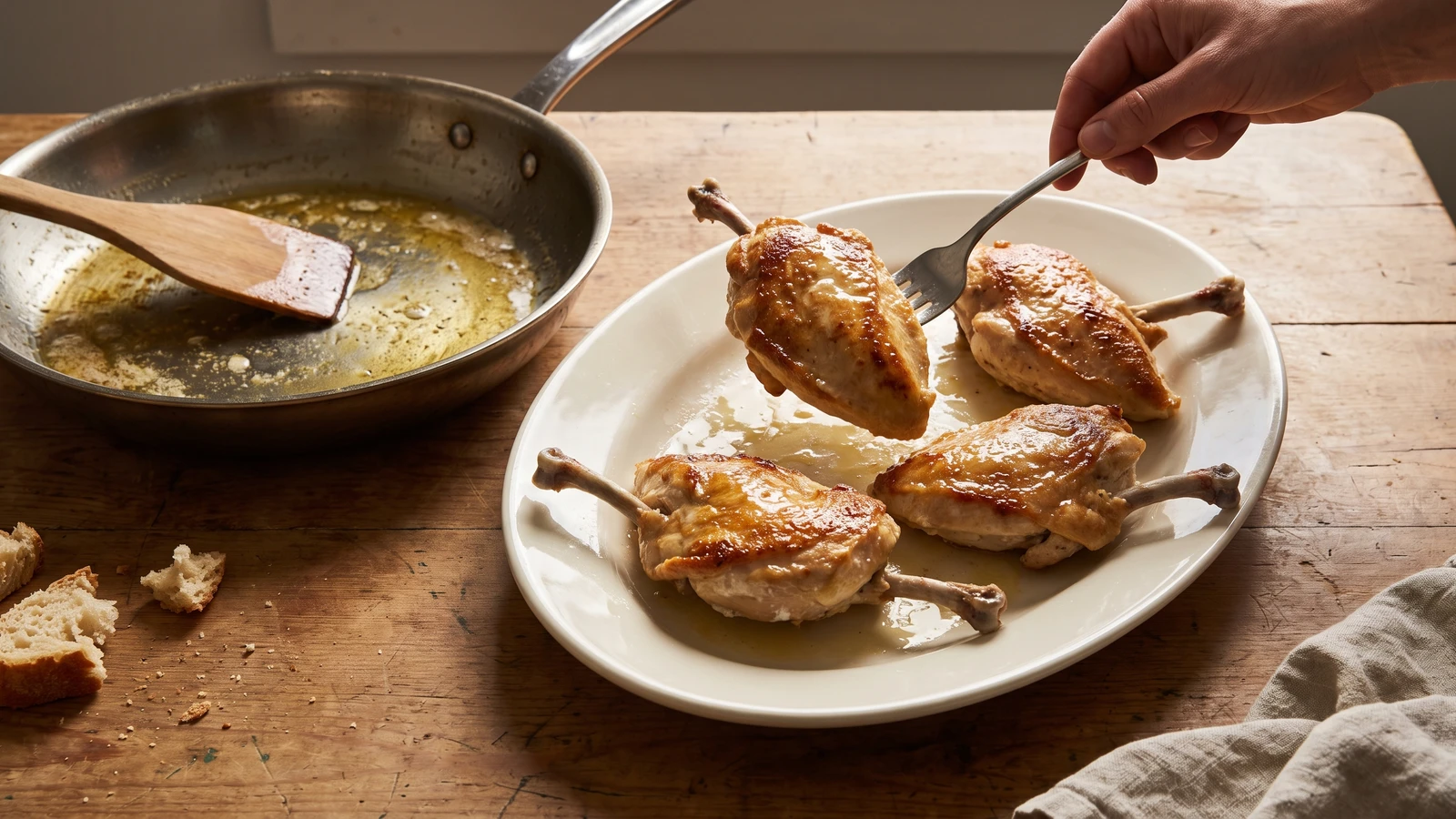
Ailerons de poulet teach the discipline of fast sautéing: small skinless breasts, wing bone attached, floured lightly and gilded in clarified butter, then carried straight from pan to warm platter before tenderness has time to leave.
Ailerons de poulet sautés (skinless chicken breasts with the first wing bone attached) teach the discipline of the sauté pan: tender poultry must color in the same short span that it cooks, then go straight to the table. The one true thing to know before touching the pan is that there is no holding time. A minute spent fussing over garnish is a minute the breast spends drying.
This entry calls on no saucier (sauce cook), no stockpot kept constantly hot, and no salamander broiler. Its brigade luxury was different: identical small birds, a poultry cook shaping each breast around its humerus, clarified butter ready at the stove, and service waiting for the pan. Four butcher-prepared airline breasts make the open-ended method a home main for four. Fabricating identical cuts from whole birds was brigade scaffolding, so the butcher does that now; the attached bone, skinless meat, thin flouring, clarified butter, and immediate service stay because they are the dish. No sauce has been added because the entry calls for none.
When the ailerons are right, the flour forms a fine butter-gold veil, the edges take a little bronze, and the meat remains resilient and juicy beneath it. Heat the clarified butter until it shimmers, gild the breasts quickly, and carry them straight to warm plates. That last-minute sauté is the step that matters.
Within the classical Parisian repertoire, aileron did not mean the loose wing tip of ordinary butcher usage; it meant a suprême (skinless breast fillet) with the humerus left attached, shaped like a côtelette (cutlet). The cut moved from the poultry bench to the sauté station, where flour and clarified butter colored the meat during the same brief cooking, and its nearest butcher-shop equivalent is the airline breast, commonly sold with its skin still on. The preparation's real luxury was immediacy: no sauce or garnish disguised poultry that had waited and dried.
Quantity
4, about 1½ pounds (680 g) total
skin removed, tenderloins attached
Quantity
1 teaspoon (5 ml / 6 g)
Quantity
¼ cup (60 ml / 30 g)
Quantity
6 tablespoons (90 ml / 85 g)
clarified to yield about 4 tablespoons (60 ml / 55 g) clear butterfat
| Ingredient | Quantity |
|---|---|
| small chicken ailerons (airline breasts with the humerus attached)skin removed, tenderloins attached | 4, about 1½ pounds (680 g) total |
| fine salt | 1 teaspoon (5 ml / 6 g) |
| all-purpose flour | ¼ cup (60 ml / 30 g) |
| unsalted butterclarified to yield about 4 tablespoons (60 ml / 55 g) clear butterfat | 6 tablespoons (90 ml / 85 g) |
Check that each breast retains only the humerus, the plump first bone of the wing, and remove the skin if the butcher has left it on. Keep the minion fillet (tenderloin) tucked against the breast. Place each aileron between sheets of parchment and tap only the thickest lobe until the meat is an even ¾ inch (2 cm) thick; you are evening it, not pounding it into an escalope. Pat every surface thoroughly dry.
Melt the butter over the lowest heat until it separates. Skim away the white foam, then pour the clear golden butterfat into a cup, leaving the milky sediment behind; you need about 4 tablespoons (60 ml / 55 g). If the butterfat looks cloudy, pass it through a fine-mesh strainer. Clarification is not brigade decoration: removing the milk solids lets the butter face the high heat without burning before the chicken gilds. Set a serving platter in a very low oven, no hotter than 175°F (80°C).
Set a broad, heavy skillet over medium-high heat. Season the ailerons evenly with the salt, then pass them through the flour immediately before cooking. Press lightly so the flour adheres, then shake off every loose speck; the coating should look like a veil, not breading. Flour applied early absorbs moisture and turns pasty, so the pan must already be waiting.
Add 3 tablespoons (45 ml / 42 g) of the clarified butter to the hot skillet, reserving the rest. When the butter shimmers without smoking, lay in all four ailerons, rounded side down and bones pointing toward the rim. Sauté without disturbing them for 3 to 4 minutes, until evenly butter-gold, then turn and cook for another 3 to 4 minutes, spooning hot butter over the thick ends. They must gild and cook through at the same moment. The meat is ready when it feels resilient rather than hard and registers 160 to 162°F (71 to 72°C) away from the bone; verify that carryover heat brings it to 165°F (74°C) before eating. If the flour darkens while the center remains underdone, lower the heat one notch. Ça se rattrape: turn the pieces every 30 seconds and baste the thick ends until the temperature catches up.
Lift each aileron directly to the warm platter as it finishes. Do not cover the platter, pause to make a sauce, or let the chicken wait beside the stove; trapped moisture softens the flour and lingering heat tightens the breast. Carry it straight to the table while the surface still gleams with butter. À table!
1 serving (about 145g)
Culinary guides, cultural storytelling, and the editorial depth that makes cooking meaningful.
Discover Culinary ExplorerChef Juliette
John Dory has the delicacy of sole and the firmness of turbot. A light flouring, a quick butter sauté, and nut-brown beurre noisette show exactly why looks never mattered.

Chef Juliette
Fresh haddock proves its delicacy in the meunière pan: a fine flour crust, moist pearly flakes, and beurre noisette sharpened with lemon and parsley, ready from one skillet in half an hour.

Chef Juliette
Éperlans à l’Anglaise turns small fish into a lesson in disciplined coating: boned smelts under a close, crisp crumb, pan-fried in clarified butter and finished with bright, half-melted maître d’hôtel butter.

Chef Juliette
Tiny smelts, shallot, mushrooms, white wine, gratin sauce, and fine bread raspings meet a fierce oven, where the fish must turn tender in the same breath the buttered crust bronzes.