
Chef Juliette
John Dory (St. Pierre)
John Dory has the delicacy of sole and the firmness of turbot. A light flouring, a quick butter sauté, and nut-brown beurre noisette show exactly why looks never mattered.
A cooking platform built around craft, culture, and the stories behind what we eat.
Created by Chef Juliette
Based on No. 1376, Côtelettes d’Agneau de Lait Nelson, from Le Guide Culinaire (1907) by Auguste Escoffier
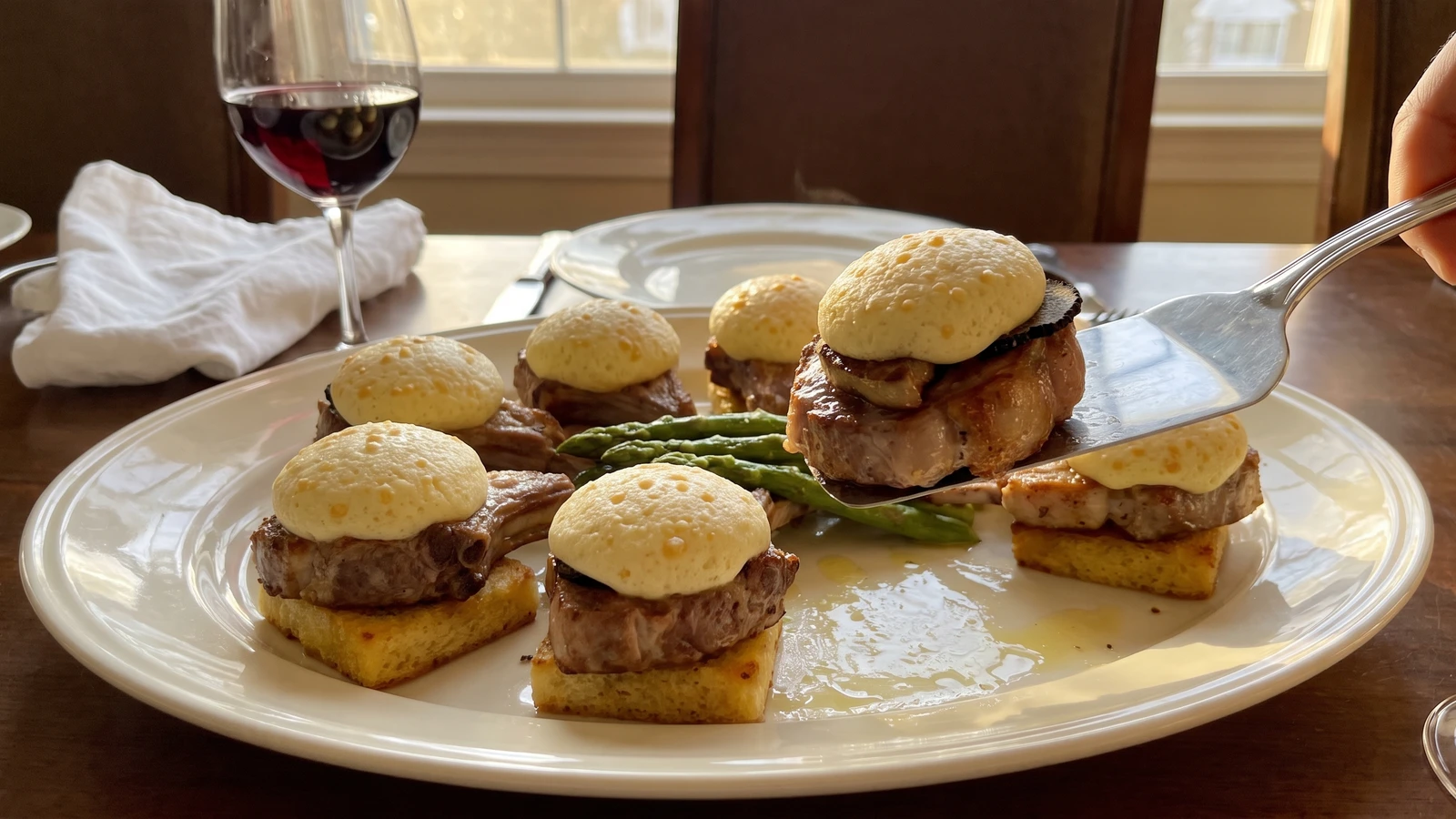
Milk-fed lamb, butter-fried croûtons, foie gras, black truffle, and a light Parmesan soufflé meet in one disciplined assembly, with glossy asparagus at the center and every rich layer still distinct.
Côtelettes d’Agneau de Lait Nelson (milk-fed lamb cutlets Nelson) teaches coordination. Every element must be ready before the cutlets touch heat, because the pleasure lies in distinct layers arriving together: crisp buttered bread, soft foie gras, rosy lamb, earthy truffle, and a feather-light cheese crown.
The classical kitchen behind this entry kept a saucier on staff, stock never off the fire, and a salamander ready, although Nelson itself calls on neither sauce nor stock. What it truly assumed was division of labor, with one cook grilling, another frying croûtons, and the soufflé preparation waiting at hand. At home, stage the work sequentially, use the upper third of a hot oven for the brief poach, and bake the stacks on a metal sheet rather than risking a serving platter. Only the service scaffolding changes. The construction and five-minute finish stay exactly where they belong. One cook, one stove, one evening.
Brigade simultaneity can go. The matched croûton, foie gras purée, truffle slice, piped soufflé, and quick oven poach cannot, because those steps are the dish. Grill the lamb one shade below your preferred doneness and pipe the crown in a thin, even layer; if it slips, blot the cutlet and pipe again. Ça se rattrape. The step that decides Nelson is simple: finish every croûton, asparagus tip, truffle slice, and piping bag before you grill the lamb.
Côtelettes Nelson belong to the Parisian grand-kitchen repertoire, where a named garnish could identify a dish as clearly as its cut of meat. Nelson is not a regional lamb preparation: its identity is the exact construction of butter-fried croûton, foie gras purée, truffle, and a light cheese cap, with buttered asparagus gathered at the center. The composition passed from formal dining rooms into household cookery because its luxury lies in assembly and timing, not in a sauce or stock that must simmer all day.
Quantity
8 (about 2¼ lb / 1 kg total)
frenched
Quantity
1½ teaspoons (7.5 ml / 9 g)
Quantity
½ teaspoon (2.5 ml / 1 g)
Quantity
2 teaspoons (10 ml / 9 g)
Quantity
8 thick slices (about 10½ oz / 300 g total)
crusts removed and cut to match the meaty eye of each cutlet
Quantity
8 tablespoons (120 ml / 113 g)
divided
Quantity
½ cup (120 ml / 125 g)
softened and worked smooth
Quantity
1 small truffle (about 1 oz / 28 g)
fresh or whole preserved, cut into 8 thin slices
Quantity
1½ cups (355 ml / 340 g) prepared Soufflé au Parmesan (No. 2295a)
unbaked and ready to pipe
Quantity
3 cups (710 ml / 360 g)
cut into 3-inch lengths
Quantity
1 tablespoon (15 ml / 18 g)
| Ingredient | Quantity |
|---|---|
| milk-fed lamb rib cutletsfrenched | 8 (about 2¼ lb / 1 kg total) |
| fine sea salt | 1½ teaspoons (7.5 ml / 9 g) |
| freshly ground black pepper | ½ teaspoon (2.5 ml / 1 g) |
| neutral high-heat oil | 2 teaspoons (10 ml / 9 g) |
| firm white sandwich breadcrusts removed and cut to match the meaty eye of each cutlet | 8 thick slices (about 10½ oz / 300 g total) |
| unsalted butterdivided | 8 tablespoons (120 ml / 113 g) |
| foie gras puréesoftened and worked smooth | ½ cup (120 ml / 125 g) |
| black trufflefresh or whole preserved, cut into 8 thin slices | 1 small truffle (about 1 oz / 28 g) |
| Soufflé au Parmesanunbaked and ready to pipe | 1½ cups (355 ml / 340 g) prepared Soufflé au Parmesan (No. 2295a) |
| slender asparagus tipscut into 3-inch lengths | 3 cups (710 ml / 360 g) |
| fine sea salt for blanching | 1 tablespoon (15 ml / 18 g) |
Set an oven rack in the upper third and heat the oven to 450°F (230°C). Line a rimmed metal baking sheet with parchment and warm the serving platter with hot water, then dry it well. Cut the bread into eight thick croûtons, meaning butter-fried bread shapes, each matching the oval meaty eye of a cutlet, with a shallow notch where the rib bone will sit. Fit a piping bag with a ½-inch plain tip. Keep the foie gras smooth, the truffle sliced, and the prepared Soufflé au Parmesan (No. 2295a) ready, but load the bag only when assembly begins so the mixture keeps its air.
Bring a wide pan of water to a lively boil and add the blanching salt. Drop in the asparagus tips and cook for 2 to 3 minutes, just until vivid green and tender at the cut end but still firm enough to hold a mound. Drain immediately and spread them in one layer on a clean towel. If they have gone softer than intended, rinse them briefly in very cold water to stop the cooking, then dry them thoroughly. Ça se rattrape, but wet asparagus will dilute the butter later.
Melt 5 tablespoons of the butter in a large skillet over medium heat. When the foam quiets, fry the croûtons in batches until deep butter-gold on both sides, about 2 minutes per side, adding the butter gradually so the bread absorbs it evenly. Transfer them to a rack rather than paper, which traps moisture underneath. If the butter turns dark before the bread colors, wipe out the pan and begin the next batch with fresh butter; burnt milk solids cannot be hidden beneath foie gras.
Heat a cast-iron grill pan over medium-high heat until properly hot. Dry the cutlets, season them with the salt and pepper, and brush them lightly with the oil. Grill in two uncrowded batches for about 2 minutes on the first side and 1½ to 2 minutes on the second, until well marked and browned but still one shade below your chosen doneness. For a rosy final center, take them from the pan at 115 to 120°F (46 to 49°C); the oven finish will bring them higher. If the exterior darkens before the center warms, lower the heat rather than extending the first side. The five-minute poach is still ahead.
Spread each croûton with 1 tablespoon of foie gras purée. Set a grilled cutlet squarely on top, then place one truffle slice over the kernel, the thick central eye of meat. Load the prepared Soufflé au Parmesan (No. 2295a) into the piping bag and cover the meaty part of every cutlet with an even ⅜ to ½-inch layer, leaving the bone exposed. Arrange the eight stacks in a loose circle on the prepared baking sheet. If the soufflé slides, scrape it gently back into the bag, blot the top of the cutlet, pipe a narrow border first, and fill the center. Ça se rattrape.
Put the baking sheet on the upper rack and bake for 5 minutes, until the soufflé caps have lifted, lost their wet shine, and set into pale ivory-gold cushions. This is the brief oven poach the dish requires; do not chase a dark crust and overcook the lamb beneath it. If a cap remains glossy at the center after five minutes, move the sheet one level higher and give it another 30 to 60 seconds while watching closely.
During the final 2 minutes in the oven, melt the remaining 3 tablespoons butter in the asparagus pan. Add the dry tips and toss gently until heated through and cohered with butter, meaning glazed enough to hold together in a glossy mound without swimming in fat. Use a thin spatula to transfer the Nelson stacks to the warmed platter in a circle, then heap the asparagus in the center. Serve at once, while the croûtons remain crisp and the soufflé is still proud. À table!
1 serving (about 420g)
Culinary guides, cultural storytelling, and the editorial depth that makes cooking meaningful.
Discover Culinary ExplorerChef Juliette
John Dory has the delicacy of sole and the firmness of turbot. A light flouring, a quick butter sauté, and nut-brown beurre noisette show exactly why looks never mattered.

Chef Juliette
Fresh haddock proves its delicacy in the meunière pan: a fine flour crust, moist pearly flakes, and beurre noisette sharpened with lemon and parsley, ready from one skillet in half an hour.

Chef Juliette
Éperlans à l’Anglaise turns small fish into a lesson in disciplined coating: boned smelts under a close, crisp crumb, pan-fried in clarified butter and finished with bright, half-melted maître d’hôtel butter.

Chef Juliette
Tiny smelts, shallot, mushrooms, white wine, gratin sauce, and fine bread raspings meet a fierce oven, where the fish must turn tender in the same breath the buttered crust bronzes.