
Chef Juliette
John Dory (St. Pierre)
John Dory has the delicacy of sole and the firmness of turbot. A light flouring, a quick butter sauté, and nut-brown beurre noisette show exactly why looks never mattered.
A cooking platform built around craft, culture, and the stories behind what we eat.
Created by Chef Juliette
Based on No. 1352, Mutton Pudding, from Le Guide Culinaire (1907) by Auguste Escoffier
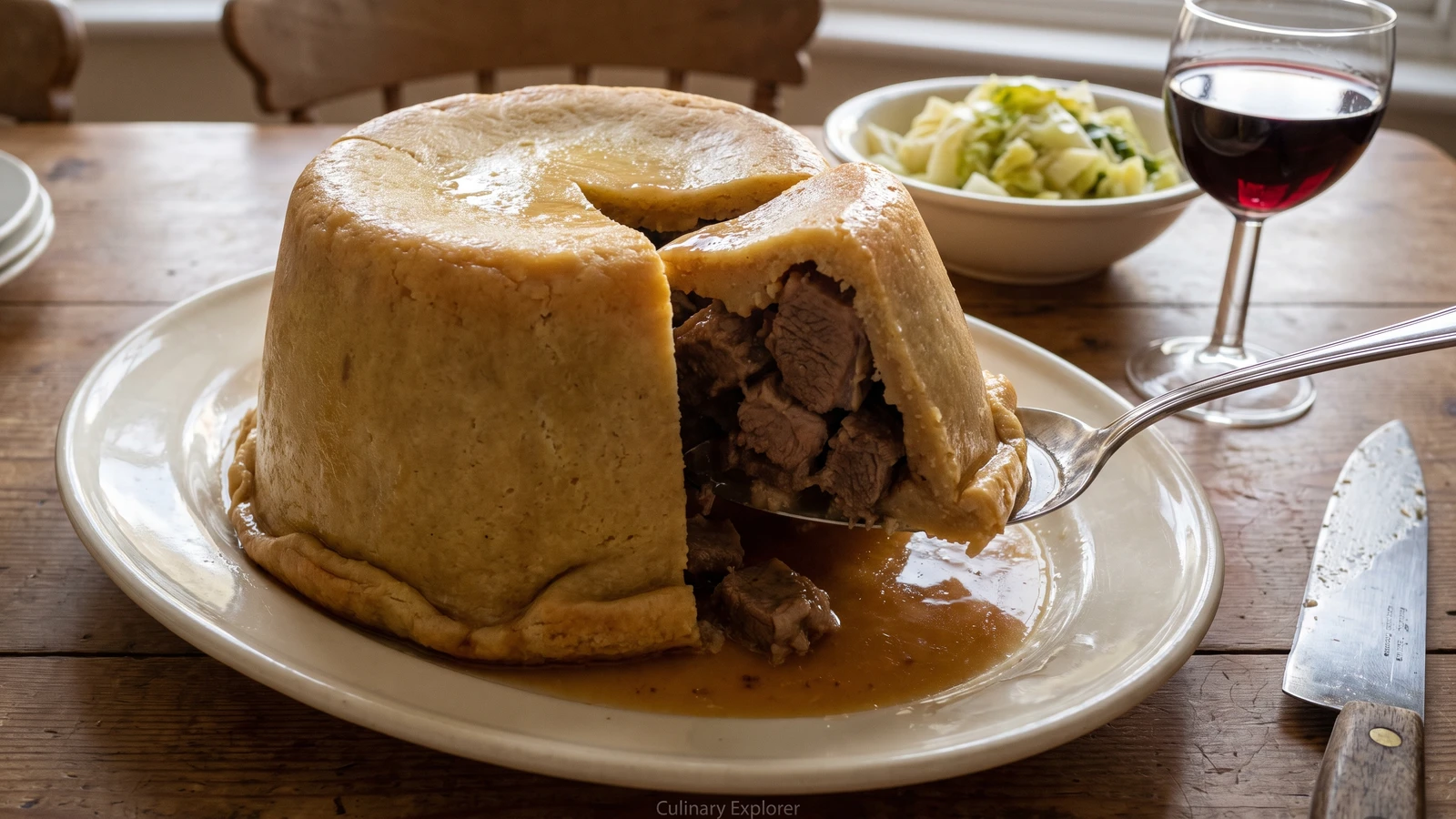
A sealed dome of suet paste turns modest mutton, salt, pepper, and water into its own rich gravy: four quiet hours in the basin, then a generous pudding for the middle of the table.
Pouding de mouton (mutton pudding) teaches the discipline of a sealed basin. Once the suet crust closes around the seasoned meat and its little measure of water, gentle moist heat does the rest. The one true thing to know before you touch the pot is this: the seal is the dish. Leave a weak seam and the liquor escapes; close it well, and mutton, salt, pepper, and time make their own deep gravy.
The book sent its cooks straight to Steak Pudding (No. 1170), a brigade-size formula with two pounds of flour, chopped beef kidney fat, a dome mould, a buttered pudding cloth, and someone available to mind the boiling pot. This home version takes one basin-size portion of that same stiff paste, lines a 1½-quart basin, replaces the cloth with buttered parchment and foil, and cooks in an ordinary lidded pot. The scale and covering changed because one cook needs four portions and dependable household equipment. The paste ratio, quarter-inch thickness, plain filling, tight seal, and four-hour cooking remain. Those are the pudding itself.
Turned out, the pouding is a pale, generous dome with tender mutton and glossy amber liquor waiting beneath the first cut. Cooking well is not cooking fancy. Give your full attention to moistening and pinching the lid firmly onto the lining; after that, one cook, one stove, one evening will carry it home.
Pouding de mouton belongs to the English basin-pudding table, not to any French province. French classical kitchens kept it among preparations à l’anglaise (in the English manner), carrying over the beef-suet crust, basin cooking, and deliberately plain filling while substituting mutton for steak. Water rather than stock or wine is essential to its character: the enclosed meat makes its own liquor as it cooks.
Quantity
1 basin-size portion (about 1 lb 9 oz / 710 g) prepared according to Steak Pudding (No. 1170)
kept cool
Quantity
1½ pounds (680 g)
surface fat and tough gristle removed, cut into 1-inch (2.5 cm) pieces
Quantity
1¼ teaspoons (6 ml / 7 g)
Quantity
¾ teaspoon (4 ml / 2 g)
Quantity
1¼ cups (300 ml / 300 g), or just enough to barely cover the mutton
Quantity
1 tablespoon (15 ml / 15 g)
Quantity
1 tablespoon (15 ml / 14 g)
softened, for the basin and covering
| Ingredient | Quantity |
|---|---|
| stiff suet pastekept cool | 1 basin-size portion (about 1 lb 9 oz / 710 g) prepared according to Steak Pudding (No. 1170) |
| boneless mutton shouldersurface fat and tough gristle removed, cut into 1-inch (2.5 cm) pieces | 1½ pounds (680 g) |
| fine sea salt | 1¼ teaspoons (6 ml / 7 g) |
| freshly ground black pepper | ¾ teaspoon (4 ml / 2 g) |
| cold water | 1¼ cups (300 ml / 300 g), or just enough to barely cover the mutton |
| cold water for sealing | 1 tablespoon (15 ml / 15 g) |
| unsalted buttersoftened, for the basin and covering | 1 tablespoon (15 ml / 14 g) |
Butter the inside of a 1½-quart (1.5 L) heatproof pudding basin thoroughly, carrying the butter right to the rim. Season the mutton evenly with the salt and pepper, turning the pieces with your hands so no layer enters the basin bland. Keep the meat cool while you roll the paste.
Set aside about one-third of the stiff suet paste prepared according to Steak Pudding (No. 1170) for the lid. Roll the remainder into a round ¼ inch (6 mm) thick, broad enough to cover the basin with a little overhang. Lower it into the basin and ease it against the bottom and sides without stretching, which would make thin places split. If the paste cracks, don't begin again. Ça se rattrape: moisten the edges of the crack, press on a small scrap of paste, and smooth the join firmly with a fingertip.
Arrange the seasoned mutton inside the lined basin in even layers, fitting the pieces closely without crushing them. Leave about 1 inch (2.5 cm) of space below the rim so the crust has room to expand. Pour in only enough cold water to come barely level with the upper pieces, using no more than the measured 1¼ cups (300 ml). This plain water is correct. Inside the sealed crust it mingles with the mutton juices and becomes the pudding's gravy.
Roll the reserved paste ¼ inch (6 mm) thick. Brush the exposed rim of the lining lightly with the sealing water, lay the lid over it, and press the two layers together all the way around. Trim the excess, then pinch and fold the seam inward until no gap remains. If the fatty paste refuses to bond, scrape the two surfaces lightly, moisten them again, and press on a narrow cord of spare paste. Ça se rattrape. Butter a round of parchment, place it buttered-side down over the basin, cover with foil, and make a generous pleat through the centre so the covering can expand. Tie it firmly beneath the rim with kitchen string and make a string handle for lifting.
Set a small heatproof trivet or inverted saucer in a deep, heavy pot and place the covered basin on it. Pour boiling water around the basin until it reaches two-thirds of the way up the sides, then cover the pot and return the water to a steady, quiet simmer. Cook for 4 hours. Check the level every 30 to 45 minutes and replenish it only with boiling water. If the level slips below halfway, top it up at once and restore the simmer; the pudding is unharmed as long as the pot hasn't boiled dry. The long, uninterrupted moist cooking is what tenderizes the mutton and cooks the stiff crust through.
Lift the basin out by its string handle and remove the foil and parchment carefully. Let the pouding settle for 10 minutes, then loosen only the upper edge with a thin knife. Place a warmed, rimmed serving platter over the basin and invert both together with confidence. If the pudding clings, wrap the basin for 1 minute in a cloth wrung out in very hot water, then try again. Cut a broad wedge at the table so the glossy mutton liquor pools onto the platter. Spoon that gravy over each serving. À table!
1 serving (about 410g)
Culinary guides, cultural storytelling, and the editorial depth that makes cooking meaningful.
Discover Culinary ExplorerChef Juliette
John Dory has the delicacy of sole and the firmness of turbot. A light flouring, a quick butter sauté, and nut-brown beurre noisette show exactly why looks never mattered.

Chef Juliette
Fresh haddock proves its delicacy in the meunière pan: a fine flour crust, moist pearly flakes, and beurre noisette sharpened with lemon and parsley, ready from one skillet in half an hour.

Chef Juliette
Éperlans à l’Anglaise turns small fish into a lesson in disciplined coating: boned smelts under a close, crisp crumb, pan-fried in clarified butter and finished with bright, half-melted maître d’hôtel butter.

Chef Juliette
Tiny smelts, shallot, mushrooms, white wine, gratin sauce, and fine bread raspings meet a fierce oven, where the fish must turn tender in the same breath the buttered crust bronzes.