
Chef Juliette
John Dory (St. Pierre)
John Dory has the delicacy of sole and the firmness of turbot. A light flouring, a quick butter sauté, and nut-brown beurre noisette show exactly why looks never mattered.
A cooking platform built around craft, culture, and the stories behind what we eat.
Created by Chef Juliette
Based on No. 1170, Steak Pudding, from Le Guide Culinaire (1907) by Auguste Escoffier
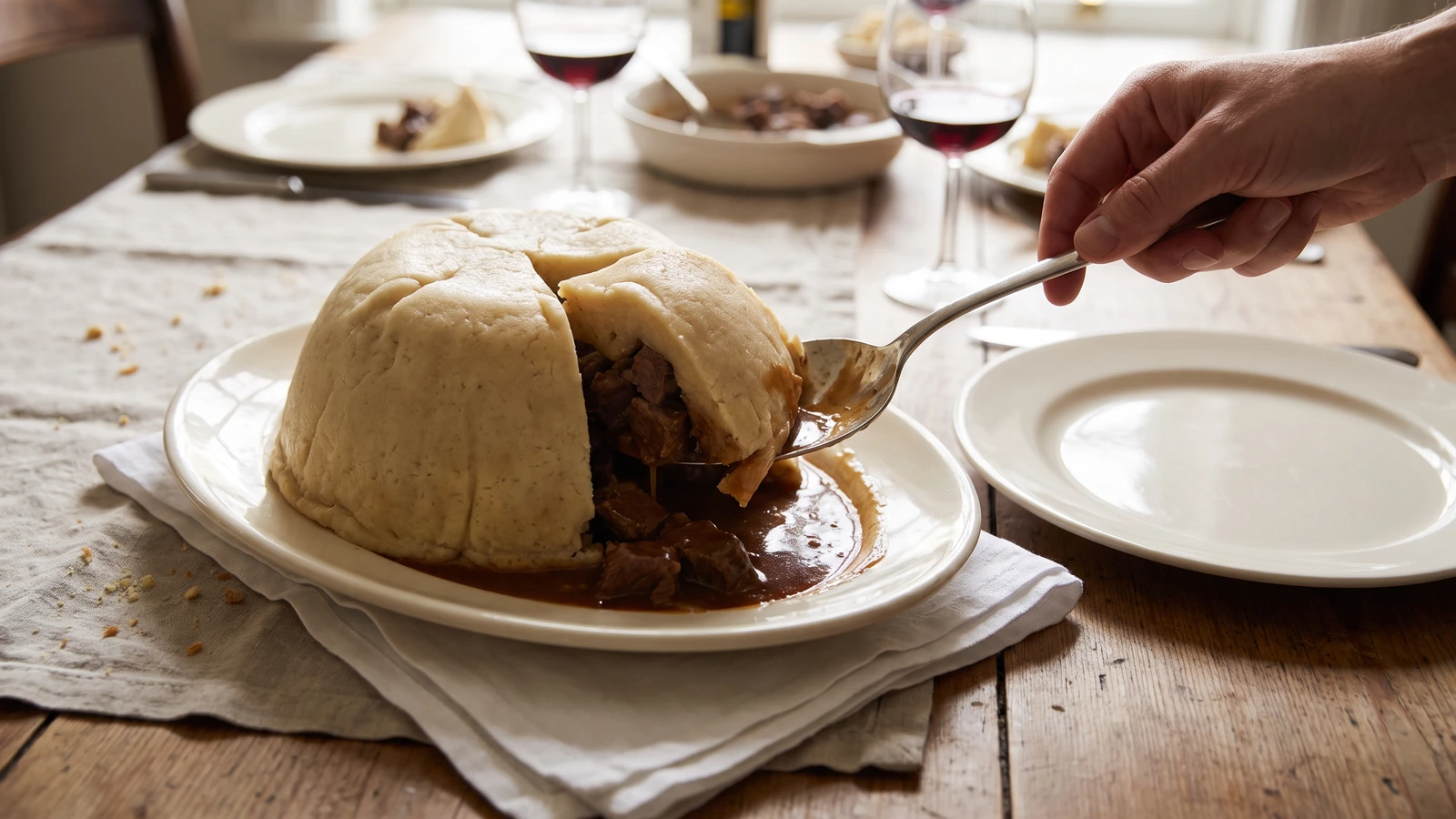
Pouding de bœuf teaches enclosed cookery: a firm suet crust, well-seasoned chuck, and only water, held gently for four hours until the meat and pastry make their own glossy gravy.
Pouding de bœuf (steak pudding) teaches the power of enclosure. There is no fond to brown, no roux to nurse, and no reduction to watch. Seasoned beef, plain water, and a stiff suet crust make their own gravy because the basin loses nothing. Before you touch a pan, know this: the seal is the sauce. If the lid and lining part, water gets in and flavour gets out.
The original assumed neither a saucier nor stock forever on the fire, and it never calls for the salamander. Its professional abundance lies elsewhere: two pounds of flour, a dome mould, a buttered pudding cloth, and a pot somebody could mind for hours. I have reduced its paste to three-eighths of that batch, preserving the original 8:5 proportion of flour to kidney suet and its remarkably scant water. A two-quart basin replaces the large mould, while pleated parchment and foil replace the cloth. The bulk batch, cloth wrapping, and folded-napkin flourish are scaffolding. The stiff paste, water-only filling, sealed basin, and full cooking time are the dish.
Use well-trimmed chuck and give it four hours. When the pudding is turned out, the pale suet dome cuts open to tender beef and gravy made entirely from the meat's juices. One cook, one stove, one patient evening. Moisten the pastry edges and pinch the seam without leaving a gap. That is the step that matters most.
Pouding de bœuf has no French regional home to pretend: steak pudding belongs to the English domestic table, and the French classical canon admitted it as an English preparation without wine, aromatics, or a French sauce. Its suet crust descends from cloth-cooked puddings that made modest meat feed a household, while the basin gave cooks a neater enclosed form. The source's choice is practical rather than grand: fillet cooks in three hours, but another cut receives four, and the thriftier cut gives the fuller gravy.
Quantity
2¾ cups (650 ml / 340 g)
Quantity
1¾ cups loosely packed (415 ml / 213 g)
chilled and finely chopped or grated
Quantity
½ teaspoon (2.5 ml / 3 g)
Quantity
3 tablespoons plus 1½ teaspoons (53 ml / 53 g)
Quantity
1 tablespoon (15 ml / 14 g)
softened
Quantity
2 pounds (900 g)
cut into 1½-inch (4 cm) pieces
Quantity
2 teaspoons (10 ml / 12 g)
Quantity
1 teaspoon (5 ml / 2 g)
Quantity
1 to 1¼ cups (240 to 300 ml / 240 to 300 g)
use only enough to cover the packed beef
| Ingredient | Quantity |
|---|---|
| plain flour | 2¾ cups (650 ml / 340 g) |
| fresh beef kidney suetchilled and finely chopped or grated | 1¾ cups loosely packed (415 ml / 213 g) |
| fine sea salt for the paste | ½ teaspoon (2.5 ml / 3 g) |
| cold water for the paste | 3 tablespoons plus 1½ teaspoons (53 ml / 53 g) |
| unsalted buttersoftened | 1 tablespoon (15 ml / 14 g) |
| well-trimmed boneless beef chuckcut into 1½-inch (4 cm) pieces | 2 pounds (900 g) |
| fine sea salt for the beef | 2 teaspoons (10 ml / 12 g) |
| freshly ground black pepper | 1 teaspoon (5 ml / 2 g) |
| cool water for the fillinguse only enough to cover the packed beef | 1 to 1¼ cups (240 to 300 ml / 240 to 300 g) |
Set a low trivet or steaming rack inside a large lidded stockpot. Add enough water to reach halfway up the pudding basin and bring it to a full boil. Keep a kettle of additional water hot for topping up. Butter the inside of a 2-quart (1.9-litre) pudding basin generously, including the rim, and butter one side of a large sheet of baking parchment.
Mix the flour and paste salt, then toss through the cold chopped suet without rubbing it away into fine crumbs. Add all 53 ml of cold water and work the mixture firmly with your hand until it presses into a cohesive, very stiff paste. It will look too dry before it comes together. This is exactly right. Cover it and rest it for 10 minutes so the scant water can travel through the flour.
Set aside one-quarter of the paste for the lid. Roll the remainder between sheets of parchment into a round about ¼ inch (6 mm) thick, then ease it into the buttered basin. Press it snugly against the bottom and sides without thinning it, leaving a little paste above the rim. If a crack opens, press a scrap of paste over it with damp fingertips until the join disappears.
Toss the beef thoroughly with the salt and pepper. Pack it into the lined basin in close, even layers, leaving about 1 inch (2.5 cm) beneath the rim. Do not brown the meat or add flour, onion, herbs, wine, or stock. This entry builds its gravy through enclosure, not through a fond or reduction. Pour in only enough cool water to reach the top layer of beef without flooding above it.
Roll the reserved paste ¼ inch (6 mm) thick. Brush the exposed edge of the lining lightly with water, lay the lid over it, and pinch both layers together firmly all around. Trim the excess, then fold and press the seam inward. Inspect it with your fingertips. If you find a split, don't start again. Ça se rattrape: dampen the spot, press on a thin patch of paste, and smooth its edges into the lid. Cover the basin with the buttered parchment, buttered side down, then heavy foil, making a broad pleat through both layers so the pudding can expand. Tie them firmly beneath the rim with kitchen string and make a string handle for lifting.
Lower the covered basin onto the trivet. The boiling water should reach halfway up its sides without touching the pastry cover. Put on the pot lid and regulate the heat to a steady, quiet boil. Cook the chuck for four full hours, counted from the moment the water returns to the boil. Check the level every 30 minutes and replenish it with boiling water from the kettle so the basin remains half surrounded. Cold water stops the cooking and can make the suet crust heavy. If using fillet as the source permits, cook it for three hours instead.
Lift the basin out by its string handle, supporting the base with a folded towel or sturdy tongs. Cut away the string and remove the foil and parchment carefully, opening them away from your face. Let the uncovered pudding rest for 10 minutes. This short pause lets the gravy settle and the crust firm enough to turn out.
Run a thin knife around the rim without cutting deeply into the crust. Set a warm oval platter over the basin, hold both firmly, and invert them in one confident motion. Lift the basin straight up. If a little crust clings, ease it free and set it back in place, then spoon any escaped gravy over the cut portion. Never apologize at your own table. Cut the pudding into generous wedges and serve at once. À table!
1 serving (about 430g)
Culinary guides, cultural storytelling, and the editorial depth that makes cooking meaningful.
Discover Culinary ExplorerChef Juliette
John Dory has the delicacy of sole and the firmness of turbot. A light flouring, a quick butter sauté, and nut-brown beurre noisette show exactly why looks never mattered.

Chef Juliette
Fresh haddock proves its delicacy in the meunière pan: a fine flour crust, moist pearly flakes, and beurre noisette sharpened with lemon and parsley, ready from one skillet in half an hour.

Chef Juliette
Éperlans à l’Anglaise turns small fish into a lesson in disciplined coating: boned smelts under a close, crisp crumb, pan-fried in clarified butter and finished with bright, half-melted maître d’hôtel butter.

Chef Juliette
Tiny smelts, shallot, mushrooms, white wine, gratin sauce, and fine bread raspings meet a fierce oven, where the fish must turn tender in the same breath the buttered crust bronzes.