Chef Juliette
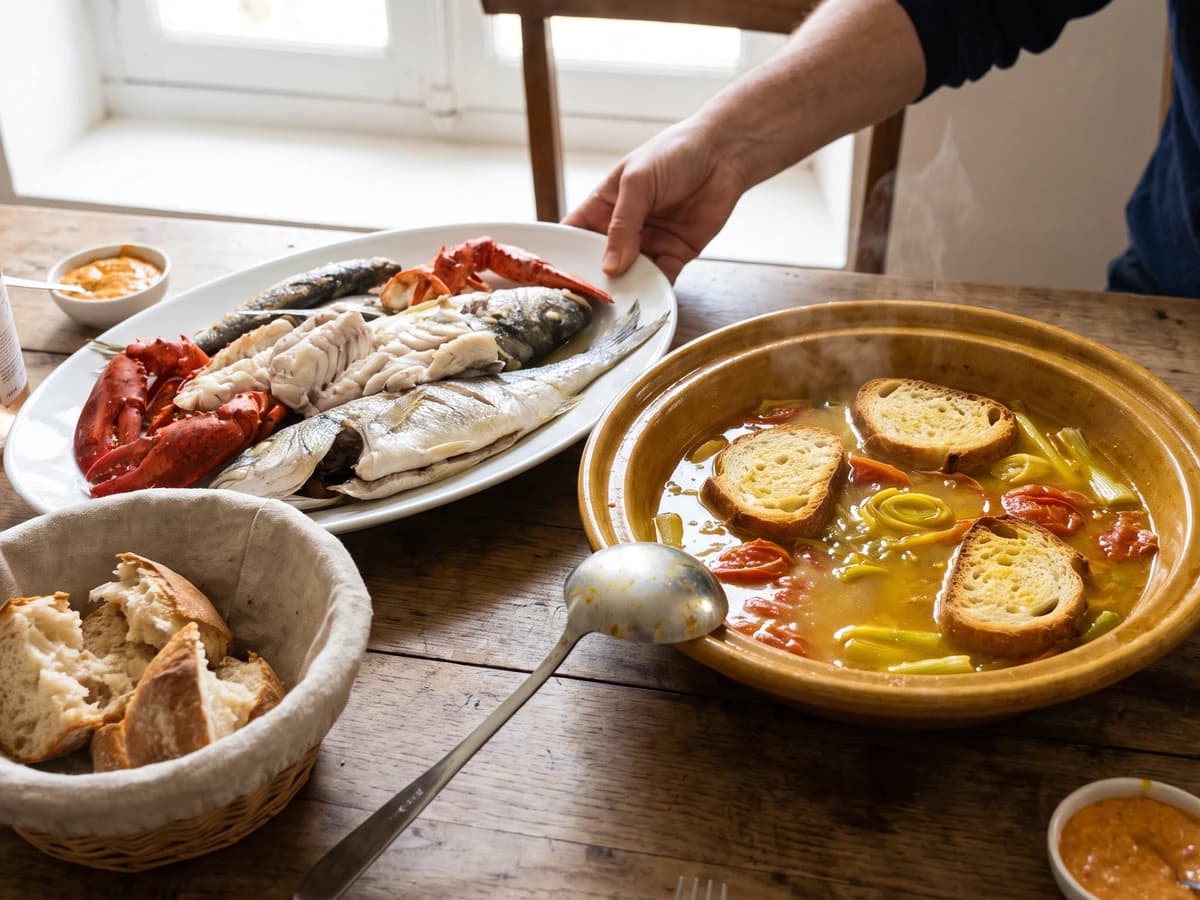
Bouillabaisse à la Marseillaise
Marseille's great fish stew, saffron-gold and garlic-scented, proves that a hard boil can be the careful choice: it binds olive oil into broth before the whole pot meets bread.
A cooking platform built around craft, culture, and the stories behind what we eat.
Created by Chef Juliette
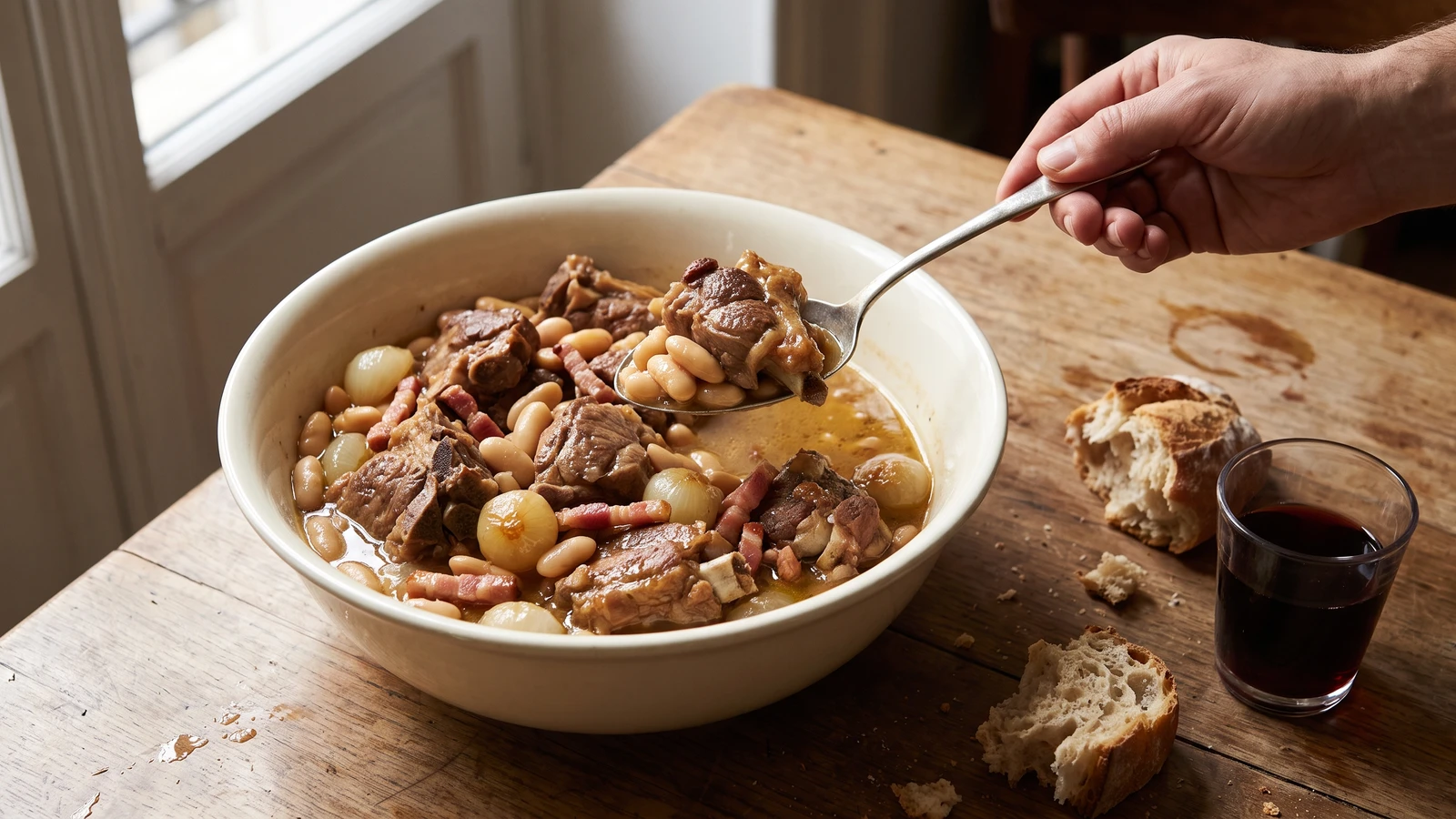
Based on No. 1349, Haricot de Mouton, from Le Guide Culinaire (1907) by Auguste Escoffier
Mutton browned to a frizzled coat, bacon and onions colored in lard, then white beans folded through a garlic-scented sauce: a thrifty braise whose depth comes from fond, flour, and patience.
Haricot de Mouton (mutton stew with haricot beans) teaches one true thing before you touch the pan: the frizzled coat on the meat is the dish. Brown the mutton properly and its fond gives backbone to water, flour, garlic, and beans. Leave it pale and no amount of simmering can put that character back.
The original assumes the rhythm of a brigade, with beans already half-cooked, bacon ready from Blanchings (No. 273), and a saucier free to strain the gravy into a second saucepan. It calls for water, not a stockpot, and it needs no salamander. At home, prepare the beans first, reuse one cocotte after straining the sauce, and keep the proportions for four. The second saucepan is brigade scaffolding and can go; the strained sauce, the lard-built fond, and the two-stage braise stay. One cook, one stove, one evening.
When it is ready, the beans remain whole but creamy within, the mutton yields at the pressure of a spoon, and the tawny sauce clings rather than floods. Do not hurry the frizzled coat on the mutton. That browning is the step that decides the Haricot de Mouton.
Haricot de mouton belongs to the Parisian cuisine bourgeoise, where economical pieces of sheep became a sustaining family ragout before the grand kitchens refined its sauce and service. There is an old debate around the name: haricot may first have referred to meat cut into pieces and stewed, rather than to the bean itself, and related preparations appeared with turnips or potatoes instead. This canonical version settles the matter at the table by adding half-cooked white haricots to finish in the strained mutton sauce.
Quantity
2 cups (475 ml / 350 g), from about ¾ cup (180 ml / 150 g) dried beans
soaked, simmered until half-cooked, and drained
Quantity
3 tablespoons (45 ml / 42 g)
Quantity
½ cup (120 ml / 115 g), prepared through Blanchings (No. 273)
cut into ½-inch dice, drained, and dried
Quantity
10 (about 1¼ cups / 200 g)
peeled
Quantity
1½ pounds (680 g)
divided roughly equally and cut into 8 pieces of about 3 ounces (85 g) each
Quantity
1½ large cloves (about 2 teaspoons / 7 g)
crushed
Quantity
1 tablespoon (15 ml / 8 g)
Quantity
2 cups (475 ml / 475 g)
Quantity
¾ teaspoon plus a small pinch (about 4 ml / 4.7 g)
Quantity
1 pinch, about 1/16 teaspoon (0.3 ml / 0.1 g)
Quantity
1 small bundle
parsley stems, thyme, and bay leaf tied together
| Ingredient | Quantity |
|---|---|
| small white haricot beanssoaked, simmered until half-cooked, and drained | 2 cups (475 ml / 350 g), from about ¾ cup (180 ml / 150 g) dried beans |
| lard | 3 tablespoons (45 ml / 42 g) |
| lean slab baconcut into ½-inch dice, drained, and dried | ½ cup (120 ml / 115 g), prepared through Blanchings (No. 273) |
| small pearl onionspeeled | 10 (about 1¼ cups / 200 g) |
| bone-in mutton breast, neck, and shoulderdivided roughly equally and cut into 8 pieces of about 3 ounces (85 g) each | 1½ pounds (680 g) |
| garliccrushed | 1½ large cloves (about 2 teaspoons / 7 g) |
| all-purpose flour | 1 tablespoon (15 ml / 8 g) |
| water | 2 cups (475 ml / 475 g) |
| fine salt | ¾ teaspoon plus a small pinch (about 4 ml / 4.7 g) |
| black pepper | 1 pinch, about 1/16 teaspoon (0.3 ml / 0.1 g) |
| bouquet garniparsley stems, thyme, and bay leaf tied together | 1 small bundle |
Cover the soaked dried haricot beans generously with fresh water and bring them slowly to a simmer. Cook until they have swollen and begun to soften but still resist the teeth at their centers, about 25 to 40 minutes depending on age; they must be only half-cooked because another hour awaits them in the stew. Drain and measure 2 cups (475 ml / 350 g). Have the diced bacon prepared through Blanchings (No. 273), then drain and dry it thoroughly. Heat the oven to 325°F (165°C).
Melt the lard in a heavy cocotte over medium heat. Add the dry bacon and pearl onions, then cook for 8 to 12 minutes, turning often, until the bacon has frizzled at the edges and the onions wear an even chestnut color. Regulate the heat so the lard bubbles actively without smoking. Lift both onto a plate with a slotted spoon, leaving the fat in the cocotte.
Dry the mutton carefully. Raise the heat to medium-high and brown the pieces in two batches, leaving room between them, until every side carries a deep frizzled coat. Give each surface time to release naturally before turning it. If the meat sheds liquid and begins to stew, lift it out, boil away the moisture, let the fat become properly hot again, and resume with fewer pieces. Ça se rattrape. Transfer the browned mutton to the plate, then pour off roughly half the free grease while preserving every browned mark on the pot floor.
Lower the heat to medium. Add the crushed garlic to the retained fat and stir for 20 seconds, just until fragrant. Dust in the flour and cook for 1 to 2 minutes, stirring continuously, to make a pale roux, flour cooked into fat. Pour in the water gradually while scraping the fond from the floor and corners of the cocotte. If the roux seizes into small lumps, keep whisking as the water goes in; the later straining is the built-in rescue. Add the salt, pepper, and bouquet garni, bring the sauce to a boil while stirring, then return the mutton. Cover and braise in the oven for 30 minutes.
Lift the mutton into a heatproof bowl. Pour the sauce through a fine-mesh sieve into a second bowl, pressing only enough to recover the liquid, then discard the bouquet garni, garlic fibers, and any coarse fragments. Wipe the cocotte if necessary and return the mutton to it. Add the frizzled bacon, browned onions, and half-cooked beans, distributing them gently so the onions remain whole. Pour the strained sauce over everything.
Cover the cocotte and return it to the 325°F (165°C) oven for about 1 hour. The sauce should barely tremble, never boil hard. Check after 45 minutes: if the sauce has tightened before the meat is tender, loosen it with hot water, 1 tablespoon (15 ml) at a time. If the beans become tender before the mutton yields, lift the beans, bacon, and onions out with a slotted spoon, continue the meat for 15-minute intervals, then return the garnish for the final 10 minutes. The stew is ready when the mutton gives easily at a fork, the beans are creamy within but still hold their skins, and the sauce coats a spoon.
Rest the Haricot de Mouton uncovered for 10 minutes so the sauce settles around the meat and beans. Taste before adjusting anything, because the bacon will have given up more salt during the braise. Spoon it generously into a deep timbale-style serving bowl or individual cocottes, keeping the pieces of mutton visible among the onions and beans. Bring bread for the sauce. À table!
1 serving (about 325g)
Culinary guides, cultural storytelling, and the editorial depth that makes cooking meaningful.
Discover Culinary ExplorerChef Juliette
Marseille's great fish stew, saffron-gold and garlic-scented, proves that a hard boil can be the careful choice: it binds olive oil into broth before the whole pot meets bread.
Chef Juliette
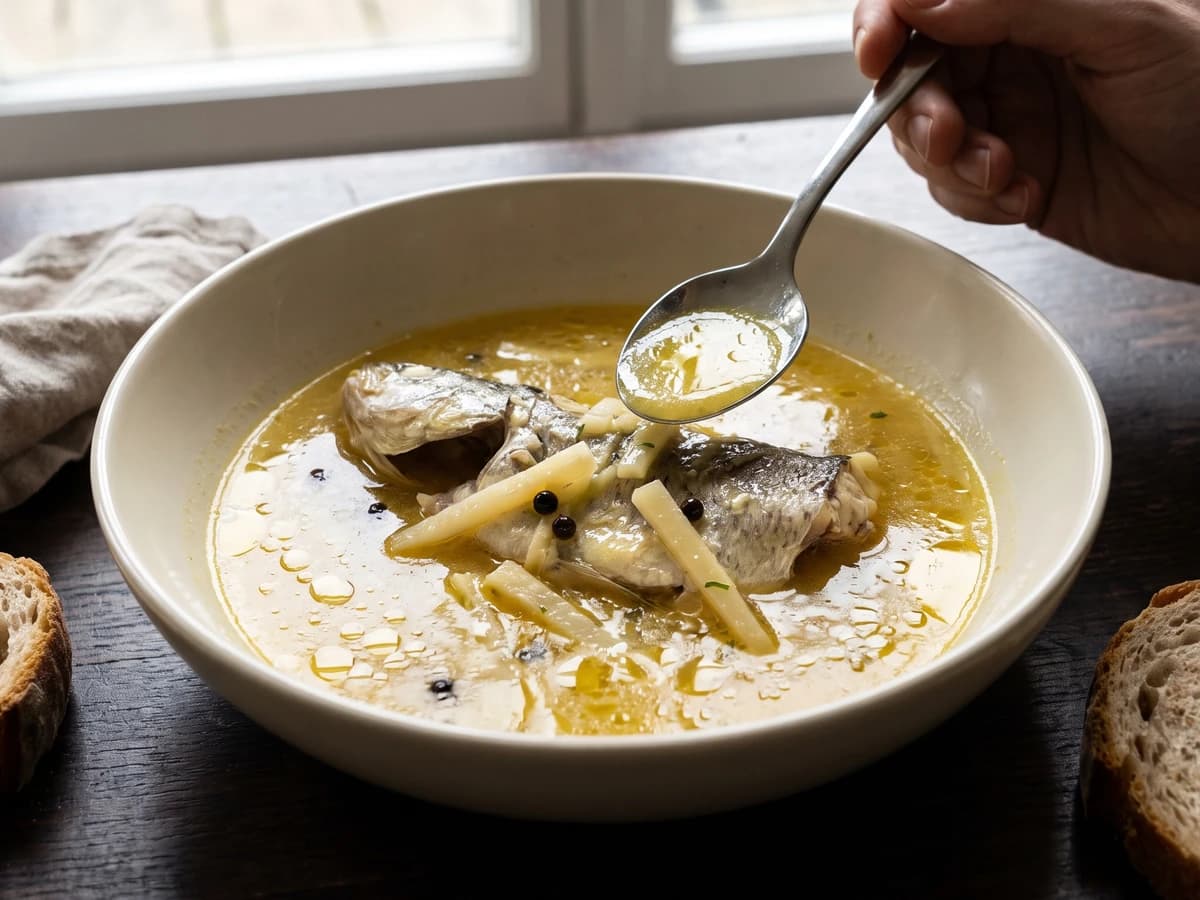
Waterzoi asks fresh, bone-in river fish to thicken its own buttery broth, with parsley root and pepper for company. No flour, no stockpot, just a brisk simmer watched closely.
Chef Juliette
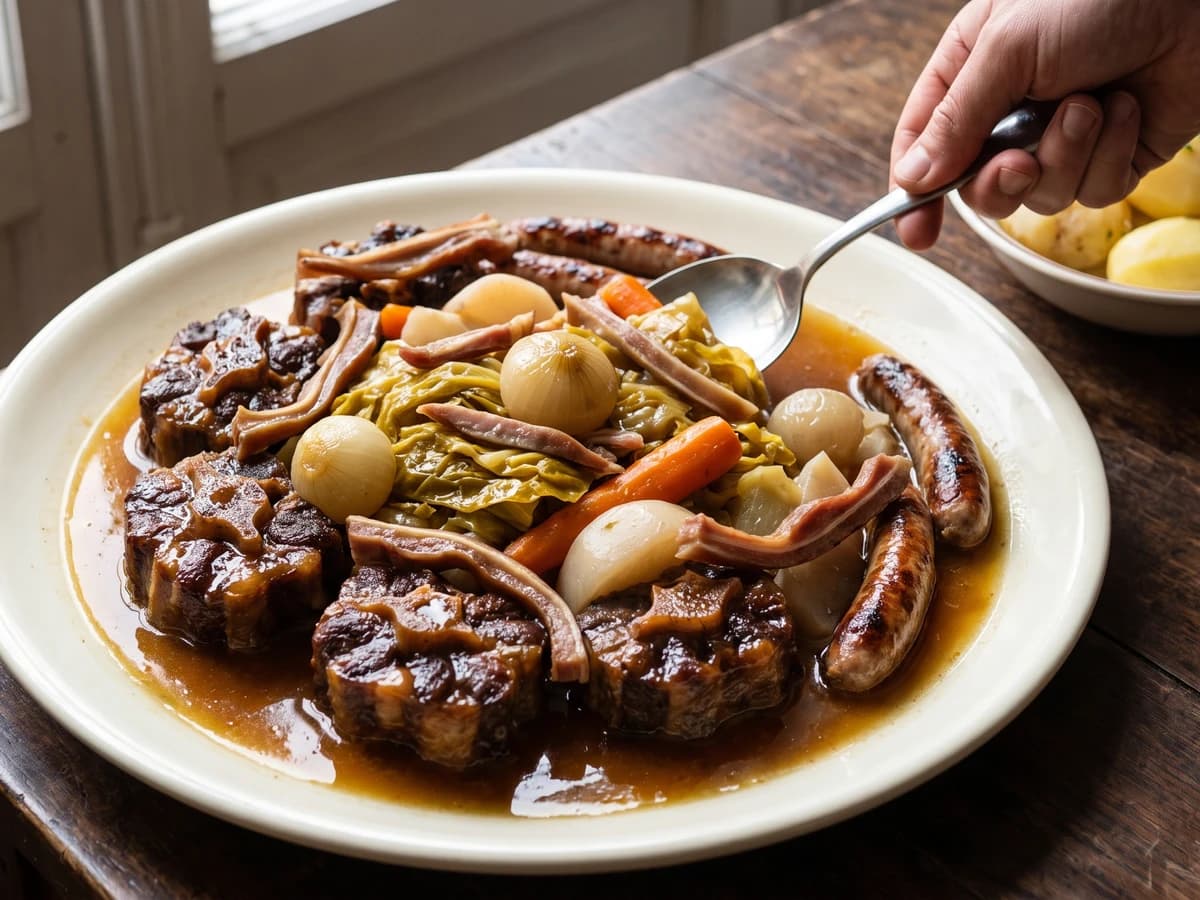
Queue de Bœuf en Hochepot gathers oxtail, pig's trotter and ear, cabbage, roots, and grilled chipolatas around a clear, gelatin-rich broth whose quiet simmer keeps every piece tender and distinct.
Chef Juliette
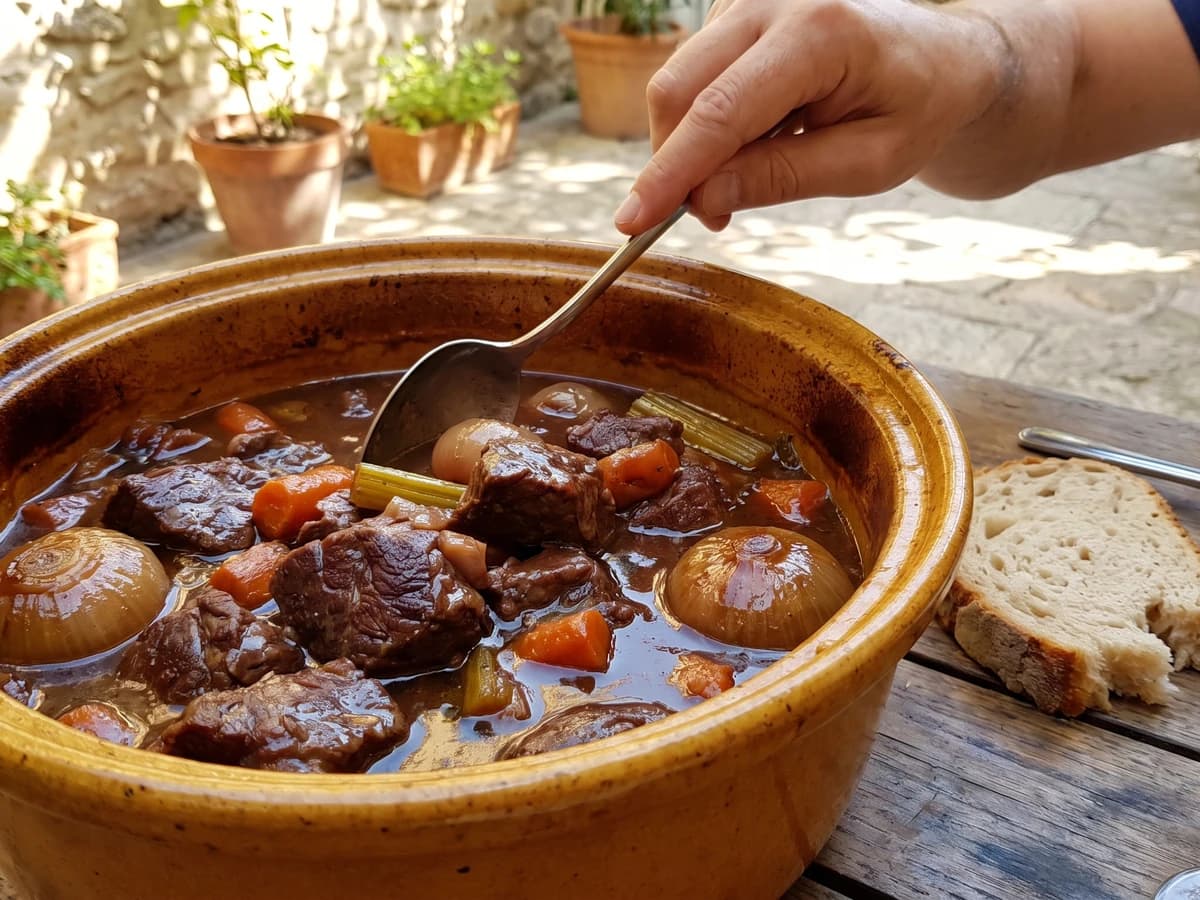
Beef shoulder larded with bacon, sharpened by red wine and vinegar, then sealed with garlic, vegetables, and dry lemon peel until the low oven turns it yielding and the gravy darkly glossy.