
Chef Juliette
John Dory (St. Pierre)
John Dory has the delicacy of sole and the firmness of turbot. A light flouring, a quick butter sauté, and nut-brown beurre noisette show exactly why looks never mattered.
A cooking platform built around craft, culture, and the stories behind what we eat.
Created by Chef Juliette
Based on No. 1317, Côtelettes à la Sévigné, from Le Guide Culinaire (1907) by Auguste Escoffier
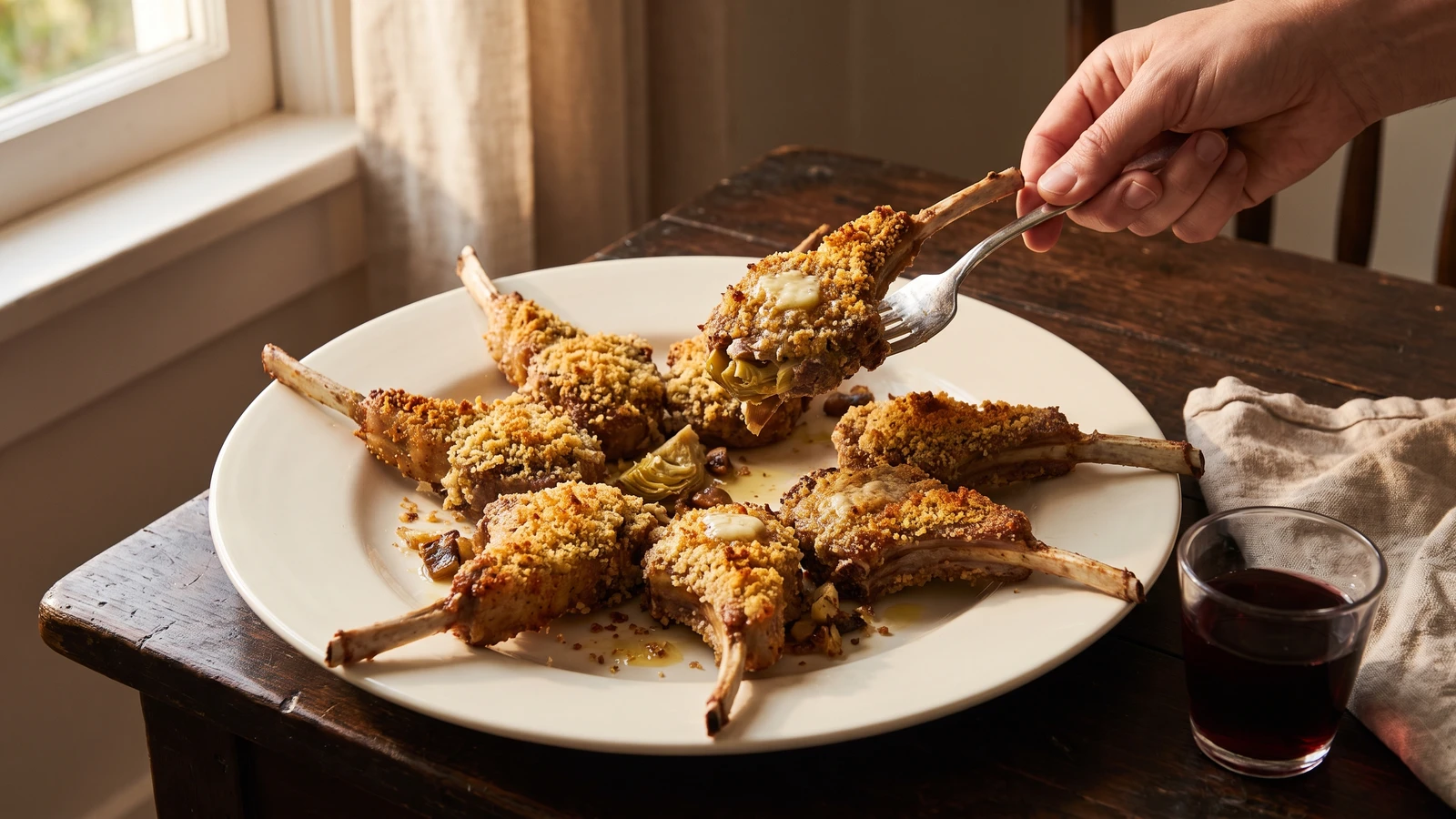
One-sided frying, a cool mushroom and artichoke crown, and a crisp à l’anglaise coat: these lamb cutlets teach how separate textures finish together under one fierce oven.
Côtelettes à la Sévigné (Sévigné-style lamb cutlets) teach a precise bit of classical timing: one side of the meat is browned in butter, its cooked face carries a cool dome of mushroom and artichoke, and the oven finishes meat, filling, and crumb together. The one true thing to know before touching the pan is that the croquette mixture must be cold and stiff enough to stand in a spooned mound. If it slumps, the coating cannot save it.
The original kitchen assumed mutton cutlets, a garnish cook with croquette filling waiting, Anglaise (for Egg-and-bread-crumbing) (No. 174) ready beside the crumbs, and a salamander overhead to colour everything quickly. Its saucier and stockpot that never went cold belonged to the larger brigade, but not to this formula, so don't invent a sauce for it. At home, thick lamb rib chops replace the harder-to-find mutton, a small roux-bound filling supplies exactly eight heaped spoonfuls, and a hot upper oven with a brief broiler finish replaces the salamander. Lamb is tenderer, so the oven time is shorter. One cook, one stove, one evening.
Bowls held ready by separate stations are brigade scaffolding and can go. What stays is the dish: fry one side only, crown that side, paner à l’anglaise (coat with flour, prepared egg mixture, and crumbs), then finish in the oven. Chill the filling until a spoonful stands proud before you brown the first cutlet.
Côtelettes à la Sévigné belongs to the Parisian classical repertoire of named preparations, not to a regional lamb tradition. Its title points to Madame de Sévigné, while its salpicon, a finely diced mushroom and artichoke filling, and its coating pané à l’anglaise speak the formal kitchen language that traveled from grand dining rooms to bourgeois dinner tables. The Sévigné name can suggest Brittany because of the family seat there, but the preparation carries no Breton regional marker; it is a Paris table dish built from technique.
Quantity
8 (about 1¾ pounds / 800 g total)
cut 1¼ inches (3 cm) thick, with the bones neatly scraped
Quantity
1½ teaspoons (7.5 ml / 9 g)
divided
Quantity
¾ teaspoon (3.75 ml / 1.5 g)
divided
Quantity
1 cup (240 ml / 75 g)
very finely chopped
Quantity
2 (about 1 cup / 240 ml / 140 g)
drained, thoroughly blotted, and very finely chopped
Quantity
2 teaspoons (10 ml / 9 g)
Quantity
2 teaspoons (10 ml / 6 g)
Quantity
¼ cup (60 ml / 60 g)
Quantity
4 tablespoons (60 ml / 56 g)
Quantity
½ cup (120 ml / 60 g)
Quantity
¾ cup (180 ml / 180 g) Anglaise (for Egg-and-bread-crumbing) (No. 174)
Quantity
2 cups (480 ml / 120 g)
Quantity
3 tablespoons (45 ml / 42 g)
melted
| Ingredient | Quantity |
|---|---|
| bone-in lamb rib chopscut 1¼ inches (3 cm) thick, with the bones neatly scraped | 8 (about 1¾ pounds / 800 g total) |
| fine sea saltdivided | 1½ teaspoons (7.5 ml / 9 g) |
| freshly ground black pepperdivided | ¾ teaspoon (3.75 ml / 1.5 g) |
| button or cremini mushroomsvery finely chopped | 1 cup (240 ml / 75 g) |
| cooked artichoke bottomsdrained, thoroughly blotted, and very finely chopped | 2 (about 1 cup / 240 ml / 140 g) |
| unsalted butter for the croquette filling | 2 teaspoons (10 ml / 9 g) |
| all-purpose flour for the croquette filling | 2 teaspoons (10 ml / 6 g) |
| heavy cream | ¼ cup (60 ml / 60 g) |
| unsalted butter for frying | 4 tablespoons (60 ml / 56 g) |
| all-purpose flour for coating | ½ cup (120 ml / 60 g) |
| prepared Anglaise (for Egg-and-bread-crumbing) | ¾ cup (180 ml / 180 g) Anglaise (for Egg-and-bread-crumbing) (No. 174) |
| fine fresh white breadcrumbs | 2 cups (480 ml / 120 g) |
| unsalted butter for finishingmelted | 3 tablespoons (45 ml / 42 g) |
Melt the 2 teaspoons of butter in a small skillet over medium heat. Add the mushrooms with a pinch of the measured salt and cook until they surrender their liquid, the pan dries, and their edges begin to colour, about 5 minutes. Sprinkle over the 2 teaspoons of flour and stir for 1 minute, then add the cream gradually. Cook, stirring, until the mixture becomes a very thick paste that leaves the pan clean behind the spoon. Fold in the artichoke bottoms and a little pepper, then cook for another minute. Scrape onto a plate, spread it shallowly, and chill for 20 minutes. It must yield eight heaped tablespoonfuls. If a spoonful spreads rather than holding a dome, return the mixture to the pan and reduce it for another minute or two. Ça se rattrape.
Heat the oven to 425°F (220°C) with a rack in the upper third. Line a rimmed sheet pan with parchment. Put the coating flour, prepared Anglaise, and breadcrumbs into three separate shallow dishes. Pat the lamb cutlets thoroughly dry and season both sides with the remaining salt and pepper. A dry surface takes colour; moisture gives you a pale cutlet.
Melt 1 tablespoon of the frying butter in a heavy skillet over medium-high heat. When the foam subsides, lay in as many cutlets as will fit without touching and fry one flat side only until deeply golden, 2 to 3 minutes. Do not turn them. Transfer the cutlets to the prepared sheet pan with their raw sides down and browned sides up, then repeat with fresh butter until all eight are browned. If the milk solids race from hazelnut-brown to black, lower the heat and wipe the pan before the next batch; burnt butter grows bitter, not noble.
Set one heaped tablespoonful of cold mushroom and artichoke filling on the browned face of each cutlet. Shape it into a smooth dome, leaving a narrow border of meat around it. Dust each dome and the exposed meat lightly with flour, brushing away the excess. Spoon or brush the prepared Anglaise (for Egg-and-bread-crumbing) (No. 174) over every floured surface, then press on the breadcrumbs until the filling and meat are completely enclosed beneath an even coat. Work gently, one cutlet at a time. If a dome begins to slip, stop and chill the assembled cutlets for 5 minutes before continuing.
Sprinkle the melted butter evenly over the crumbed cutlets, giving each dome enough to darken without soaking it. Bake in the upper third of the oven until the crumbs are crisp and butter-gold and the meat reaches 137 to 140°F (58 to 60°C), about 8 to 12 minutes. If the lamb reaches temperature while the crumbs remain pale, place the pan under the broiler for 30 to 60 seconds, watching without looking away. If the coating colours before the meat is ready, shield the domes loosely with foil and lower the oven to 375°F (190°C).
Rest the cutlets for 5 minutes, until the meat reaches about 145°F (63°C). On a warm round platter, overlap them in a tight ring with the crumbed domes facing upward and the bones radiating toward the rim. This crown is the presentation the source requires, generous and direct, with no sauce or ornamental garnish to distract from the buttered crust. Serve at once. À table!
1 serving (about 245g)
Culinary guides, cultural storytelling, and the editorial depth that makes cooking meaningful.
Discover Culinary ExplorerChef Juliette
John Dory has the delicacy of sole and the firmness of turbot. A light flouring, a quick butter sauté, and nut-brown beurre noisette show exactly why looks never mattered.

Chef Juliette
Fresh haddock proves its delicacy in the meunière pan: a fine flour crust, moist pearly flakes, and beurre noisette sharpened with lemon and parsley, ready from one skillet in half an hour.

Chef Juliette
Éperlans à l’Anglaise turns small fish into a lesson in disciplined coating: boned smelts under a close, crisp crumb, pan-fried in clarified butter and finished with bright, half-melted maître d’hôtel butter.

Chef Juliette
Tiny smelts, shallot, mushrooms, white wine, gratin sauce, and fine bread raspings meet a fierce oven, where the fish must turn tender in the same breath the buttered crust bronzes.