Chef Juliette
Bouillabaisse à la Marseillaise
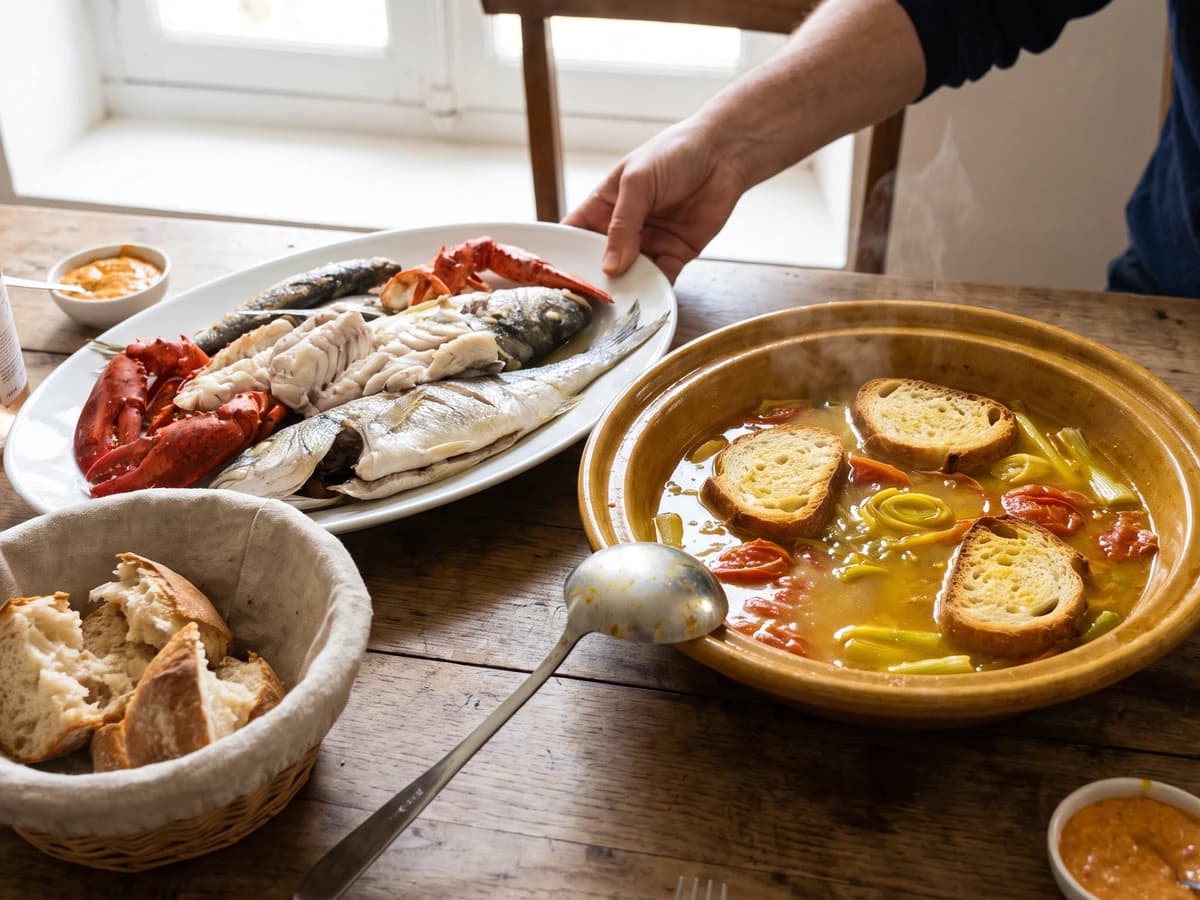
Marseille's great fish stew, saffron-gold and garlic-scented, proves that a hard boil can be the careful choice: it binds olive oil into broth before the whole pot meets bread.
A cooking platform built around craft, culture, and the stories behind what we eat.
Created by Chef Juliette
Based on No. 1281, Sauté de Veau Chasseur, from Le Guide Culinaire (1907) by Auguste Escoffier
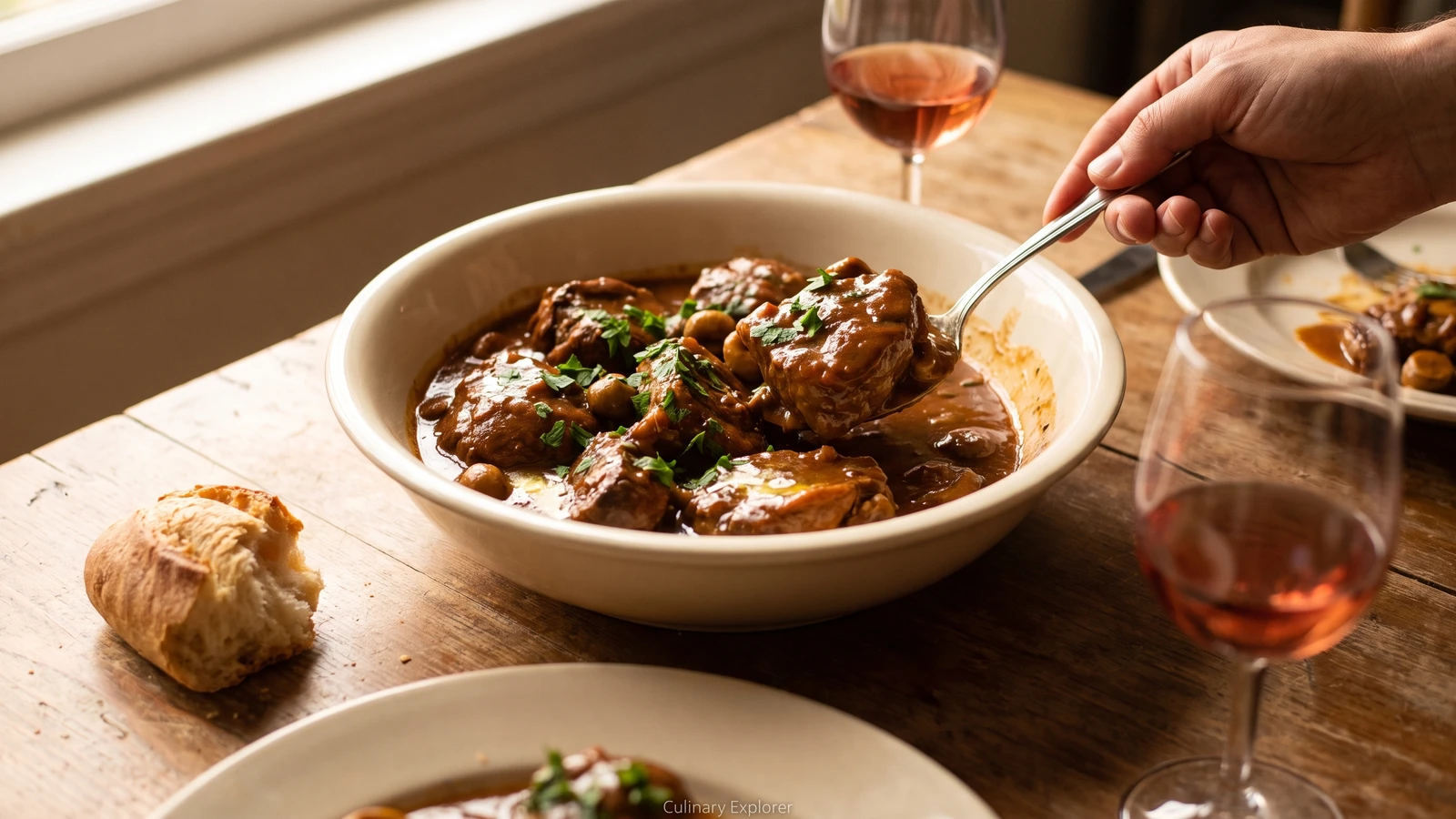
Sauté de Veau Chasseur turns deep-browned veal, brown stock, tomato, and Chasseur Sauce (Escoffier’s Method) (No. 33) into a glossy braise, proving that fond and gentle heat do the real work.
Sauté de Veau Chasseur (veal browned and braised hunter-style) teaches the discipline behind every good sauté: colour the meat deeply before the liquid enters, because the fond on the pot floor becomes the backbone of the sauce. This is the one true thing to know before touching the pan. Crowd the veal and it pales in its own juices; give it room and the finished sauce will taste complete before the parsley falls.
The book's kitchen assumed a saucier with Chasseur Sauce (Escoffier’s Method) (No. 33) ready, a brown stockpot never off the fire, and enough pans to pass meat and sauce down a line. For four servings, good unsalted brown veal stock and a measured portion of the finished referenced sauce do the same work; one heavy casserole, a bowl, and a fine sieve replace the relay of saucepans. There is no salamander work to replace here, and the book's timbale becomes a warmed deep serving bowl, which holds the sauce by the same intent. The extra transfers are brigade scaffolding, so they go. Deep browning, gentle oven cooking, straining, reducing the liquor by one quarter, and the final fifteen minutes in sauce are the dish, so they stay.
The result is generous rather than fussy: tender veal under a glossy brown sauce, its tomato held in check, mushroom and wine coming through at the finish, parsley waking the whole pot. One cook, one stove, one evening. Brown in uncrowded batches, and the Sauté de Veau Chasseur is already more than halfway home.
Sauté de veau belongs to the cuisine bourgeoise of Paris and the national classical repertoire rather than to one claimed province, a tender-meat stew refined through the sauce system of the grand kitchen. The chasseur name points to a family of mushroom-and-wine sauces first associated with game cookery, which cooks then carried to poultry and veal. The misconception is that the veal itself must taste game-like; here its mildness is deliberate, a quiet body for the darker sauce.
Quantity
2 pounds (900 g)
cut into 1½-inch (4 cm) pieces
Quantity
3 tablespoons (45 ml / 42 g)
Quantity
2 cups (480 ml / 480 g)
Quantity
1 tablespoon (15 ml / 16 g)
Quantity
1 bouquet garni
2 parsley stems, 1 thyme sprig, and 1 bay leaf tied into an herb bundle
Quantity
¼ cup (60 ml / about 65 g) Chasseur Sauce (Escoffier’s Method) (No. 33)
prepared in advance as a finished sauce
Quantity
2 tablespoons (30 ml / 8 g)
finely chopped
Quantity
1 teaspoon (5 ml / 6 g)
divided
Quantity
½ teaspoon (2.5 ml / 1 g)
| Ingredient | Quantity |
|---|---|
| boneless veal shouldercut into 1½-inch (4 cm) pieces | 2 pounds (900 g) |
| clarified unsalted butter | 3 tablespoons (45 ml / 42 g) |
| unsalted brown veal stock | 2 cups (480 ml / 480 g) |
| tomato purée | 1 tablespoon (15 ml / 16 g) |
| bouquet garni2 parsley stems, 1 thyme sprig, and 1 bay leaf tied into an herb bundle | 1 bouquet garni |
| Chasseur Sauce (Escoffier’s Method)prepared in advance as a finished sauce | ¼ cup (60 ml / about 65 g) Chasseur Sauce (Escoffier’s Method) (No. 33) |
| flat-leaf parsleyfinely chopped | 2 tablespoons (30 ml / 8 g) |
| fine sea saltdivided | 1 teaspoon (5 ml / 6 g) |
| freshly ground black pepper | ½ teaspoon (2.5 ml / 1 g) |
Heat the oven to 325°F (160°C). Dry the veal thoroughly, then season it with three quarters of the salt and all the pepper. Leave the remaining salt for the finished sauce, because both reduction and the prepared Chasseur sauce concentrate seasoning. Have the stock, tomato purée, bouquet garni, and finished sauce measured before the butter meets the pot.
Heat one tablespoon of clarified butter in a 4-quart (4-litre) heavy casserole over medium-high heat. When the butter gleams, add only enough veal to leave space around every piece. Brown it deeply on several sides, replenishing the butter as needed and transferring each finished batch to a bowl. Do not fuss with the pieces before they release from the pot; the bronze crust and the fond underneath are the sauce's foundation. If liquid collects and the meat begins to pale, lift the veal out, boil the liquid away, add a little of the remaining butter, and resume with smaller batches. Ça se rattrape. When all the veal is browned, pour away loose grease but leave every brown mark fixed to the pot.
Return the veal and any collected juices to the casserole. Pour in the brown veal stock, add the tomato purée and bouquet garni, then scrape the pot floor until the fond dissolves into the liquid. Bring everything just to a boil, cover, and place it in the oven for 1½ hours. Turn the pieces once midway through and keep the cooking gentle, with only a quiet movement beneath the lid. The veal is ready when a fork enters the shoulder easily but the pieces still hold their shape; if it remains firm after the allotted time, give it another 10 to 15 minutes.
Lift the veal into a warm bowl and cover it loosely. Discard the bouquet garni, then strain the cooking liquor through a fine sieve into a heatproof measuring jug. Skim away visible fat and note the volume. Return the liquor to the casserole and boil it steadily until only three quarters of that measured amount remains. This quarter reduction is not brigade ceremony; it gives the sauce its body. If it passes the mark and turns sticky or too salty, loosen it with a measured spoonful of unsalted stock. Ça se rattrape.
Pour the reduced liquor back into the measuring jug. Place the finished Chasseur Sauce (Escoffier’s Method) (No. 33) in the casserole, then whisk in the reduced liquor gradually until smooth. Return the veal and its resting juices, bring the sauce to a bare simmer, and cook uncovered for 15 minutes, turning the pieces once so they glaze evenly. The finished sauce should coat the back of a spoon and fall from it in a broad ribbon. If it remains thin, lift out the veal and reduce the sauce briefly; if it tightens too far, add stock one tablespoon at a time.
Taste the sauce before adding the reserved salt. Spoon the veal into a warmed deep serving bowl and pour the glossy sauce over and around it, keeping the pieces generously coated. Sprinkle with the chopped parsley at the last moment, while its green still tastes fresh. Bring the bowl straight to the table. À table!
1 serving (about 260g)
Culinary guides, cultural storytelling, and the editorial depth that makes cooking meaningful.
Discover Culinary ExplorerChef Juliette
Marseille's great fish stew, saffron-gold and garlic-scented, proves that a hard boil can be the careful choice: it binds olive oil into broth before the whole pot meets bread.
Chef Juliette
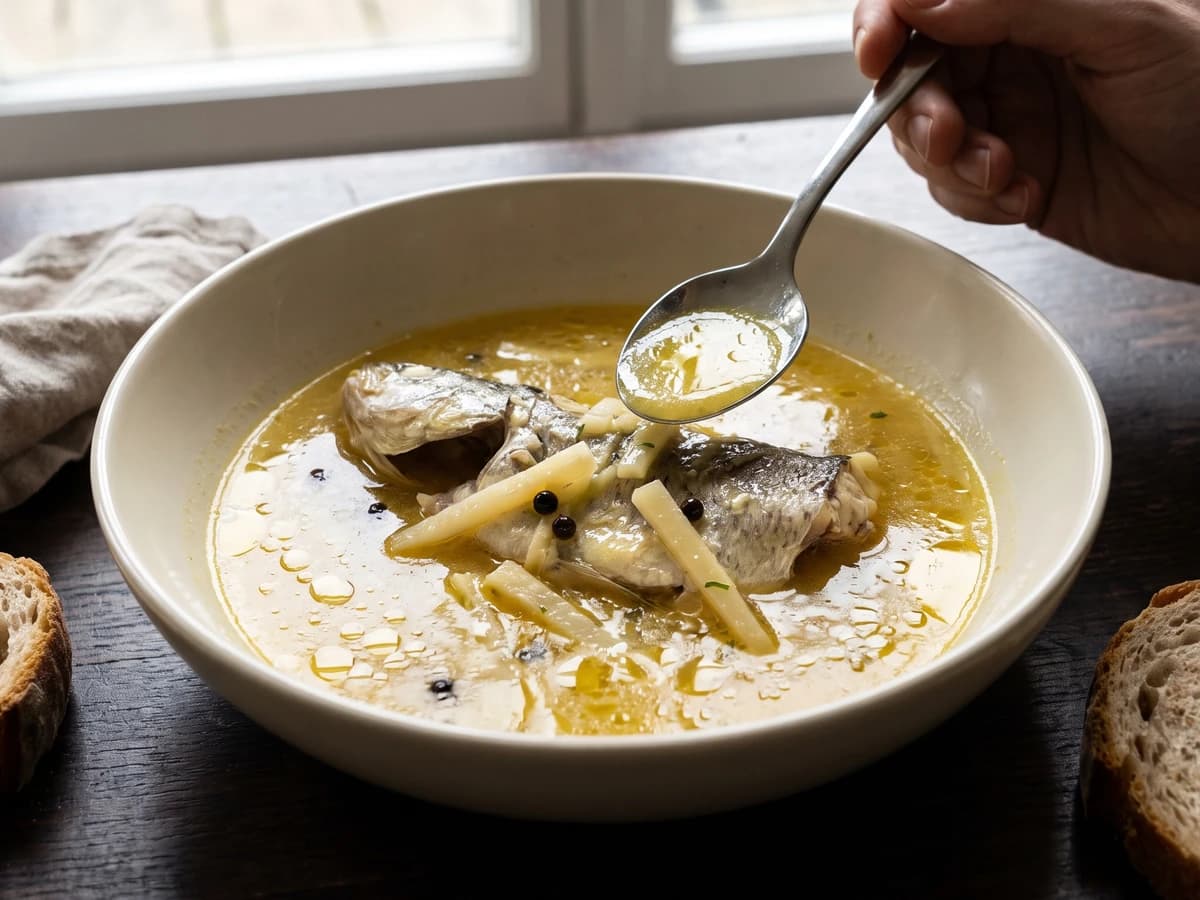
Waterzoi asks fresh, bone-in river fish to thicken its own buttery broth, with parsley root and pepper for company. No flour, no stockpot, just a brisk simmer watched closely.
Chef Juliette
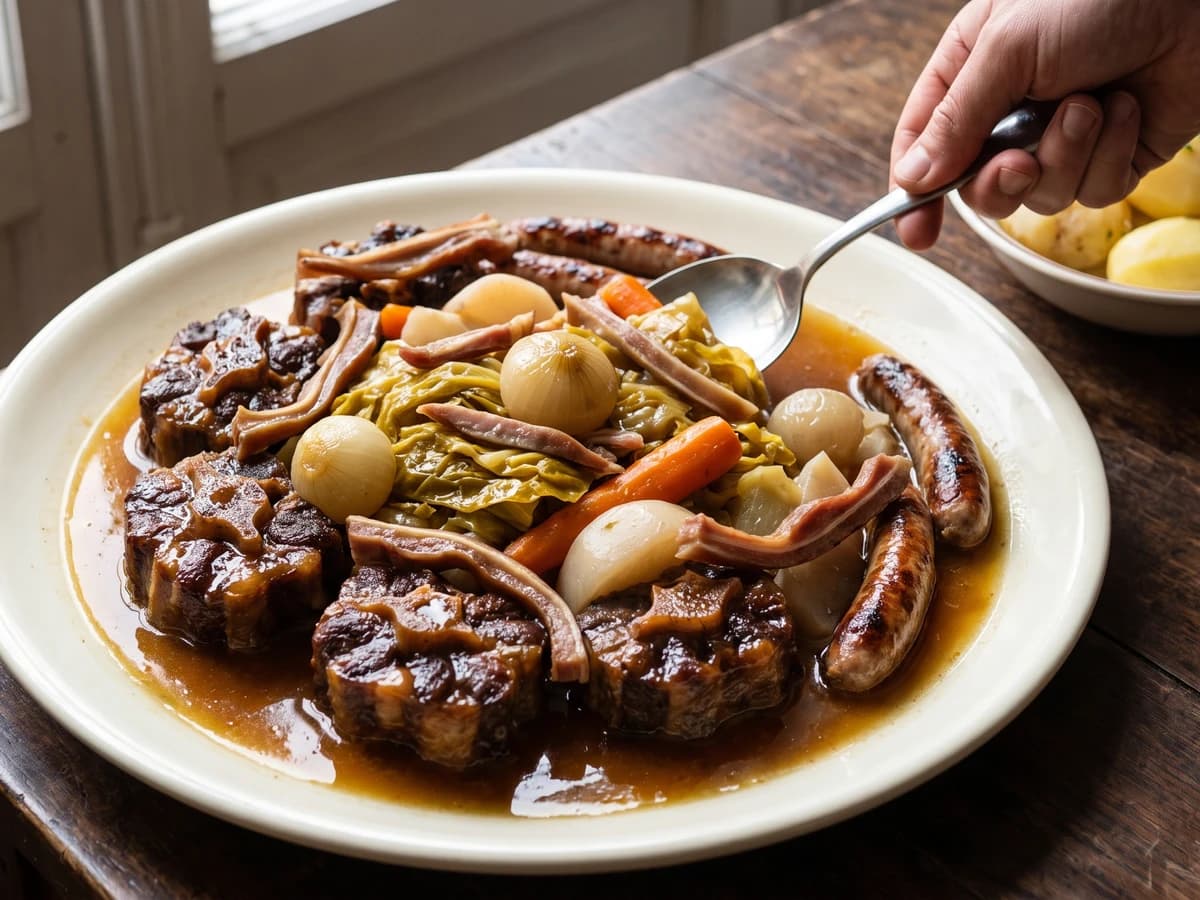
Queue de Bœuf en Hochepot gathers oxtail, pig's trotter and ear, cabbage, roots, and grilled chipolatas around a clear, gelatin-rich broth whose quiet simmer keeps every piece tender and distinct.
Chef Juliette
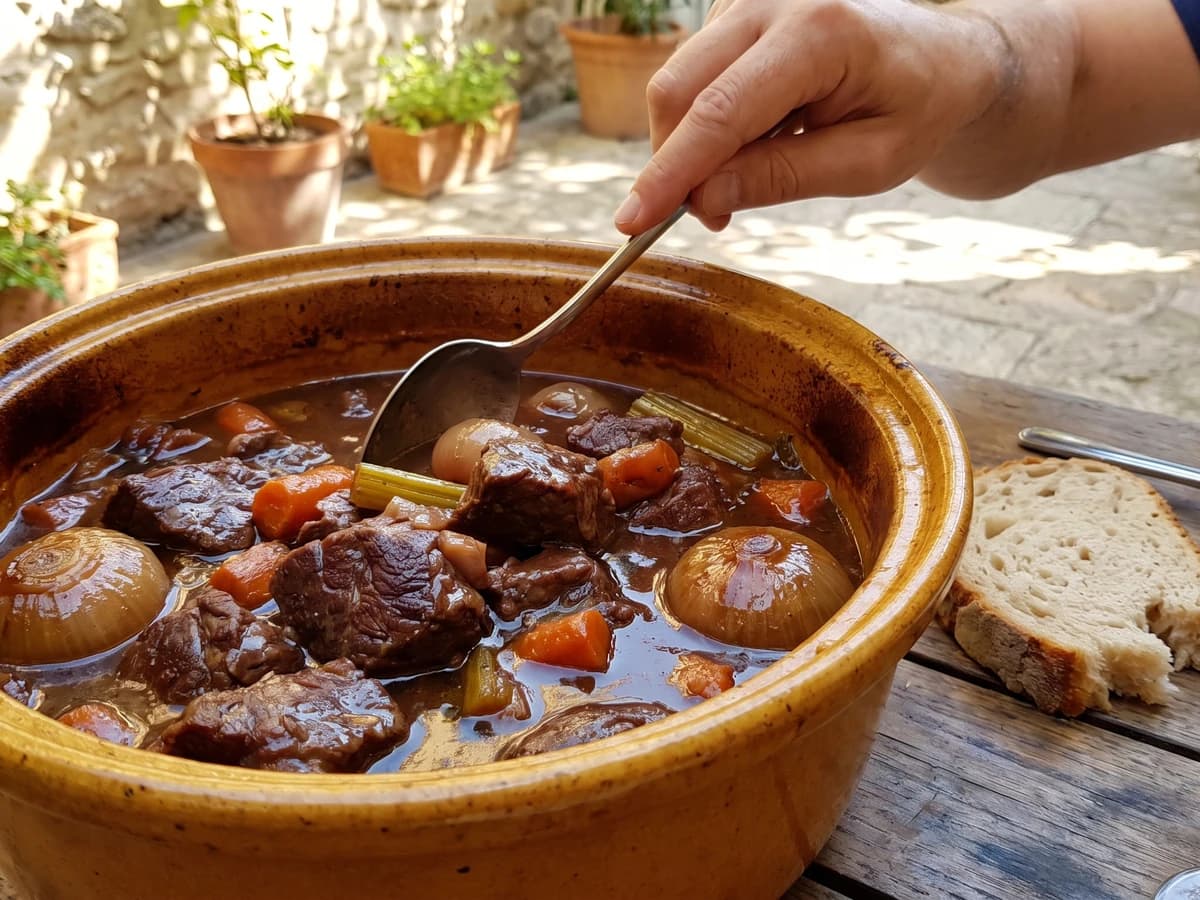
Beef shoulder larded with bacon, sharpened by red wine and vinegar, then sealed with garlic, vegetables, and dry lemon peel until the low oven turns it yielding and the gravy darkly glossy.