Chef Juliette
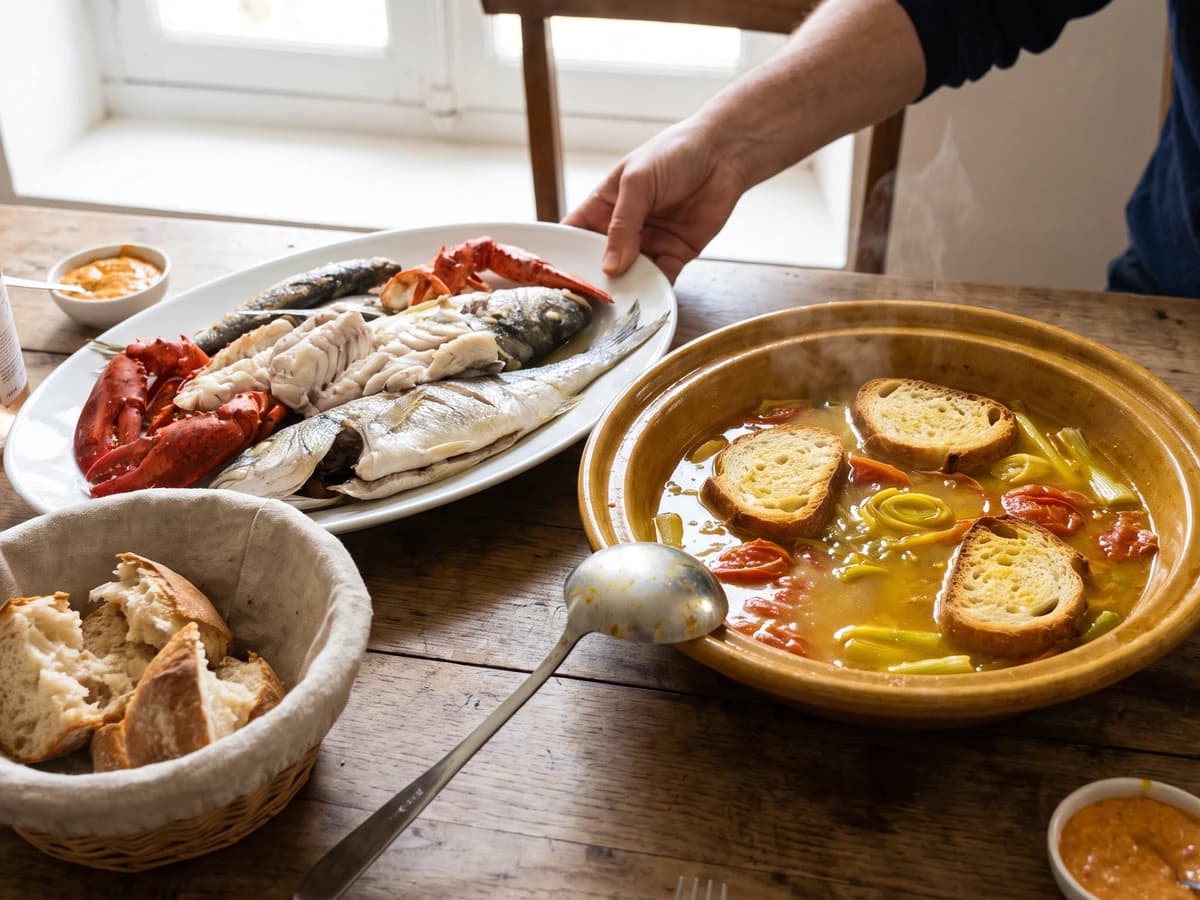
Bouillabaisse à la Marseillaise
Marseille's great fish stew, saffron-gold and garlic-scented, proves that a hard boil can be the careful choice: it binds olive oil into broth before the whole pot meets bread.
A cooking platform built around craft, culture, and the stories behind what we eat.
Created by Chef Juliette
Based on No. 1274, Blanquette de Veau aux Céleris, Cardons, etc., from Le Guide Culinaire (1907) by Auguste Escoffier
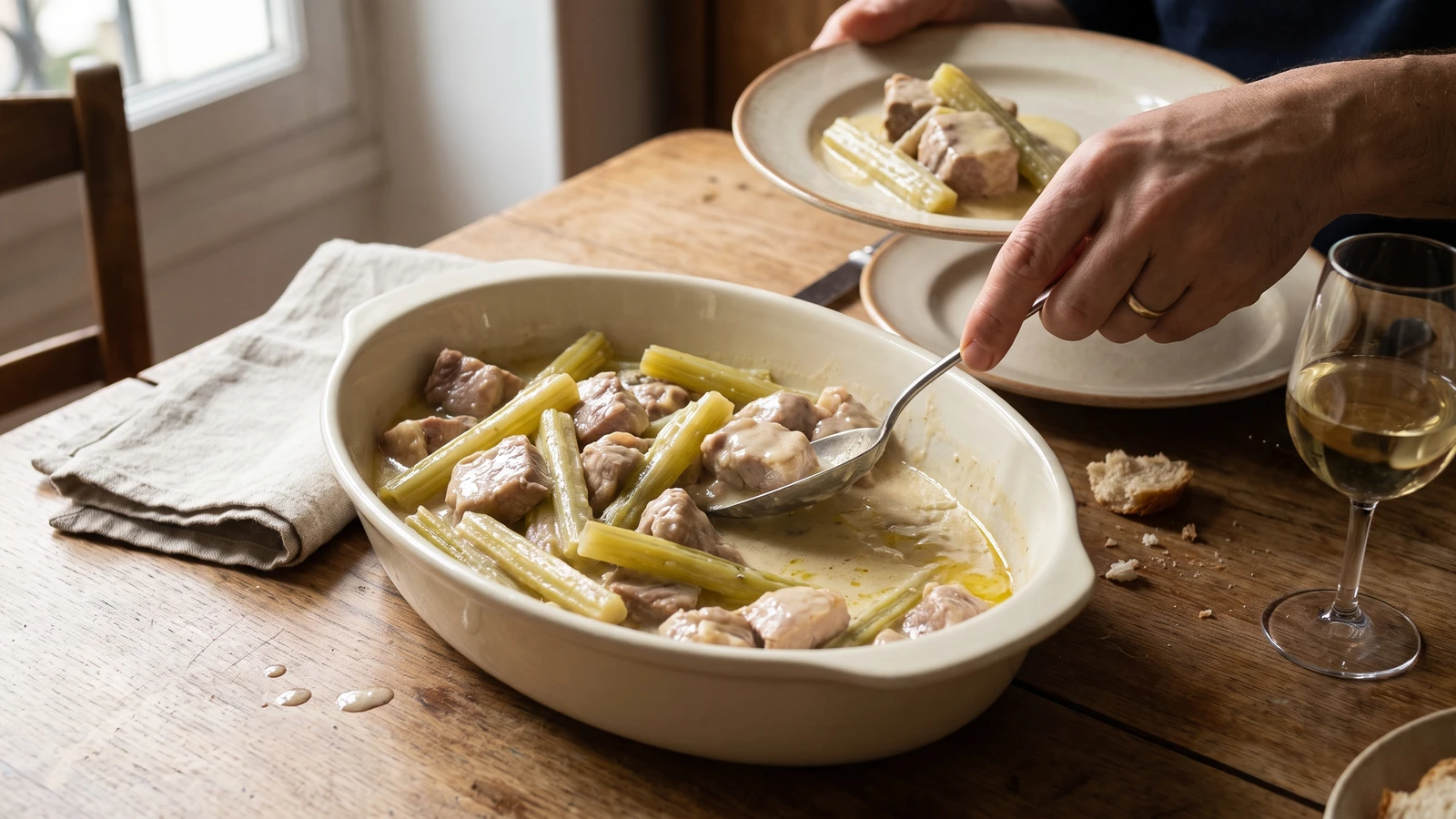
Veal and cardoon, celery, or endive share one pale simmer, then return beneath a glossy liaison of cream and yolk: a generous blanquette whose vegetable gives the white sauce its character.
Blanquette de Veau aux Céleris, Cardons, etc. (white veal stew with celery, cardoons, or endive) teaches the discipline of cooking pale food without cooking timidly. The one true thing to know before touching the pan is this: you do not brown the veal. Its savour comes from a slow cold start, exact skimming, the vegetable's gentle bitterness, a roux blanc, and a liaison that must never boil.
The original assumed a stock never off the fire, a saucier finishing the sauce, and another pair of hands tending a separately prepared vegetable. At home, use one heavy pot, one saucepan, and good light stock, scaled for four. The extra hands were brigade scaffolding and can go. The cold start, the separate white roux, the egg-and-cream liaison, and the final straining are the dish, so they stay. One cook, one stove, one evening.
When it is right, the veal is yielding, the vegetable still recognizable, and the ivory sauce lies over both with a quiet butter sheen. Choose cardoon for earthy bitterness, celery for freshness, or endive for a northern edge, but choose only one and let it lead. The decisive moment comes at the liaison: keep it below a simmer, because gentleness is what turns yolk and cream into silk.
Blanquette de veau belongs chiefly to the bourgeois table of Paris and central France, where pale simmered veal and velouté enriched with egg and cream moved from professional kitchens into home cooking. This vegetable-led formula is deliberately elastic but not vague: cardoon gives the pot a Lyonnais and Rhône Valley accent, while endive belongs to the northern larder and celery travels widely. Its whiteness never required boiling the meat first; good veal started in cold liquid, and careful skimming preserved both colour and savour.
Quantity
2 lb (900 g)
cut into 1½-inch pieces
Quantity
1½ lb (680 g); prepare cardoons or celery according to Blanchings (No. 273)
cardoons cut into 4-inch pieces, celery hearts quartered, or endives washed and left whole
Quantity
5 cups (1.2 L / 1.2 kg)
Quantity
Up to 2 cups (480 ml / 480 g)
as needed to cover
Quantity
1 (about 1 cup / 150 g)
peeled
Quantity
2
Quantity
1
Quantity
1½ teaspoons (7.5 ml / 9 g)
divided
Quantity
¼ teaspoon (1.25 ml / 0.6 g), plus more to taste
Quantity
4 tablespoons (60 ml / 57 g)
divided
Quantity
⅓ cup (80 ml / 42 g)
Quantity
2
Quantity
½ cup (120 ml / 120 g)
divided
Quantity
1 tablespoon (15 ml / 15 g)
| Ingredient | Quantity |
|---|---|
| boneless veal shoulder or breastcut into 1½-inch pieces | 2 lb (900 g) |
| cardoons, small celery hearts, or small Belgian endives, choose onecardoons cut into 4-inch pieces, celery hearts quartered, or endives washed and left whole | 1½ lb (680 g); prepare cardoons or celery according to Blanchings (No. 273) |
| cold light veal stock or low-sodium chicken stock | 5 cups (1.2 L / 1.2 kg) |
| cold wateras needed to cover | Up to 2 cups (480 ml / 480 g) |
| medium onionpeeled | 1 (about 1 cup / 150 g) |
| whole cloves | 2 |
| bouquet garni of parsley stems, thyme, and bay leaf | 1 |
| fine saltdivided | 1½ teaspoons (7.5 ml / 9 g) |
| ground white pepper | ¼ teaspoon (1.25 ml / 0.6 g), plus more to taste |
| unsalted butterdivided | 4 tablespoons (60 ml / 57 g) |
| all-purpose flour | ⅓ cup (80 ml / 42 g) |
| large egg yolks | 2 |
| cold heavy creamdivided | ½ cup (120 ml / 120 g) |
| fresh lemon juice | 1 tablespoon (15 ml / 15 g) |
Choose one vegetable, not a mixture. For cardoons or celery, reach for the vegetable already prepared according to Blanchings (No. 273); keep the cardoons in 4-inch pieces and quarter the celery hearts lengthwise. If using endive, wash it thoroughly and leave it whole. Endive is deliberately not blanched in this formula.
Stud the peeled onion with the cloves. Put the veal, chosen vegetable, onion, bouquet garni, 1 teaspoon of the salt, and white pepper in a heavy pot. Pour in the cold stock and only enough cold water to cover everything by about ½ inch. Do not soak or parboil the meat first. Bring the pot slowly toward a simmer over medium heat, stirring gently from the bottom several times so the proteins rise rather than cling.
As grey-white foam gathers, skim it carefully with a shallow spoon. Once the first quiet bubbles appear, lower the heat and hold the liquid at the barest tremble for 60 to 75 minutes. Check the vegetable as it cooks: endive or celery may be tender after 25 to 40 minutes, while cardoon may need 45 to 60. Lift each piece out when a knife enters without resistance, then continue cooking the veal until it yields easily but still holds its shape. If the pot boils hard, lower the heat and add a small ladle of cold water before skimming again.
Lift the veal into a warmed deep serving dish. Drain the vegetables, trim away any ragged edges, and arrange them among the meat without breaking them. Cover loosely to keep everything warm. Discard the onion and bouquet garni, then strain the cooking liquor through a fine sieve and skim away excess surface fat. Measure 3 cups (720 ml / about 720 g) for the sauce and keep a little extra nearby for adjusting its consistency.
Melt 3 tablespoons (45 ml / 42 g) of the butter in the saucepan over medium-low heat. Stir in the flour to make a roux blanc, a white roux, and cook for 2 minutes without allowing it to colour. Whisk in the measured hot cooking liquor a little at a time, making each addition smooth before the next. Simmer gently for 15 to 20 minutes, stirring often, until the sauce coats the back of a spoon. If it is thin, simmer it longer before adding the liaison; if it is too tight, loosen it with reserved cooking liquor.
Whisk the egg yolks with 6 tablespoons (90 ml / 90 g) of the cold cream and the lemon juice. Whisk in 1 cup (240 ml / about 240 g) of the hot sauce by small additions, then take the saucepan off the heat and stir this tempered liaison, the egg-and-cream enrichment, back into the remaining sauce. Return it to the lowest heat and stir constantly until it thickens slightly and reaches about 165°F (74°C). Never let it boil. If small curds appear, pull it from the heat immediately and whisk in the reserved 2 tablespoons (30 ml / 30 g) cold cream. Ça se rattrape. Stir in the remaining tablespoon (15 ml / 14 g) of butter.
Strain the finished sauce directly over the arranged veal and vegetables, moving the sieve so every piece receives an even ivory coating. Taste the sauce and add the remaining salt or a little more white pepper if needed. Serve at once from the deep dish, with the sauce generously pooled around the meat. À table!
1 serving (about 560g)
Culinary guides, cultural storytelling, and the editorial depth that makes cooking meaningful.
Discover Culinary ExplorerChef Juliette
Marseille's great fish stew, saffron-gold and garlic-scented, proves that a hard boil can be the careful choice: it binds olive oil into broth before the whole pot meets bread.
Chef Juliette
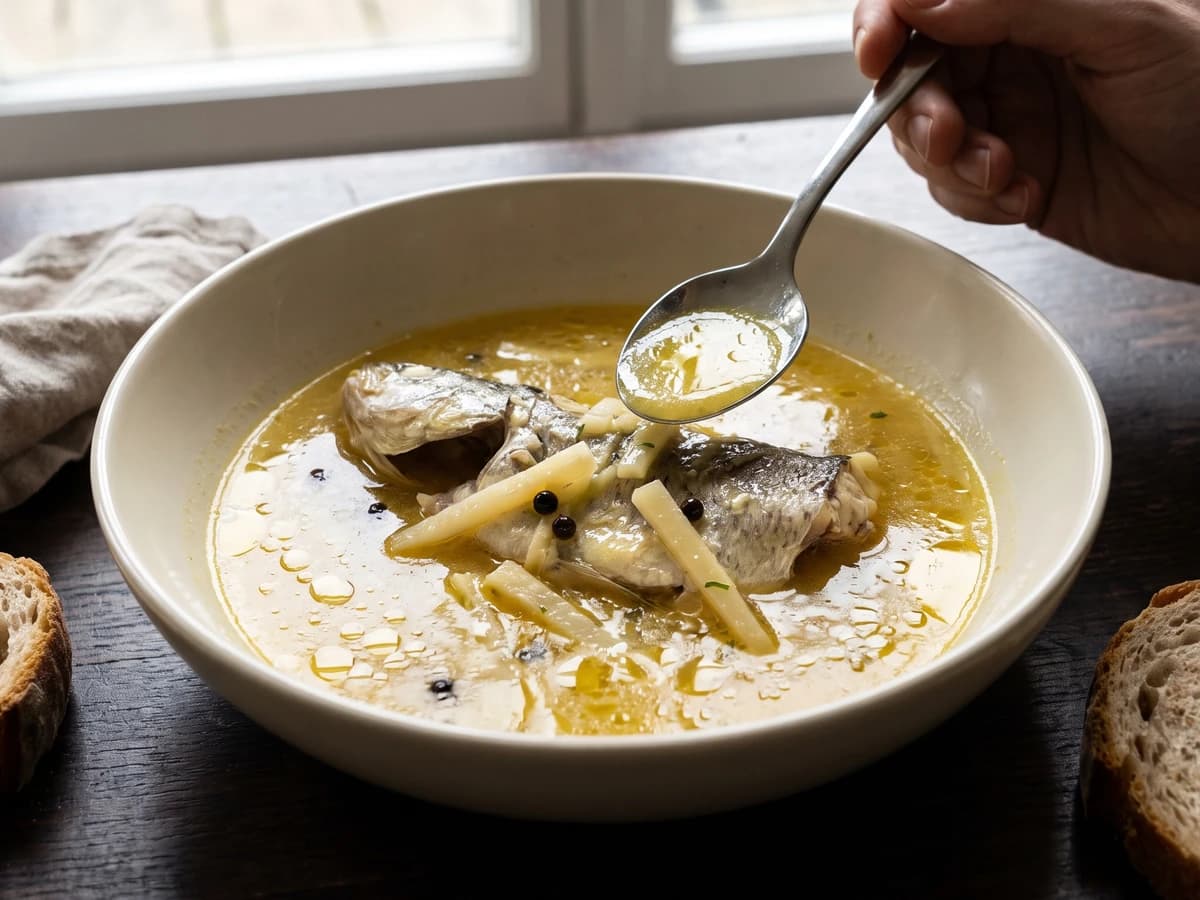
Waterzoi asks fresh, bone-in river fish to thicken its own buttery broth, with parsley root and pepper for company. No flour, no stockpot, just a brisk simmer watched closely.
Chef Juliette
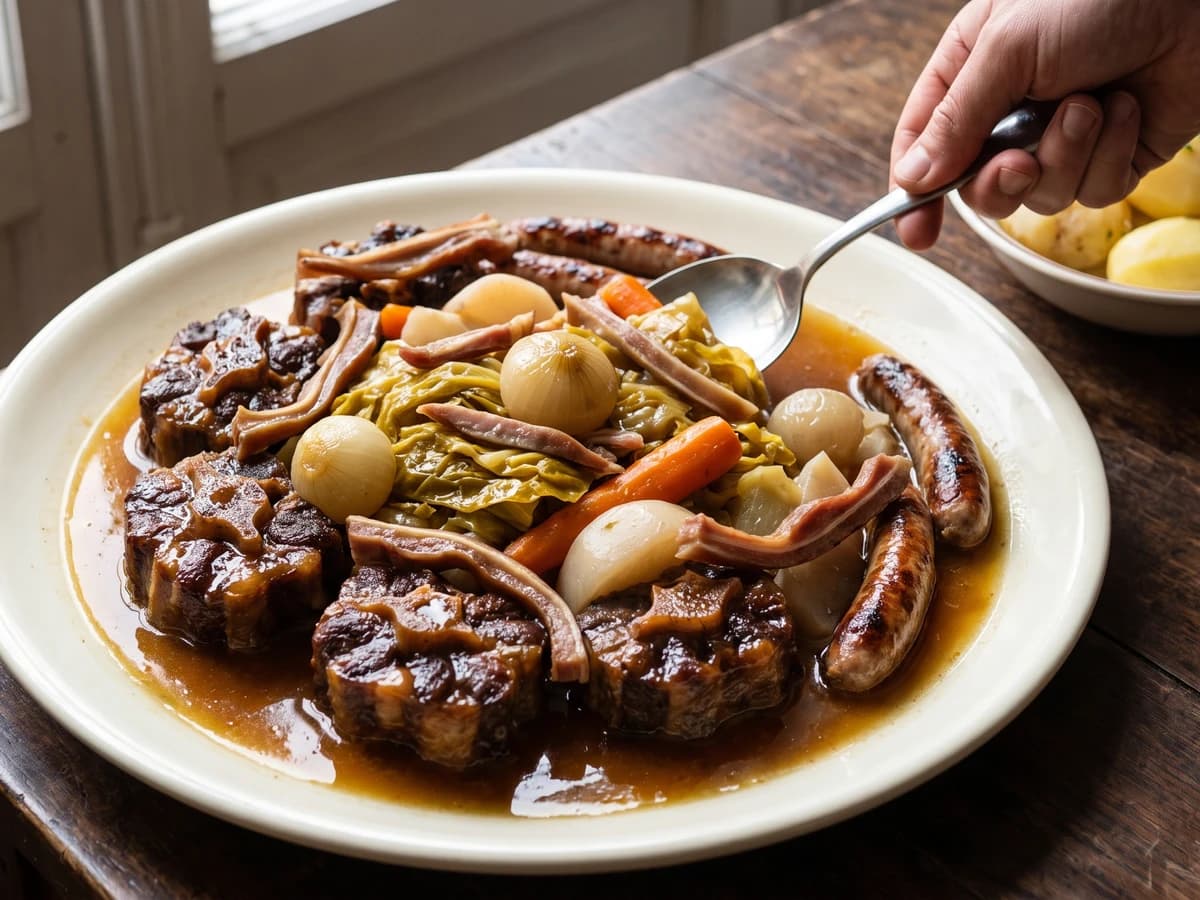
Queue de Bœuf en Hochepot gathers oxtail, pig's trotter and ear, cabbage, roots, and grilled chipolatas around a clear, gelatin-rich broth whose quiet simmer keeps every piece tender and distinct.
Chef Juliette
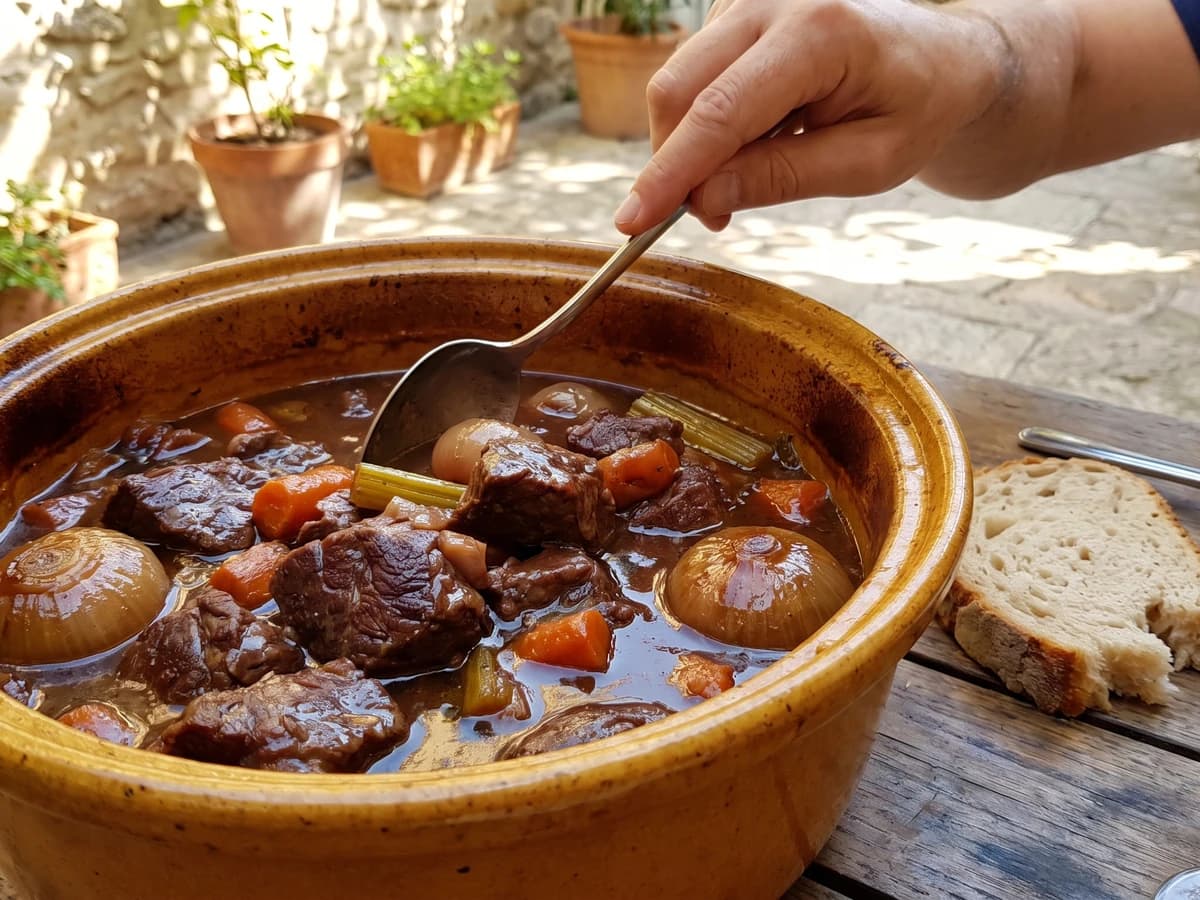
Beef shoulder larded with bacon, sharpened by red wine and vinegar, then sealed with garlic, vegetables, and dry lemon peel until the low oven turns it yielding and the gravy darkly glossy.