Chef Juliette
Bouillabaisse à la Marseillaise
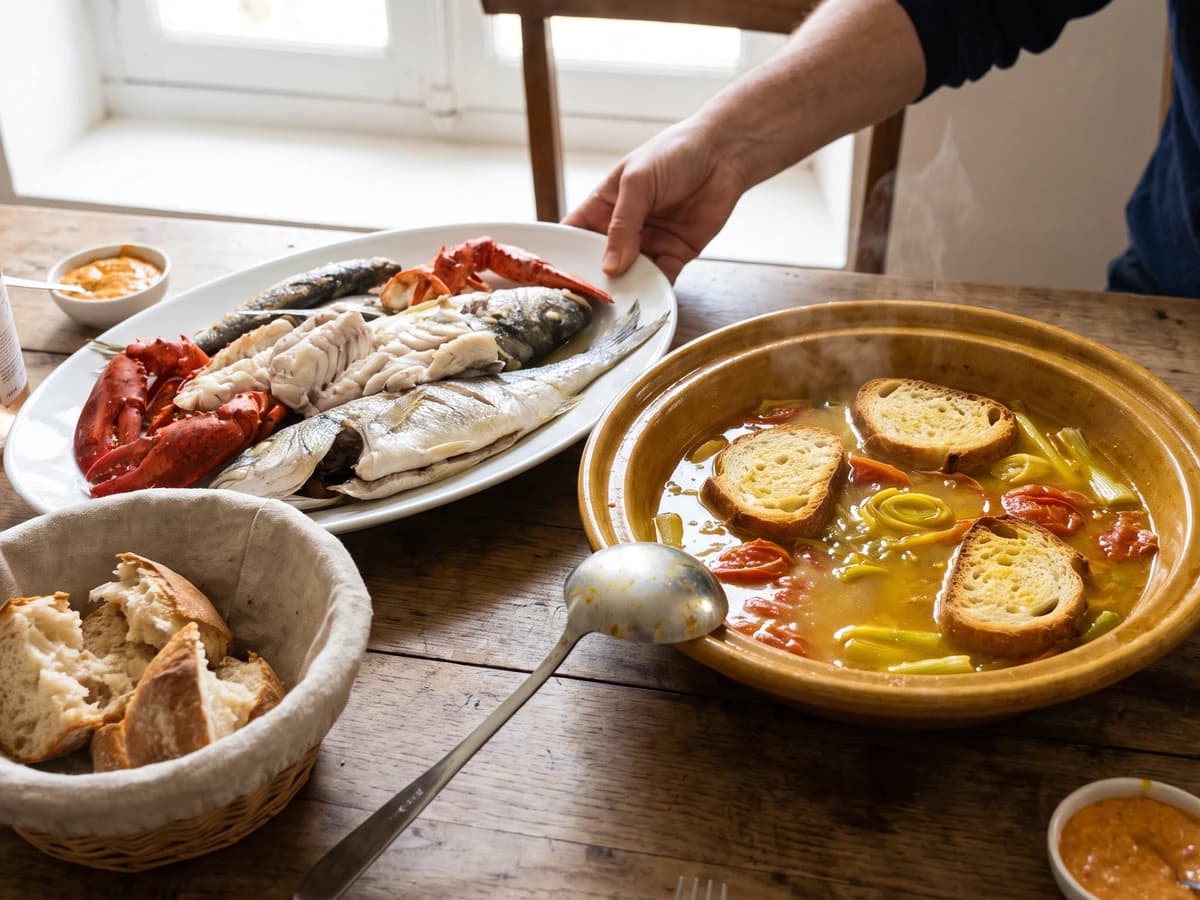
Marseille's great fish stew, saffron-gold and garlic-scented, proves that a hard boil can be the careful choice: it binds olive oil into broth before the whole pot meets bread.
A cooking platform built around craft, culture, and the stories behind what we eat.
Created by Chef Juliette
Based on No. 1273, Blanquette de Veau à l’Ancienne, from Le Guide Culinaire (1907) by Auguste Escoffier
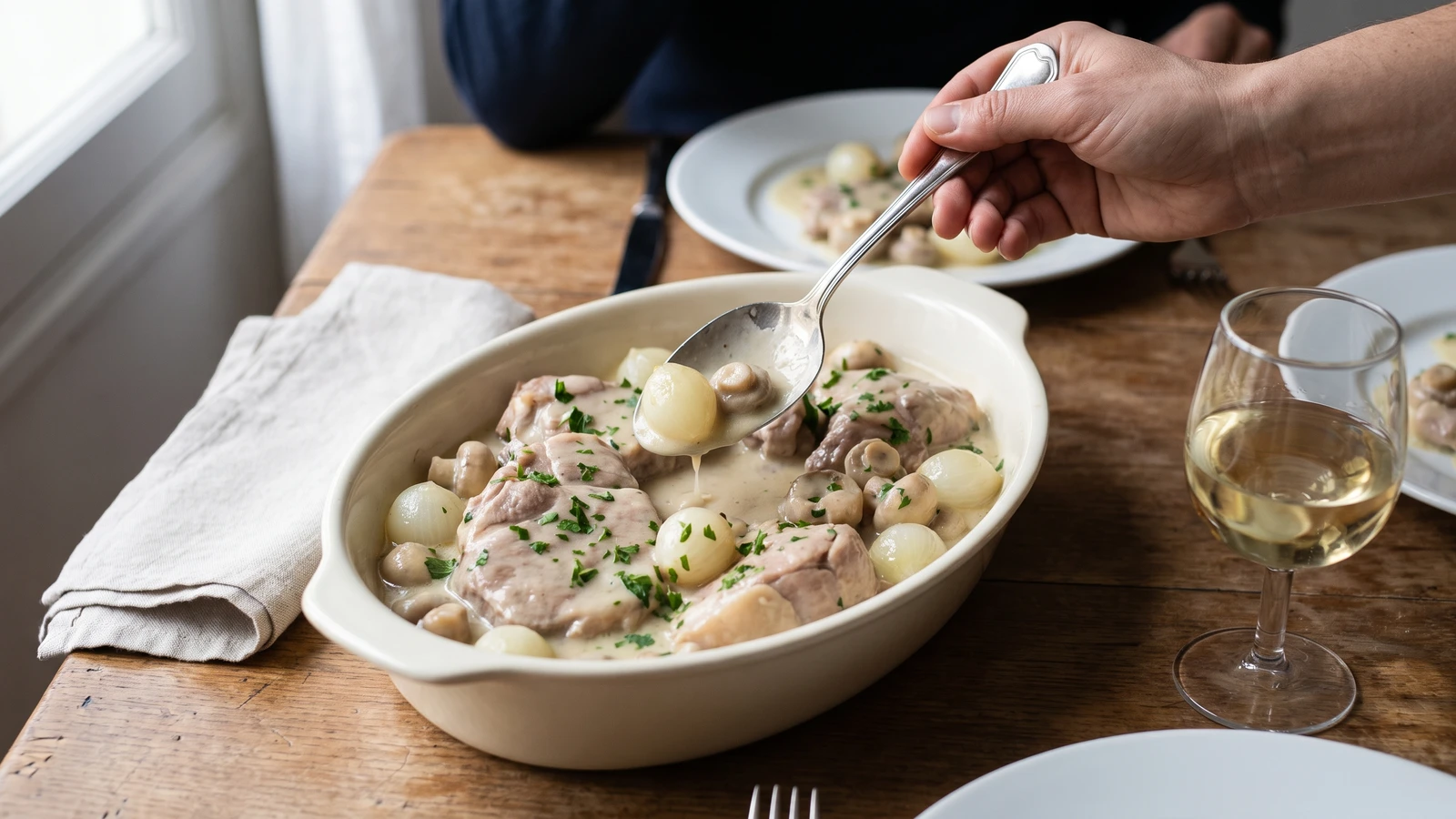
The great white stew teaches restraint: veal kept pale, a roux cooked without color, and a yolk-cream liaison folded in off the heat. Never boil after, and the sauce stays satin-smooth.
Blanquette de veau à l’ancienne (old-style white veal stew) teaches the discipline of building depth without browning. Veal, roux blanc (white roux), pearl onions, mushrooms, and a liaison (egg-yolk-and-cream binding) must remain pale yet taste complete. The one true thing to know before touching a pan is this: once the liaison enters, the sauce must never boil.
The original formula assumed a saucier tending separate pans, pale white stock and consommé always ready to ladle, and enough hands to cook the garnishes while the sauce was skimmed and passed. It has no need of a salamander because this is a stovetop dish. At home, one supply of good unsalted pale stock serves the veal and the onions, and a fine sieve does the passing. The source’s two pounds of veal already makes four generous servings, so its proportions remain intact. A separate consommé for twelve onions is brigade scaffolding and can go; the roux, the fifteen-minute mushroom infusion, and the liaison are the dish and must stay.
You’ll simmer the veal at a bare tremble, build its sauce from the cooking liquor, then finish everything gently. One cook, one stove, one evening. Guard that final heating above all: no bubbles after the yolks and cream, only enough warmth to bring the sauce back to a gloss.
Blanquette belongs to French cuisine bourgeoise, especially the Parisian household table, rather than to one provincial larder; its name points to blanche, the pale meat and white sauce that define it. Household simmering passed into the grand kitchen, where the cooking liquor became a roux-thickened velouté (stock-based white sauce), pearl onions and mushrooms became a formal garnish, and yolk with cream supplied the final liaison. It is often mistaken for an ordinary stew enriched at the end, but its refusal of browning is the method, not merely the color.
Quantity
2 lb (907 g), prepared by Blanchings (No. 273)
cut into 3 oz (85 g) pieces
Quantity
6 cups (1.44 L / 1.44 kg)
divided
Quantity
1 teaspoon (5 ml / 6 g), plus more only if needed
Quantity
1 (about 1/2 cup / 120 ml / 75 g)
peeled and cut into large pieces
Quantity
1 (about 1 cup / 240 ml / 150 g)
peeled
Quantity
1
Quantity
1 (about 1 cup / 240 ml / 90 g)
split and thoroughly washed
Quantity
8
Quantity
1
Quantity
1
Quantity
12 (about 1 cup / 240 ml / 180 g)
peeled
Quantity
15 (about 2 cups / 480 ml / 225 g)
trimmed; reserve 1 oz (28 g) stems and parings
Quantity
3 tablespoons (45 ml / 43 g)
Quantity
1/3 cup (80 ml / 43 g)
Quantity
2
Quantity
3 tablespoons (45 ml / 45 g)
Quantity
1/2 teaspoon (2.5 ml / 2.5 g)
Quantity
1 teaspoon (5 ml / 1 g)
finely chopped
Quantity
1 tablespoon (15 ml / 15 g)
| Ingredient | Quantity |
|---|---|
| veal tendron or veal breastcut into 3 oz (85 g) pieces | 2 lb (907 g), prepared by Blanchings (No. 273) |
| unsalted pale veal stock or low-sodium chicken stockdivided | 6 cups (1.44 L / 1.44 kg) |
| fine salt | 1 teaspoon (5 ml / 6 g), plus more only if needed |
| small carrotpeeled and cut into large pieces | 1 (about 1/2 cup / 120 ml / 75 g) |
| medium yellow onionpeeled | 1 (about 1 cup / 240 ml / 150 g) |
| whole clove | 1 |
| small leek, white and light-green partssplit and thoroughly washed | 1 (about 1 cup / 240 ml / 90 g) |
| parsley stems | 8 |
| small thyme sprig | 1 |
| small bay leaf | 1 |
| small white pearl onionspeeled | 12 (about 1 cup / 240 ml / 180 g) |
| small white button mushroomstrimmed; reserve 1 oz (28 g) stems and parings | 15 (about 2 cups / 480 ml / 225 g) |
| unsalted butter | 3 tablespoons (45 ml / 43 g) |
| plain flour | 1/3 cup (80 ml / 43 g) |
| large egg yolks | 2 |
| heavy cream | 3 tablespoons (45 ml / 45 g) |
| fresh lemon juice | 1/2 teaspoon (2.5 ml / 2.5 g) |
| flat-leaf parsleyfinely chopped | 1 teaspoon (5 ml / 1 g) |
| cold heavy cream for liaison rescue (optional) | 1 tablespoon (15 ml / 15 g) |
Prepare the veal according to Blanchings (No. 273), using the meat operation only to the slight stage required for this formula; cool it as directed and drain it thoroughly. Tie the leek, parsley stems, thyme, and bay leaf into a compact bouquet garni. Push the clove into the peeled yellow onion so it cannot disappear into the cooking liquor.
Place the cooled veal in a heavy 4-quart saucepan and add enough cold stock to cover it, usually 4 1/2 to 5 cups (1.08 to 1.2 L / 1.08 to 1.2 kg). Add the salt and bring it slowly toward a boil, stirring the pieces once or twice so none clings to the bottom. Skim away the gray foam as it gathers. Add the carrot, clove-studded onion, and bouquet garni, then lower the heat and cook with the lid slightly ajar at the barest tremble for 1 1/2 hours. Add a little hot stock if the meat becomes exposed. The veal is ready when a knife enters easily but the pieces still hold their shape.
While the veal cooks, put the pearl onions in a lidded sauté pan with 1 cup (240 ml / 240 g) of the remaining stock. Cover and simmer very gently for 15 to 20 minutes, until tender but intact, then lift them out. Poach the trimmed mushroom caps in the same liquor for 5 to 7 minutes, just until tender and still white, then lift them out beside the onions. This shared pale stock is the honest home equivalent of maintaining a separate pan of consommé for twelve onions.
Transfer the cooked veal piece by piece to the sauté pan containing the onions and mushrooms. Keep it moistened with a spoonful of cooking liquor and cover loosely. Discard the carrot, onion, and bouquet garni. Strain the remaining veal liquor through a fine sieve, skim away any visible surface fat, and measure exactly 2 3/8 cups (570 ml / 570 g) for the sauce. Keep any extra liquor nearby for loosening it later.
Melt the butter in a clean medium saucepan over low heat without letting it color. Add the flour and whisk for 2 to 3 minutes, until the roux blanc looks smooth and foamy but remains pale. Gradually whisk in the measured hot cooking liquor, adding the first ladle slowly so the roux opens without lumps. Add the reserved mushroom stems and parings, bring the sauce to a gentle simmer, and cook for 15 minutes, skimming the surface as needed. If lumps appear, keep whisking; any stubborn ones will be caught by the final straining. Do not brown the roux. Color cannot be taken back.
Whisk the egg yolks, 3 tablespoons (45 ml / 45 g) cream, and lemon juice together in a heatproof bowl. Remove the sauce from direct heat. Whisk one ladle of hot sauce into the liaison, then another, before slowly whisking the warmed liaison back into the saucepan. The sauce should coat the back of a spoon in an even ivory layer. If the first tiny grains appear, stop heating immediately, pass the sauce through the fine sieve into a cool bowl, and whisk in the optional cold cream. Ça se rattrape. Heat is the danger now, not lack of it.
Strain the finished sauce over the veal, pearl onions, and mushrooms without pressing hard on the mushroom parings. Set the sauté pan over the lowest heat and warm everything for 3 to 5 minutes, shaking the pan gently rather than stirring and breaking the veal. Never let the sauce boil after the liaison. If it tightens too far, loosen it with reserved cooking liquor one tablespoon at a time. Taste for salt, transfer the blanquette to a deep porcelain serving dish, sprinkle with the chopped parsley, and serve at once. À table!
1 serving (about 510g)
Culinary guides, cultural storytelling, and the editorial depth that makes cooking meaningful.
Discover Culinary ExplorerChef Juliette
Marseille's great fish stew, saffron-gold and garlic-scented, proves that a hard boil can be the careful choice: it binds olive oil into broth before the whole pot meets bread.
Chef Juliette
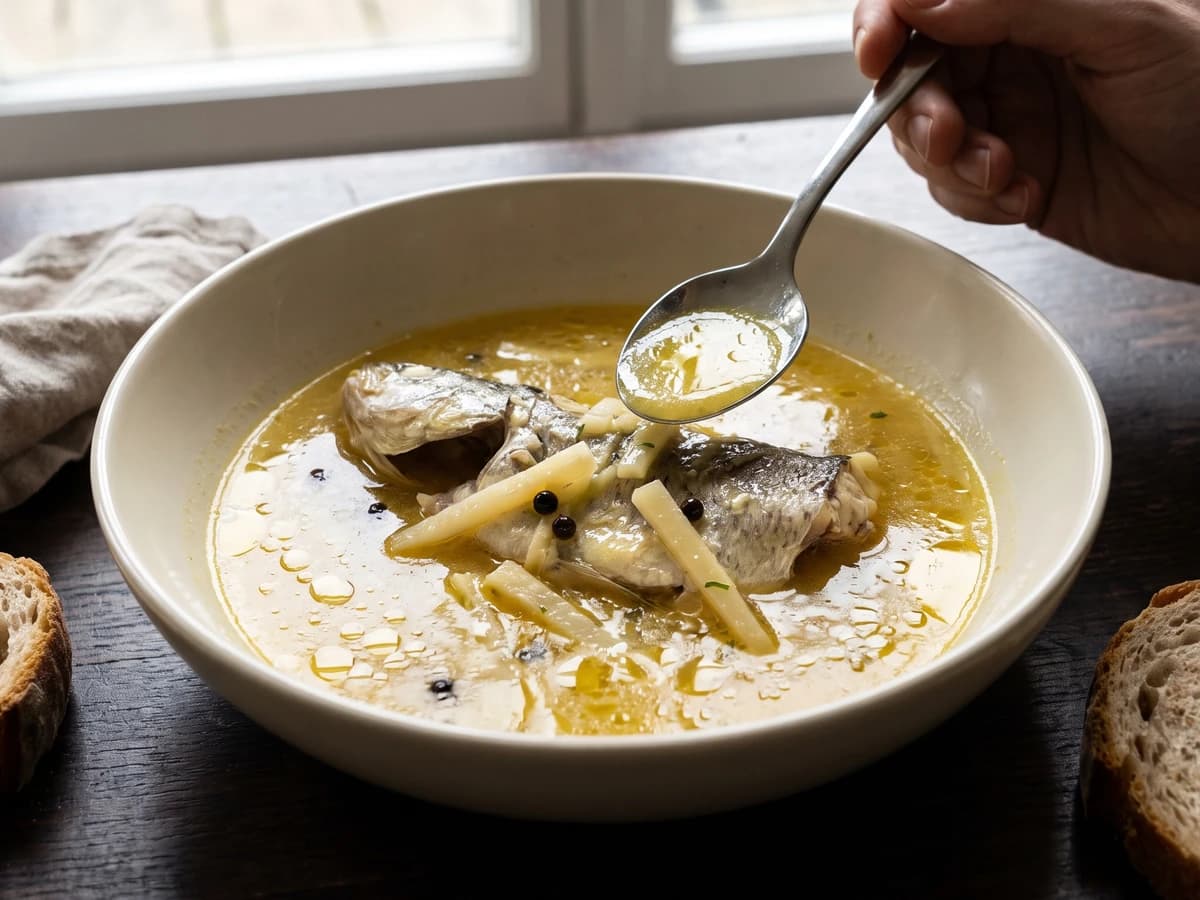
Waterzoi asks fresh, bone-in river fish to thicken its own buttery broth, with parsley root and pepper for company. No flour, no stockpot, just a brisk simmer watched closely.
Chef Juliette
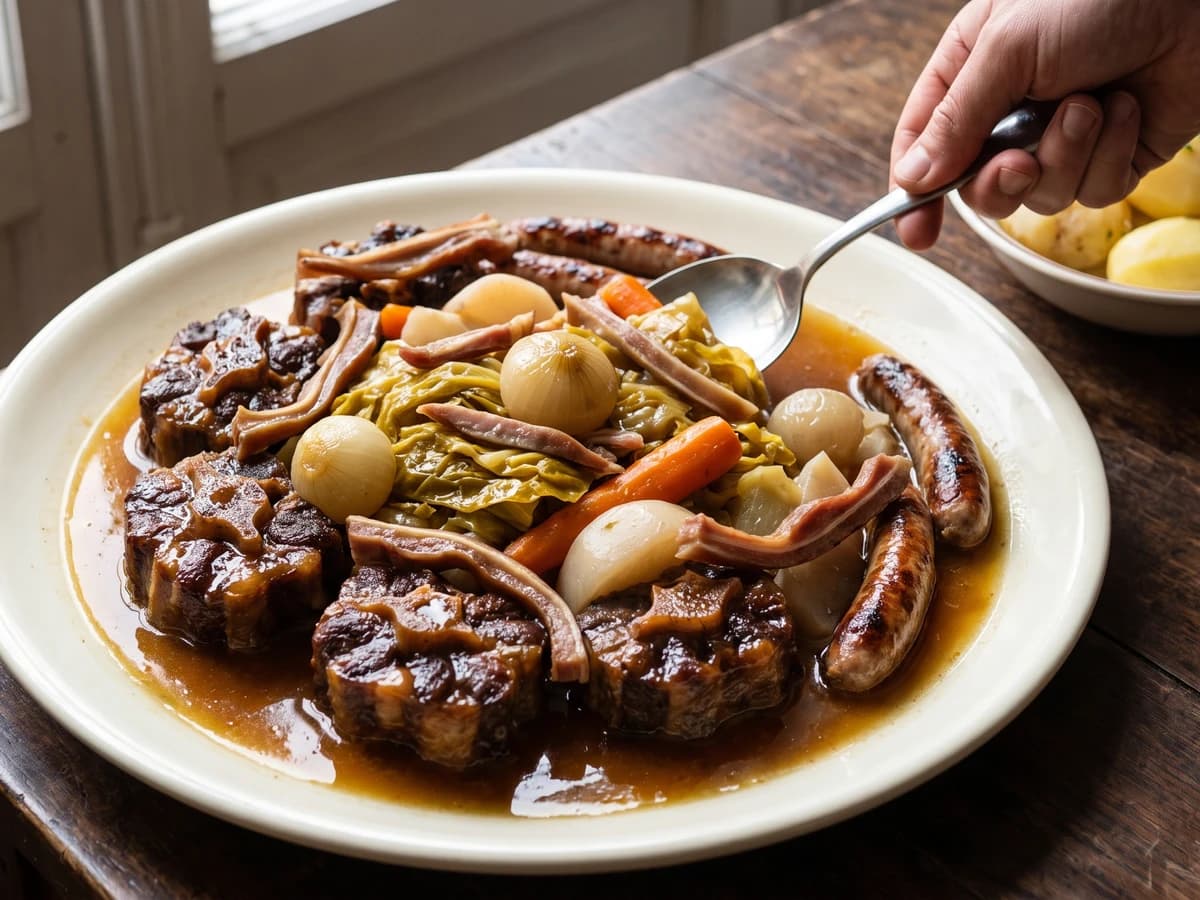
Queue de Bœuf en Hochepot gathers oxtail, pig's trotter and ear, cabbage, roots, and grilled chipolatas around a clear, gelatin-rich broth whose quiet simmer keeps every piece tender and distinct.
Chef Juliette
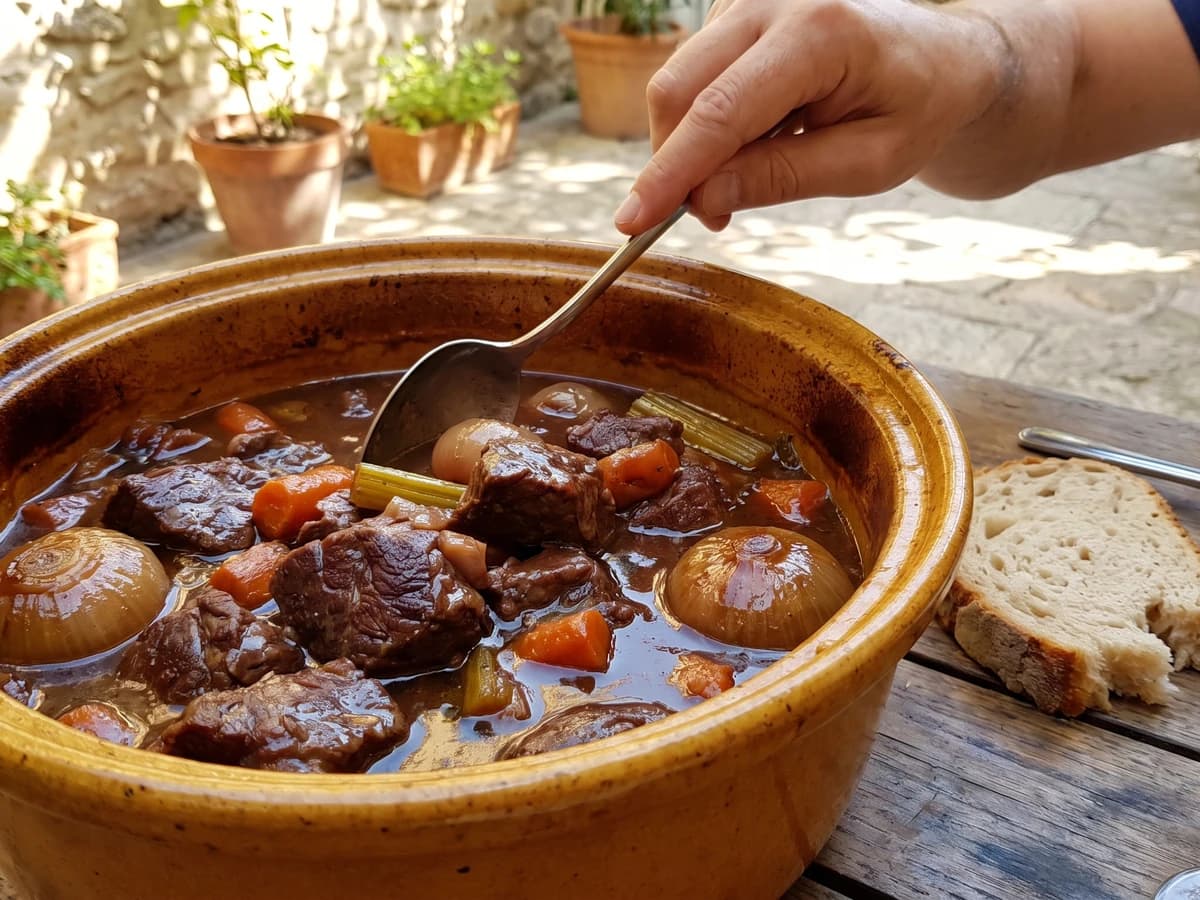
Beef shoulder larded with bacon, sharpened by red wine and vinegar, then sealed with garlic, vegetables, and dry lemon peel until the low oven turns it yielding and the gravy darkly glossy.