
Chef Juliette
John Dory (St. Pierre)
John Dory has the delicacy of sole and the firmness of turbot. A light flouring, a quick butter sauté, and nut-brown beurre noisette show exactly why looks never mattered.
A cooking platform built around craft, culture, and the stories behind what we eat.
Created by Chef Juliette
Based on No. 1263, Côte de Veau Froide Rubens, from Le Guide Culinaire (1907) by Auguste Escoffier
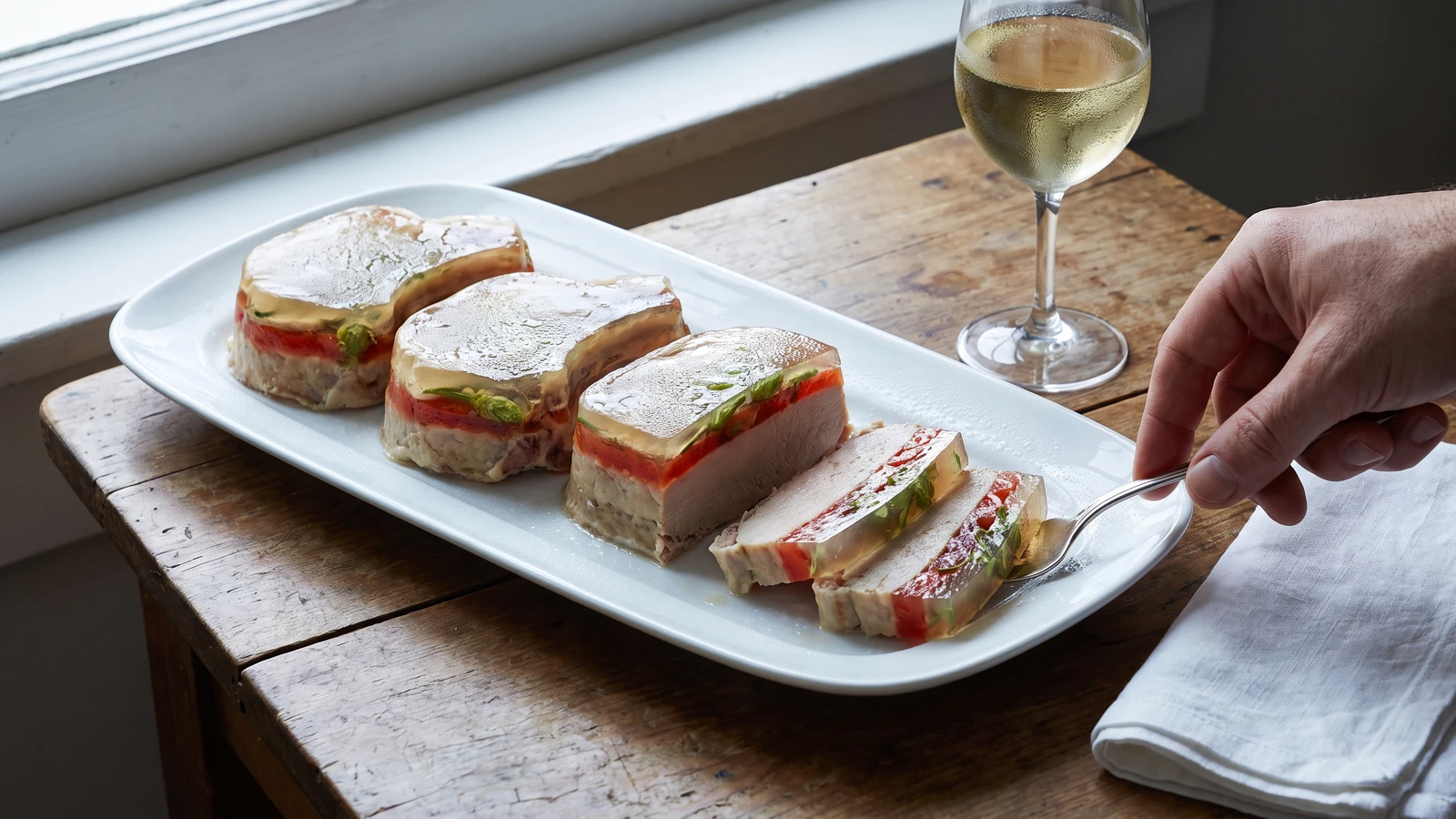
Côte de Veau Froide Rubens sets tender cold veal beneath young hop shoots and tomato-bound aspic, then seals everything in clear jelly: a spring lesson in patience, clarity, and exact chilling.
Côte de Veau Froide Rubens (cold veal cutlet with hop shoots in tomato aspic) teaches the discipline of cold garde-manger: every layer must taste fully seasoned, go down cool, and set before the next one covers it. The one true thing is simple. If the aspic is warm enough to melt the layer beneath, the design blurs; if it is too cold to flow, it sets in ropes. Half-melted, glossy, and just beginning to thicken is exactly right.
The original entry assumed a saucier with sauce tomate ready, a stockpot of clear aspic never off the fire, and a garde-manger station holding trimmed cutlets and shell-shaped molds. A salamander has no work here. At home, good clear stock strengthened with gelatin replaces the stockpot, reduced sieved tomato replaces the waiting sauce, and four shallow dishes replace the service molds. I have cut the decorative vegetable border from the Belle-vue method because it is brigade scaffolding; the two clear aspic layers, the tomato-bound hop shoots, and the spring ingredient itself are the dish and must stay.
Young hop shoots are not a flourish. Their tender bitterness gives Rubens its character, and the dish belongs to their short season. The active work fits one cook, one stove, one evening, then the refrigerator does the service work. Before you touch the pan, clear a level shelf for four molds; patient, undisturbed chilling decides the finish.
Côte de Veau Froide Rubens belongs to the Parisian grande cuisine repertoire of the cold garde-manger, where cooked meats were glazed and enclosed in aspic for formal spring service. Its young hop shoots look toward the Flemish and Belgian larder evoked by the name Rubens, but the construction itself is French: veal, sauce tomate collée, and clear jelly assembled by the cold-kitchen station. The cross-reference to Grenadins Froids en Bellevue shows how this repertoire traveled through technique, with the same aspic setting method carrying different garnishes and names.
Quantity
4 cutlets, 6 to 7 oz (170 to 200 g) each
trimmed to about 1 inch (2.5 cm) thick
Quantity
3½ cups (840 ml / 840 g)
Quantity
½ cup (120 ml / 120 g)
Quantity
2 tablespoons plus 1 teaspoon (35 ml / 22 g), plus 1 teaspoon (5 ml / 3 g) if needed
Quantity
1½ tablespoons (22.5 ml / 27 g)
divided
Quantity
½ teaspoon (2.5 ml / 1 g)
divided
Quantity
3 tablespoons (45 ml / 42 g)
Quantity
1 cup (240 ml / 245 g)
Quantity
8 oz (225 g)
trimmed and washed
Quantity
1 reference preparation Grenadins Froids en Bellevue (No. 1217)
| Ingredient | Quantity |
|---|---|
| bone-in veal rib cutletstrimmed to about 1 inch (2.5 cm) thick | 4 cutlets, 6 to 7 oz (170 to 200 g) each |
| clear unsalted veal stock, or clear unsalted chicken stock | 3½ cups (840 ml / 840 g) |
| cold water | ½ cup (120 ml / 120 g) |
| powdered gelatin | 2 tablespoons plus 1 teaspoon (35 ml / 22 g), plus 1 teaspoon (5 ml / 3 g) if needed |
| fine sea saltdivided | 1½ tablespoons (22.5 ml / 27 g) |
| finely ground white pepperdivided | ½ teaspoon (2.5 ml / 1 g) |
| clarified butter | 3 tablespoons (45 ml / 42 g) |
| smooth sieved tomato passata | 1 cup (240 ml / 245 g) |
| very young hop shootstrimmed and washed | 8 oz (225 g) |
| Grenadins Froids en Bellevue (optional) | 1 reference preparation Grenadins Froids en Bellevue (No. 1217) |
Sprinkle the gelatin over the cold water and leave it for 10 minutes to bloom. Bring the stock just to a simmer with 1 teaspoon of the salt and a small pinch of white pepper, then remove it from the heat and stir in the bloomed gelatin until completely dissolved. Do not boil it once the gelatin is added. Strain through a dampened fine cloth or coffee filter, taste, and season slightly more firmly than you would a hot broth because cold mutes salt. Chill a spoonful on a saucer for 10 minutes: it should set firmly enough to cut while retaining a tender wobble. If it slumps, bloom the reserved teaspoon of gelatin in 1 tablespoon of cold water, dissolve it in a little warm aspic, and stir it back into the batch. Ça se rattrape.
Trim away excess surface fat and sinew, scrape the rib bones neatly, and shorten them only if needed to fit the molds. Season the cutlets with salt and white pepper. Heat the clarified butter in a broad pan over medium-high heat and cook the cutlets in two batches, about 3 to 4 minutes on each side, until evenly golden and the centres reach 145°F (63°C). Keep them succulent; cold overcooked veal becomes cottony. Rest for 10 minutes, transfer to a rack over a tray, and refrigerate uncovered until thoroughly cold, about 1 hour.
Bring a saucepan of generously salted water to a boil. Add the hop shoots and blanch for 2 to 4 minutes, according to thickness, until tender enough to bite cleanly but still bright and intact. Cool them at once in ice water, then drain and blot them completely dry. Water caught between the shoots weakens the tomato layer and makes it slide, so take this small piece of drying seriously.
Simmer the passata in a small saucepan until reduced by half to ½ cup (120 ml), thick enough to hold a clear trail from the spoon. Season with salt and white pepper, pass it through a fine sieve, and cool it until barely warm. Measure ¾ cup (180 ml) of liquid aspic and whisk it into the tomato. This is sauce tomate collée, tomato sauce bound to set with aspic. Chill a teaspoon to confirm that it sets softly but holds its shape. If the bowl begins setting before you need it, stand it briefly over warm water and stir until smooth; direct heat will dull the tomato and weaken the gelatin.
Remelt the remaining aspic gently if necessary, then cool it over ice, stirring, until it has the viscosity of uncooked egg white. Brush each cold cutlet with this half-melted aspic and chill for 10 minutes to set the glaze. Arrange the hop shoots closely over the presentation side of each cutlet, following its length, and spoon over only enough sauce tomate collée to bind them into an even layer without burying their shape. Chill for 30 to 45 minutes, until completely firm. If the covering slides, lift it back into place and chill both the cutlet and sauce for 10 minutes before trying again; one of them was simply too warm.
Pour a layer of cool liquid aspic about ¼ inch (6 mm) deep into each shallow mold and refrigerate until set but still slightly tacky, about 15 minutes. Lay one cutlet in each mold with the decorated hop-shoot side facing down against the clear base. Pour the remaining aspic slowly down the sides, never directly onto the decoration, until the cutlet is enclosed and covered by another clear layer. Refrigerate on a level shelf for at least 4 hours, preferably overnight. This double enclosure is not decorative scaffolding; it is the defining construction of Rubens.
Chill the serving platter. Dip the bottom of each mold into hot tap water for 3 to 5 seconds, wipe it dry, invert it over the platter, and lift gently. If the aspic clings, press a warm damp towel against the outside for a few seconds rather than digging around the edge with a knife. Serve cold, with the green hop shoots and coral tomato layer visible through the clear jelly. If hop shoots cannot be found, follow the book's optional Grenadins Froids en Bellevue (No. 1217) presentation with its vegetable decoration; that is Belle-vue, not Rubens. À table!
1 serving (about 380g)
Culinary guides, cultural storytelling, and the editorial depth that makes cooking meaningful.
Discover Culinary ExplorerChef Juliette
John Dory has the delicacy of sole and the firmness of turbot. A light flouring, a quick butter sauté, and nut-brown beurre noisette show exactly why looks never mattered.

Chef Juliette
Fresh haddock proves its delicacy in the meunière pan: a fine flour crust, moist pearly flakes, and beurre noisette sharpened with lemon and parsley, ready from one skillet in half an hour.

Chef Juliette
Éperlans à l’Anglaise turns small fish into a lesson in disciplined coating: boned smelts under a close, crisp crumb, pan-fried in clarified butter and finished with bright, half-melted maître d’hôtel butter.

Chef Juliette
Tiny smelts, shallot, mushrooms, white wine, gratin sauce, and fine bread raspings meet a fierce oven, where the fish must turn tender in the same breath the buttered crust bronzes.