Chef Juliette
Ordinary or White Consommé
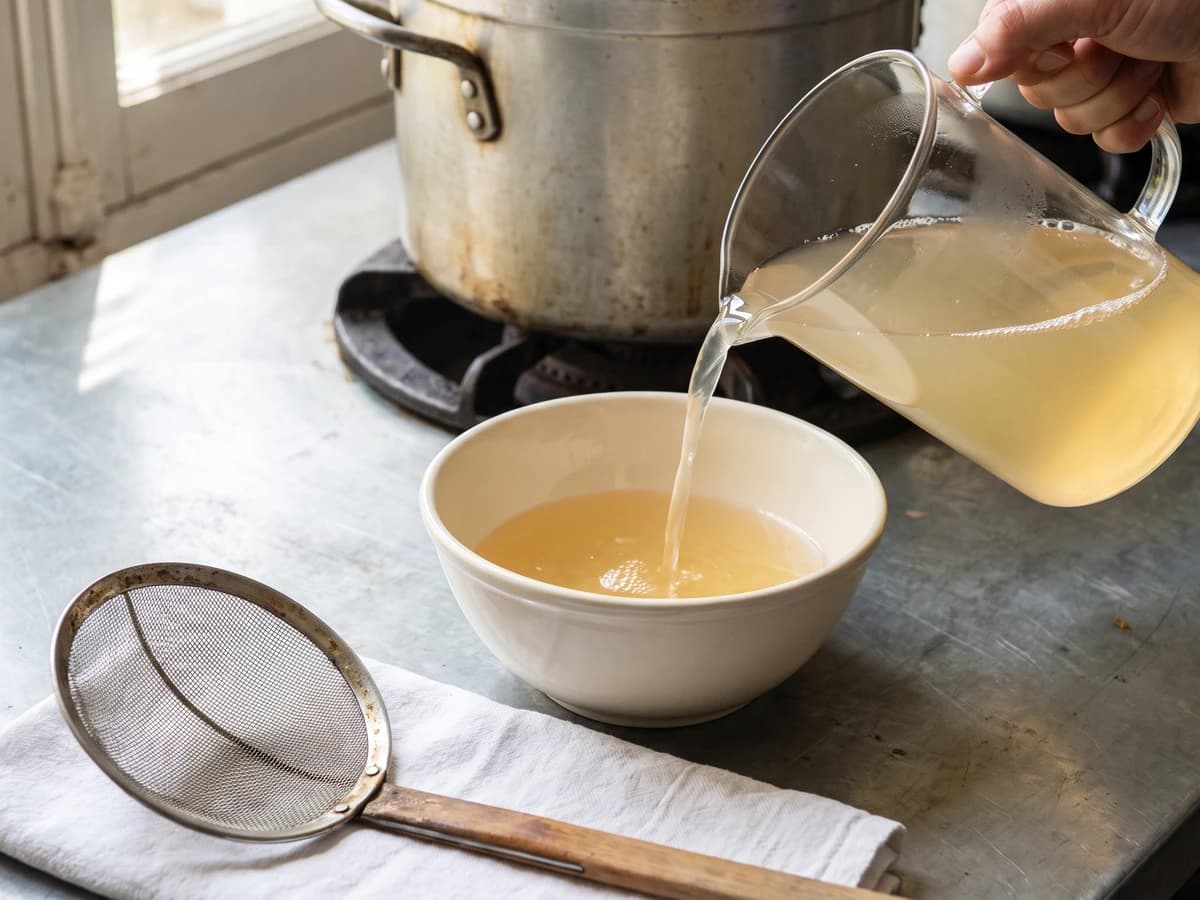
Beef shin, lean beef, and fowl begin in cold water and rise slowly toward a tremble. Skim before the boil, and you learn the quiet discipline that gives every clear French broth its backbone.
A cooking platform built around craft, culture, and the stories behind what we eat.
Created by Chef Juliette
Based on No. 119a, PARSLEY SAUCE, from Le Guide Culinaire (1907) by Auguste Escoffier
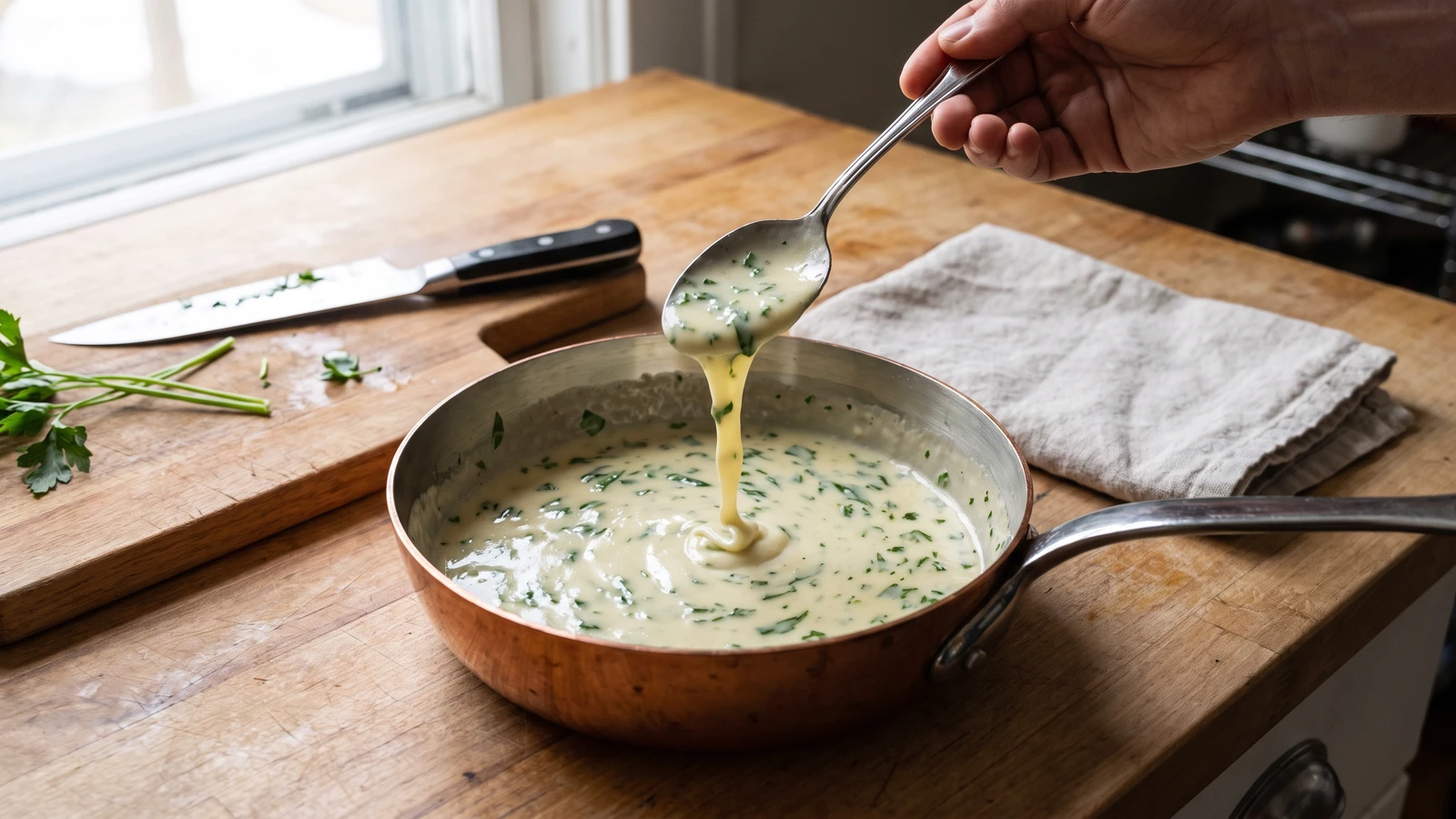
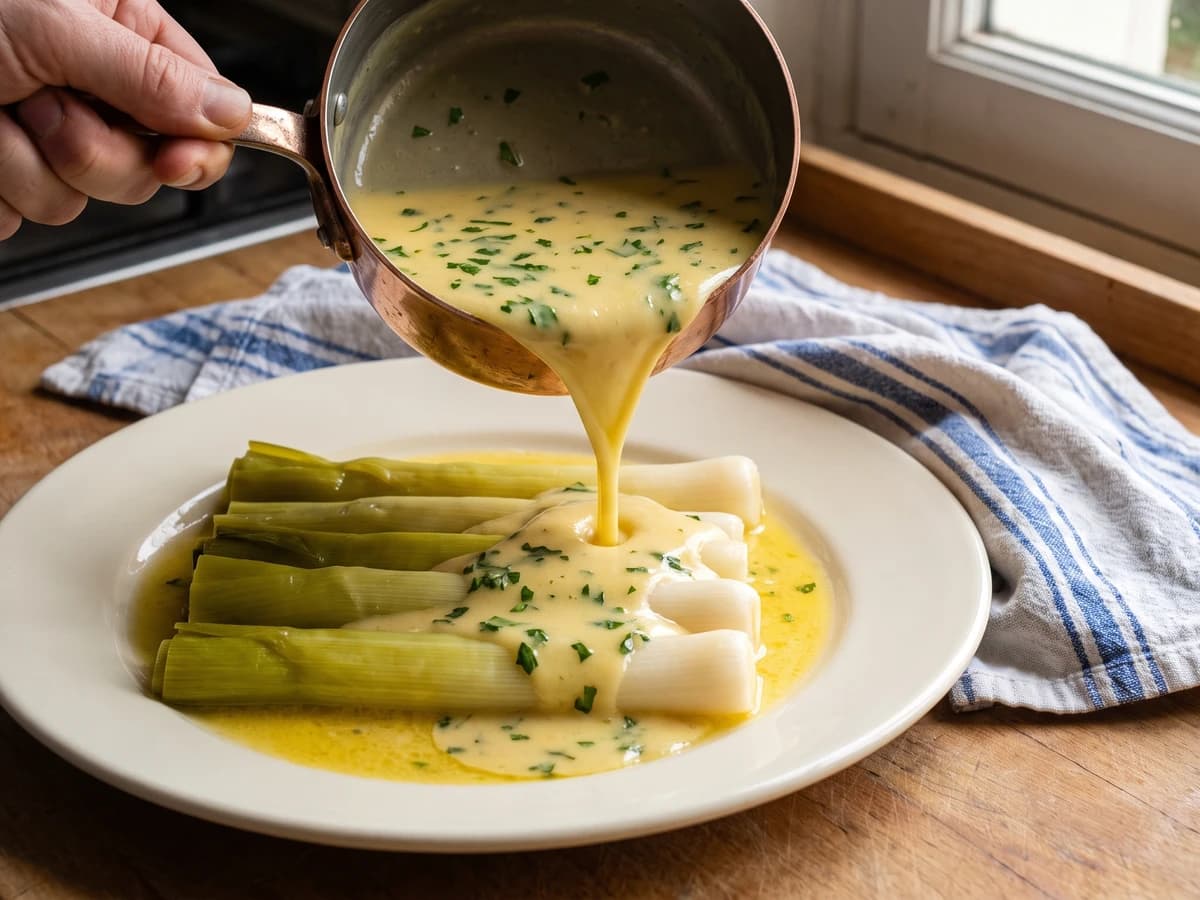
Sauce au Persil teaches the discipline of finishing: warm egg-and-cream butter sauce, parsley chopped at the last moment, and no boiling, so the texture stays silken and the green remains alive.
Sauce au Persil (parsley sauce) teaches restraint at the finish. Its liaison, the egg-and-cream thickening, is already built, the butter is already emulsified, and the parsley is not something to simmer into submission. The one true thing is simple: chop the herb at the last possible moment and fold it into the sauce away from the heat.
The formula assumes a saucier with Butter Sauce (No. 66) finished and ready for service, then gives the parsley by the pint. At home, one heavy saucepan and a sharp knife do the work. This batch preserves the book's ratio of one heaped tablespoon of parsley per pint; it needs no second straining because the base arrives complete from its own entry. That extra pass was brigade scaffolding. The last-minute parsley and the refusal to boil are the dish itself, and they stay. One cook, one stove, one evening.
The finished sauce should fall from a spoon in an ivory ribbon, glossy with butter and brightly freckled with green. If the liaison begins to separate while warming, don't pour it out. Ça se rattrape, and the method below will bring it back. The decisive step remains the last one: take the pan off the heat before the parsley enters.
Sauce au Persil belongs to the Parisian classical sauce repertory, where cooks organized sauces as families and named each derivative according to the finishing ingredient that gave it character. From grand kitchens it passed naturally into cuisine bourgeoise, accompanying poached fish, poultry, eggs, and plainly cooked vegetables. It should not be confused with the milk-thickened parsley sauce of the British table; this French version rests on Butter Sauce (No. 66), whose yolks, cream, lemon, and finishing butter give it a richer structure.
Quantity
8 cups (1.9 liters / about 1.9 kg) Butter Sauce (No. 66)
finished and held below a simmer
Quantity
4 heaped tablespoons (about 1/3 cup / 80 ml / 20 g)
washed, thoroughly dried, and chopped at the last moment
Quantity
Up to 4 tablespoons (60 ml / 60 g)
only if needed to rescue or loosen the sauce
| Ingredient | Quantity |
|---|---|
| Butter Saucefinished and held below a simmer | 8 cups (1.9 liters / about 1.9 kg) Butter Sauce (No. 66) |
| fresh flat-leaf parsley leaves and tender stemswashed, thoroughly dried, and chopped at the last moment | 4 heaped tablespoons (about 1/3 cup / 80 ml / 20 g) |
| cold water (optional)only if needed to rescue or loosen the sauce | Up to 4 tablespoons (60 ml / 60 g) |
Place the Butter Sauce (No. 66) in a heavy saucepan over the lowest heat and stir steadily from the bottom with a flexible spatula. Warm it only until fluid, glossy, and pleasant for serving, about 150 to 160°F (65 to 70°C). It must not boil. If oily beads gather around the edge or the texture turns grainy, remove the pan immediately and whisk in 1 tablespoon of cold water; repeat only as needed until the sauce comes together. Ça se rattrape. Firm egg curds mean it boiled, so strain the sauce and serve it promptly, knowing the texture will be less fine.
When the sauce is fully warm and everything else is ready for the table, gather the dry parsley and chop it cleanly with a sharp knife. Stop when the leaves form small, distinct green flecks. Don't work them into a wet paste with a dull blade or food processor; bruised parsley darkens quickly and gives its moisture to the sauce.
Take the Butter Sauce (No. 66) completely off the heat. Add all 4 heaped tablespoons of chopped parsley, preserving the book's ratio of one heaped tablespoon per pint, and fold just until the green is evenly distributed. Do not strain the finished Sauce au Persil and do not return it to a simmer. The parsley belongs suspended in the sauce, fresh and unmistakable.
Check the nappage, the sauce's coating consistency, by dipping in a spoon and drawing a finger across its back. The line should remain clean while the sauce falls in a broad, silken ribbon. If it has tightened too far, whisk in cold water 1 teaspoon at a time. If it seems loose, return it to the lowest heat only long enough to recover its body, stirring constantly and never allowing a bubble.
Transfer the Sauce au Persil to a warm sauceboat or spoon it directly over poached fish, chicken, eggs, new potatoes, or cauliflower. Serve immediately, while the butter gleams and the parsley remains vivid. Holding dulls the herb and risks the liaison, so the table should be waiting for the sauce, not the other way round. À table!
1 serving (about 60g)
Culinary guides, cultural storytelling, and the editorial depth that makes cooking meaningful.
Discover Culinary ExplorerChef Juliette
Beef shin, lean beef, and fowl begin in cold water and rise slowly toward a tremble. Skim before the boil, and you learn the quiet discipline that gives every clear French broth its backbone.
Chef Juliette
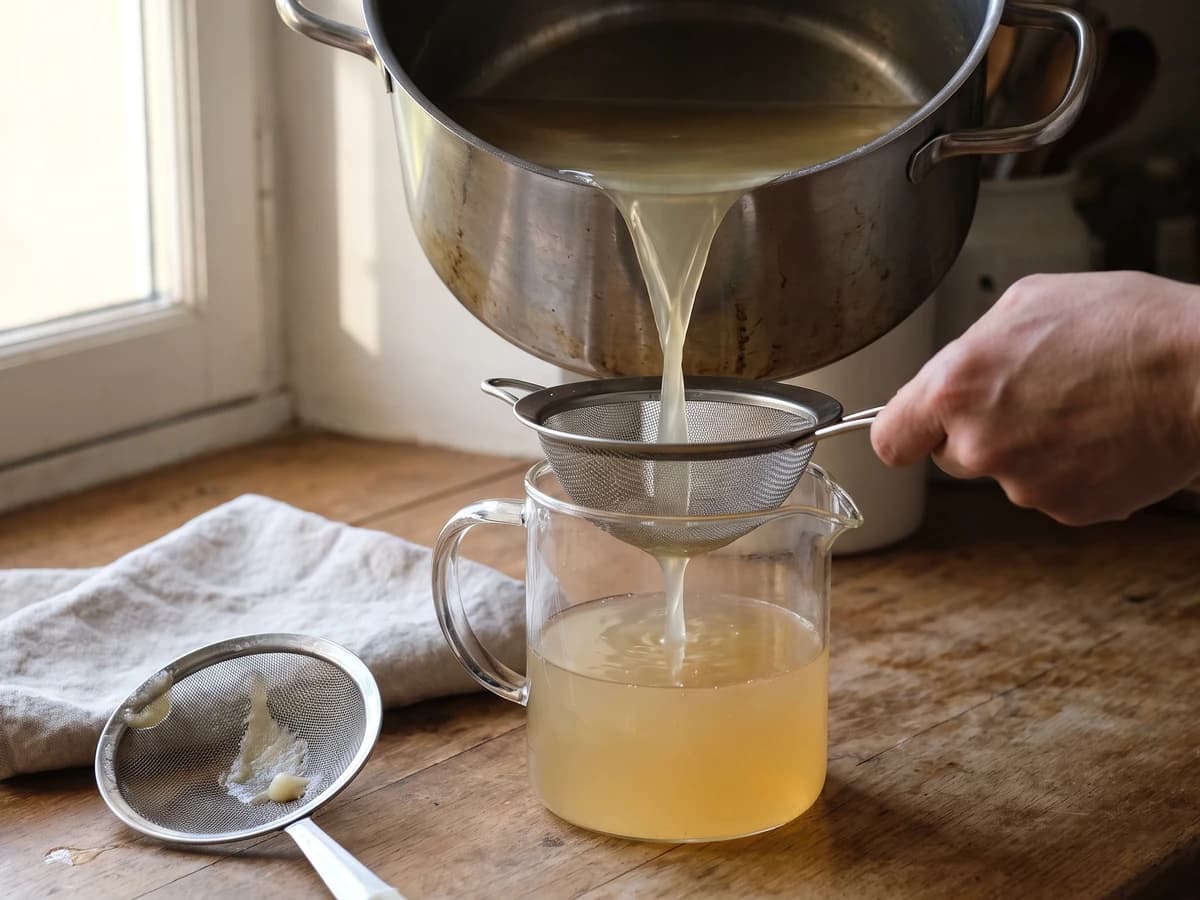
Break the veal bones small, then give them eight hours at a bare tremble. This pale, gelatinous fond becomes the quiet foundation beneath velouté, blanquette, and every sauce that must stay light.
Chef Juliette
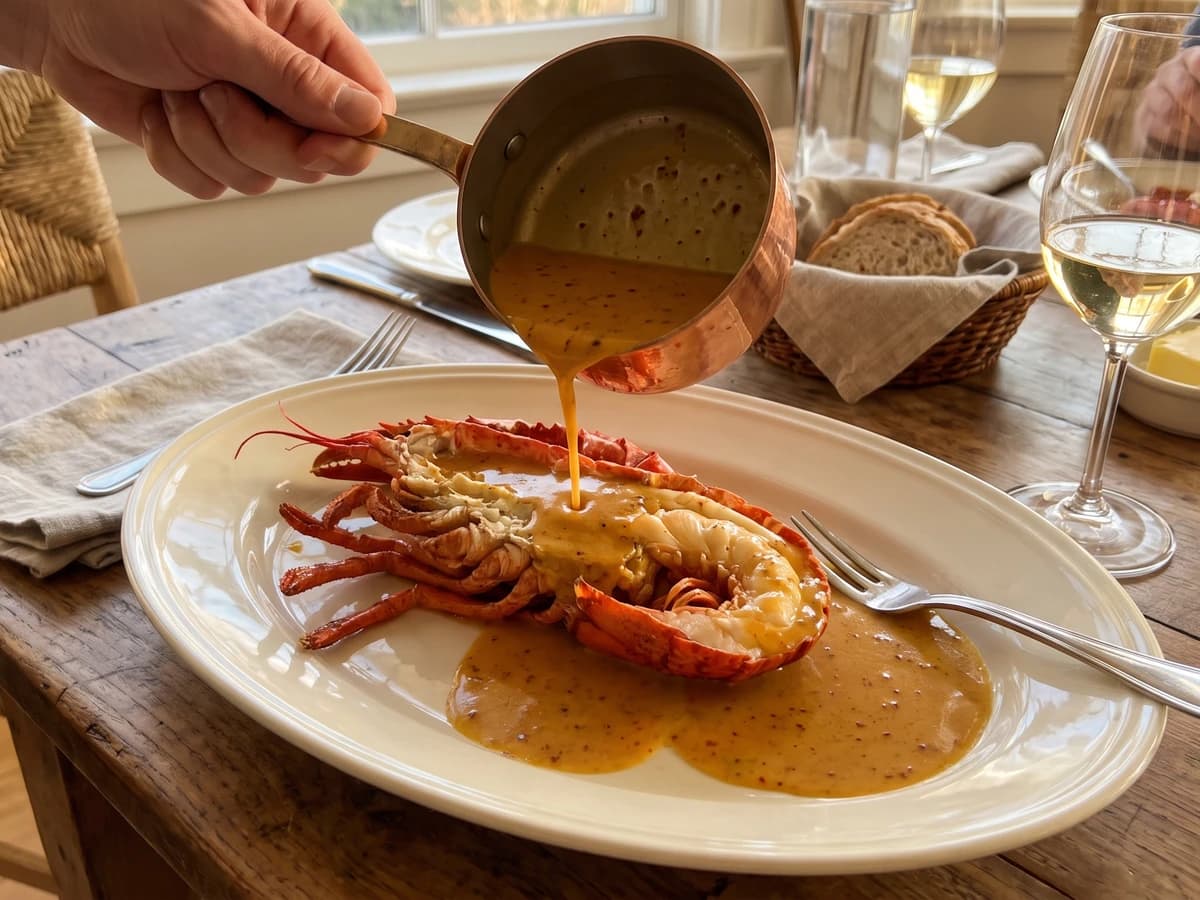
Sauce Orientale concentrates lobster-rich American Sauce with curry, then folds in cream away from the fire: a glossy, gently spiced derivative made for lobster, crayfish, and firm fish.
Chef Juliette
An old lesson in sauce families: Sauce Allemande takes mushroom liquor, then butter, lemon, and parsley, becoming a glossy Poulette for sheep's trotters, leeks, cauliflower, and anything needing gentle richness with a bright edge.