Chef Juliette
Ordinary or White Consommé
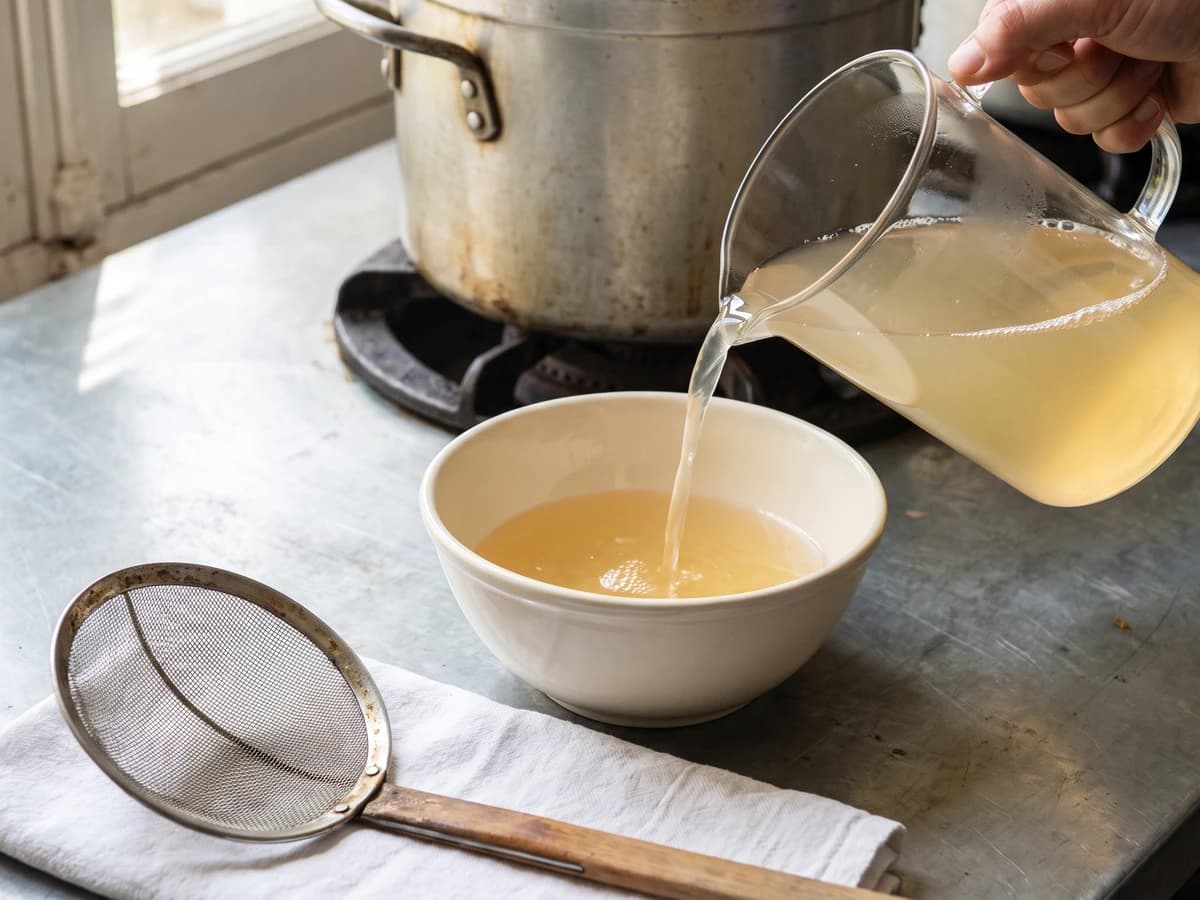
Beef shin, lean beef, and fowl begin in cold water and rise slowly toward a tremble. Skim before the boil, and you learn the quiet discipline that gives every clear French broth its backbone.
A cooking platform built around craft, culture, and the stories behind what we eat.
Created by Chef Juliette
Based on No. 112, Apple Sauce, from Le Guide Culinaire (1907) by Auguste Escoffier
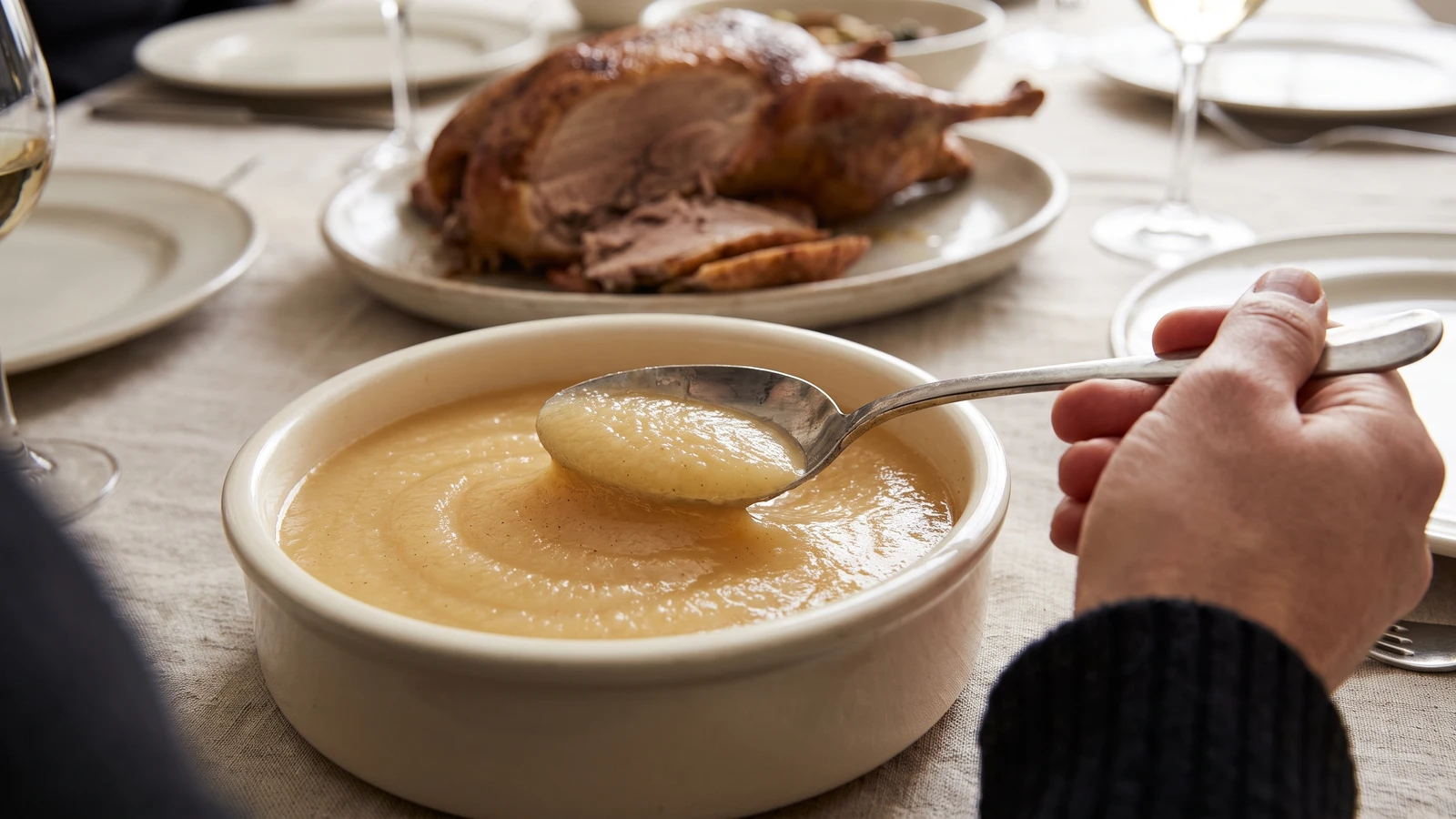
Sauce aux pommes turns four plain ingredients into a softly cinnamon-scented companion for roast duck, goose, or hare. Covered gentle cooking is the whole technique: let the apples slump in their juices, then whisk.
Sauce aux pommes (apple sauce) teaches the discipline of covered stewing: the fruit must soften in its own released juice without taking colour. That is the one true thing to know before touching the pan. Browning is splendid elsewhere, but here it muddies the clean apple flavour and risks bitterness beneath the cinnamon.
The old entry assumed a heavy stewpan, a cook close enough to judge a bit of cinnamon and a few tablespoonfuls of water by feel, and a whisk waiting at service. It asked for no saucier on staff, permanent stockpot, or salamander, and neither do you. A 2-quart heavy saucepan with a snug lid is the honest home equivalent. This version keeps the book's two pounds of apples, one tablespoon of powdered sugar, restrained cinnamon, and scant water; only the vague measures and pan size have been made precise. The quantity already suits a family holiday table, so there is no brigade batch to cut down.
Keep the covered, gentle cook. That is the dish, not brigade scaffolding. The dispensable part is constant attendance at the range; one midway check is enough. When the sauce is right, it is pale gold, softly scented, and smooth enough to mound beside a slice of roast goose without running across the plate. Before you touch the pan, choose the lowest steady burner and a lid that fits tightly; that covered cooking decides the sauce.
Cooked apple purées belong especially to the northern apple larders of Normandy and Brittany, where fruit naturally meets pork and boudin at the savoury table. Yet the sweetened, cinnamon-scented sauce served lukewarm with roast goose, duck, or hare was catalogued in the French classical repertoire as an English-style accompaniment, a reminder that the canon borrowed freely when a pairing worked. Whisking the cooked fruit into a smooth purée brought that household sauce into formal service without changing its purpose: fresh fruit and gentle acidity beside rich meat.
Quantity
About 6 medium (2 lb / 907 g before trimming)
quartered, peeled, cored, and cut into 1-inch (2.5 cm) chunks
Quantity
1 tablespoon (15 ml / 8 g)
Quantity
1 small pinch, about 1/16 teaspoon (0.3 ml / 0.15 g)
Quantity
3 tablespoons (45 ml / 45 g), plus up to 1 tablespoon (15 ml / 15 g) only if needed
| Ingredient | Quantity |
|---|---|
| medium applesquartered, peeled, cored, and cut into 1-inch (2.5 cm) chunks | About 6 medium (2 lb / 907 g before trimming) |
| powdered sugar | 1 tablespoon (15 ml / 8 g) |
| ground cinnamon | 1 small pinch, about 1/16 teaspoon (0.3 ml / 0.15 g) |
| water | 3 tablespoons (45 ml / 45 g), plus up to 1 tablespoon (15 ml / 15 g) only if needed |
Quarter, peel, and core the apples, then cut them into roughly 1-inch (2.5 cm) chunks. Keep the pieces even so they collapse together; tiny pieces at the bottom can scorch while large ones above remain firm. Put each apple into the saucepan as soon as it is cut. A little surface darkening does no harm because the fruit is going straight to the stove.
Add the powdered sugar, the small pinch of cinnamon, and 3 tablespoons (45 ml / 45 g) water. Toss once to distribute everything, then cover tightly. Set the pan over medium-low heat just until moisture gathers and you hear the faintest bubbling beneath the lid, about 3 minutes, then immediately turn the heat to low. The water only starts the cooking; the apples must release the rest.
Cook gently with the lid on for 18 to 25 minutes, giving the pan one shake halfway through. Check at 12 minutes: the apples should be wet, glossy, and beginning to slump. If the pan looks dry, add the reserved water 1 teaspoon at a time and cover it again. If you smell scorching, lift the pan off the heat at once and do not scrape the bottom. Transfer the clean fruit from the top into another saucepan, add 1 tablespoon (15 ml / 15 g) water, and continue over lower heat. Ça se rattrape. The apples are ready when every piece crushes under the whisk without resistance.
Take the pan off the heat and whisk the apples directly in the saucepan until they form a smooth, softly mounded purée. This whisking at service is part of the original method and must stay; it breaks down the tender fruit while leaving the sauce with body. If it is too loose, return it uncovered to low heat for 1 to 3 minutes, whisking frequently. If it is too thick, loosen it with hot water 1 teaspoon at a time. The finished sauce should hold the trail of a spoon briefly, then settle.
Let the sauce stand for 10 to 15 minutes, then spoon it into a warm serving bowl. Serve lukewarm with roast duck, goose, or hare, allowing a generous spoonful for each plate. Keep it beside the meat rather than pouring it over the crisp skin. À table!
1 serving (about 95g)
Culinary guides, cultural storytelling, and the editorial depth that makes cooking meaningful.
Discover Culinary ExplorerChef Juliette
Beef shin, lean beef, and fowl begin in cold water and rise slowly toward a tremble. Skim before the boil, and you learn the quiet discipline that gives every clear French broth its backbone.
Chef Juliette
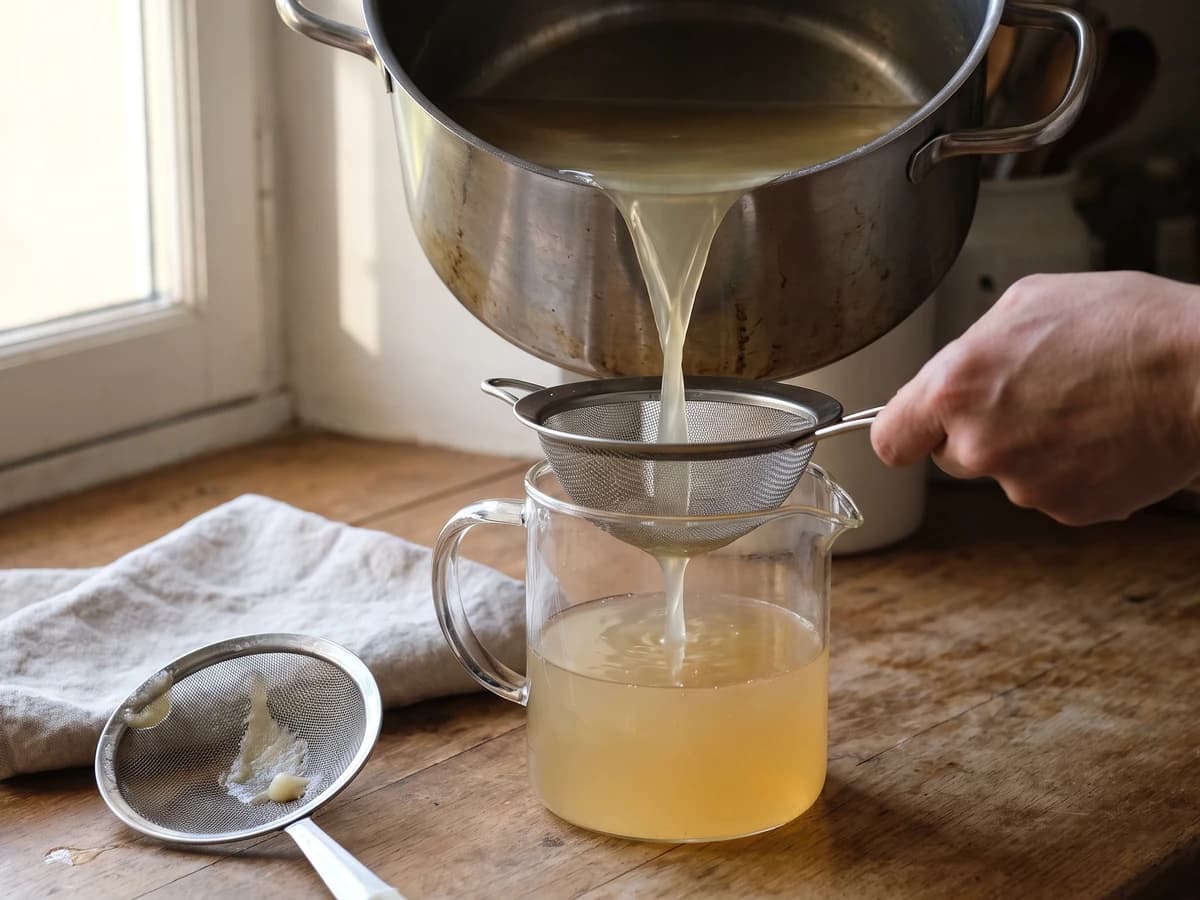
Break the veal bones small, then give them eight hours at a bare tremble. This pale, gelatinous fond becomes the quiet foundation beneath velouté, blanquette, and every sauce that must stay light.
Chef Juliette
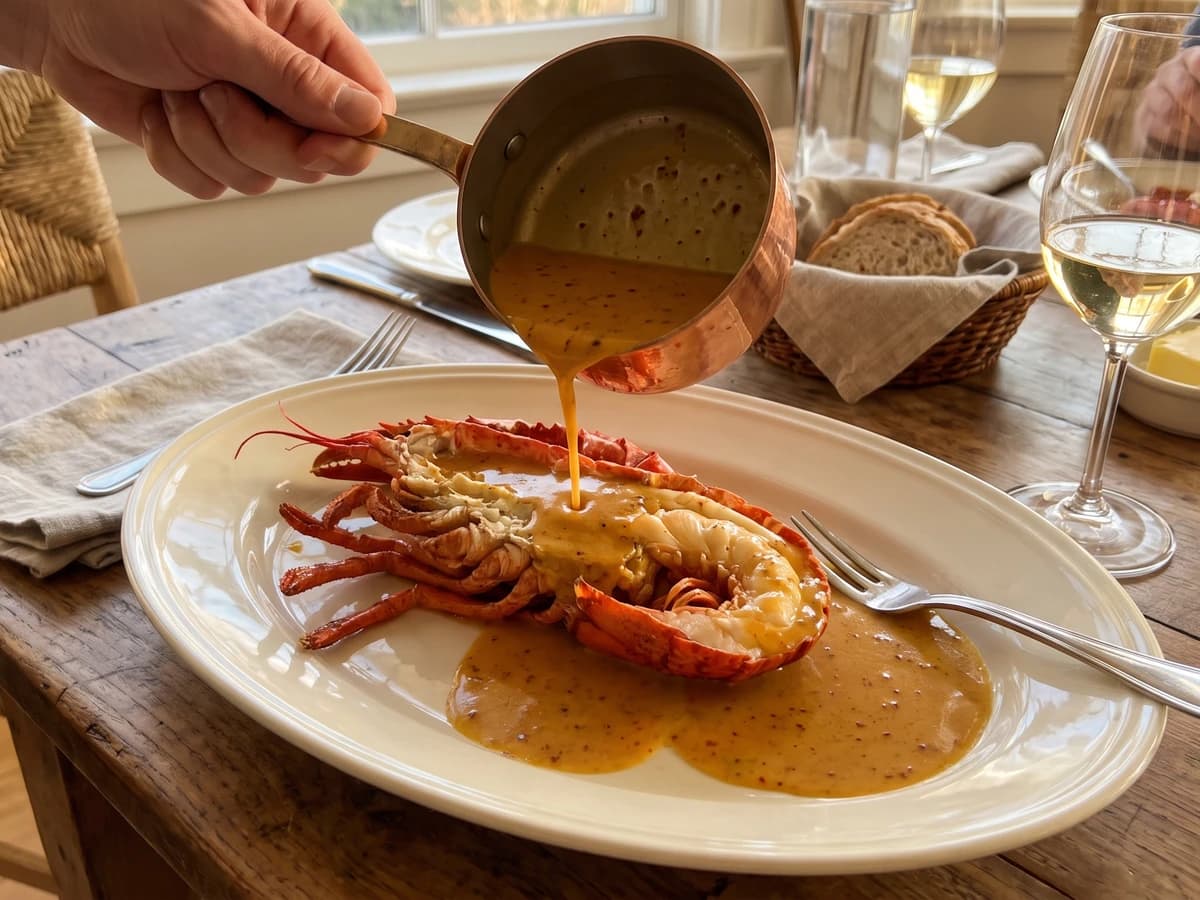
Sauce Orientale concentrates lobster-rich American Sauce with curry, then folds in cream away from the fire: a glossy, gently spiced derivative made for lobster, crayfish, and firm fish.
Chef Juliette
An old lesson in sauce families: Sauce Allemande takes mushroom liquor, then butter, lemon, and parsley, becoming a glossy Poulette for sheep's trotters, leeks, cauliflower, and anything needing gentle richness with a bright edge.