Chef Juliette
Ordinary or White Consommé
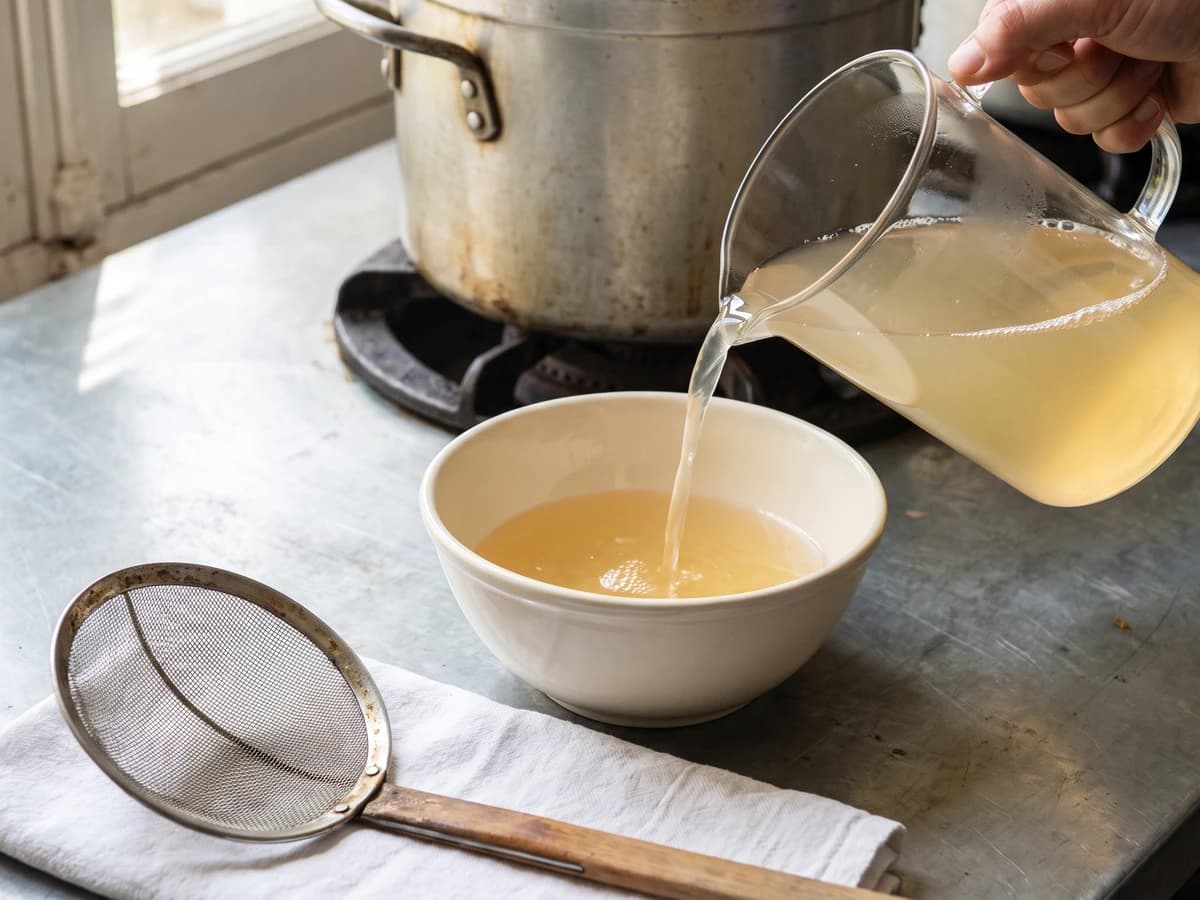
Beef shin, lean beef, and fowl begin in cold water and rise slowly toward a tremble. Skim before the boil, and you learn the quiet discipline that gives every clear French broth its backbone.
A cooking platform built around craft, culture, and the stories behind what we eat.
Created by Chef Juliette
Based on No. 116, Fennel Sauce, from Le Guide Culinaire (1907) by Auguste Escoffier
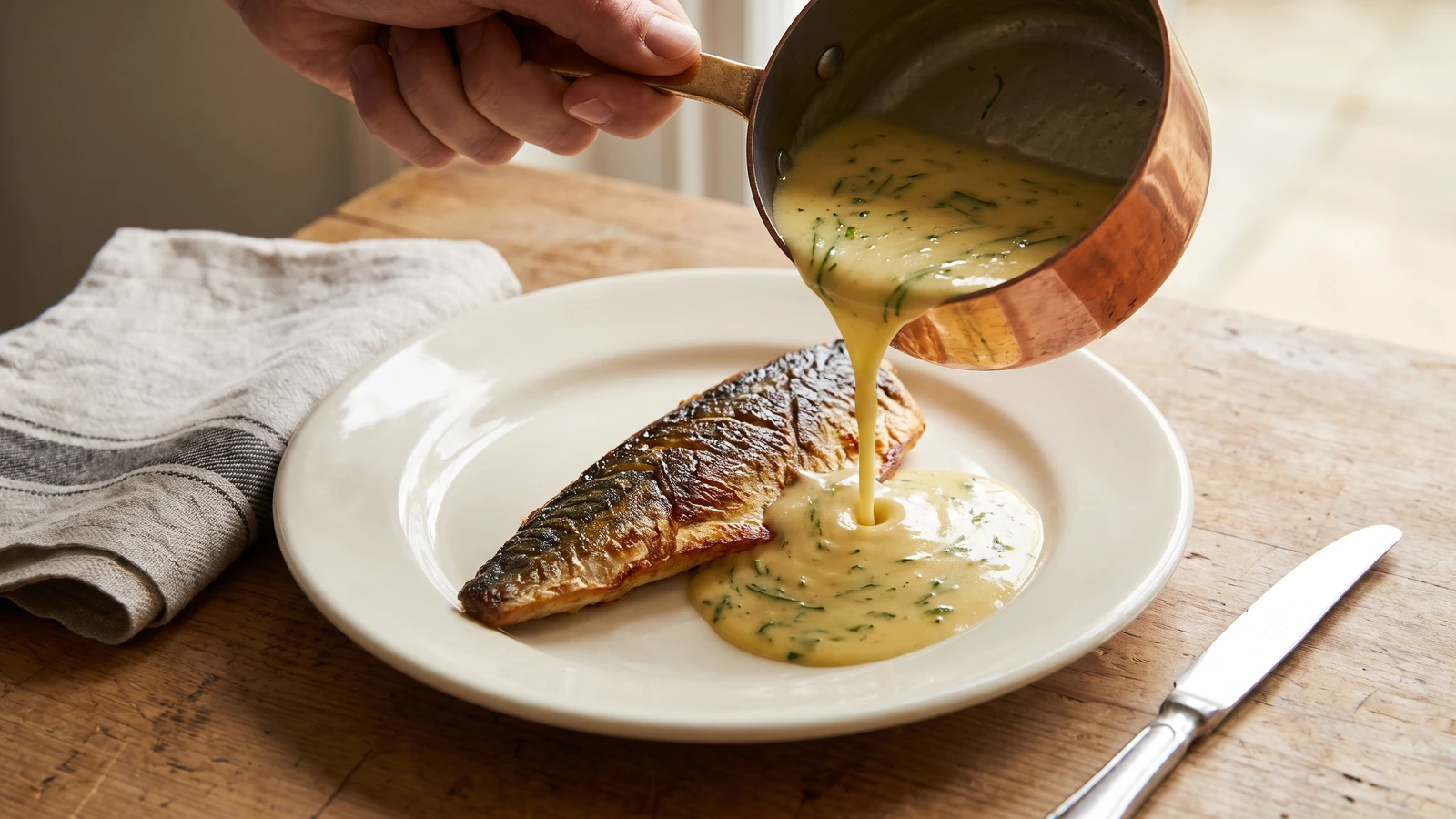
A classical derivative in one clean gesture: scald the fennel, fold it into Butter Sauce (No. 66), and guard the gentle heat so mackerel meets a glossy sauce, never a broken one.
Sauce Fenouil (fennel sauce) teaches one of the canon's most useful principles: a derivative sauce is won at the finish. The one true thing to know before touching a pan is this: once the finished Butter Sauce (No. 66) is warm, it must never boil. Boiling destroys the liaison that gives the sauce its soft body and buttered gloss.
The source entry assumed a saucier who could draw a pint of Butter Sauce (No. 66) from a service bain-marie, scald the herb, and send the derivative at once. At home, a heavy saucepan and a small sieve do the same work. The standing service pan is brigade scaffolding and goes; the brief scald and unboiled finish are the dish and stay. For this two-quart batch, the book's finishing ratio is simply multiplied fourfold, so only the quantity changes.
Scald the fennel for seconds, dry it well, then fold it through at the last moment. You want an ivory sauce carrying clean green flecks, glossy enough to nap a spoon and bright enough to meet oily mackerel. The step that decides everything is the warming: stop before the first bubble.
Sauce Fenouil belongs to the French classical fish-sauce repertoire rather than to one province; its practical home is beside mackerel, whose rich, oily flesh welcomes fennel's clean aniseed lift. Classical kitchens made it as a derivative of Butter Sauce (No. 66), using a few seconds of scalding to soften the herb's raw bite without cooking away its perfume. The fennel here is the tender green herb, not a purée of the bulb, correcting the common assumption that fennel sauce must begin with a braised vegetable.
Quantity
1/2 cup (120 ml / about 15 g)
finely chopped
Quantity
1 to 2 tablespoons (15 to 30 ml / 15 to 30 g)
only if the sauce needs rescuing
Bring a small saucepan of water to a full boil. Put the finely chopped fennel in a fine-mesh sieve, lower it into the water for five to eight seconds, then lift it out immediately. Shake away the water and blot the fennel thoroughly on a clean towel. The scald softens its raw aniseed bite; a longer boil washes away the perfume and green colour.
Put the finished Butter Sauce (No. 66) in a heavy four-quart saucepan and set it over the lowest heat. Stir slowly with a whisk or flexible spatula until it flows in a thick ribbon and reaches about 140 to 150°F (60 to 65°C). It must not simmer. If greasy butter beads appear around the edge, remove the pan from the heat at once. Ça se rattrape: put 1 tablespoon of the cold water in a clean bowl, whisk in one ladleful of sauce until smooth, then whisk in the remaining sauce gradually. Add the second tablespoon of water only if the emulsion still looks tight or oily.
Take the saucepan off the heat and fold in the scalded fennel until the green flecks are evenly distributed. Return the pan to the lowest heat for no more than thirty seconds if the sauce needs warming. Don't reduce, boil, or strain it now; the referenced sauce arrives complete, and this final turn of the spoon is what makes Sauce Fenouil.
Spoon about 1/4 cup (60 ml) per serving beside or beneath mackerel, leaving crisp skin uncovered. If you must hold the sauce, cover it and keep it over barely warm water for no longer than fifteen minutes, stirring often and watching for any sign of bubbling. Serve while the sauce is glossy and the fennel still tastes fresh. À table!
1 serving (about 60g)
Culinary guides, cultural storytelling, and the editorial depth that makes cooking meaningful.
Discover Culinary ExplorerChef Juliette
Beef shin, lean beef, and fowl begin in cold water and rise slowly toward a tremble. Skim before the boil, and you learn the quiet discipline that gives every clear French broth its backbone.
Chef Juliette
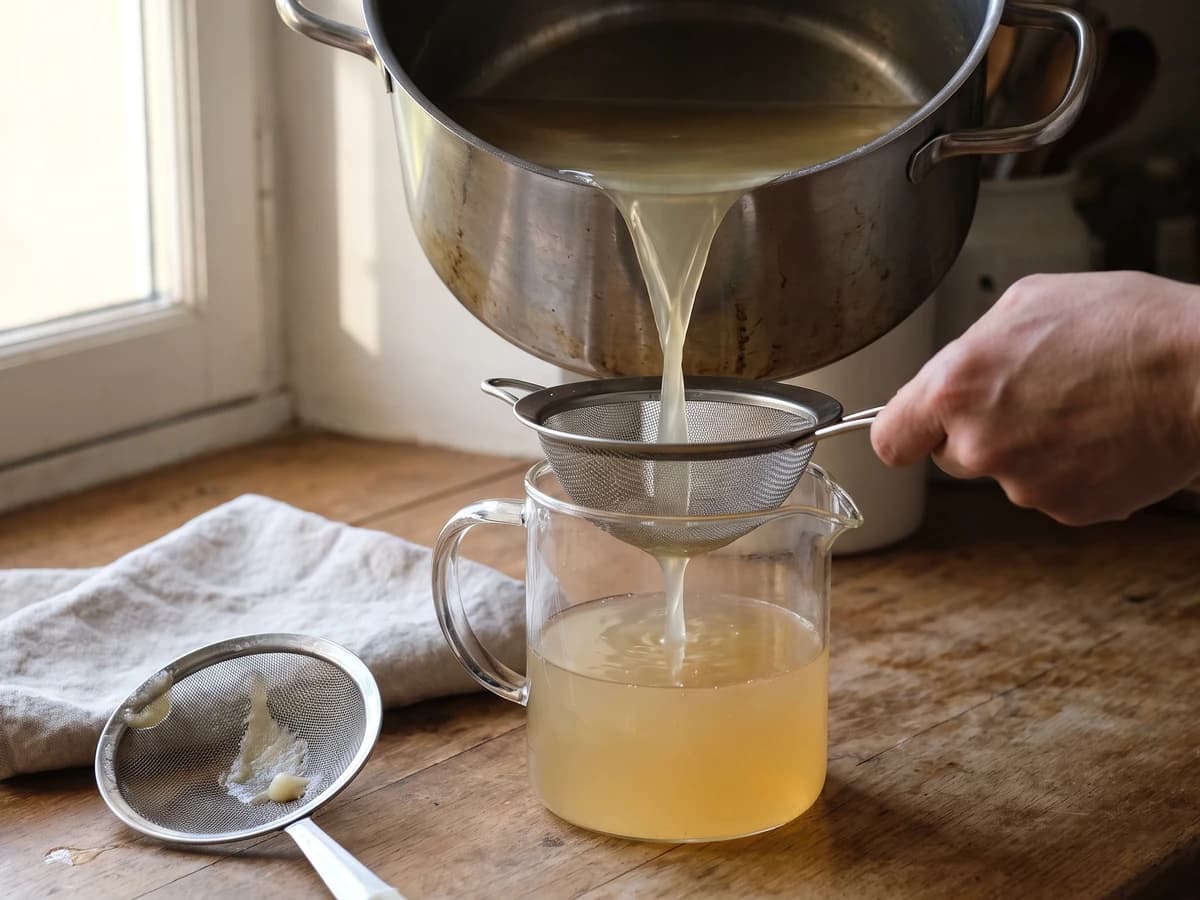
Break the veal bones small, then give them eight hours at a bare tremble. This pale, gelatinous fond becomes the quiet foundation beneath velouté, blanquette, and every sauce that must stay light.
Chef Juliette
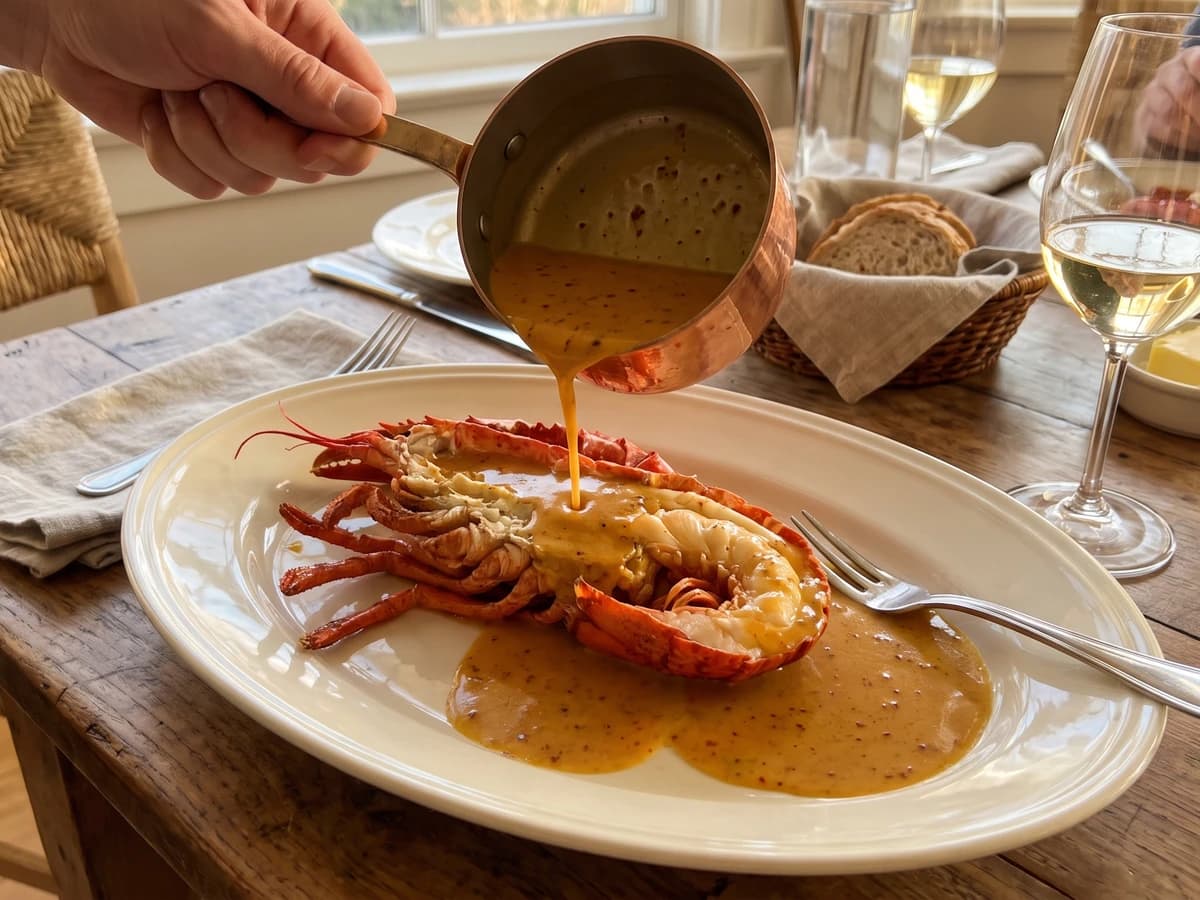
Sauce Orientale concentrates lobster-rich American Sauce with curry, then folds in cream away from the fire: a glossy, gently spiced derivative made for lobster, crayfish, and firm fish.
Chef Juliette
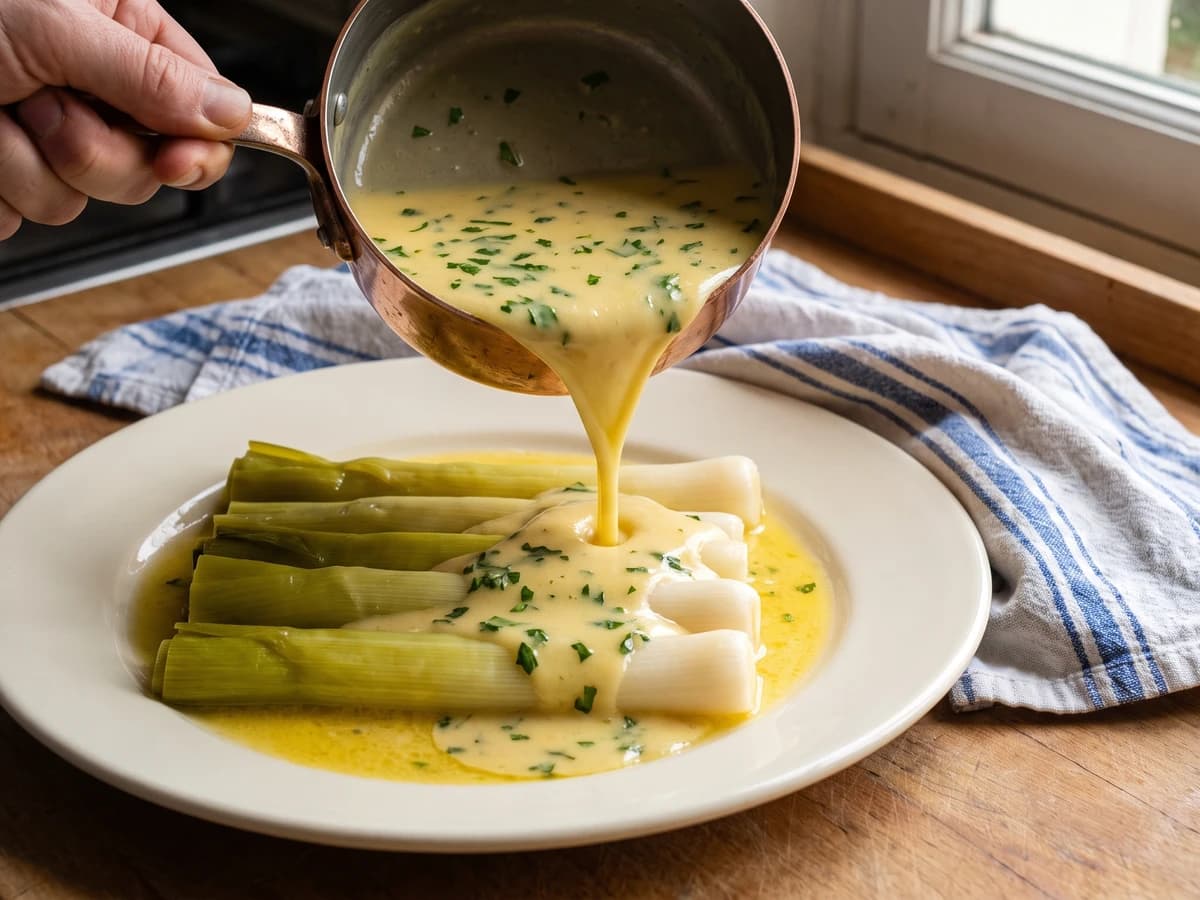
An old lesson in sauce families: Sauce Allemande takes mushroom liquor, then butter, lemon, and parsley, becoming a glossy Poulette for sheep's trotters, leeks, cauliflower, and anything needing gentle richness with a bright edge.