Chef Juliette
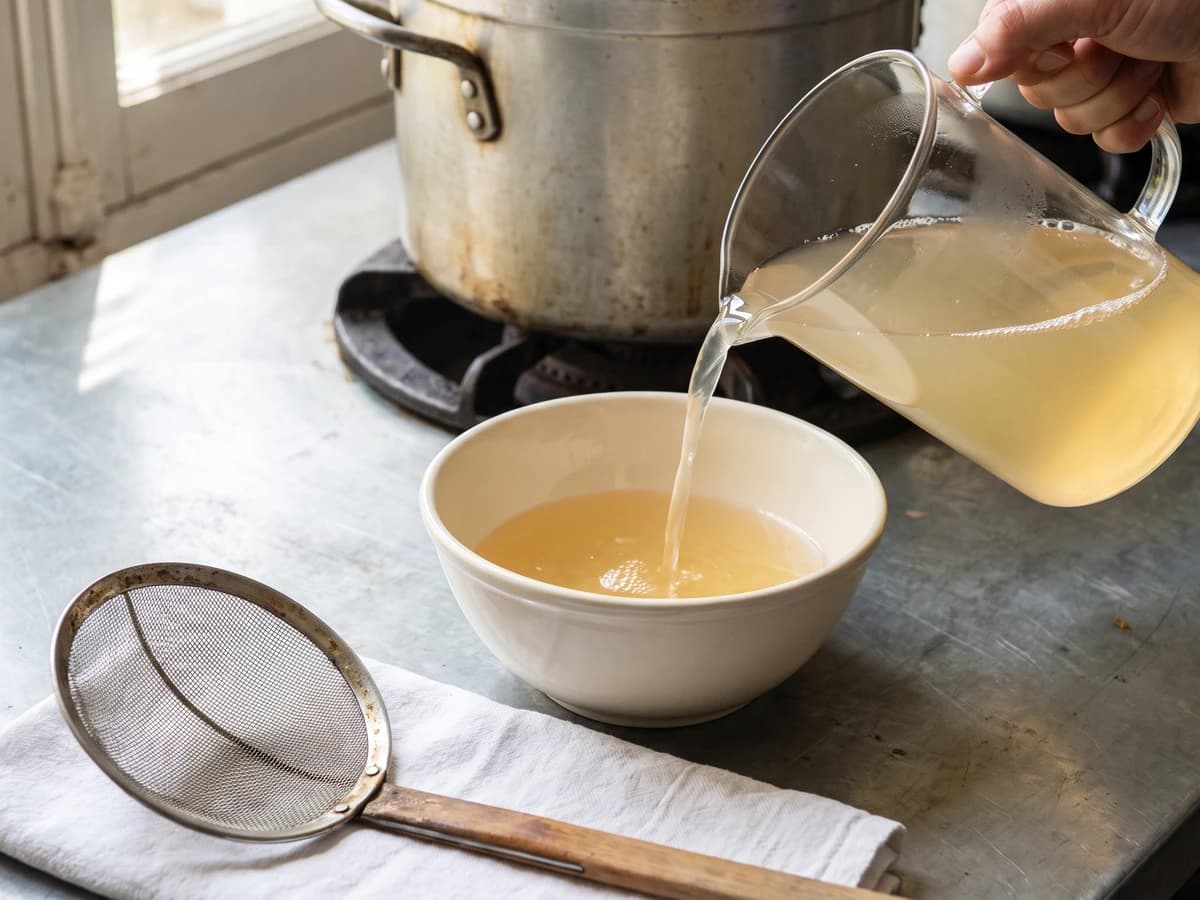
Ordinary or White Consommé
Beef shin, lean beef, and fowl begin in cold water and rise slowly toward a tremble. Skim before the boil, and you learn the quiet discipline that gives every clear French broth its backbone.
A cooking platform built around craft, culture, and the stories behind what we eat.
Created by Chef Juliette
Based on No. 114, Celery Sauce, from Le Guide Culinaire (1907) by Auguste Escoffier
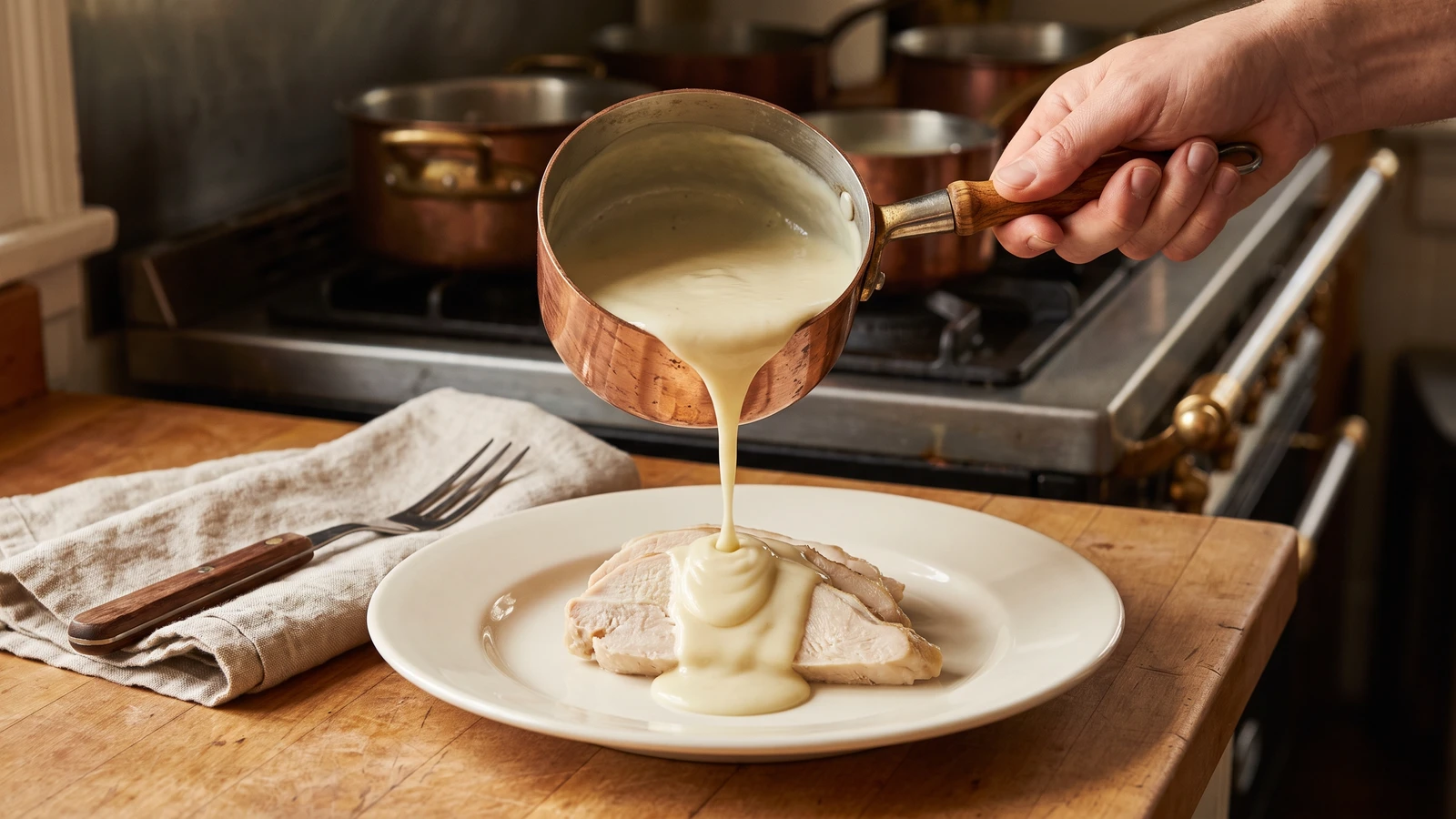
Sauce au Céleri turns consommé-poached celery hearts into a silken purée, then balances it measure for measure with cream sauce, a quiet classical companion for boiled or braised poultry.
Sauce au Céleri (celery sauce) teaches the discipline of a purée sauce: the vegetable must become completely tender before it can become completely smooth. Rush the poach and no blender will erase the strings. Cook the hearts until a knife passes through without resistance, and the sauce will be pale, glossy, and quietly savory beneath boiled or braised poultry.
The old formula assumed a saucier on staff, consommé never off the fire, a mortar, a tammy, and enough sauce for a full service. At home, use finished consommé and cream sauce, a blender, and a fine-mesh sieve. The mortar and tammy were brigade scaffolding and can go; the consommé poach, the equal measure of celery purée and cream sauce, and the warm bain-marie (hot-water bath) are the dish and must stay. Six small hearts make about two quarts, manageable by one cook, one stove, one evening.
The step that matters is tenderness before puréeing. Test the thick base of the largest heart, not its leafy end. If the knife meets even a thread of resistance, keep poaching; patience here is cheaper than forcing celery fiber through a sieve.
Sauce au céleri belongs to the French classical service table rather than to a single provincial larder; the source itself identifies it as an adopted purée sauce fitted to the established sauce system. Its method shows how the canon absorbs a preparation: poach the vegetable in consommé, refine it through a tammy, then balance the purée with an equal quantity of cream sauce. It accompanies boiled or braised poultry because celery's gentle bitterness gives shape to mild meat without covering it.
Quantity
6 small (about 4 lb / 1.8 kg before trimming)
tough outer ribs removed
Quantity
3 quarts (2.8 L / 2.8 kg), or enough to immerse the celery completely
Quantity
1
Quantity
1 small (about 4 oz / 115 g)
peeled
Quantity
1
Quantity
4 cups (960 ml / about 1 kg), or exactly the volume of the sieved celery purée
warmed
| Ingredient | Quantity |
|---|---|
| small celery heartstough outer ribs removed | 6 small (about 4 lb / 1.8 kg before trimming) |
| clear chicken consommé | 3 quarts (2.8 L / 2.8 kg), or enough to immerse the celery completely |
| bouquet garni | 1 |
| small yellow onionpeeled | 1 small (about 4 oz / 115 g) |
| whole dried clove | 1 |
| finished classical cream saucewarmed | 4 cups (960 ml / about 1 kg), or exactly the volume of the sieved celery purée |
Pull away every dark, coarse outer rib until only the compact, pale celery hearts remain. Trim the bases without cutting so deeply that the hearts fall apart, then rinse carefully between the ribs. Halve only the largest hearts lengthwise so all six cook at the same rate. Press the dried clove into the peeled onion to make an oignon piqué, a clove-studded onion.
Arrange the celery snugly in a wide lidded pan. Add the bouquet garni and oignon piqué, then pour over enough consommé to immerse the hearts completely. Bring it just to a simmer, cover, and cook gently for 45 to 60 minutes. The liquid should barely tremble; a hard boil knocks the hearts apart before their fibers soften.
Lift the tender hearts into a colander and let them drain thoroughly. Discard the bouquet garni and onion. Strain 1 cup (240 ml / 240 g) of the celery-scented consommé into a small saucepan and reduce it at a lively simmer to 1/4 cup (60 ml / 60 g). Keep this reduced liquor warm; it will adjust the finished sauce without weakening its flavor.
Let the celery cool for five minutes, then blend it in two or three batches until completely smooth. Never fill a blender jar more than halfway with hot food; remove the center cap, cover the opening loosely with a folded towel, and begin at low speed. Press the purée through a fine-mesh sieve with a flexible spatula, leaving the dry strings behind. If the pulp refuses to pass, it was not tender enough. Ça se rattrape: return it to the pan with a little reserved consommé, simmer for ten minutes, then blend and sieve again.
Measure the sieved celery purée by volume; six small hearts should give about 4 cups (960 ml). Put it in a clean saucepan and add exactly the same volume of warm finished cream sauce. The equality matters more than the nominal yield, so if you have 3 1/2 cups of purée, use 3 1/2 cups of cream sauce. Plain liquid cream is not the equivalent: the finished cream sauce supplies the body that lets the celery remain suspended.
Warm the combined sauce over moderate heat, stirring along the bottom and into the corners, until it is glossy and hot but never boiling. Add the reduced celery liquor a tablespoon at a time until the sauce falls from the spoon in a broad ribbon and nappes, or coats, its back. If it becomes too loose, keep it over gentle heat and stir until it regains body. If the bottom catches, pour the unscorched sauce into a clean pan without scraping, then sieve it once more. Ça se rattrape.
Transfer the sauce to a heatproof bowl or saucepan and set it in a wider pan of hot water reaching halfway up its sides. Keep the water between 160 and 180°F (71 and 82°C), never boiling, and hold the sauce at or above 140°F (60°C). Cover and stir every ten minutes so no skin forms. Hold for no longer than 45 minutes, then spoon it generously over boiled or braised poultry. À table!
1 serving (about 60g)
Culinary guides, cultural storytelling, and the editorial depth that makes cooking meaningful.
Discover Culinary ExplorerChef Juliette
Beef shin, lean beef, and fowl begin in cold water and rise slowly toward a tremble. Skim before the boil, and you learn the quiet discipline that gives every clear French broth its backbone.
Chef Juliette
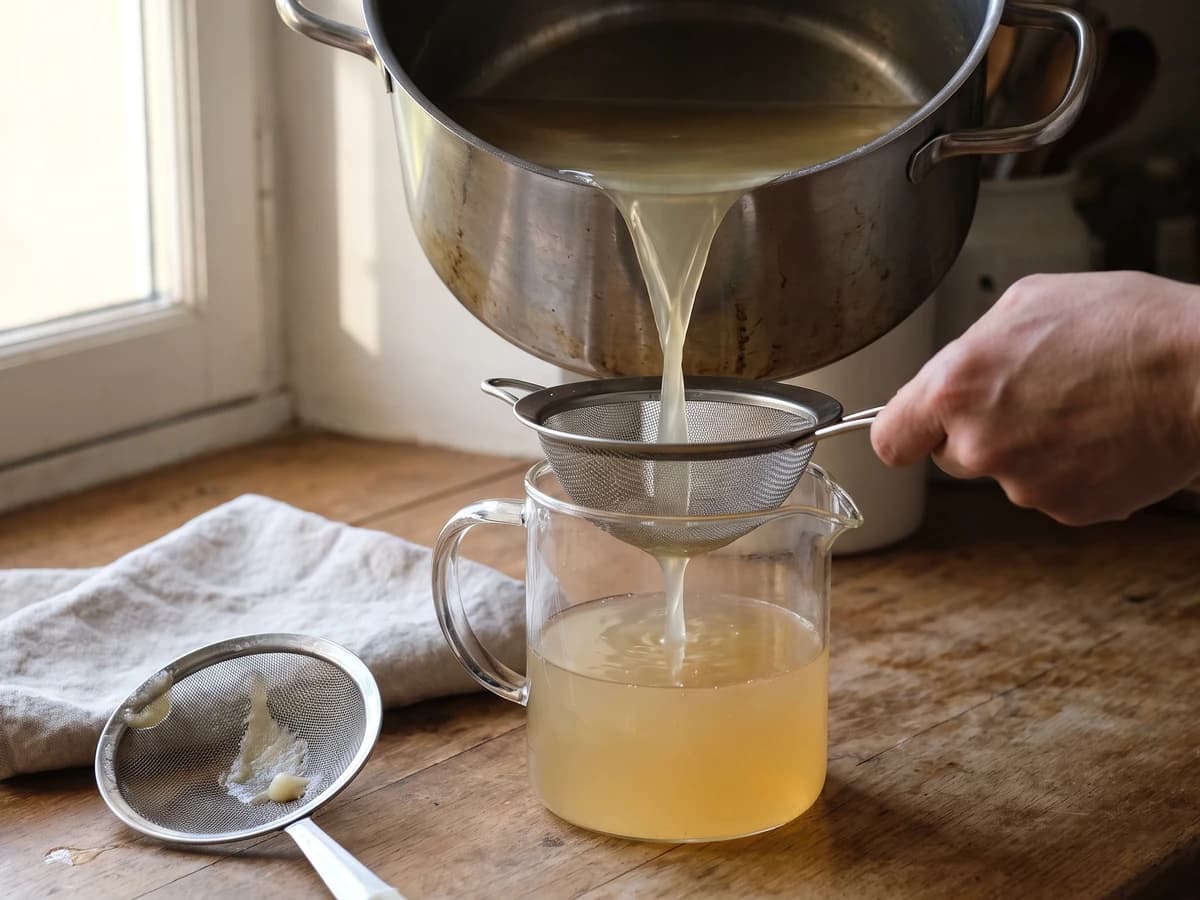
Break the veal bones small, then give them eight hours at a bare tremble. This pale, gelatinous fond becomes the quiet foundation beneath velouté, blanquette, and every sauce that must stay light.
Chef Juliette
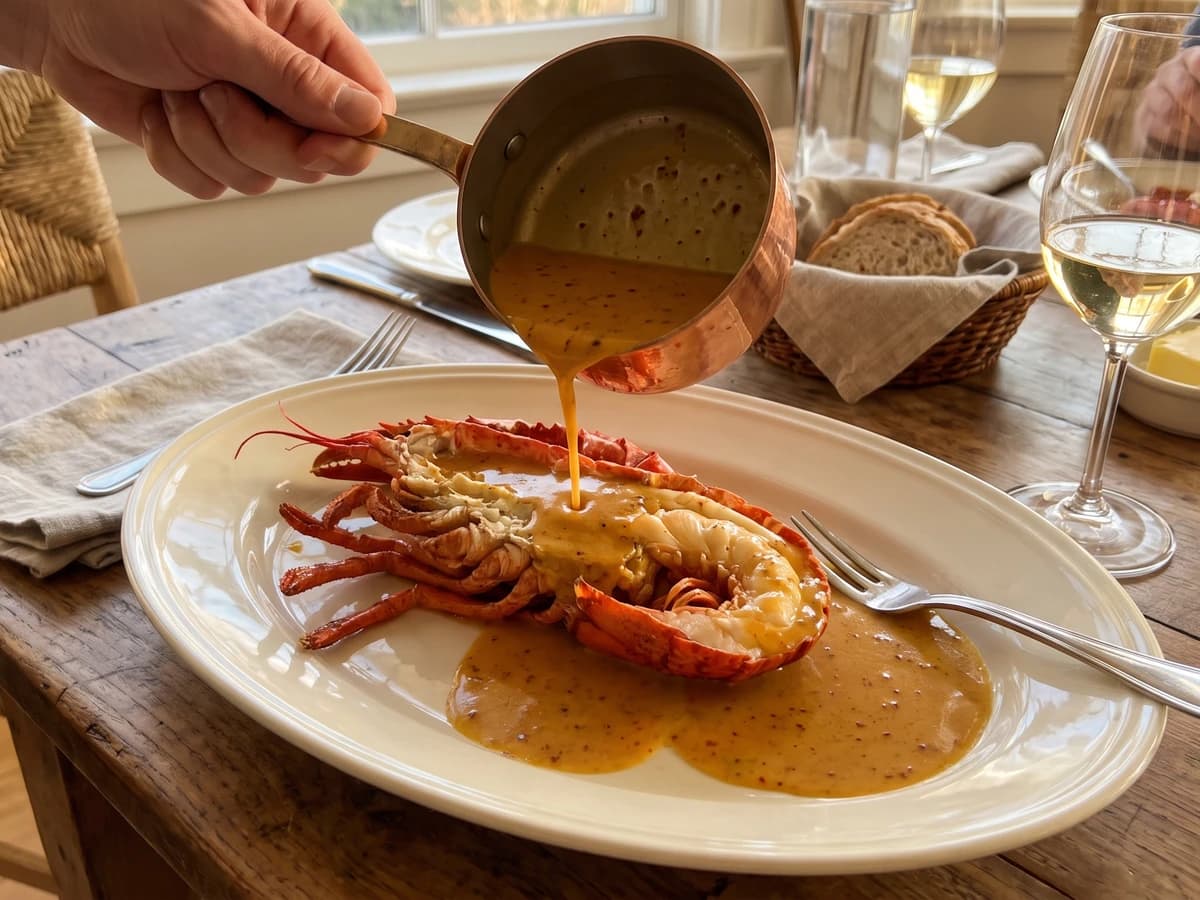
Sauce Orientale concentrates lobster-rich American Sauce with curry, then folds in cream away from the fire: a glossy, gently spiced derivative made for lobster, crayfish, and firm fish.
Chef Juliette
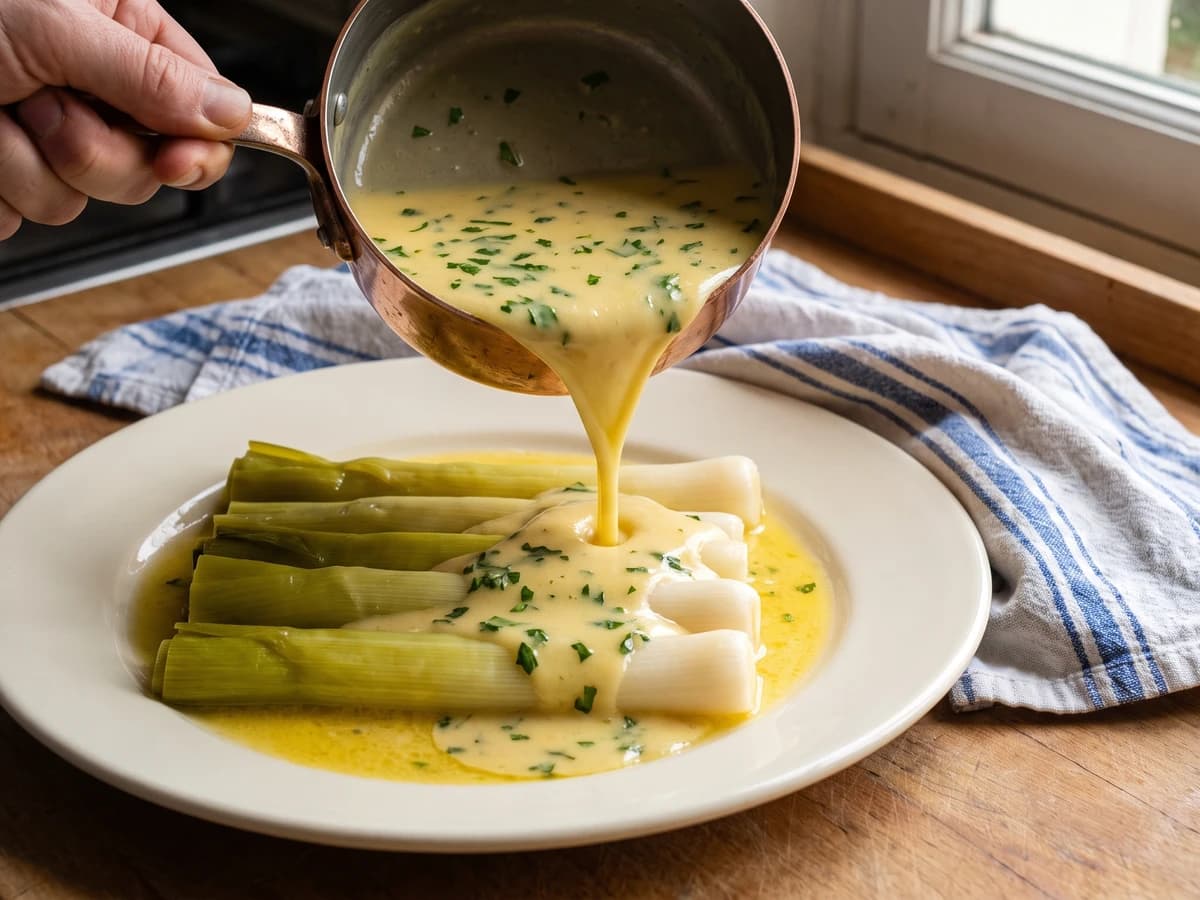
An old lesson in sauce families: Sauce Allemande takes mushroom liquor, then butter, lemon, and parsley, becoming a glossy Poulette for sheep's trotters, leeks, cauliflower, and anything needing gentle richness with a bright edge.