Chef Juliette
Ordinary or White Consommé
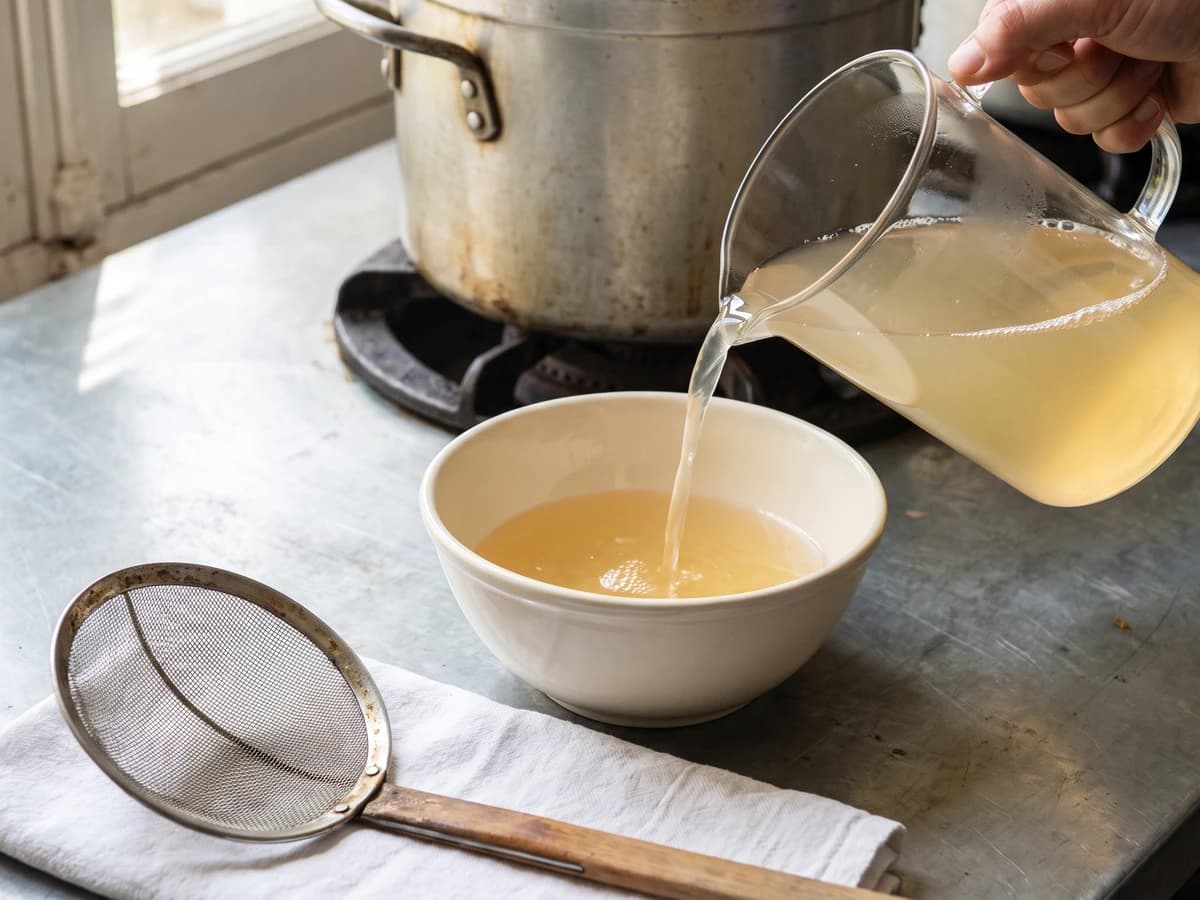
Beef shin, lean beef, and fowl begin in cold water and rise slowly toward a tremble. Skim before the boil, and you learn the quiet discipline that gives every clear French broth its backbone.
A cooking platform built around craft, culture, and the stories behind what we eat.
Created by Chef Juliette
Based on No. 113, Bread Sauce, from Le Guide Culinaire (1907) by Auguste Escoffier
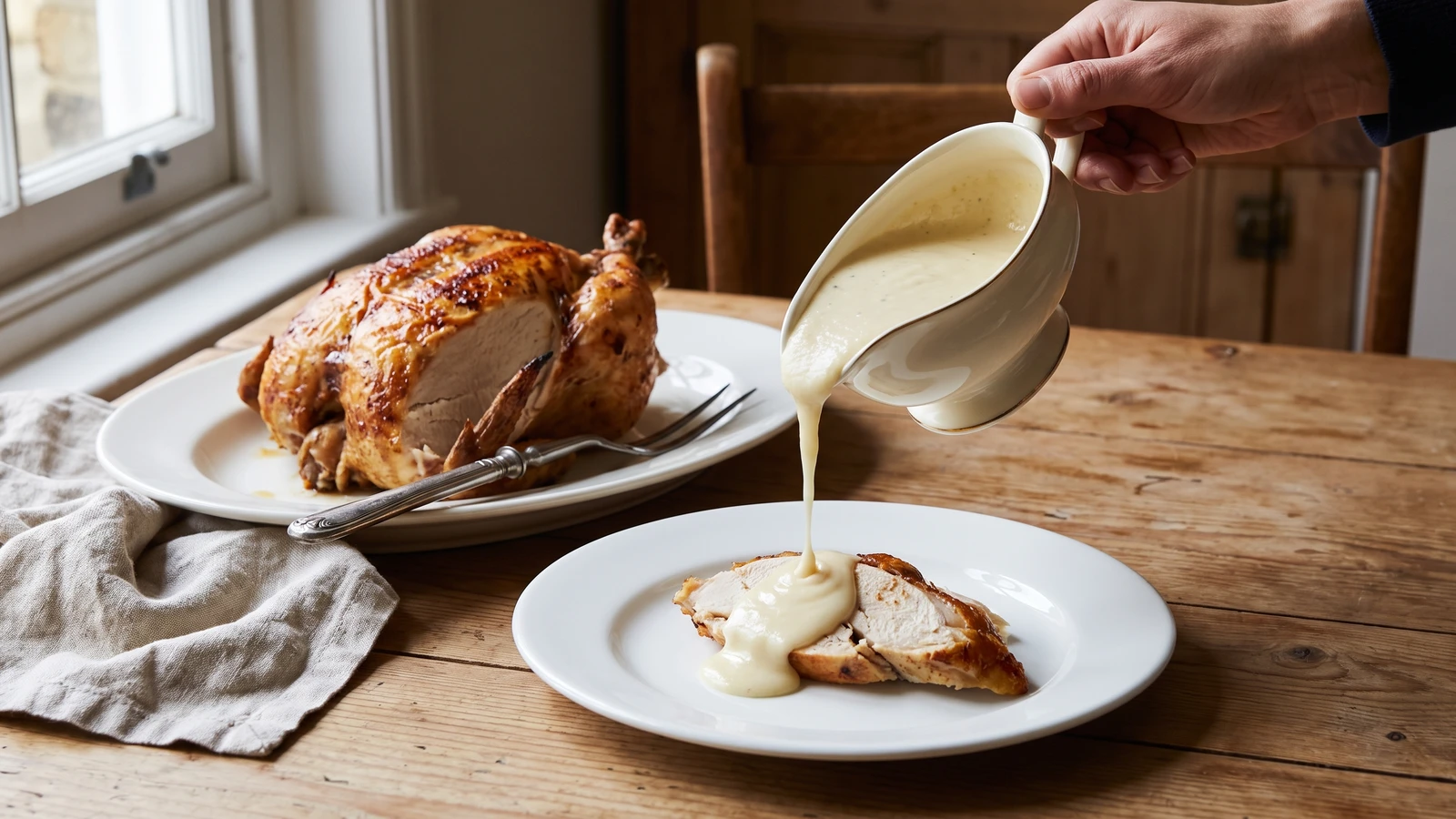
Sauce au pain turns milk, fresh crumb, butter, and cream into an ivory velvet for roast fowl. The whole lesson is timing: draw the clove-studded onion before its perfume becomes the sauce.
Sauce au pain (bread sauce) teaches the quiet art of thickening with bread. The one true thing to know before touching the pan is this: the infusion has a clock. Draw the oignon piqué (clove-studded onion) while its perfume still sits behind the milk, because clove cannot be called back once it owns the sauce.
The original entry assumes a saucier on staff to watch one small pan and fresh white crumb always within reach. It asks for neither the stockpot that never left the fire nor a salamander. At home, the honest equivalent is a heavy saucepan, a whisk, and fifteen attentive minutes. The book's one-pint formula already suits a family table, so its proportions remain intact; the measures are converted, and its few tablespoonfuls of cream become three for a repeatable finish. One cook, one stove, one evening.
Brigade holding and passing are scaffolding and can go. The gentle cook, the timely removal of the onion, the whisking, and the final cream are the dish itself. The finished sauce should fall in a broad ivory ribbon, soft enough to pool beside roast fowl but substantial enough to cling. The step that matters most is drawing the oignon piqué before the clove dominates.
Sauce au pain belongs first to England's roast table, where it has accompanied roast poultry and feathered game for generations. French classical manuals carried it into the canon among sauces anglaises (English sauces), preserving its method while ordering it for the grand kitchen. Despite the milk and pale color, it is not béchamel: fresh white breadcrumb, not roux, gives this sauce its body.
Quantity
2⅓ cups (570 ml / 585 g)
Quantity
about 2 cups, loosely packed (480 ml / 85 g)
made from crustless fresh white bread, finely grated or pulsed
Quantity
1 (about 2½ oz / 70 g)
peeled
Quantity
1
Quantity
½ teaspoon (2.5 ml / 3 g)
Quantity
2 tablespoons (30 ml / 28 g)
Quantity
3 tablespoons (45 ml / 45 g)
Quantity
up to ½ cup (120 ml / 125 g)
heated before adding
| Ingredient | Quantity |
|---|---|
| whole milk | 2⅓ cups (570 ml / 585 g) |
| fresh fine white breadcrumbsmade from crustless fresh white bread, finely grated or pulsed | about 2 cups, loosely packed (480 ml / 85 g) |
| small onionpeeled | 1 (about 2½ oz / 70 g) |
| whole clove | 1 |
| fine sea salt | ½ teaspoon (2.5 ml / 3 g) |
| unsalted butter | 2 tablespoons (30 ml / 28 g) |
| heavy cream | 3 tablespoons (45 ml / 45 g) |
| additional whole milk (optional)heated before adding | up to ½ cup (120 ml / 125 g) |
Remove every dark crust from the bread, then grate or pulse the soft interior into fine, fluffy crumbs. Weigh out 3 ounces (85 g) if possible, because fresh crumbs settle differently from loaf to loaf. Press the single clove firmly into the peeled onion to make the oignon piqué. One clove is enough; this sauce wants perfume, not potpourri.
Pour the milk into a heavy 2-quart saucepan and bring it just to a full boil over medium heat, stirring across the bottom as it warms. Watch the final minute, because milk rises quickly. If it catches, do not scrape the scorched film into the sauce; pour the clean milk above it into another saucepan and continue. Ça se rattrape.
As soon as the milk boils, stir in the fresh breadcrumbs, salt, oignon piqué, and butter, preserving the source's sequence. Lower the heat immediately and cook very gently for about 15 minutes, stirring often enough that the bread cannot settle and catch. The surface should give an occasional lazy bubble, never a hard boil. Begin smelling at 10 minutes: if the clove becomes sharp before the time is up, draw the onion at once. If the clove has already gone too far, remove the onion and whisk in hot additional milk 2 tablespoons at a time; simmer briefly afterward to restore the body.
Lift out the oignon piqué after about 15 minutes and discard it, then whisk the sauce vigorously until the crumb disappears into an even ivory texture. It should coat a spoon and fall from it in a broad ribbon. If it stands stiffly, loosen it with hot milk, one tablespoon at a time. If it runs like plain cream, keep it at the barest simmer for 2 to 4 minutes more. Do not use a blender, which can work fresh bread into glue.
Lower the heat and whisk in the cream. Taste and correct the salt, then remove the saucepan before the sauce boils again. The butter and cream should leave a quiet gloss, not a greasy slick. Serve promptly with roast chicken, turkey, capon, or feathered game. If a skin forms while the sauce waits, whisk it back in with a spoonful of hot milk. Never apologize at your own table. À table!
1 serving (about 83g)
Culinary guides, cultural storytelling, and the editorial depth that makes cooking meaningful.
Discover Culinary ExplorerChef Juliette
Beef shin, lean beef, and fowl begin in cold water and rise slowly toward a tremble. Skim before the boil, and you learn the quiet discipline that gives every clear French broth its backbone.
Chef Juliette
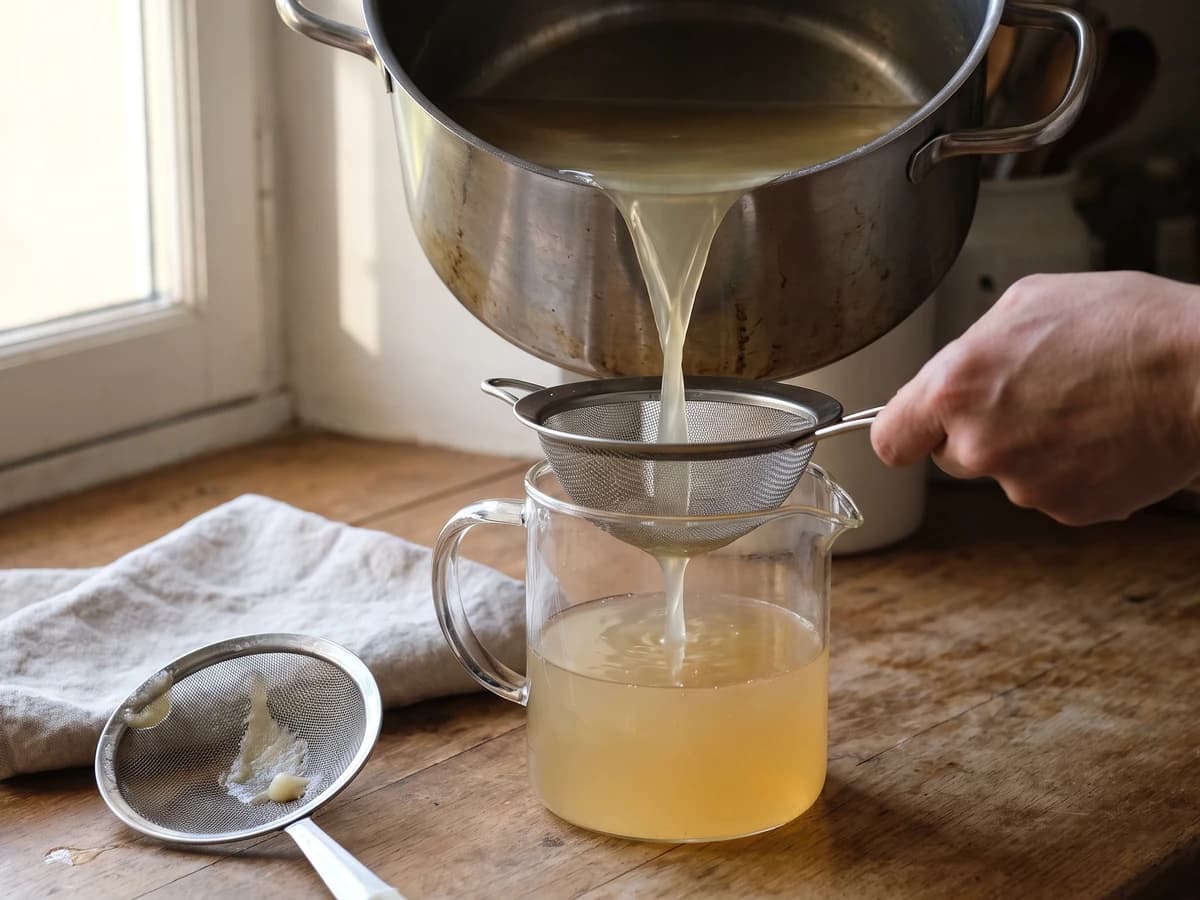
Break the veal bones small, then give them eight hours at a bare tremble. This pale, gelatinous fond becomes the quiet foundation beneath velouté, blanquette, and every sauce that must stay light.
Chef Juliette
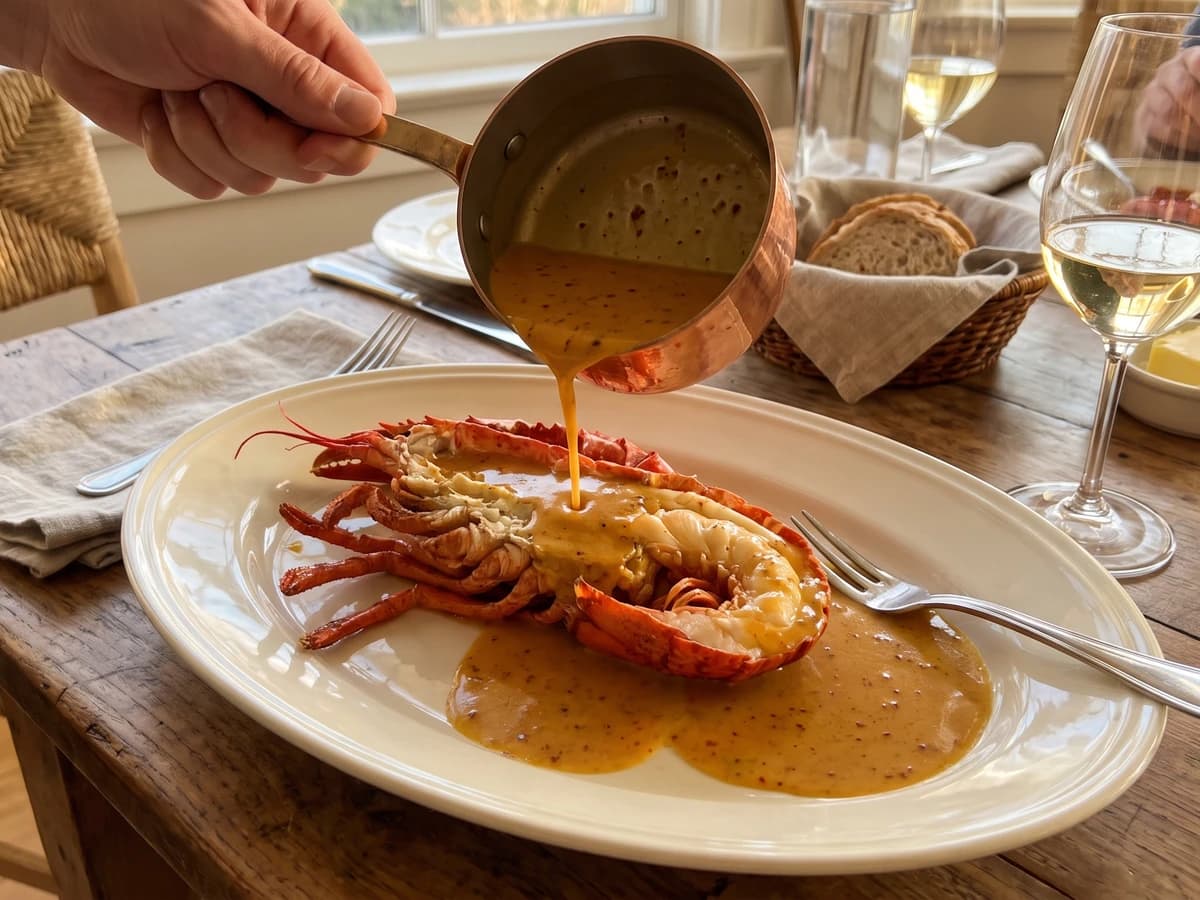
Sauce Orientale concentrates lobster-rich American Sauce with curry, then folds in cream away from the fire: a glossy, gently spiced derivative made for lobster, crayfish, and firm fish.
Chef Juliette
An old lesson in sauce families: Sauce Allemande takes mushroom liquor, then butter, lemon, and parsley, becoming a glossy Poulette for sheep's trotters, leeks, cauliflower, and anything needing gentle richness with a bright edge.