
Chef Juliette
John Dory (St. Pierre)
John Dory has the delicacy of sole and the firmness of turbot. A light flouring, a quick butter sauté, and nut-brown beurre noisette show exactly why looks never mattered.
A cooking platform built around craft, culture, and the stories behind what we eat.
Created by Chef Juliette
Based on No. 1198, Adjuncts to Cushion of Veal, from Le Guide Culinaire (1907) by Auguste Escoffier
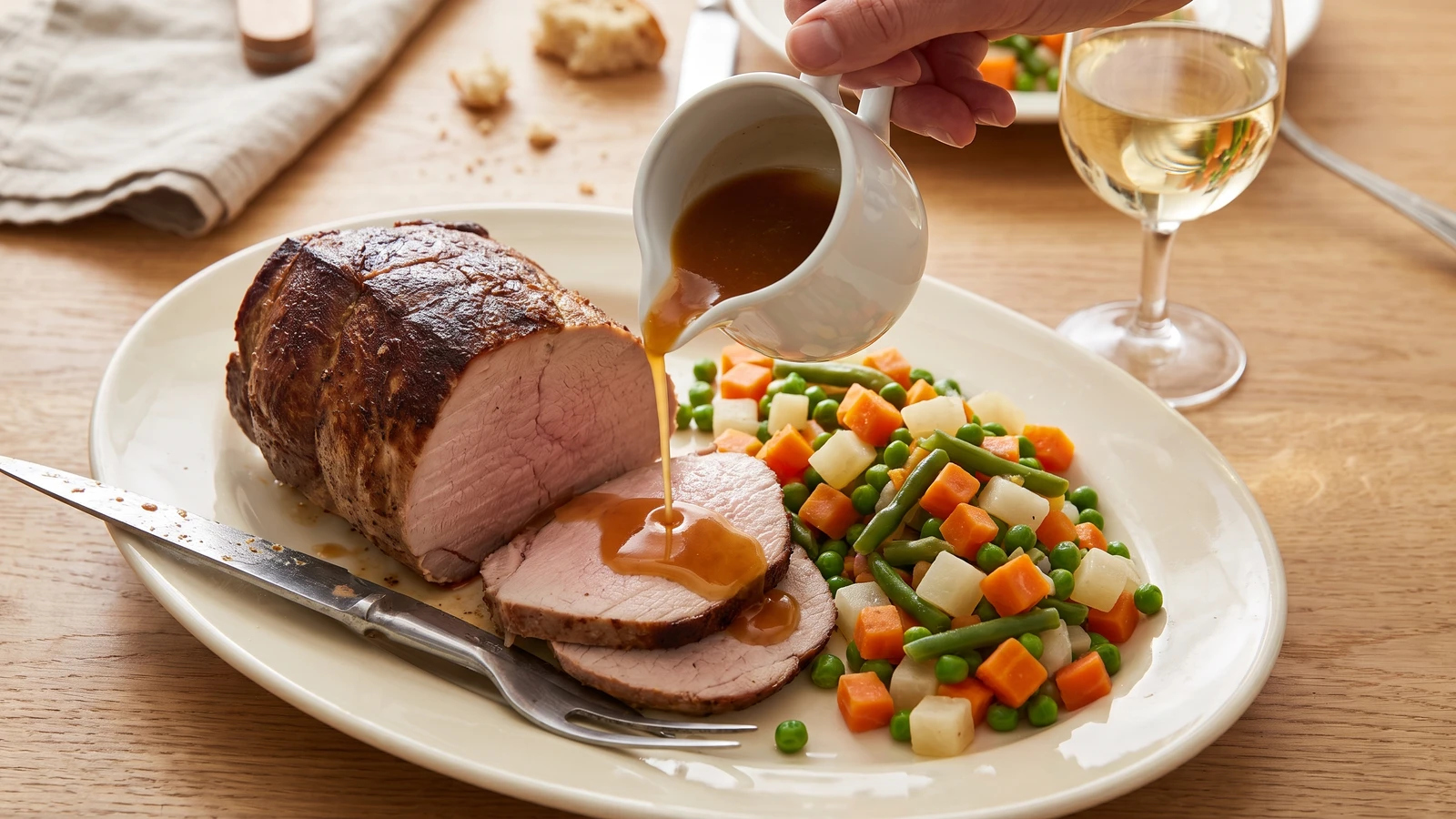
Noix de veau asks for one well-cooked garnish, not a parade: rosy slices, a glossy natural jus, and a bright macédoine whose vegetables remain distinct under their coat of butter.
Noix de veau et ses garnitures (cushion of veal with its adjuncts) teaches judgment before technique. The one true thing is this: choose one garnish and cook it beautifully. A well-browned joint, rosy within and surrounded by firm vegetables or buttered pasta, needs no procession of competing ideas.
The grand kitchen behind this catalogue assumed a saucier on staff, stock never off the fire, a salamander, several vegetable pans, and enough hands to hold every component at its perfect point. At home, the roasting pan supplies the fond, water and reduction make the natural jus, and one saucepan cooks the vegetables in sequence. The salamander has no work here because the crust is built honestly in the pan and oven. That is the translation: four generous servings, one cook, one stove, one evening.
Macédoine (a mixture of early-season vegetables) is the best companion for tonight, though the same vegetables may be arranged Bouquetière or exchanged for buttered noodles. The separate chartreuse remains available for the historically curious, but complexity is not improvement. The step that matters most is cooking each vegetable only to its own point, firm, bright, and still recognizably itself.
These adjuncts belong to the Parisian grand-kitchen language of the relevé (a substantial roasted joint), where a named garnish was a complete preparation rather than decoration. From that table, Bouquetière, Jardinière, Macédoine, and garnishes of pasta passed into bourgeois dining rooms as practical choices for serving a large piece of meat generously. The source makes its sharpest correction through abundance: the long catalogue is permission to choose, not an instruction to pile everything around the veal.
Quantity
1 roast (about 2¼ lb / 1.02 kg)
tied into an even cylinder
Quantity
1 tablespoon plus 1½ teaspoons (22.5 ml / 27 g)
divided
Quantity
1 teaspoon (5 ml / 2 g)
Quantity
2 tablespoons (30 ml / 28 g)
Quantity
1 cup (240 ml / 240 g)
Quantity
5 tablespoons (75 ml / 70 g)
3 tablespoons for the adjunct and 2 tablespoons kept cold for the jus
Quantity
2 medium, about 1 cup (240 ml / 130 g)
diced for Macédoine or cut into short batons for Bouquetière
Quantity
2 small, about 1 cup (240 ml / 150 g)
diced for Macédoine or cut into short batons for Bouquetière
Quantity
4 oz (115 g / about 240 ml)
cut to match the vegetables for Macédoine or left longer for Bouquetière
Quantity
1 cup (240 ml / 140 g)
Quantity
8 oz (225 g)
use in place of the vegetable garnish
Quantity
1 prepared home-scale mould for 4 (No. 1220)
use as the sole adjunct
| Ingredient | Quantity |
|---|---|
| boneless veal cushion roast (noix)tied into an even cylinder | 1 roast (about 2¼ lb / 1.02 kg) |
| fine sea saltdivided | 1 tablespoon plus 1½ teaspoons (22.5 ml / 27 g) |
| freshly ground white pepper | 1 teaspoon (5 ml / 2 g) |
| clarified butter | 2 tablespoons (30 ml / 28 g) |
| water | 1 cup (240 ml / 240 g) |
| unsalted butter3 tablespoons for the adjunct and 2 tablespoons kept cold for the jus | 5 tablespoons (75 ml / 70 g) |
| carrots (optional)diced for Macédoine or cut into short batons for Bouquetière | 2 medium, about 1 cup (240 ml / 130 g) |
| small white turnips (optional)diced for Macédoine or cut into short batons for Bouquetière | 2 small, about 1 cup (240 ml / 150 g) |
| fine green beans (optional)cut to match the vegetables for Macédoine or left longer for Bouquetière | 4 oz (115 g / about 240 ml) |
| frozen petits pois (optional) | 1 cup (240 ml / 140 g) |
| dried fine egg noodles (optional)use in place of the vegetable garnish | 8 oz (225 g) |
| Chartreuse de Ris de Veau (optional)use as the sole adjunct | 1 prepared home-scale mould for 4 (No. 1220) |
Decide before cutting. For Macédoine, dice the carrots and turnips into ½-inch (1.25 cm) pieces, cut the beans to match, and leave the petits pois whole. For Bouquetière, cut the carrots and turnips into short batons, leave the beans longer, and plan to arrange each vegetable in its own cluster. For noodles, omit the vegetables. If you choose the elaborate historical curiosity, reach for one prepared Chartreuse de Ris de Veau (No. 1220) as a finished component from its own entry and omit every other adjunct. One garnish is generosity; four are an argument.
Take the veal from the cold 30 minutes before cooking. Heat the oven to 325°F (165°C). Pat the meat thoroughly dry, check that the string holds it in an even cylinder, then season all over with 1½ teaspoons (9 g) of the salt and the white pepper. An even shape is not cosmetic: it lets the center cook at the same rate from end to end.
Heat the clarified butter in a heavy ovenproof skillet over medium-high heat until it gleams. Brown the veal patiently on every broad face, about 3 minutes per face, then color the narrower sides. The crust should be deep hazelnut, never black. If the butter or fond scorches, lift out the meat, wipe away only the black residue, add a little fresh clarified butter, and continue. Ça se rattrape. Transfer the skillet to the oven and roast until the center reaches 145°F (63°C), beginning to check after 45 minutes; a thick joint may require 60 to 70 minutes.
While the veal roasts, bring a wide saucepan of water to a boil with 1 tablespoon (18 g) of the remaining salt. Cook the vegetables one kind at a time in the same water: carrots for 4 to 6 minutes, turnips for 4 to 5 minutes, beans for 3 to 4 minutes, and petits pois for 60 to 90 seconds. Lift each batch out with a spider and spread it on a tray so carryover heat does not soften it. Several pans and a hot cupboard were brigade scaffolding; one pan used in sequence replaces them. Cooking each vegetable according to its nature is the dish and must stay. If one batch goes too soft, keep it apart and crush it with a little butter as a small purée beneath the veal rather than breaking up the firm vegetables.
Move the roasted veal to a board, cover it loosely, and rest it for 20 minutes. Pour excess fat from the skillet while preserving every brown trace of fond. Set the pan over medium heat, add the water, and scrape until the fond dissolves. Boil steadily until reduced to about ½ cup (120 ml), glossy but still fluid. Take the pan off the heat and whisk in 2 tablespoons (28 g) of cold butter a little at a time. If the jus separates, stop heating and whisk in 1 teaspoon of cold water; ça se rattrape. Taste before adding any remaining salt.
For Macédoine, melt the remaining 3 tablespoons (42 g) butter in the emptied vegetable pan and toss all four vegetables gently until hot and shining. For Bouquetière, warm the vegetables separately in the butter and keep their shapes distinct. If using noodles, boil them in salted water until tender but firm, drain thoroughly, and turn them through the same 3 tablespoons of butter. If using Chartreuse de Ris de Veau (No. 1220), turn out the finished preparation according to its own entry and serve it without vegetables or pasta. Butter, not margarine. The butter carries the veal's delicacy rather than covering it.
Remove the strings and carve the veal across the grain into slices about ¼ inch (6 mm) thick. Fan them loosely on a warm oval platter and spoon over just enough jus to make the cut faces gleam, sending the rest in a sauceboat. Place the Macédoine in one generous band, arrange Bouquetière in distinct clusters, or set the buttered noodles alongside. The chartreuse, if chosen, receives its own place beside the joint. Never bury the veal under its garnish. À table!
1 serving (about 350g)
Culinary guides, cultural storytelling, and the editorial depth that makes cooking meaningful.
Discover Culinary ExplorerChef Juliette
John Dory has the delicacy of sole and the firmness of turbot. A light flouring, a quick butter sauté, and nut-brown beurre noisette show exactly why looks never mattered.

Chef Juliette
Fresh haddock proves its delicacy in the meunière pan: a fine flour crust, moist pearly flakes, and beurre noisette sharpened with lemon and parsley, ready from one skillet in half an hour.

Chef Juliette
Éperlans à l’Anglaise turns small fish into a lesson in disciplined coating: boned smelts under a close, crisp crumb, pan-fried in clarified butter and finished with bright, half-melted maître d’hôtel butter.

Chef Juliette
Tiny smelts, shallot, mushrooms, white wine, gratin sauce, and fine bread raspings meet a fierce oven, where the fish must turn tender in the same breath the buttered crust bronzes.