Chef Juliette
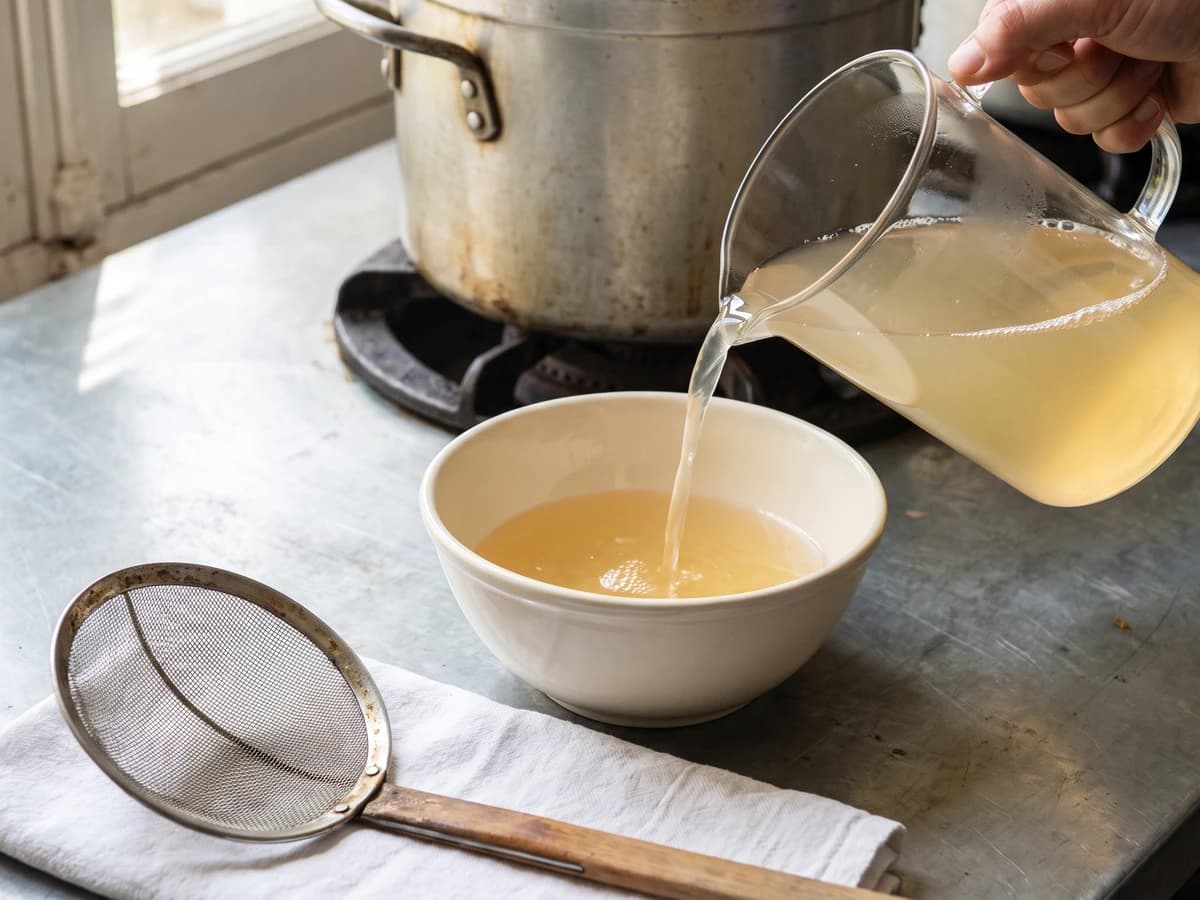
Ordinary or White Consommé
Beef shin, lean beef, and fowl begin in cold water and rise slowly toward a tremble. Skim before the boil, and you learn the quiet discipline that gives every clear French broth its backbone.
A cooking platform built around craft, culture, and the stories behind what we eat.
Created by Chef Juliette
Based on No. 110, Villeroy Tomatée Sauce, from Le Guide Culinaire (1907) by Auguste Escoffier
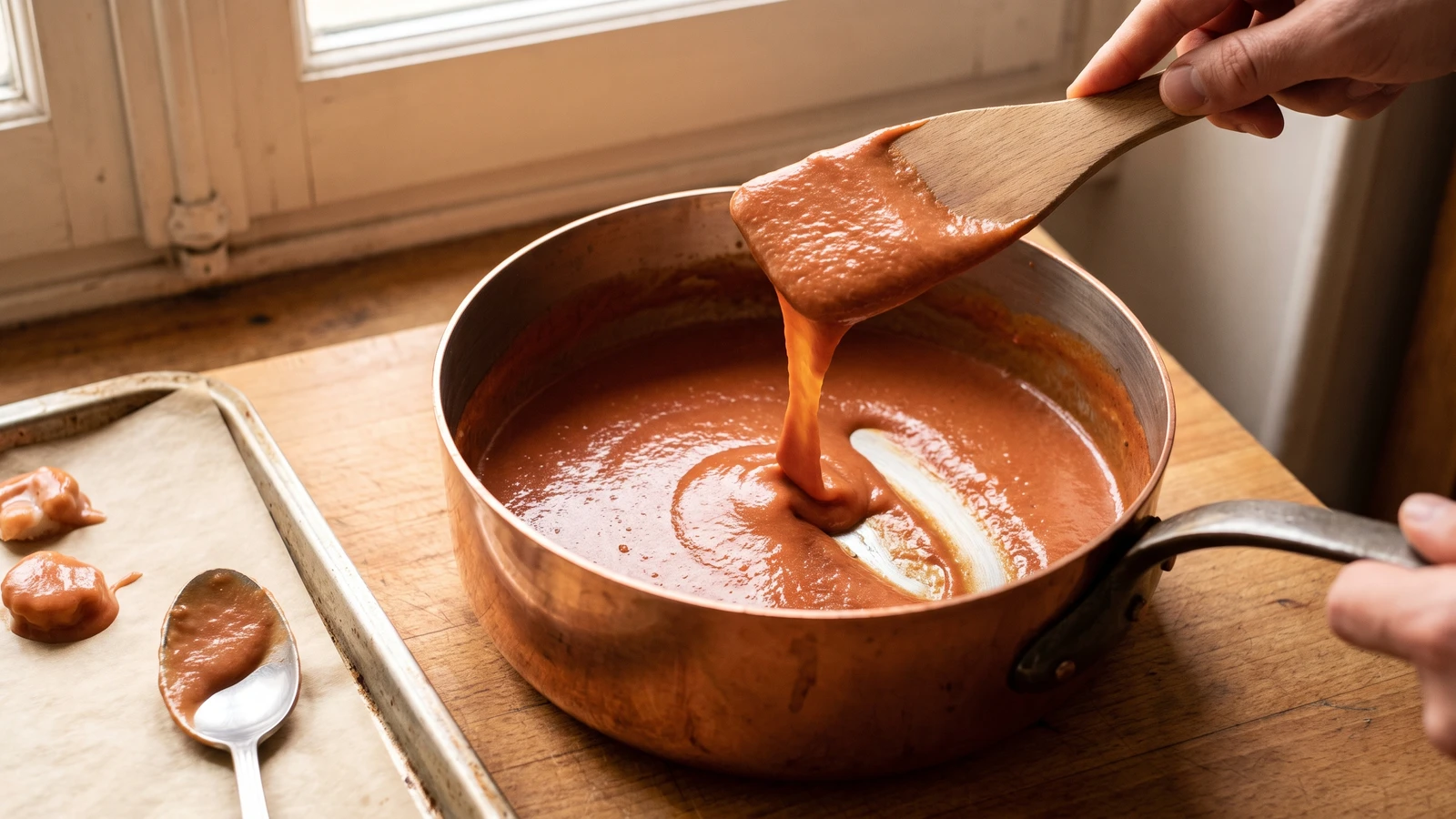
Tomato deepens the classical Villeroy coating without loosening its grip: reduce patiently until the sauce clings in a thick, even mantle, ready for breading and frying à la Villeroy.
Sauce Villeroy Tomatée (tomato-red Villeroy coating sauce) teaches that not every sauce is meant to flow. It must be reduced beyond nappe, the spoon-coating stage, until it will cling to a cooked morsel in a thick, unbroken mantle. That firmness is not a flaw. It is the dish.
The original kitchen assumed a saucier on staff, a finished Villeroy Sauce (No. 108) waiting by the stove, and an open fire watched without interruption. At home, the open fire becomes a broad heavy saucepan on a controllable burner, and one attentive cook replaces the saucier. The formula remains exact: very fine tomato purée equal to one-third the volume of the Villeroy, reduced back to coating strength. The brigade scaffolding goes; the constant stirring stays. This batch makes about two quarts, enough for a generous dinner-party tray of small preparations. One cook, one stove, one evening.
When it is right, the sauce is glossy and brick-rose, falling from the spatula in a slow, broad ribbon and holding fast on a cold spoon. The one step that matters is the reduction: scrape the bottom and corners continuously, because a pale sauce can be reduced further, but a scorched one remembers.
Sauce Villeroy belongs to the Parisian grand-kitchen repertoire, where cooked morsels were coated, chilled until their mantle set, then breaded and fried as preparations à la Villeroy. The tomatée derivative follows the classical family method by adding very fine tomato purée equal to one-third of the finished sauce and reducing it to the same firm consistency, with curry or paprika used only when the morsel calls for it. It is sometimes mistaken for a serving sauce, but its sole purpose is structural: it forms the rich layer beneath the crumbs.
Quantity
2 quarts (1.9 L / 2 kg) Villeroy Sauce (No. 108)
Quantity
2⅔ cups (630 ml / 660 g)
passed through a fine-mesh sieve if not perfectly smooth
Quantity
1 teaspoon (5 ml / 2 g)
Quantity
Up to 2 tablespoons (30 ml / 30 g)
only to correct over-reduction
| Ingredient | Quantity |
|---|---|
| Villeroy Sauce | 2 quarts (1.9 L / 2 kg) Villeroy Sauce (No. 108) |
| very fine tomato puréepassed through a fine-mesh sieve if not perfectly smooth | 2⅔ cups (630 ml / 660 g) |
| mild curry powder or sweet paprika (optional) | 1 teaspoon (5 ml / 2 g) |
| hot water (optional)only to correct over-reduction | Up to 2 tablespoons (30 ml / 30 g) |
Set a wide 6-quart heavy saucepan over the stove and place a flexible heatproof spatula and a cold metal spoon beside it. Measure the Villeroy Sauce (No. 108) and tomato purée separately. The purée is exactly one-third the volume of the Villeroy, and that proportion must stay intact; it gives tomato depth without turning the coating into an ordinary tomato sauce.
Put the Villeroy Sauce (No. 108) into the saucepan and whisk in the very fine tomato purée gradually, scraping around the base and corners until the colour is perfectly even. Bring the mixture toward its first lazy bubbles over medium heat, stirring without pause. Once it begins to bubble, lower the heat enough to prevent spattering while keeping a steady reduction.
Cook uncovered for 25 to 40 minutes, stirring constantly and drawing the spatula firmly across the pan floor and into every corner. The sauce is ready when the spatula leaves a furrow that stays open briefly, the sauce falls in a slow broad ribbon, and a cold spoon dipped into it keeps a thick, opaque coat when turned. If it grows too stiff, whisk in the hot water a teaspoon at a time until the heavy ribbon returns. If one patch catches, stop scraping, pour the unburnt sauce into a clean pan, and continue over gentler heat. Ça se rattrape, provided the burnt taste has not spread.
Remove the pan from direct heat. If the preparation calls for it, sift in either the curry powder or the sweet paprika and stir until no specks or clumps remain. Choose one, never both, and keep it subordinate to the tomato and the Villeroy. Return the pan to low heat for thirty seconds, stirring, then stop the cooking before the sauce tightens further.
Use the Villeroy Tomatée while it is warm and fluid enough to spread, but no longer bubbling. The cooked morsels must be thoroughly cold and dry. Dip each one or spoon the sauce over it, let the excess fall away once, then place it on parchment until the coating is cold and firm enough for breading and frying. This sauce has no other service. Its thick grip beneath the crumbs is the whole reason it exists.
1 serving (about 70g)
Culinary guides, cultural storytelling, and the editorial depth that makes cooking meaningful.
Discover Culinary ExplorerChef Juliette
Beef shin, lean beef, and fowl begin in cold water and rise slowly toward a tremble. Skim before the boil, and you learn the quiet discipline that gives every clear French broth its backbone.
Chef Juliette
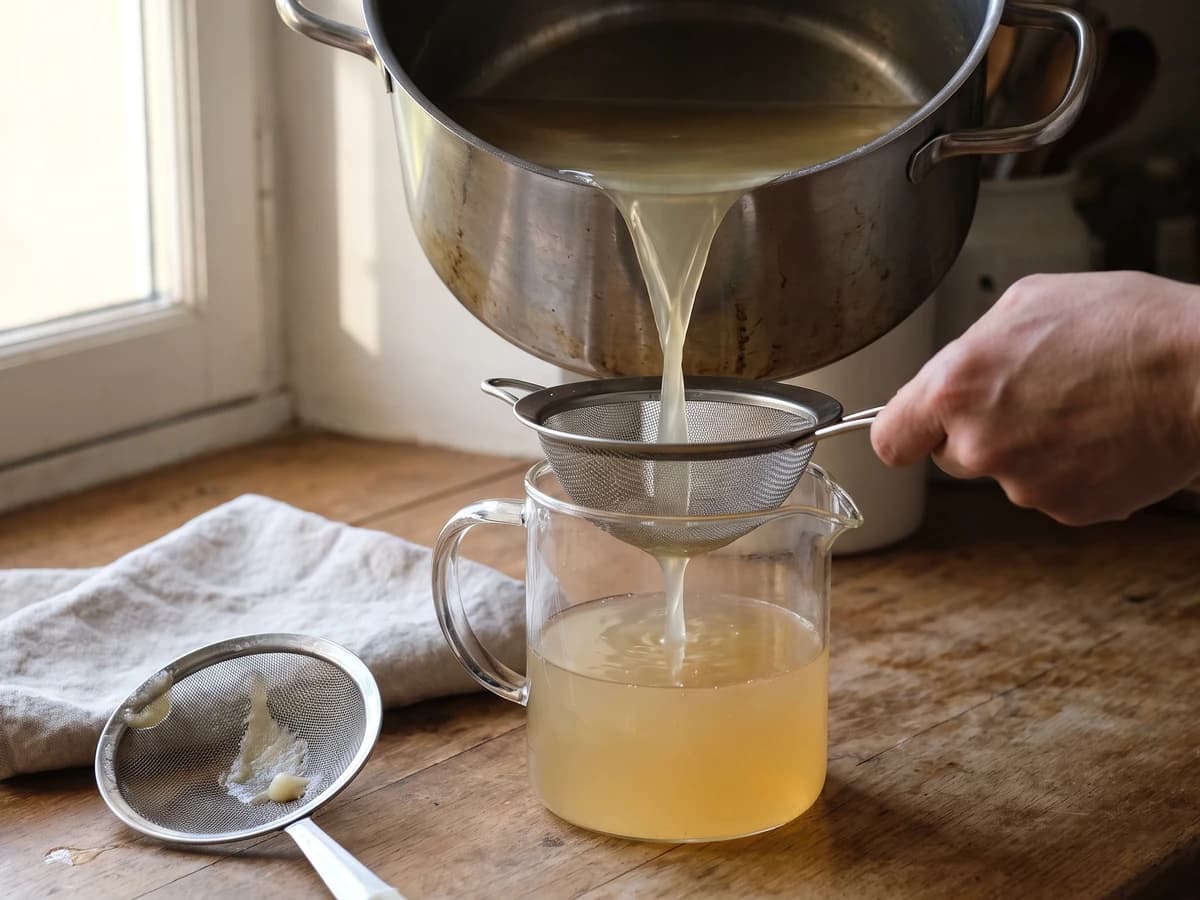
Break the veal bones small, then give them eight hours at a bare tremble. This pale, gelatinous fond becomes the quiet foundation beneath velouté, blanquette, and every sauce that must stay light.
Chef Juliette
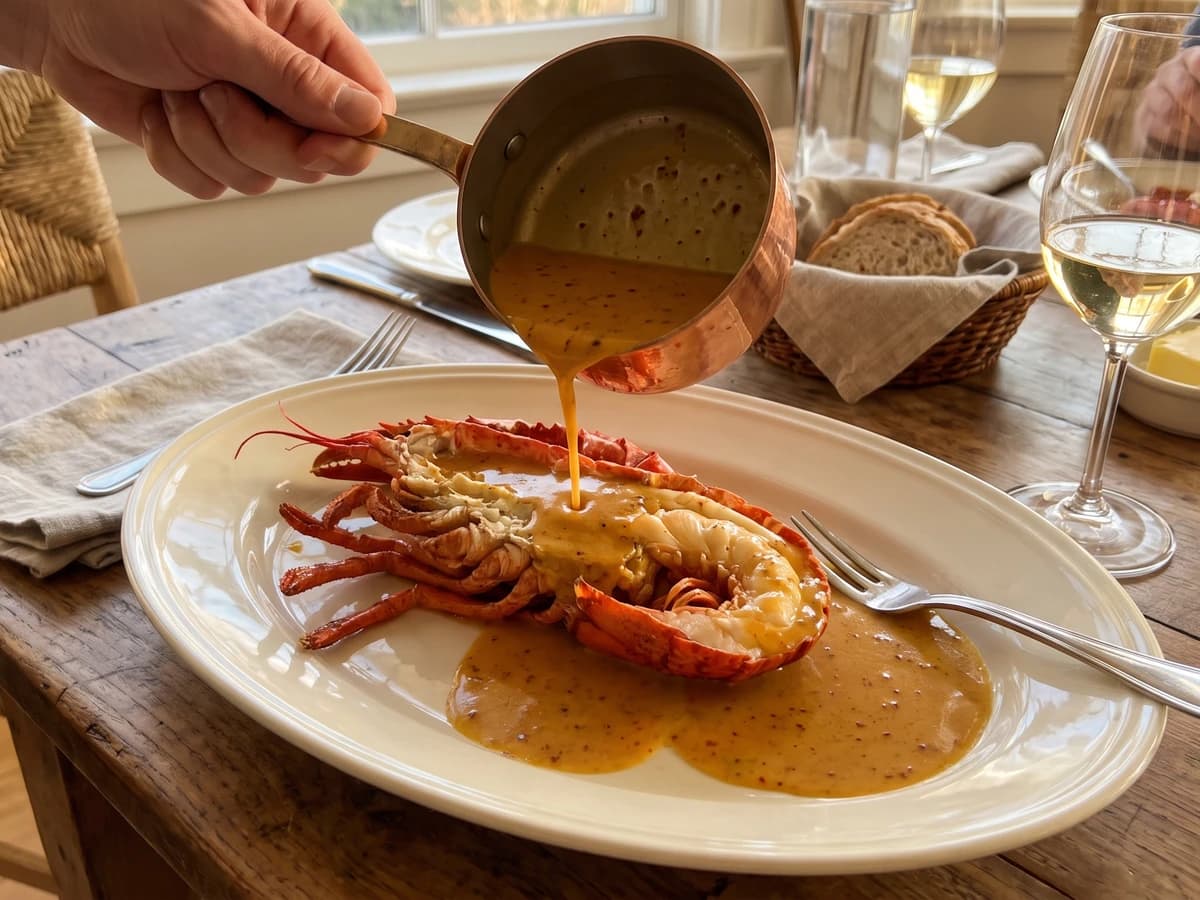
Sauce Orientale concentrates lobster-rich American Sauce with curry, then folds in cream away from the fire: a glossy, gently spiced derivative made for lobster, crayfish, and firm fish.
Chef Juliette
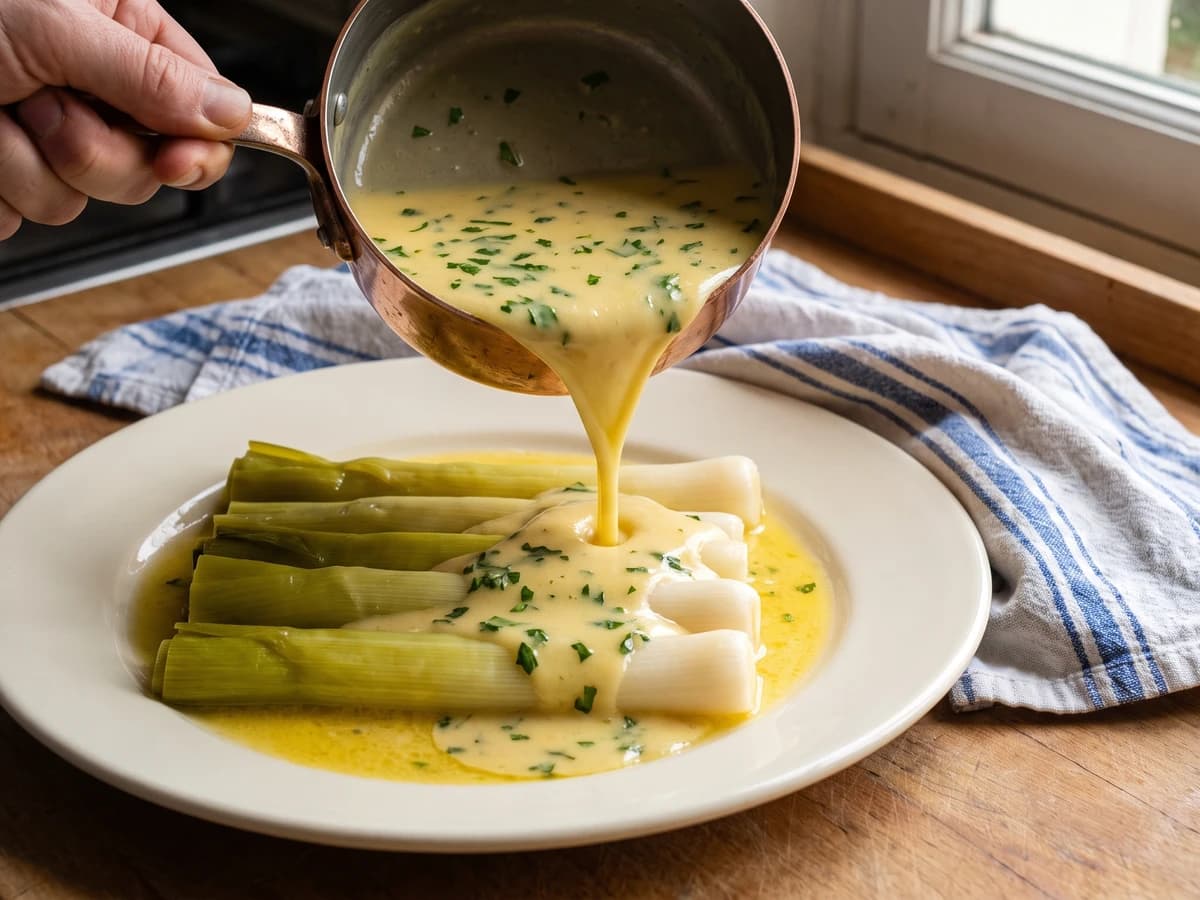
An old lesson in sauce families: Sauce Allemande takes mushroom liquor, then butter, lemon, and parsley, becoming a glossy Poulette for sheep's trotters, leeks, cauliflower, and anything needing gentle richness with a bright edge.