
Chef Juliette
John Dory (St. Pierre)
John Dory has the delicacy of sole and the firmness of turbot. A light flouring, a quick butter sauté, and nut-brown beurre noisette show exactly why looks never mattered.
A cooking platform built around craft, culture, and the stories behind what we eat.
Created by Chef Juliette
Based on No. 1092, Tournedos à l’Estragon, from Le Guide Culinaire (1907) by Auguste Escoffier
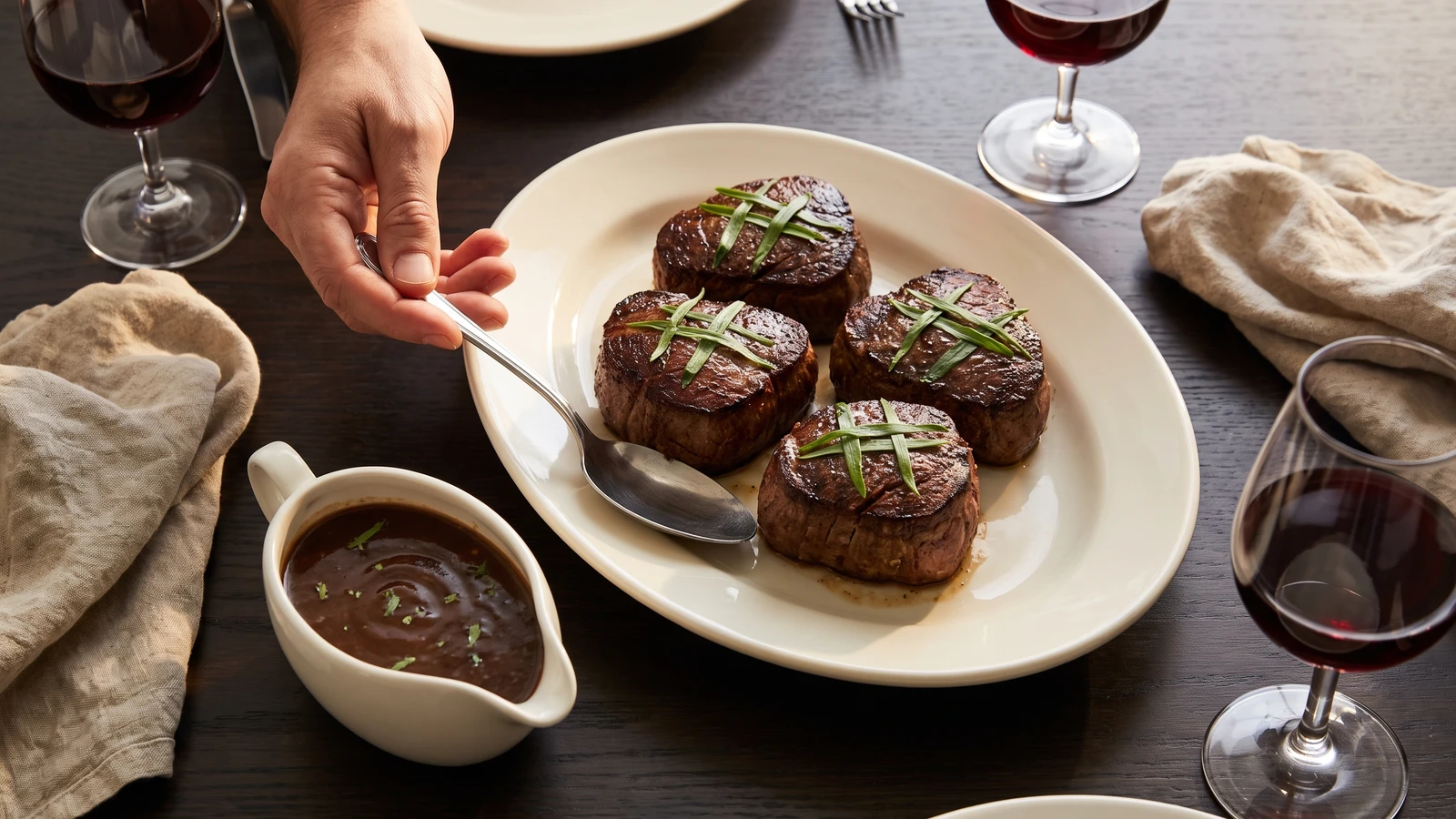
Four butter-seared tournedos wear the dish’s proper lattice of blanched tarragon, with glossy tarragon-scented gravy served apart. High heat and swift timing keep the lean beef rosy and tender.
Tournedos à l’Estragon (butter-seared beef tenderloin medallions with tarragon) teaches exact pan timing. The one true thing to know is this: tenderloin is lean, and the tenderness you paid for disappears quickly when it overcooks. Have the garnish ready, the gravy warm, and the platter waiting before the beef meets the butter.
The original kitchen assumed a saucier on staff, a veal stockpot never off the fire, and enough hands to arrange a grand crown at the instant of service. The salamander standing nearby had no work in this entry; the tarragon leaves are parboiled, never scorched. At home, the separate sauce station is scaffolding you can discard: prepare the finished Thickened Gravy (No. 41) ahead, scent it with tarragon in a small saucepan, and fry four tournedos together in one broad skillet. The grand crown becomes a compact crown for four, and the original parboiling gains an ice bath to preserve the leaves’ green color. The butter frying, tarragon lattice, and gravy served apart are the dish itself, so they stay. One cook, one stove, one evening.
When the tournedos are right, their crust is deep bronze, their centers remain rosy, and the supple green lattice declares the herb before the gravy reaches the plate. Dry the beef thoroughly and pull it from the pan early. That is the step that decides the dish.
Tournedos à l’Estragon belongs to the Parisian classical dining room, where small center-cut rounds of beef fillet were cooked to order, arranged as a crown, and accompanied by sauce apart. From grand kitchens it passed naturally into cuisine bourgeoise because the prized cut cooks quickly and asks for little equipment, though the household cook had to replace the waiting sauce station with a prepared gravy. The parboiled tarragon lattice is not idle decoration: it softens the herb’s leaves against the meat while declaring estragon before the veal-based Thickened Gravy (No. 41) reaches the plate.
Quantity
4 tournedos, 6 oz (170 g) each
cut about 1½ inches (4 cm) thick and tied around the circumference
Quantity
1 teaspoon (5 ml / 6 g)
Quantity
½ teaspoon (2.5 ml / 1 g)
Quantity
1 large bunch (about 2 loosely packed cups / 480 ml / 30 g)
leaves picked, 32 long leaves reserved whole and enough remaining leaves finely chopped to make 2 tablespoons
Quantity
1 cup (240 ml / 250 g) Thickened Gravy (No. 41)
Quantity
3 tablespoons (45 ml / 42 g)
divided
| Ingredient | Quantity |
|---|---|
| center-cut beef tenderloin tournedoscut about 1½ inches (4 cm) thick and tied around the circumference | 4 tournedos, 6 oz (170 g) each |
| fine sea salt | 1 teaspoon (5 ml / 6 g) |
| freshly ground black pepper | ½ teaspoon (2.5 ml / 1 g) |
| fresh tarragonleaves picked, 32 long leaves reserved whole and enough remaining leaves finely chopped to make 2 tablespoons | 1 large bunch (about 2 loosely packed cups / 480 ml / 30 g) |
| Thickened Gravy, prepared with veal stock | 1 cup (240 ml / 250 g) Thickened Gravy (No. 41) |
| unsalted butterdivided | 3 tablespoons (45 ml / 42 g) |
Bring a small saucepan of water to a gentle boil and set a bowl of ice water beside it. Choose 32 of the longest, least damaged tarragon leaves. Blanchir, briefly parboil, them for 5 seconds, then lift them straight into the ice water. They should be supple enough to bend without tearing while retaining their green color. Drain and press them thoroughly dry between clean towels; wet leaves slide from the meat and dilute its butter sheen. Finely chop enough of the remaining leaves to make 2 tablespoons (30 ml / 4 g).
Put the Thickened Gravy (No. 41) in a 1-quart saucepan and bring it to the barest tremble over medium-low heat. Stir in the chopped tarragon, simmer gently for 1 minute, then cover and take the pan off the heat for 3 minutes so the herb scents the gravy without losing its freshness. Return it to the lowest heat and keep it warm. If a skin forms, whisk it smooth. If the gravy tightens too far, loosen it with hot water, 1 teaspoon at a time. Ça se rattrape.
Pat every surface of the tournedos thoroughly dry. Tie each around its circumference with kitchen twine if the butcher has not already done so; the string keeps the compact round shape and helps all four cook evenly. Season both sides with the measured salt and pepper immediately before frying. Warm an oval serving platter and the sauceboat now, because the beef will not wait while you search for them.
Heat a dry 12-inch heavy skillet over medium-high heat for 2 minutes. Add 2 tablespoons (30 ml / 28 g) of the butter. When it foams briskly and smells nutty, set in the tournedos with room between them. Fry without moving for 2½ to 3 minutes, until the first side is deeply bronzed and releases cleanly. Turn, add the remaining 1 tablespoon (15 ml / 14 g) butter, and baste continuously for about 2 minutes. Hold each tournedos briefly on its edge with tongs to color the sides. If the pan is smaller than 12 inches, work in two batches and divide the butter evenly. Check the center from the side with an instant-read thermometer. Pull the beef at 122 to 125°F (50 to 52°C) for medium-rare, or 128 to 130°F (53 to 54°C) for medium; carryover heat will finish it during the rest. If the butter’s milk solids turn black rather than hazelnut brown, move the beef to a plate, lower the heat, carefully wipe the skillet, and resume with the reserved butter. Burned butter is bitter, but the tournedos are not lost.
Transfer the tournedos to a warm plate and rest them uncovered for 5 minutes. Covering traps moisture and softens the crust. If one proves too rare after resting, ça se rattrape: return it to the hot skillet for 30 seconds per side and check again. Beef cooked too far cannot be taken backward, which is why you pull early. While it rests, rewarm the gravy gently without letting it boil hard.
Remove the strings and arrange the four tournedos in a tight ring on the warm platter, leaving a small open center to form the crown described in the original entry. Lay four blanched tarragon leaves parallel across each tournedos, then cross them with four more leaves to make a simple lattice. Do not pour gravy over the top and bury the garnish. Send the tarragon gravy separately in the warm sauceboat, letting each guest spoon it around the beef. À table!
1 serving (about 195g)
Culinary guides, cultural storytelling, and the editorial depth that makes cooking meaningful.
Discover Culinary ExplorerChef Juliette
John Dory has the delicacy of sole and the firmness of turbot. A light flouring, a quick butter sauté, and nut-brown beurre noisette show exactly why looks never mattered.

Chef Juliette
Fresh haddock proves its delicacy in the meunière pan: a fine flour crust, moist pearly flakes, and beurre noisette sharpened with lemon and parsley, ready from one skillet in half an hour.

Chef Juliette
Éperlans à l’Anglaise turns small fish into a lesson in disciplined coating: boned smelts under a close, crisp crumb, pan-fried in clarified butter and finished with bright, half-melted maître d’hôtel butter.

Chef Juliette
Tiny smelts, shallot, mushrooms, white wine, gratin sauce, and fine bread raspings meet a fierce oven, where the fish must turn tender in the same breath the buttered crust bronzes.