Chef Juliette
Ordinary or White Consommé
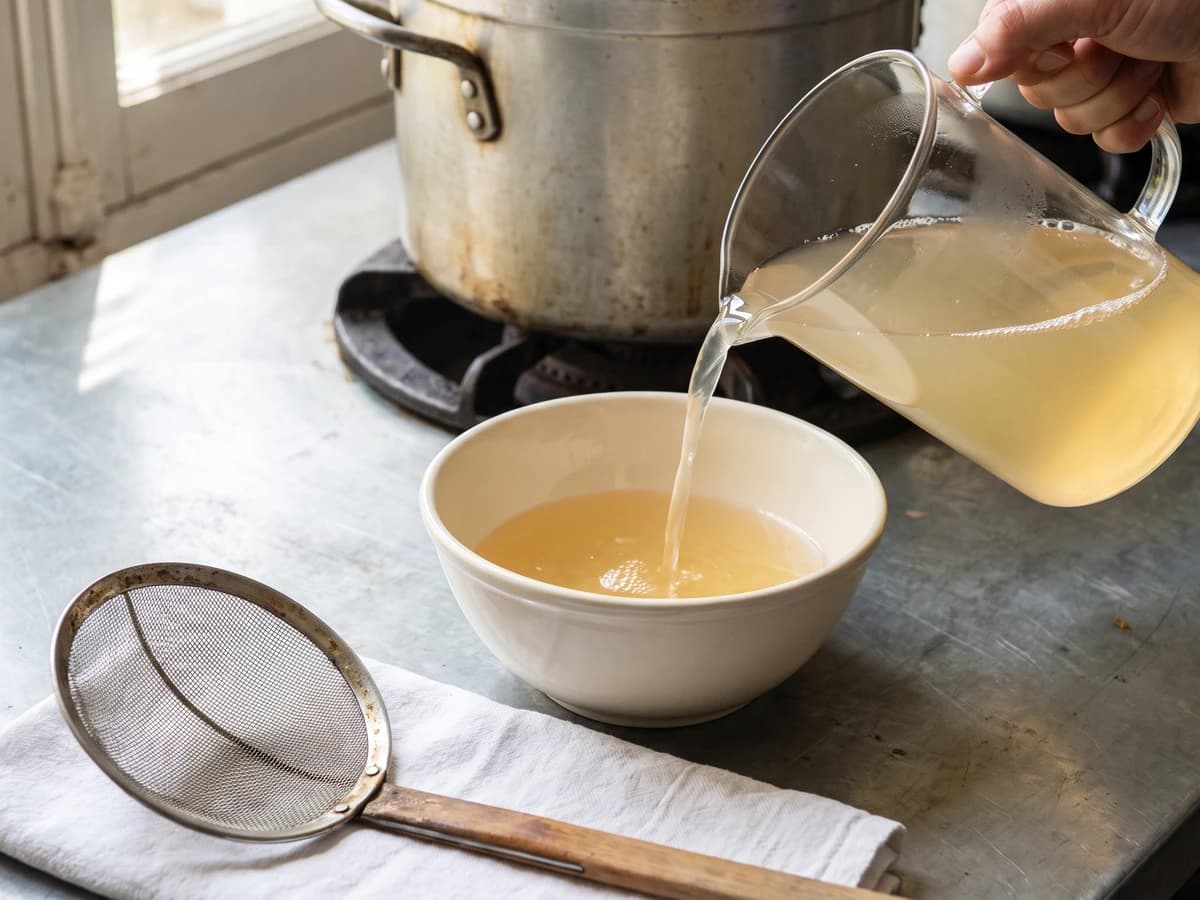
Beef shin, lean beef, and fowl begin in cold water and rise slowly toward a tremble. Skim before the boil, and you learn the quiet discipline that gives every clear French broth its backbone.
A cooking platform built around craft, culture, and the stories behind what we eat.
Created by Chef Juliette
Based on No. 41, Thickened Gravy, from Le Guide Culinaire (1907) by Auguste Escoffier
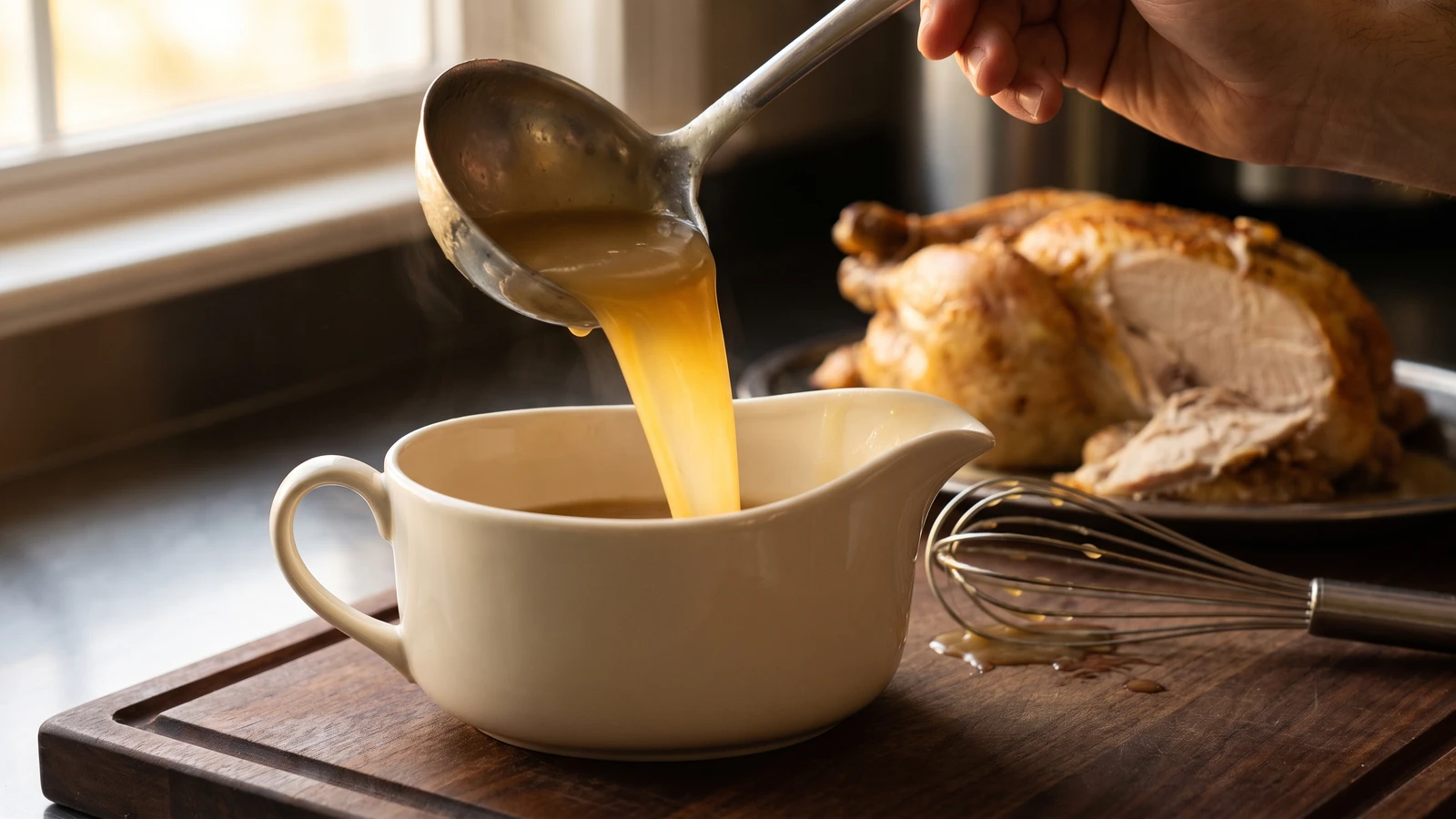
Jus lié à la fécule turns a well-made poultry or veal stock into glossy gravy in minutes, using a cold potato-starch slurry, a brisk whisk, and no roux at all.
Jus lié à la fécule teaches one clean lesson: the stock supplies the flavor, and the fécule supplies only the body. Before you touch the pan, know this: cold starch must meet boiling liquid while the whisk moves briskly. That meeting gives you a smooth, glossy sauce; hesitation gives you lumps.
The original assumed a saucier beside a stockpot never off the fire, binding a pint whenever service called. The source already provides a compact one-pint working ratio; for a useful make-ahead batch, it is multiplied fourfold to about two quarts, still modest beside a rolling brigade reserve and manageable in one saucepan. The constant stockpot and dedicated saucier are scaffolding and can go. The boiling stock, cold slurry, and brisk stirring are the dish and must stay. One cook, one stove, one evening.
Done properly, the jus lié remains clean-tasting and lightly translucent, with enough body to cling to poultry or meat without burying it. There is no roux because the source does not want one. Have the stock fully boiling and the slurry freshly stirred before they meet; that single moment decides the sauce.
Jus lié à la fécule belongs to the classical French sauce kitchen rather than to any single province: it was a service sauce made from the stock appropriate to the meat and bound at the last moment. It passed naturally from the saucier's stove to bourgeois and home tables because the method needs no roux and preserves the stock's color and direct flavor. The common notion that every French gravy begins with flour and fat simply does not apply here.
Quantity
8 cups (1.9 L / about 1.9 kg)
choose poultry stock for poultry and veal stock for butcher's meat
Quantity
7 tablespoons (105 ml / 85 g)
Quantity
½ cup (120 ml / 120 g)
for slaking the fécule
| Ingredient | Quantity |
|---|---|
| poultry stock or veal stockchoose poultry stock for poultry and veal stock for butcher's meat | 8 cups (1.9 L / about 1.9 kg) |
| potato starch (fécule) | 7 tablespoons (105 ml / 85 g) |
| cold water or cold matching stockfor slaking the fécule | ½ cup (120 ml / 120 g) |
Choose the stock according to what the sauce will accompany: poultry stock for poultry fillets, veal stock for butcher's meat. This choice is the foundation, not a minor seasoning, because the recipe adds no roux, aromatics, cream, or butter to disguise a weak or mismatched stock.
Pour the stock into a heavy saucepan and bring it to a full boil over medium-high heat. Do not reduce it deliberately; the source calls for boiling stock at its finished strength, and reduction would disturb both its seasoning and the prescribed stock-to-fécule ratio.
While the stock comes to the boil, put the fécule in a bowl and whisk in the cold water or cold matching stock until perfectly smooth. This is slaking, dispersing the starch in cold liquid before it meets heat. Make the slurry only when the stock is nearly ready, because potato starch settles quickly; whisk it again immediately before pouring.
Keep the stock boiling and whisk continuously while pouring in the freshly stirred slurry in a thin, steady stream. The jus lié will thicken almost at once. Continue whisking briskly until it is smooth, glossy, and coats the back of a spoon with an even film, then let it boil for only 20 to 30 seconds. If lumps appear, lift the pan from the heat and whisk firmly; if any remain, pass the sauce through a fine-mesh sieve. Ça se rattrape. If the sauce is too thick, whisk in a little boiling matching stock. If it is too thin, slake a small additional spoonful of fécule in cold liquid before adding it; never scatter dry starch into the pan.
Use the jus lié at once, spooning the poultry-stock version over poultry fillets or the veal-stock version over butcher's meat. For a short hold, keep it over the lowest heat and whisk occasionally without allowing another hard boil, since prolonged boiling weakens a potato-starch binding. If making it ahead, cool it promptly in shallow containers. Reheat gently, loosening with matching stock if needed. À table!
1 serving (about 60g)
Culinary guides, cultural storytelling, and the editorial depth that makes cooking meaningful.
Discover Culinary ExplorerChef Juliette
Beef shin, lean beef, and fowl begin in cold water and rise slowly toward a tremble. Skim before the boil, and you learn the quiet discipline that gives every clear French broth its backbone.
Chef Juliette
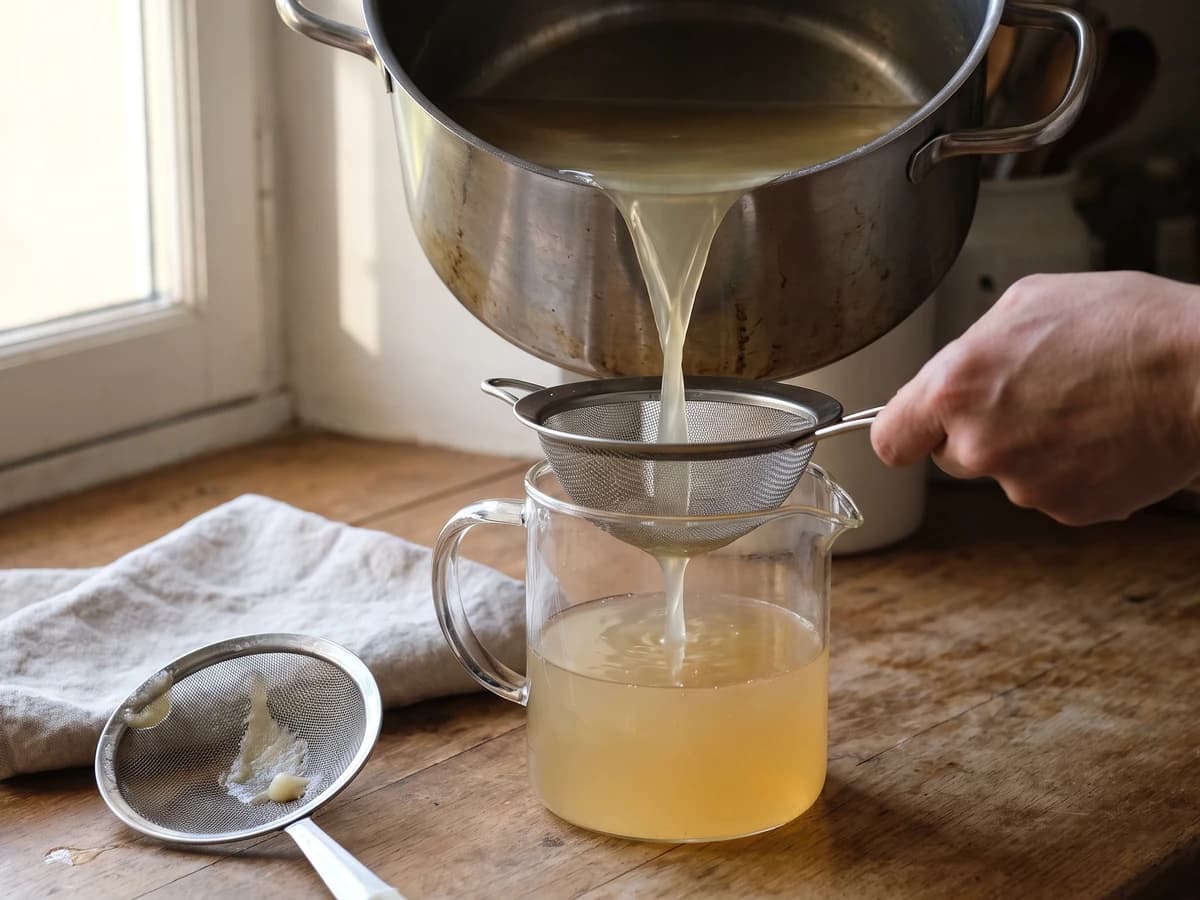
Break the veal bones small, then give them eight hours at a bare tremble. This pale, gelatinous fond becomes the quiet foundation beneath velouté, blanquette, and every sauce that must stay light.
Chef Juliette
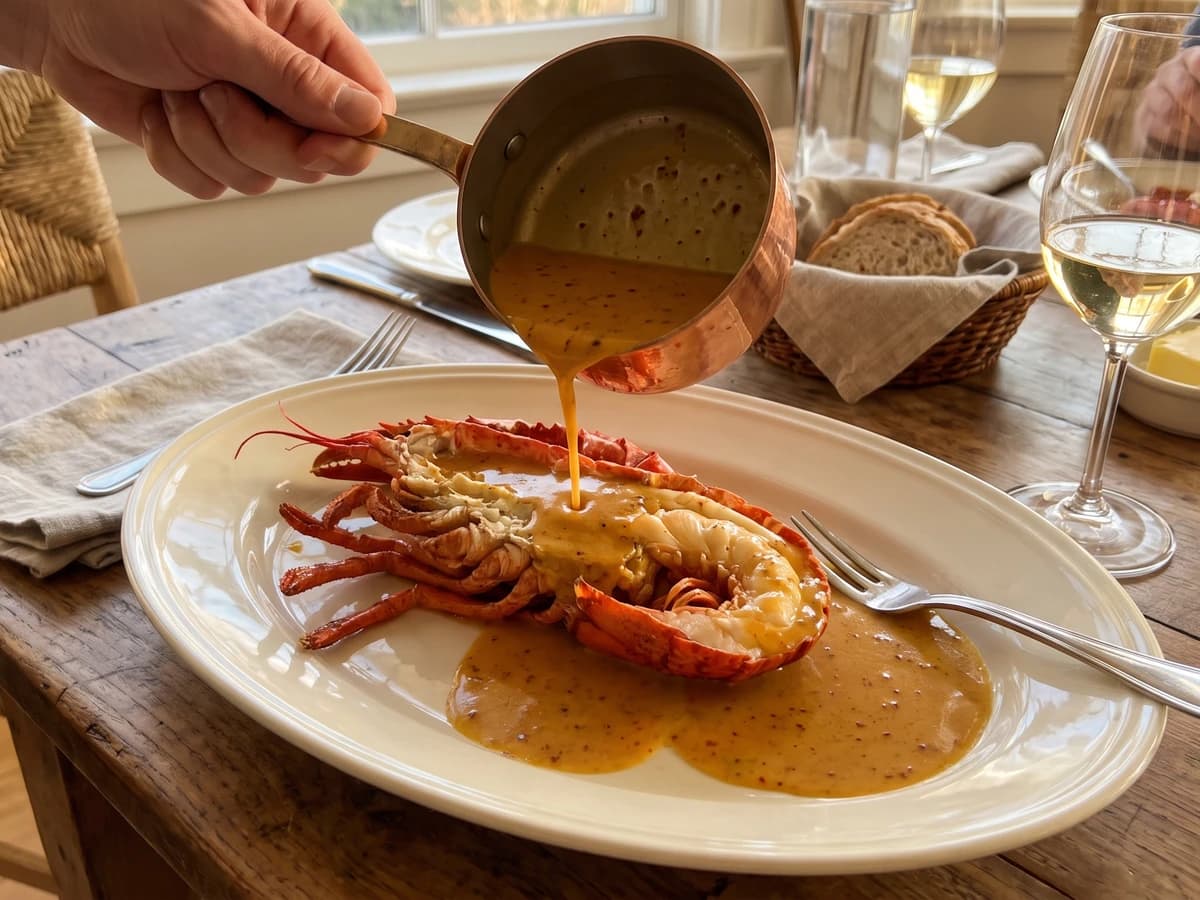
Sauce Orientale concentrates lobster-rich American Sauce with curry, then folds in cream away from the fire: a glossy, gently spiced derivative made for lobster, crayfish, and firm fish.
Chef Juliette
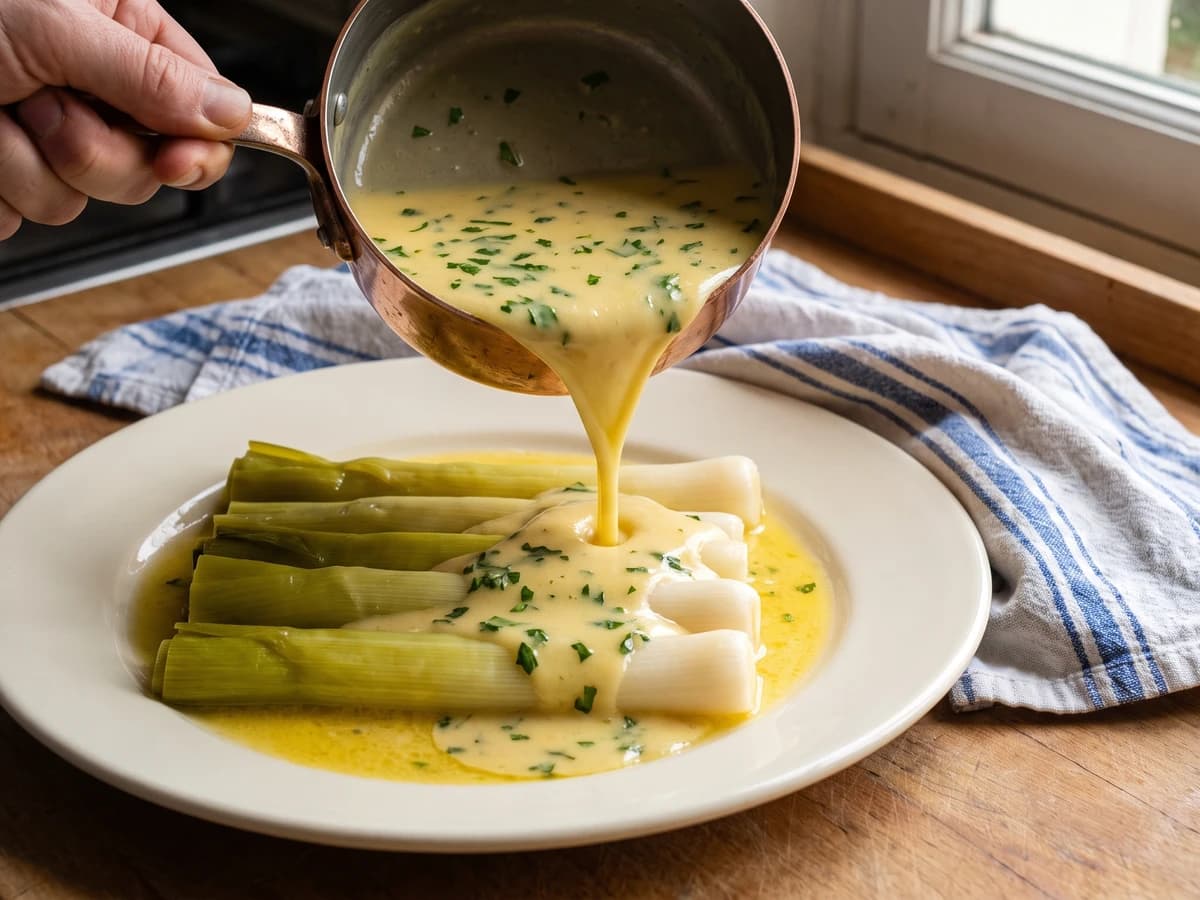
An old lesson in sauce families: Sauce Allemande takes mushroom liquor, then butter, lemon, and parsley, becoming a glossy Poulette for sheep's trotters, leeks, cauliflower, and anything needing gentle richness with a bright edge.