Chef Juliette
Ordinary or White Consommé
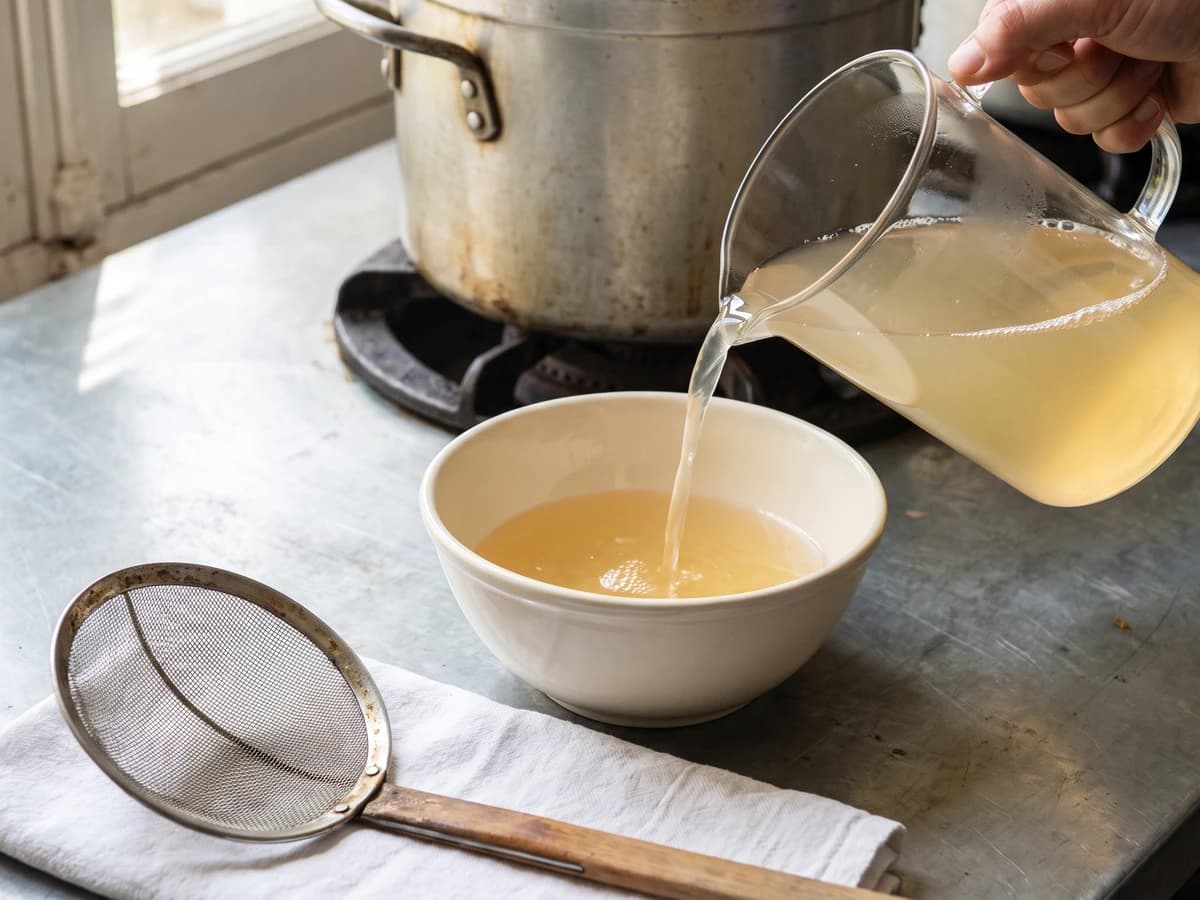
Beef shin, lean beef, and fowl begin in cold water and rise slowly toward a tremble. Skim before the boil, and you learn the quiet discipline that gives every clear French broth its backbone.
A cooking platform built around craft, culture, and the stories behind what we eat.
Created by Chef Juliette
Based on No. 109, Villeroy Soubisée Sauce, from Le Guide Culinaire (1907) by Auguste Escoffier
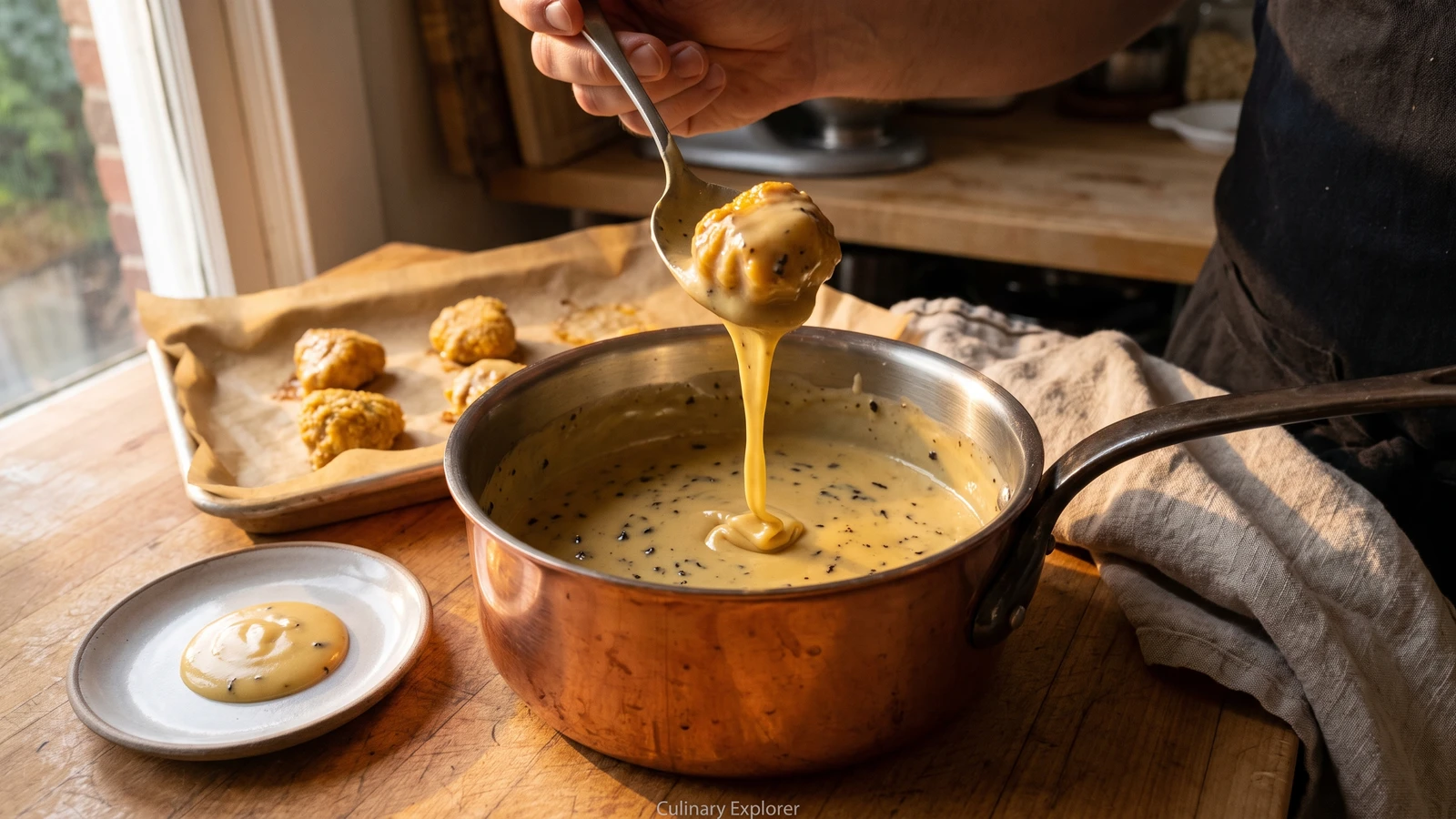
A Villeroy sauce reduced beyond pouring consistency, with onion-rich Soubise for body and black truffle when the morsel asks for it, ready to cloak, set, take crumbs, and meet the frying pan.
Sauce Villeroy Soubisée (stiff onion-enriched coating sauce) teaches the distinction between a sauce made to pour and one made to hold. The one true thing is this: judge it cold. Hot from the pan, it must remain fluid enough to cloak a morsel; once chilled, that coat must set firmly enough to accept breading without slipping away.
The book assumed a saucier on staff, Allemande Sauce waiting from stock never off the fire, and Soubise Sauce with Rice (No. 105) already pounded and passed through a tammy. A home kitchen needs the two finished sauces, a broad heavy saucepan, a fine-mesh sieve where the referenced Soubise calls for a tammy, and a cold saucer for testing. The standing brigade mise en place becomes one two-quart dinner-party batch, while the book's exact two-thirds Allemande to one-third Soubise proportion remains untouched. One cook, one stove, one evening.
The all-day holding and separate hands are scaffolding, and they can go. The reduction is the dish, and it must stay. A salamander has no work here; Villeroy sets in the cold and meets breading and frying later. Before you begin, put two saucers in the cold: the cold-set test, not the clock, decides when the sauce is finished.
Villeroy sauces belong to the Parisian grand-kitchen repertoire, where a finished sauce was reduced beyond pouring consistency so it could cloak a cooked morsel, set, and survive breading and frying. Sauce Villeroy Soubisée crosses that method with Soubise Sauce with Rice (No. 105), whose onion-and-rice purée contributes flavour and body without another addition of flour. Despite its name, this is not properly a table sauce: its classical place is between the cooked morsel and the crumb.
Quantity
6⅔ cups (1.6 L / about 1.65 kg)
warm but not boiling
Quantity
3⅓ cups (800 ml / about 830 g) Soubise Sauce with Rice (No. 105)
warm but not boiling
Quantity
¼ cup (60 ml / 40 g)
finely chopped
Quantity
Up to ½ cup (120 ml / 120 g)
for rescue only
| Ingredient | Quantity |
|---|---|
| Allemande Saucewarm but not boiling | 6⅔ cups (1.6 L / about 1.65 kg) |
| Soubise Sauce with Ricewarm but not boiling | 3⅓ cups (800 ml / about 830 g) Soubise Sauce with Rice (No. 105) |
| very black truffle (optional)finely chopped | ¼ cup (60 ml / 40 g) |
| just-boiled water (optional)for rescue only | Up to ½ cup (120 ml / 120 g) |
Put two small saucers in the freezer for at least 10 minutes. Set a wide, heavy-bottomed saucepan over the stove and have a whisk, a heatproof spatula, and the just-boiled water within reach. The sauce will thicken quickly near the end, so this is the moment for an orderly stove.
Pour the warm Allemande Sauce and the warm Soubise Sauce with Rice (No. 105) into the saucepan. Whisk until no pale or darker streaks remain and the mixture is completely uniform. This preserves the source's exact two-to-one ratio; do not alter it with extra cream, flour, or butter.
Bring the mixture to a controlled simmer over medium-low heat, then reduce for 25 to 35 minutes, stirring steadily and sweeping the spatula across the entire pan floor and into every corner. As water leaves, the sauce will become glossy, the bubbles will grow slower and heavier, and a stroke of the spatula will expose the pan for a moment before the sauce closes over it. Keep the heat composed; a violent boil can make the enriched Allemande grainy and can scorch the onion purée before you smell trouble.
Drop a teaspoonful onto a chilled saucer and leave it for 1 minute. Tip the saucer: the sauce should mound and creep only slightly, and a fingertip drawn through it should leave a clean track without liquid weeping into the line. If it runs, continue reducing for 2 minutes and test again. If it sets pasty, rubbery, or prone to tearing, take the pan off the heat and whisk in the hot water 1 tablespoon (15 ml / 15 g) at a time, then retest. You are replacing evaporation, not changing the sauce's foundation.
Remove the finished sauce from the heat. If the nature of the morsel asks for truffle, fold in the finely chopped black truffle now so its dark pieces remain distinct and its perfume is not boiled away. The source makes this addition conditional, and so should you: including it or leaving it out can both be faithful.
Hold the sauce over a bain-marie (warm-water bath) so it remains fluid without simmering. Blot fully cooked, well-chilled morsels completely dry, then dip or spoon the Villeroy over them in a generous, even layer and place them on a parchment-lined tray. Chill for 30 to 45 minutes, until the coating is firm enough to touch without sticking. If it slides from the morsel, dry and chill the morsel again, reduce the sauce a little further, and recoat. Bread and fry according to the morsel's own formula, then serve without delay. À table!
1 serving (about 35g)
Culinary guides, cultural storytelling, and the editorial depth that makes cooking meaningful.
Discover Culinary ExplorerChef Juliette
Beef shin, lean beef, and fowl begin in cold water and rise slowly toward a tremble. Skim before the boil, and you learn the quiet discipline that gives every clear French broth its backbone.
Chef Juliette
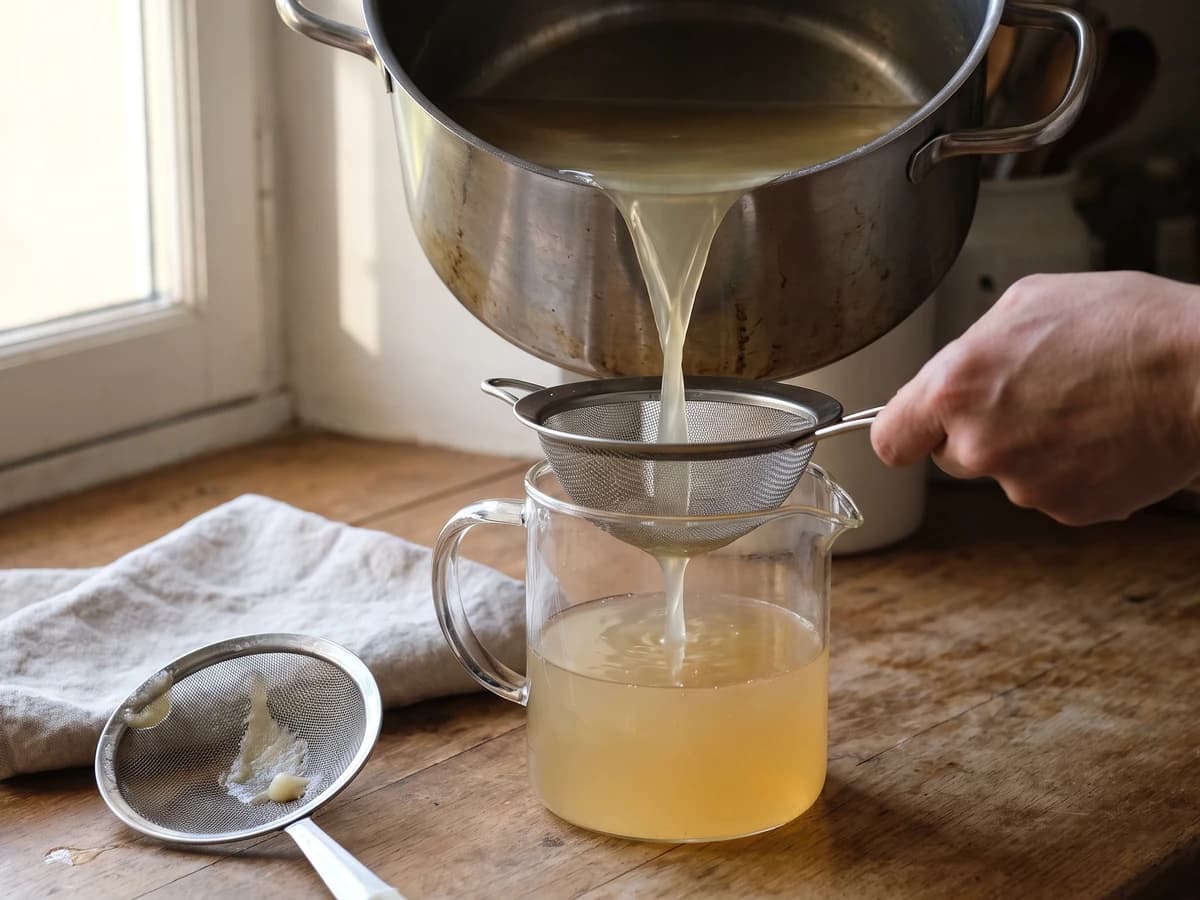
Break the veal bones small, then give them eight hours at a bare tremble. This pale, gelatinous fond becomes the quiet foundation beneath velouté, blanquette, and every sauce that must stay light.
Chef Juliette
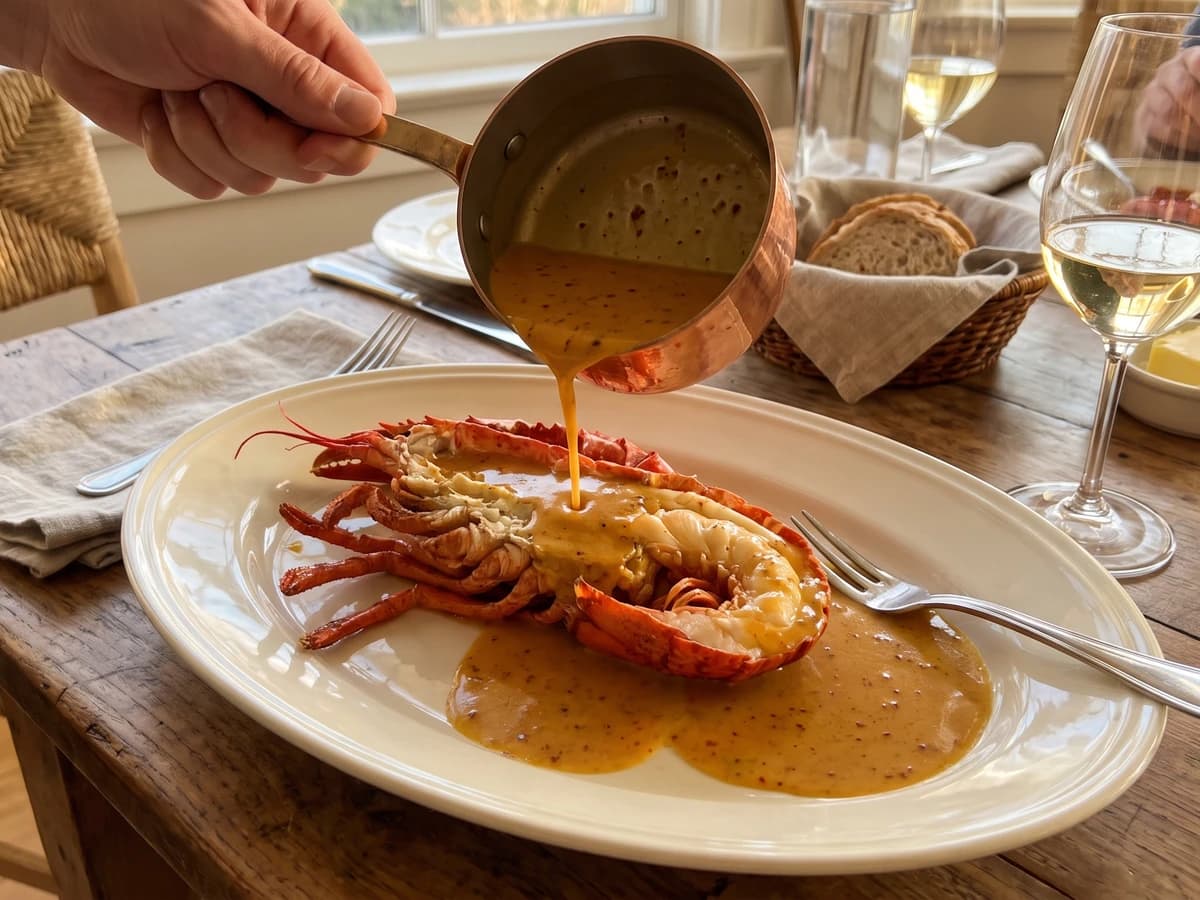
Sauce Orientale concentrates lobster-rich American Sauce with curry, then folds in cream away from the fire: a glossy, gently spiced derivative made for lobster, crayfish, and firm fish.
Chef Juliette
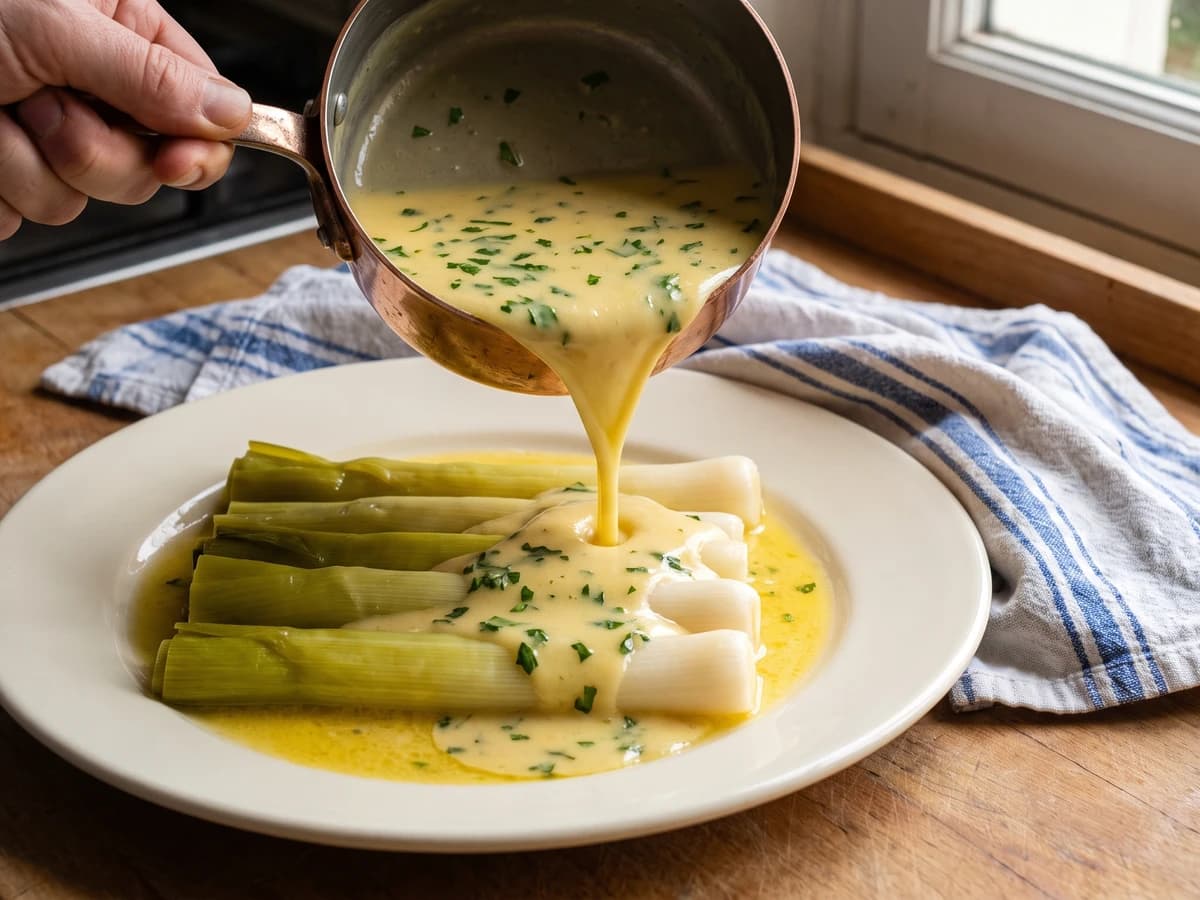
An old lesson in sauce families: Sauce Allemande takes mushroom liquor, then butter, lemon, and parsley, becoming a glossy Poulette for sheep's trotters, leeks, cauliflower, and anything needing gentle richness with a bright edge.