Chef Juliette
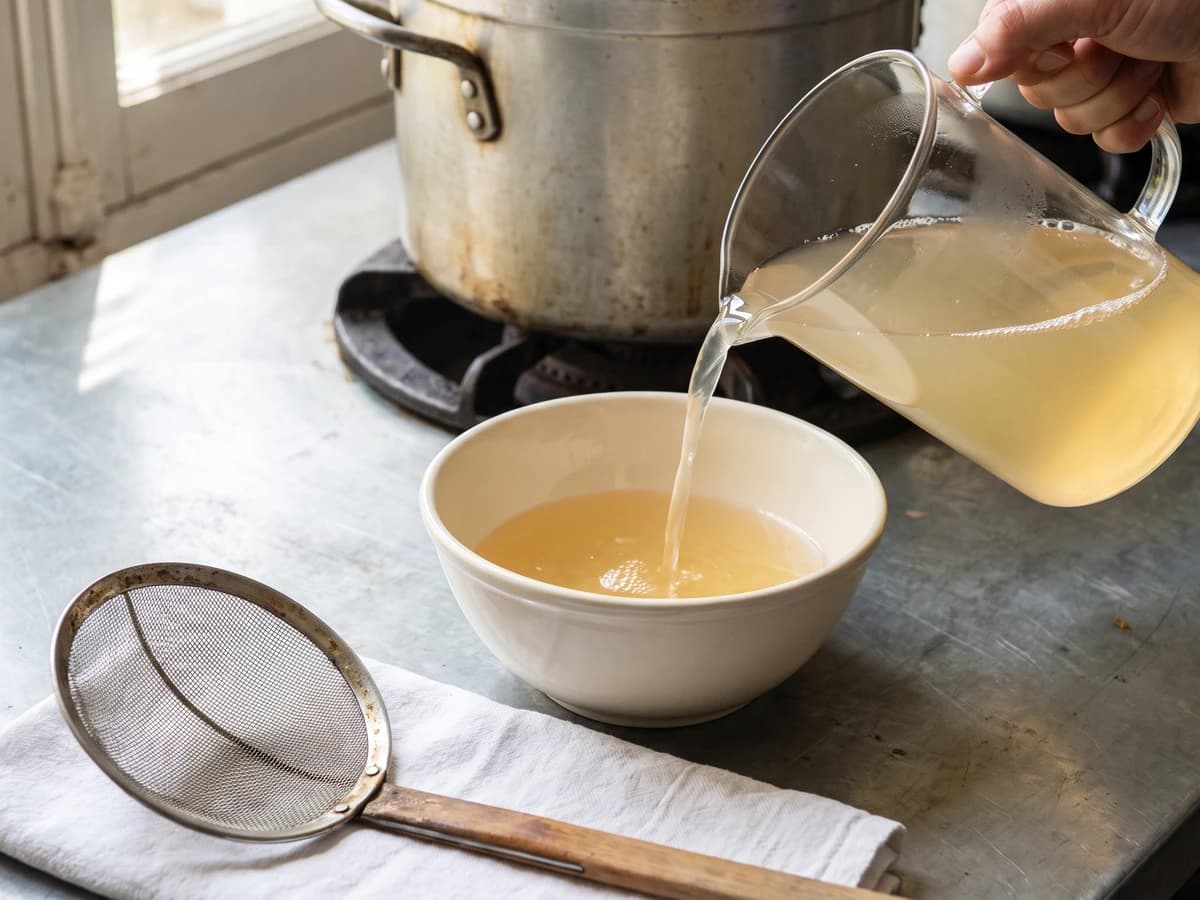
Ordinary or White Consommé
Beef shin, lean beef, and fowl begin in cold water and rise slowly toward a tremble. Skim before the boil, and you learn the quiet discipline that gives every clear French broth its backbone.
A cooking platform built around craft, culture, and the stories behind what we eat.
Created by Chef Juliette
Based on No. 105, Soubise Sauce with Rice, from Le Guide Culinaire (1907) by Auguste Escoffier
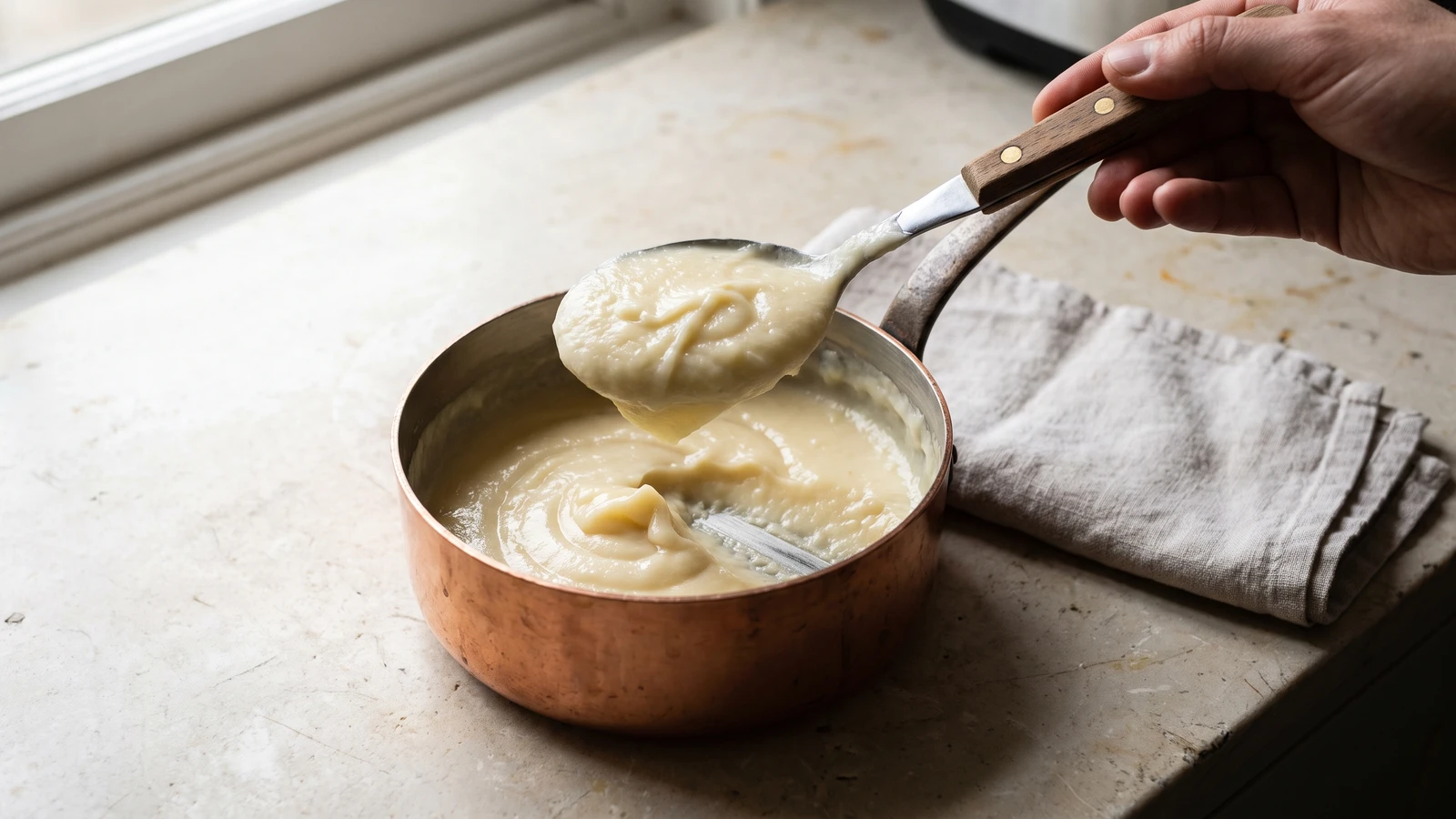
Sauce Soubise au Riz turns blanched onions, Carolina rice, white consommé, cream, and butter into a satin-thick purée: gentle cooking and a fine sieve make it both sauce and generous garnish.
Sauce Soubise au Riz (onion and rice purée) teaches the quietest lesson in sauce work: gentleness is a technique. Before you touch a pan, know this one thing. The onions and rice must surrender completely without taking colour, because the soubise should finish ivory, sweet, and satin-thick.
The original formula assumed a saucier on staff, white consommé never off the fire, a tall stewpan lined with fat bacon at the gentle front of an oven, and enough hands to pound the mixture in a mortar before forcing it through a tammy. For one cook, one stove, one evening, the batch is reduced to about two quarts and the equipment becomes a heavy covered saucepan, a low oven, a blender, and a fine sieve. The mortar was brigade scaffolding and can go. The blanching, bacon lining, slow cooking, sieving, cream, and butter are the dish, so they stay.
Finished correctly, the soubise falls from the spoon in glossy ivory folds and holds a soft mound when used as a garnish. The decisive step is the gentle oven cook: forty-five minutes without browning, until both onion and rice yield without resistance. Guard that heat, and the rest is patient work.
Sauce soubise belongs to the Parisian classical repertoire, where cooks transformed humble onions into a pale, refined purée served with veal, lamb, poultry, and eggs. The rice-bound version is not merely onions stretched with grain: the rice cooks in white consommé and becomes the binder, giving the purée enough body to stand as a garnish. Its aristocratic name has inspired tidy invention stories, but the firmer history lies in practice, as soubise passed from grand kitchens to bourgeois tables because its ingredients were modest and its method deeply useful.
Quantity
4½ cups (1.1 L / 680 g)
very finely minced
Quantity
6 thin rashers (about 4 oz / 115 g)
Quantity
Scant 1 cup (225 ml / 170 g)
unrinsed
Quantity
3½ cups (830 ml / 830 g)
warmed
Quantity
½ teaspoon (2.5 ml / 2 g)
Quantity
1 teaspoon (5 ml / 6 g), plus more as needed
divided
Quantity
¾ cup (180 ml / 180 g)
divided and warmed
Quantity
6 tablespoons (90 ml / 85 g)
cold and cut into small cubes
| Ingredient | Quantity |
|---|---|
| yellow onionsvery finely minced | 4½ cups (1.1 L / 680 g) |
| unsmoked fatty bacon | 6 thin rashers (about 4 oz / 115 g) |
| Carolina long-grain white riceunrinsed | Scant 1 cup (225 ml / 170 g) |
| prepared white consomméwarmed | 3½ cups (830 ml / 830 g) |
| powdered sugar | ½ teaspoon (2.5 ml / 2 g) |
| fine saltdivided | 1 teaspoon (5 ml / 6 g), plus more as needed |
| heavy creamdivided and warmed | ¾ cup (180 ml / 180 g) |
| unsalted buttercold and cut into small cubes | 6 tablespoons (90 ml / 85 g) |
Heat the oven to 300°F (150°C). Lower the minced onions into a large pan of boiling water and scald them for 2 minutes, just until their raw bite begins to soften. Drain at once, press gently in a colander, and leave them for 5 minutes so excess water can escape. This blanching keeps the finished soubise pale and delicate; wet onions dilute the consommé and cook unevenly.
Line the bottom and sides of a heavy 4-quart ovenproof saucepan with the bacon rashers, overlapping them slightly so the onions cannot sit directly against the hot metal. Add the drained onions, unrinsed rice, powdered sugar, and half the salt. Pour in the warm white consommé and stir once to distribute the rice. Cover tightly. The bacon is both insulation and seasoning here, protecting the pale mixture while lending it quiet richness.
Set the covered pan in the oven and cook gently for 45 minutes. Begin checking at 40 minutes: the rice should crush easily between two fingers, the onions should be meltingly soft, and nearly all the consommé should be absorbed. If the rice remains firm and the pan looks dry, add hot water 2 tablespoons at a time and continue cooking. If a brown patch appears at the edge, do not stir it through. Lift the pale mixture into a clean pan, add 2 tablespoons of hot water, and lower the oven by 25°F (15°C). Ça se rattrape when caught early.
Remove and discard the bacon rashers. Transfer the onions and rice to a blender in batches, never filling it more than halfway with the hot mixture, and blend until completely smooth. If the blades cannot turn freely, add a spoonful of hot water. Press the purée through a fine-mesh sieve or tamis with a flexible scraper. The blender replaces the mortar, but the sieve stays: it removes the last onion fibres and grains that stand between a heavy mash and a true soubise.
Reserve 2 tablespoons of the cream, then return the sieved purée to a clean saucepan over low heat. Stir in the remaining warm cream until the soubise loosens into slow, glossy folds. Remove the pan from the heat and whisk in the cold butter a few cubes at a time, adding each portion only after the last disappears. If beads of fat gather on the surface, the pan was too hot. Transfer the soubise to a cool bowl and whisk in the reserved cold cream. Ça se rattrape.
Taste and add the remaining salt only as needed, remembering that the consommé may already carry plenty. For a sauce, loosen the soubise with enough reserved cream to make a spooned path close slowly. For a garnish, leave it firm enough to hold a soft mound beside veal, lamb, poultry, or eggs. Keep it covered over a barely warm bain-marie for no more than 30 minutes, never over direct heat. À table!
1 serving (about 120g)
Culinary guides, cultural storytelling, and the editorial depth that makes cooking meaningful.
Discover Culinary ExplorerChef Juliette
Beef shin, lean beef, and fowl begin in cold water and rise slowly toward a tremble. Skim before the boil, and you learn the quiet discipline that gives every clear French broth its backbone.
Chef Juliette
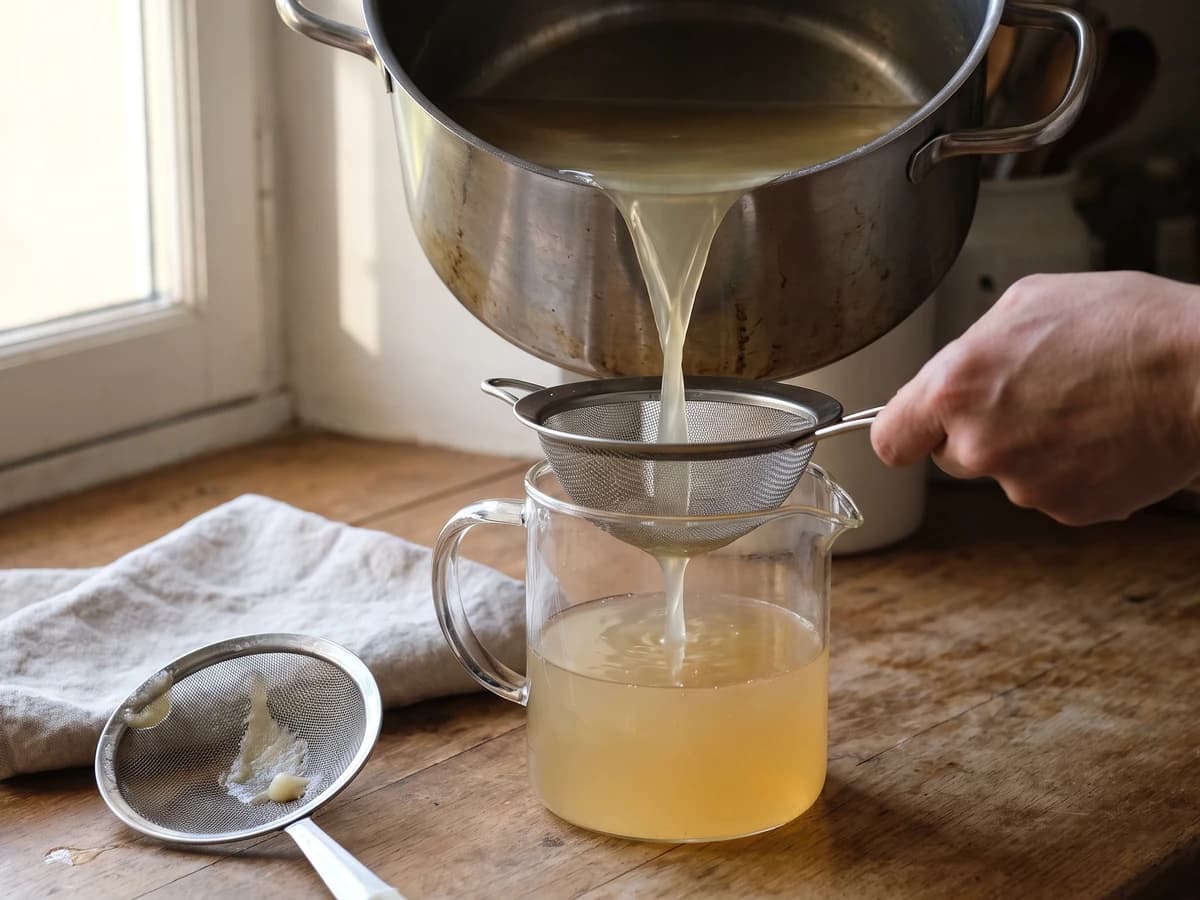
Break the veal bones small, then give them eight hours at a bare tremble. This pale, gelatinous fond becomes the quiet foundation beneath velouté, blanquette, and every sauce that must stay light.
Chef Juliette
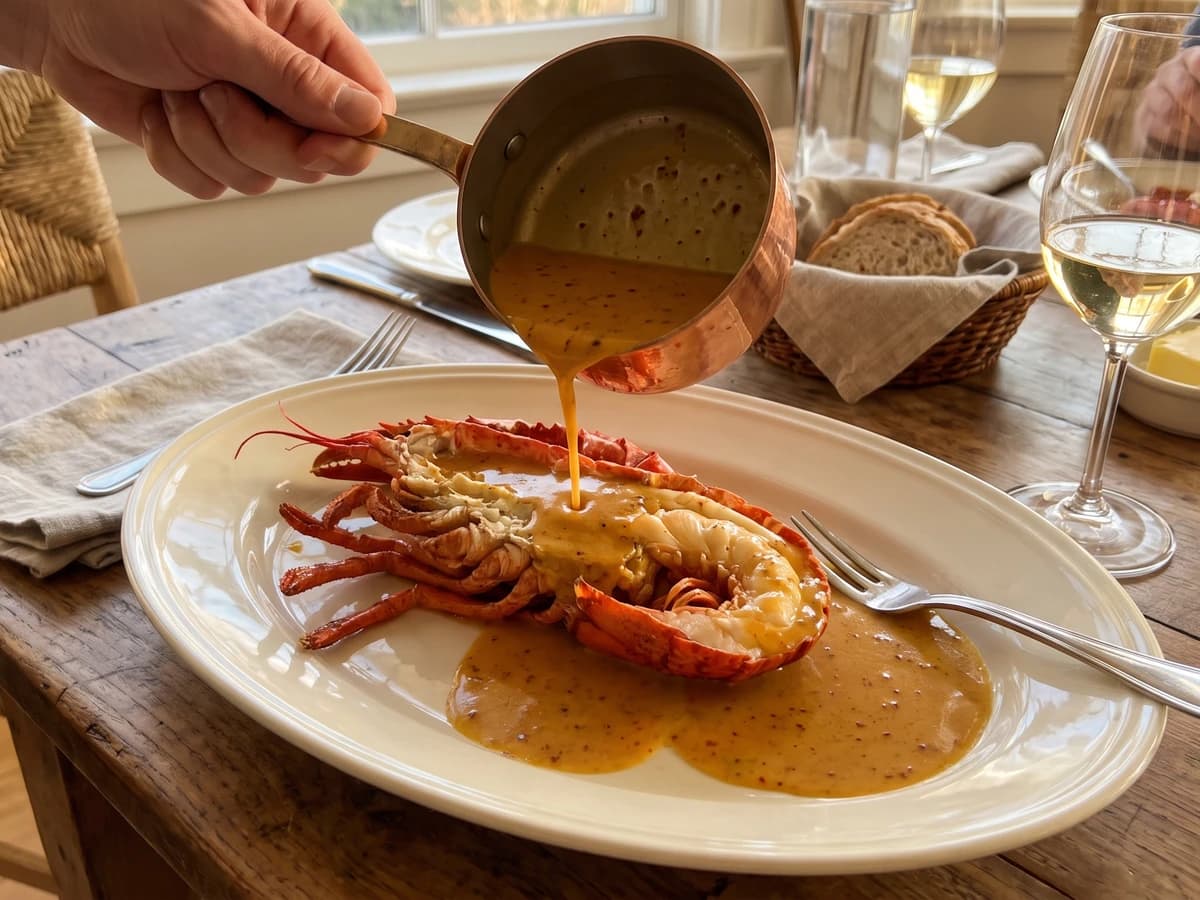
Sauce Orientale concentrates lobster-rich American Sauce with curry, then folds in cream away from the fire: a glossy, gently spiced derivative made for lobster, crayfish, and firm fish.
Chef Juliette
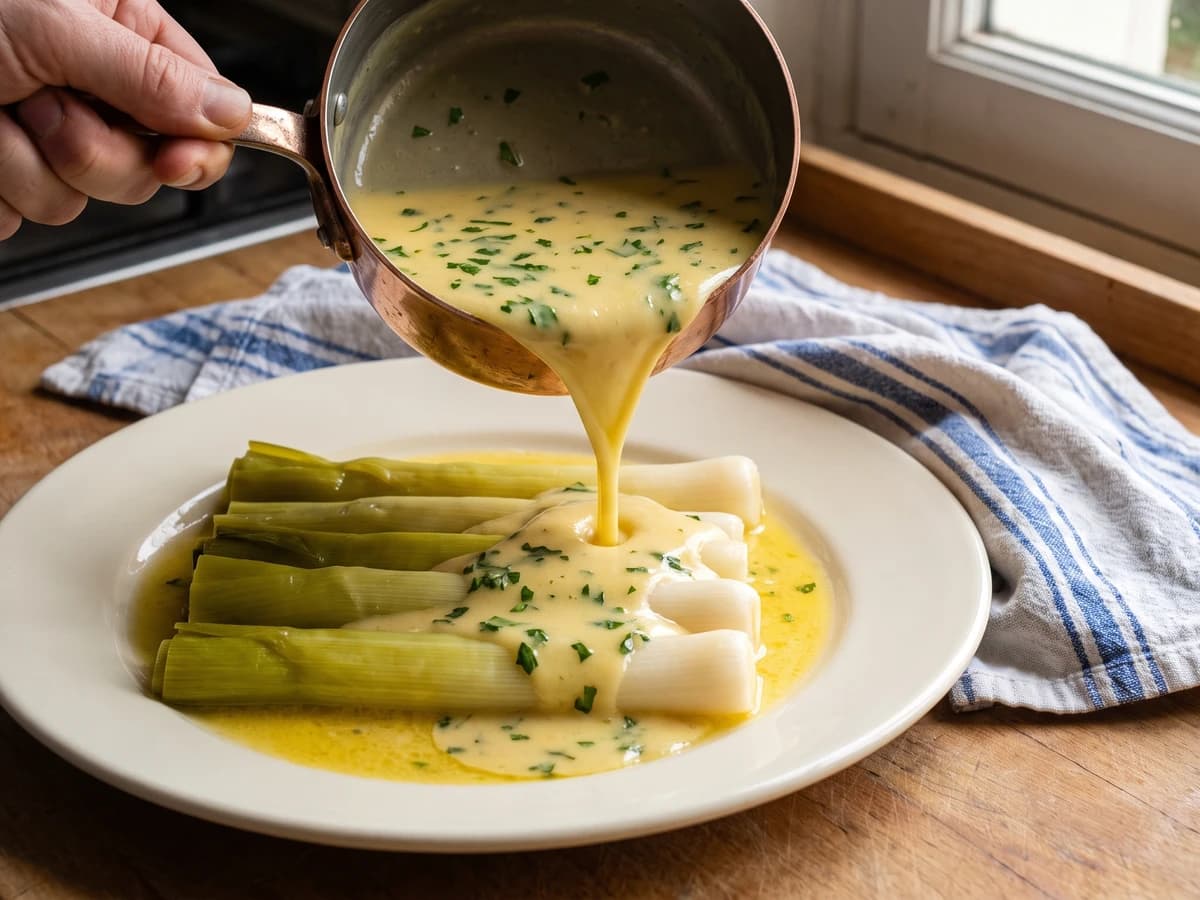
An old lesson in sauce families: Sauce Allemande takes mushroom liquor, then butter, lemon, and parsley, becoming a glossy Poulette for sheep's trotters, leeks, cauliflower, and anything needing gentle richness with a bright edge.