
Chef Juliette
John Dory (St. Pierre)
John Dory has the delicacy of sole and the firmness of turbot. A light flouring, a quick butter sauté, and nut-brown beurre noisette show exactly why looks never mattered.
A cooking platform built around craft, culture, and the stories behind what we eat.
Created by Chef Juliette
Based on No. 1084, Tournedos Bordelaise, from Le Guide Culinaire (1907) by Auguste Escoffier
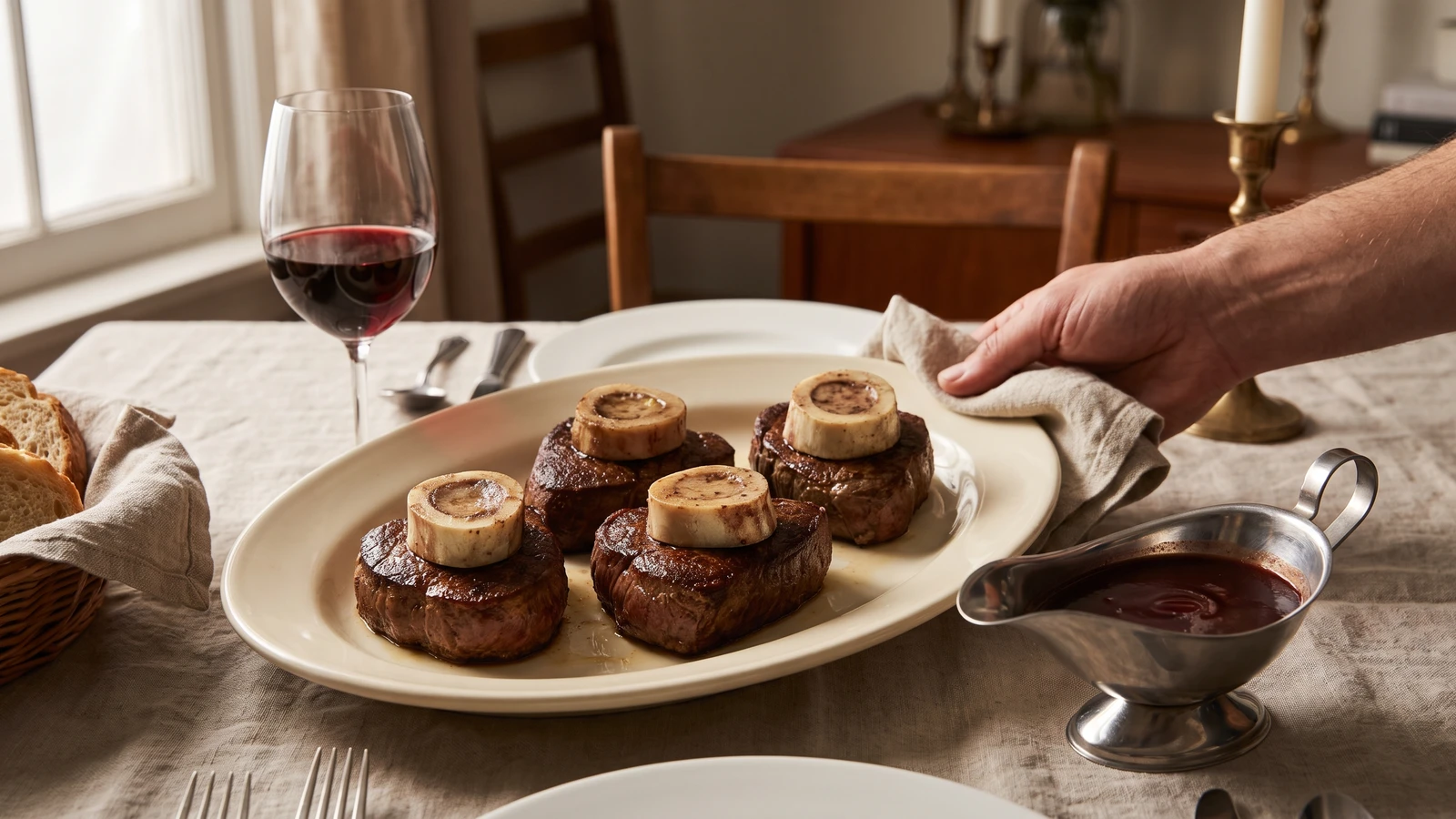
Four tender tournedos, grilled hard and fast, crowned with trembling poached marrow, and ringed on a warm platter while wine-dark sauce waits beside them. The fillet's luxury is restraint, not fuss.
Tournedos Bordelaise (beef fillet with red-wine shallot sauce and poached marrow) teaches timing before it teaches sauce. The one true thing is this: fillet has almost no fat to forgive hesitation, so every other element must be hot and ready before the beef touches iron. Grill fast, rest briefly, serve at once.
The old kitchen assumed a saucier on staff, demi-glace from stock never off the fire, a commercial grill, and a hot cupboard to synchronize service. A salamander had no work in this particular formula because nothing is gratinéed. At home, finished Sauce Bordelaise (No. 32) comes from its own entry, a heavy cast-iron griddle stands in for the grill, and a low oven warms the platter. One cook, one stove, one evening.
The brigade-sized crown was service scaffolding, so four tournedos make a loose ring instead of an architectural exercise. What must stay is the dish itself: marrow poached just until tender, one generous slice on each fillet, and the sauce passed separately so the grilled surface remains itself. Have the sauce hot and the marrow cut before you heat the griddle. That preparation is the step that decides everything.
Tournedos Bordelaise belongs to the French grand-kitchen grill repertoire, where naming a preparation à la bordelaise signaled the wine, shallot, meat glaze, and marrow vocabulary associated with Bordeaux. It traveled readily to bourgeois dining rooms and bistro tables because the sauce could be prepared separately while the small fillets were grilled to order. Sauce Bordelaise (No. 32) is not a vague name for any red wine gravy: marrow is part of its classical character, both within the sauce and, in this entry, as a poached slice crowning every tournedos.
Quantity
4 tournedos, 6 oz (170 g) each and about 1½ inches (4 cm) thick
tied into neat rounds and patted dry
Quantity
4 large rounds, about 3 oz (85 g) total and ½ inch (1.25 cm) thick
kept very cold
Quantity
1 tablespoon (15 ml / 14 g)
melted
Quantity
1½ teaspoons (7.5 ml / 9 g)
for seasoning the beef
Quantity
1 teaspoon (5 ml / 2 g)
coarsely crushed
Quantity
4 cups (960 ml / 960 g)
for poaching
Quantity
2 teaspoons (10 ml / 12 g)
for the poaching water
| Ingredient | Quantity |
|---|---|
| center-cut beef tenderloin tournedostied into neat rounds and patted dry | 4 tournedos, 6 oz (170 g) each and about 1½ inches (4 cm) thick |
| finished Sauce Bordelaise (No. 32)ready to reheat | 1 cup (240 ml / about 250 g) |
| beef marrowkept very cold | 4 large rounds, about 3 oz (85 g) total and ½ inch (1.25 cm) thick |
| clarified buttermelted | 1 tablespoon (15 ml / 14 g) |
| fine sea saltfor seasoning the beef | 1½ teaspoons (7.5 ml / 9 g) |
| black peppercoarsely crushed | 1 teaspoon (5 ml / 2 g) |
| waterfor poaching | 4 cups (960 ml / 960 g) |
| fine sea saltfor the poaching water | 2 teaspoons (10 ml / 12 g) |
Take the tournedos from the cold about 20 minutes before cooking. Tie each around its circumference so it holds a compact, even shape, then dry every surface thoroughly. Set an oval serving platter and a sauceboat in a 170°F (75°C) oven to warm gently. Keep the marrow rounds cold until their water is ready; warm marrow softens before it ever reaches the pan.
Put the finished Sauce Bordelaise (No. 32) in a small saucepan and warm it over the lowest heat, stirring occasionally, until glossy and hot throughout. Let it approach a bare simmer but never boil. Vigorous heat roughens the marrow already present in the sauce and can separate a buttered finish. Cover and hold it off the heat once ready, then return it to low heat for a moment just before serving.
Heat a 12-inch (30 cm) cast-iron griddle or grill pan over high heat for 5 minutes. Season the tournedos on every side with the measured salt and crushed pepper, then brush them lightly with clarified butter. Lay them on the griddle with space between them and cook without moving for 2½ to 3 minutes, until the undersides wear a deep Maillard-brown crust. Turn once and cook the second side for 2 to 3 minutes, then stand each briefly against the pan to color its edges. Pull them at 125°F (52°C) for medium-rare or 135°F (57°C) for medium. If no proper crust appears after 90 seconds, lift the meat and let the griddle recover its heat for 2 minutes before returning it. Ça se rattrape while the centers are still rare; leaving fillet on weak iron until it browns only dries it.
Transfer the tournedos to a warm plate and rest them uncovered for 4 minutes. While they rest, bring the water and poaching salt to a quiet, active boil. Lower the very cold marrow rounds into it with a skimmer and poach for 45 to 75 seconds, just until the marrow turns opaque and yields slightly without losing its shape. Lift it at once and drain on a clean towel. If a round breaks, collect the tender pieces and divide them over one tournedos; the geometry is lost, not the dish.
Arrange the four tournedos in a loose crown on the warmed platter and set one poached marrow round on each. Pour the hot Sauce Bordelaise (No. 32) into the warmed sauceboat and pass it separately, exactly as the entry directs. The sauce stays apart until the table so the fillets keep their browned surfaces and each guest controls the generous spoonful. Serve immediately. À table!
1 serving (about 215g)
Culinary guides, cultural storytelling, and the editorial depth that makes cooking meaningful.
Discover Culinary ExplorerChef Juliette
John Dory has the delicacy of sole and the firmness of turbot. A light flouring, a quick butter sauté, and nut-brown beurre noisette show exactly why looks never mattered.

Chef Juliette
Fresh haddock proves its delicacy in the meunière pan: a fine flour crust, moist pearly flakes, and beurre noisette sharpened with lemon and parsley, ready from one skillet in half an hour.

Chef Juliette
Éperlans à l’Anglaise turns small fish into a lesson in disciplined coating: boned smelts under a close, crisp crumb, pan-fried in clarified butter and finished with bright, half-melted maître d’hôtel butter.

Chef Juliette
Tiny smelts, shallot, mushrooms, white wine, gratin sauce, and fine bread raspings meet a fierce oven, where the fish must turn tender in the same breath the buttered crust bronzes.