
Chef Juliette
John Dory (St. Pierre)
John Dory has the delicacy of sole and the firmness of turbot. A light flouring, a quick butter sauté, and nut-brown beurre noisette show exactly why looks never mattered.
A cooking platform built around craft, culture, and the stories behind what we eat.
Created by Chef Juliette
Based on No. 1071, Filet de Bœuf Richelieu, from Le Guide Culinaire (1907) by Auguste Escoffier
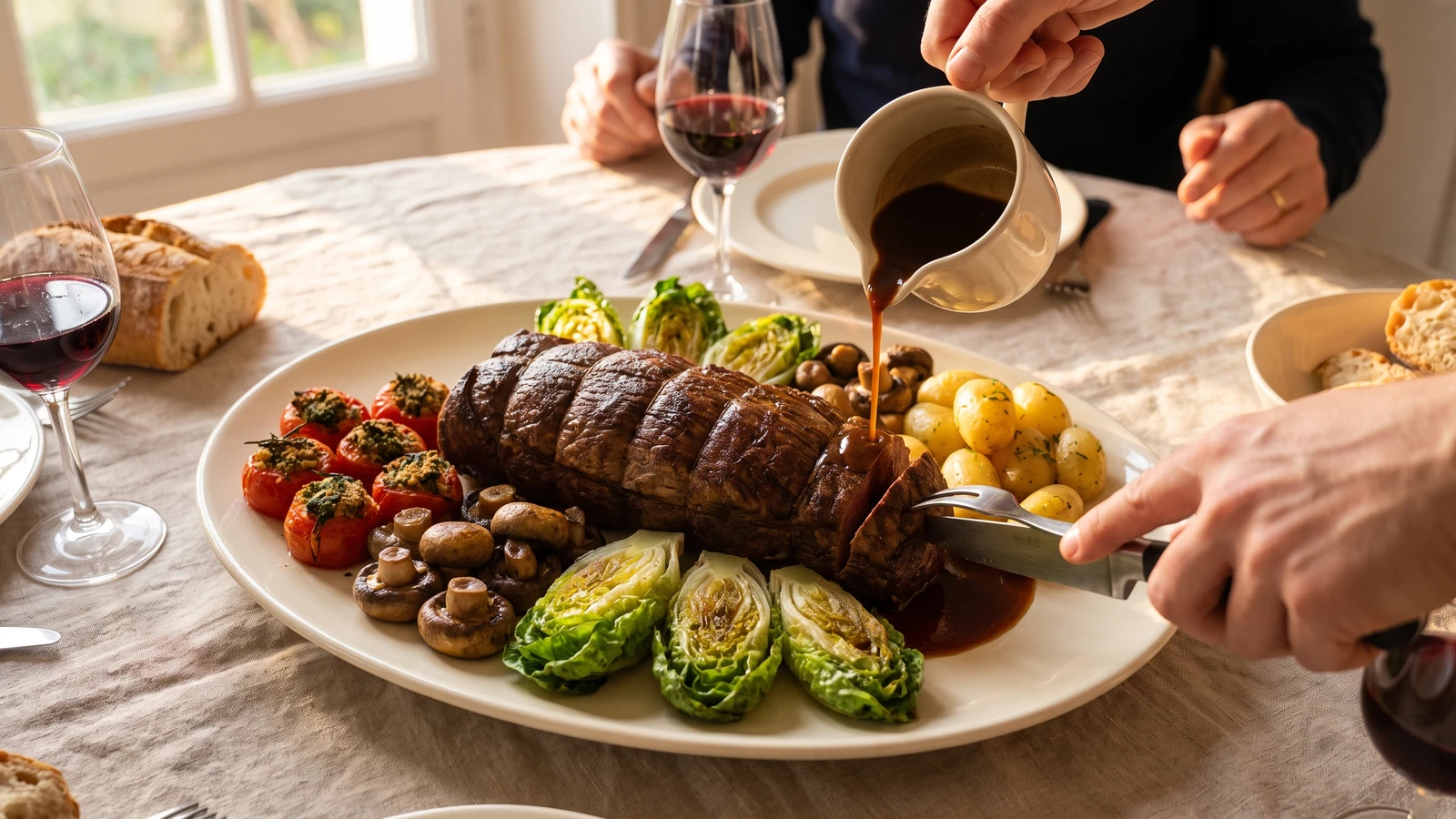
Filet de Bœuf Richelieu teaches orchestration: butter-poêled tenderloin, four carefully timed garnishes, and a clear, lightly bound jus arriving together in distinct, generous heaps for the celebration table.
Filet de Bœuf Richelieu (butter-poêled beef fillet with composed vegetable garnishes) teaches orchestration, but the one true thing to know before touching a pan is simpler: poêlé means the fillet cooks in butter and its own juices, without stock. Add liquid early and you have braised tenderloin. Done properly, the beef arrives deep bronze and glossy, surrounded by red tomatoes, brown mushrooms, green lettuce, and butter-gold potatoes, each keeping its own character.
The original assumed a larding needle, a saucier on staff, stock never off the fire, a salamander at service, and several hands tending separate pans. At home, chilled fatback follows pilot cuts made with a paring knife, one good stock becomes both cooking liquor and glaze, the broiler gives the stuffing its final colour, and four portions follow one careful timetable. Decorative turning and a dedicated sauce station are brigade scaffolding, so they go; larding, moisture-free poêling, contrasting heaps, and the lightly bound liquor served apart are the dish, so they stay. One cook, one stove, one evening.
Before applying heat, hollow and stuff the vegetables, shape the lettuces, and trim the potatoes. Once the beef enters the oven, its thermometer sets the clock, and its resting time becomes your quiet window for the sauce and final browning.
Filet de Bœuf Richelieu belongs to Parisian grande cuisine rather than a regional farmhouse larder; Richelieu names a formal garnish and manner of presentation built around beef fillet. Its red stuffed tomatoes, brown mushrooms, green braised lettuce, and butter-gold potatoes were kept in separate heaps so colour displayed the kitchen's command as clearly as technique. As the preparation moved from grand dining rooms to bourgeois celebration tables, the brigade grew smaller, but the contrasting garnish and cooking liquor served apart remained.
Quantity
1 roast, 2 lb (900 g)
silverskin removed
Quantity
1/4 cup (60 ml / 55 g)
cut into 8 slender batons
Quantity
2 1/2 teaspoons (12.5 ml / 15 g)
divided
Quantity
1 teaspoon (5 ml / 2 g)
divided
Quantity
1/2 cup (120 ml / 75 g)
finely diced
Quantity
1/2 cup (120 ml / 65 g)
finely diced
Quantity
1/3 cup (80 ml / 40 g)
finely diced
Quantity
2 sprigs
Quantity
1
Quantity
4 tablespoons (60 ml / 57 g)
Quantity
2 cups (480 ml / 480 g)
divided
Quantity
4, about 12 oz (340 g)
Quantity
8, about 10 oz (280 g)
stems removed and reserved
Quantity
1
finely chopped
Quantity
1/2 cup (120 ml / 45 g)
Quantity
2 tablespoons (30 ml / 8 g)
finely chopped
Quantity
2 tablespoons (30 ml / 28 g)
Quantity
2 heads, about 10 oz (280 g)
halved lengthwise
Quantity
1 tablespoon (15 ml / 14 g)
Quantity
16, about 1 lb (450 g)
peeled and trimmed to small ovals
Quantity
3 tablespoons (45 ml / 43 g)
Quantity
2 teaspoons (10 ml / 9 g)
Quantity
2 teaspoons (10 ml / 6 g)
| Ingredient | Quantity |
|---|---|
| Poëlingsfor cooking the beef fillet | 1 application Poëlings (No. 250) |
| centre-cut beef tenderloin roastsilverskin removed | 1 roast, 2 lb (900 g) |
| chilled unsmoked cured fatbackcut into 8 slender batons | 1/4 cup (60 ml / 55 g) |
| fine sea saltdivided | 2 1/2 teaspoons (12.5 ml / 15 g) |
| freshly ground black pepperdivided | 1 teaspoon (5 ml / 2 g) |
| yellow onionfinely diced | 1/2 cup (120 ml / 75 g) |
| carrotfinely diced | 1/2 cup (120 ml / 65 g) |
| celeryfinely diced | 1/3 cup (80 ml / 40 g) |
| thyme | 2 sprigs |
| bay leaf | 1 |
| unsalted butter for poêling | 4 tablespoons (60 ml / 57 g) |
| good unsalted beef or veal stockdivided | 2 cups (480 ml / 480 g) |
| small firm tomatoes | 4, about 12 oz (340 g) |
| medium mushroomsstems removed and reserved | 8, about 10 oz (280 g) |
| medium shallotfinely chopped | 1 |
| fresh fine breadcrumbs | 1/2 cup (120 ml / 45 g) |
| flat-leaf parsleyfinely chopped | 2 tablespoons (30 ml / 8 g) |
| unsalted butter for the stuffed vegetables | 2 tablespoons (30 ml / 28 g) |
| small Little Gem lettuceshalved lengthwise | 2 heads, about 10 oz (280 g) |
| unsalted butter for braising the lettuce | 1 tablespoon (15 ml / 14 g) |
| baby Yukon Gold potatoespeeled and trimmed to small ovals | 16, about 1 lb (450 g) |
| unsalted butter for cooking the potatoes | 3 tablespoons (45 ml / 43 g) |
| softened unsalted butter for the beurre manié | 2 teaspoons (10 ml / 9 g) |
| plain flour for the beurre manié | 2 teaspoons (10 ml / 6 g) |
Heat the oven to 350°F (175°C), with a second rack near the broiler. Bring a saucepan of salted water to the boil for the lettuce, and set out a long serving platter and sauceboat. Prepare every garnish before the beef begins cooking. This is not fuss for its own sake: the fillet will wait only through its proper rest, so the vegetables must be ready for their final warming.
Chill the fatback batons for 15 minutes until firm. Make eight narrow channels lengthwise through the tenderloin with a slim paring knife, spacing them evenly, then push one baton into each channel. If a channel tears, stop widening it and insert a shorter baton from each end. Tie the roast at 1 1/2-inch (4 cm) intervals so it holds an even cylinder. Season with about two-thirds of the salt and half the pepper, then leave it for 30 minutes while you prepare the garnishes.
Cut a lid from each tomato, scoop out the seeds and loose pulp, season the cavities lightly, and drain them upside down for 10 minutes. Finely chop the mushroom stems. Melt half the stuffed-vegetable butter in a sauté pan, add the shallot and chopped stems, and cook until the mushrooms have released their water and the pan is nearly dry. Stir in the breadcrumbs, parsley, 2 tablespoons (30 ml) of the stock, and a little pepper. The filling should hold when pinched without becoming paste; if it is wet, cook it another minute or add a spoonful of crumbs, and if it is dry, add stock by the teaspoon. Fill the tomatoes and mushroom caps without packing them hard, dot with the remaining butter, and bake for 18 to 22 minutes. Remove them while the tomatoes still hold their shape and set aside for the final broiling.
Blanch the lettuce halves in the boiling salted water for 90 seconds, then cool them under cold water and press gently between towels. Fold any loose leaves inward so each half forms a neat bundle. Arrange them cut-side down in a small sauté pan with the lettuce butter and 1/3 cup (80 ml) of the stock. Cover closely and hold at a bare simmer for 12 to 15 minutes, until tender but still green. Lift them out, reduce the braising liquor to a glaze, and spoon it back over them. Trim only ragged outer leaves; if a bundle unfolds, wrap it in one sound outer leaf and hold it seam-side down.
Spread the onion, carrot, celery, thyme, and bay leaf in a heavy lidded cocotte just large enough to hold the beef. Set the tenderloin on this aromatic bed, melt the poêling butter, and spoon it generously over the meat. Use the Poëlings (No. 250) method: cover and roast for 18 minutes, basting once after 12 minutes, with no stock or other liquid in the pan. Uncover, raise the oven to 450°F (230°C), baste again, and roast for another 6 to 12 minutes, until the surface is deeply bronzed and the centre reaches 122 to 125°F (50 to 52°C) for medium-rare. Transfer the beef to a rack, cover loosely, and rest for 15 to 20 minutes; it should finish near 129 to 133°F (54 to 56°C).
Run this step alongside the poêling. Dry the trimmed potatoes thoroughly and place them in one layer in a wide pan with the potato butter and a good pinch of salt. Cover and cook over low heat for 25 to 30 minutes, rolling them every 5 minutes so they cook evenly without taking colour too soon. When a knife enters their centres cleanly, uncover, raise the heat to medium, and turn them until butter-gold on every side. If the butter darkens before the centres soften, add 1 tablespoon (15 ml) water and lower the heat; let it evaporate completely before the final browning.
Set the cocotte over medium heat as soon as the beef comes out. If any vegetables have blackened, do not scrape them into the sauce; transfer the sound vegetables and brown juices to a clean saucepan. Ça se rattrape. Pour in the remaining stock while the poêling butter is still present, scrape up the brown fond, and simmer gently for 10 minutes so the stock recovers the flavour held in the butter. Strain through a fine sieve without crushing the vegetables, let the liquor settle briefly, then skim away every visible trace of fat. Reserve 3 tablespoons (45 ml) for glazing the beef. Knead the softened butter and flour into a beurre manié, then whisk it into the remaining simmering liquor in pea-sized pieces, stopping as soon as the jus lightly coats a spoon. Simmer for 2 minutes. If it grows too thick, loosen it with stock or water; if it catches a lump, strain it once more.
Boil the reserved poêling liquor in a small pan until syrupy, then brush it over the rested fillet twice, allowing the first coat to settle before adding the second. Heat the broiler and return the stuffed tomatoes and mushrooms to the upper rack for 2 to 4 minutes, just until the crumbs bronze. Rewarm the lettuce gently in its covered pan, and give the potatoes their last turn through the butter. The broiler replaces the salamander here; colour is the intention, specialized equipment was only scaffolding.
Place the whole glazed fillet lengthwise on the warmed platter. Arrange the garnishes around it in generous, separate heaps, alternating red tomatoes, brown mushrooms, green lettuce, and golden potatoes so no two colours collapse into one another. Pour the lightly thickened poêling liquor into the warmed sauceboat and send it separately. Carve the fillet across the grain at the table, two thick slices per person. À table!
1 serving (about 590g)
Culinary guides, cultural storytelling, and the editorial depth that makes cooking meaningful.
Discover Culinary ExplorerChef Juliette
John Dory has the delicacy of sole and the firmness of turbot. A light flouring, a quick butter sauté, and nut-brown beurre noisette show exactly why looks never mattered.

Chef Juliette
Fresh haddock proves its delicacy in the meunière pan: a fine flour crust, moist pearly flakes, and beurre noisette sharpened with lemon and parsley, ready from one skillet in half an hour.

Chef Juliette
Éperlans à l’Anglaise turns small fish into a lesson in disciplined coating: boned smelts under a close, crisp crumb, pan-fried in clarified butter and finished with bright, half-melted maître d’hôtel butter.

Chef Juliette
Tiny smelts, shallot, mushrooms, white wine, gratin sauce, and fine bread raspings meet a fierce oven, where the fish must turn tender in the same breath the buttered crust bronzes.