Chef Juliette
Fillet of Beef (Relevé)
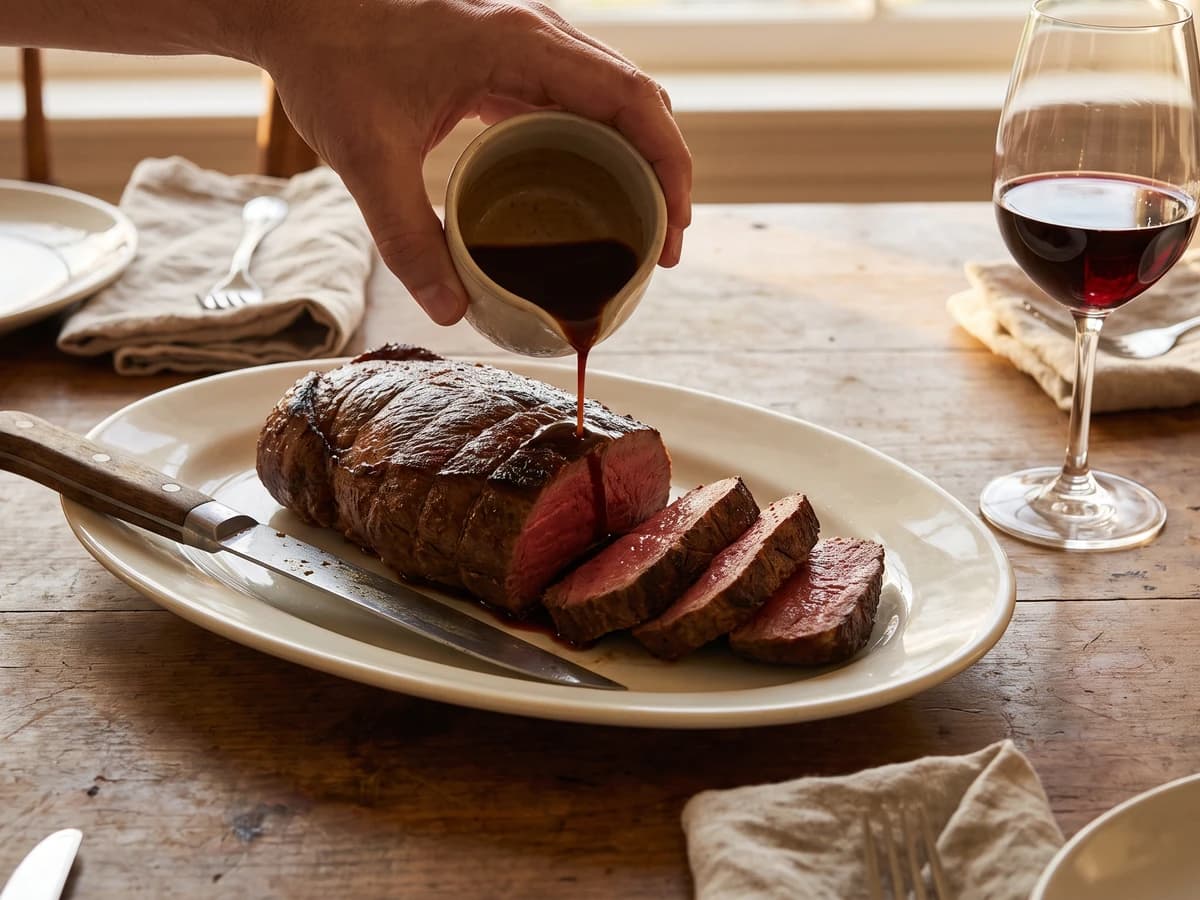
A whole rosy fillet, larded with cool fatback and poêlé beneath butter, then carved thick under glossy jus. The lesson is exact but simple: deep colour outside, red tenderness within.
A cooking platform built around craft, culture, and the stories behind what we eat.
Created by Chef Juliette
Based on No. 1045, Filet de Bœuf Bouquetiere, from Le Guide Culinaire (1907) by Auguste Escoffier
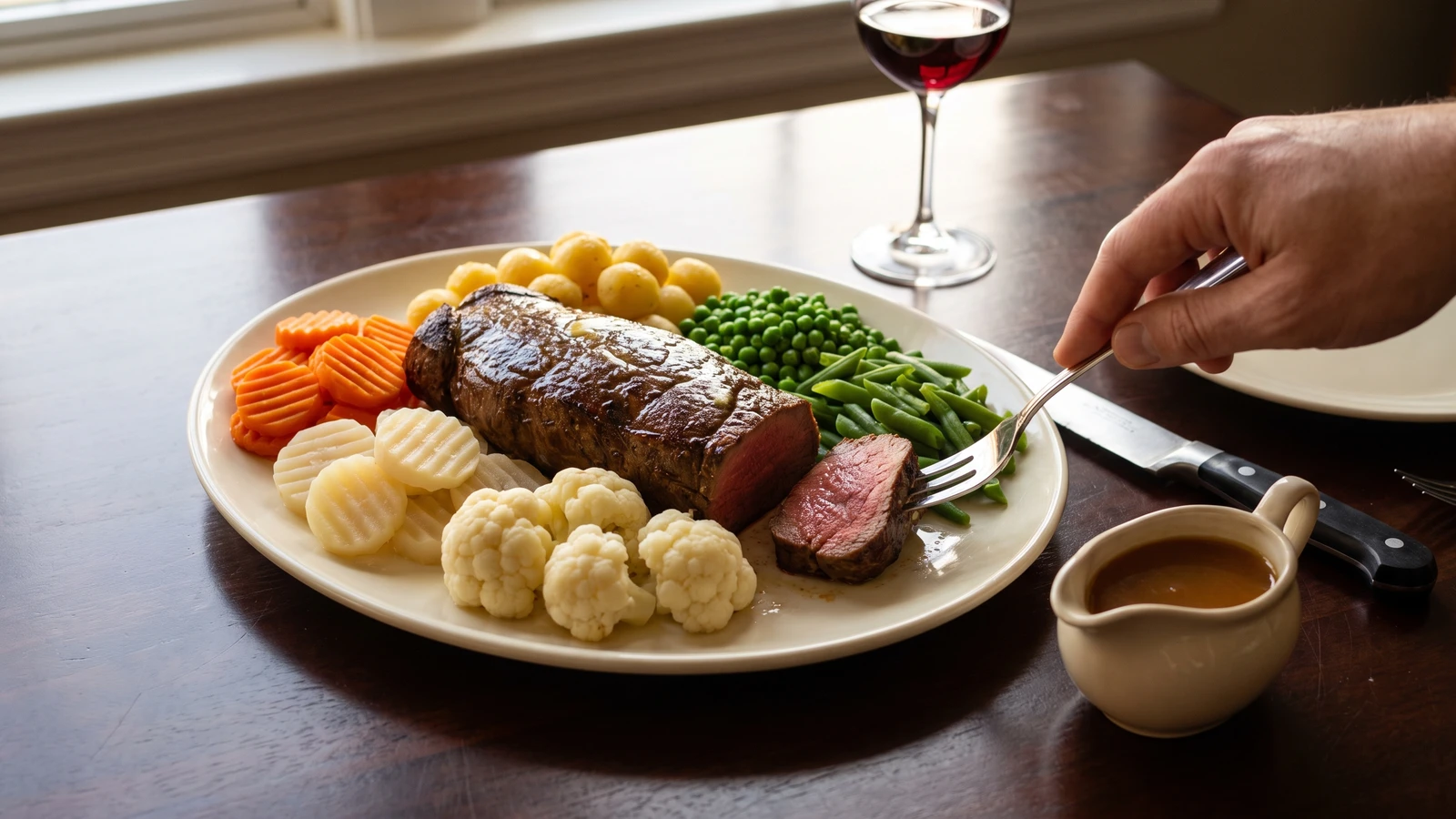
One burnished fillet, six vegetables, and a clear gravy passed beside it: Bouquetière teaches the classical art of cooking each garnish correctly, then arranging colour with generosity rather than fuss.
Filet de Bœuf Bouquetière (poëled beef fillet with a bouquet of vegetables) teaches arrangement, not ornament. The one true thing to know before touching a pan is that every vegetable must be cooked according to its own nature. Put them all in one pot and you get one texture, one muddied colour, and no Bouquetière at all.
The old entry assumed a saucier on staff, brown stock never off the fire, a larding needle, a grooved vegetable spoon, and a platter assembled by several hands. It did not call for a salamander; final colour comes from uncovering the poëling. Your equivalents are a narrow knife, a small vegetable scoop, a thermometer, a heavy covered casserole, and the linked Poëlings (No. 250), scaled to one fillet. The exact decorative grooving was brigade scaffolding and may be simplified. Even size, separate cooking, butter, the alternation of colour, and gravy served separately are the dish itself and must stay. One cook, one stove, one evening.
Complete the shaping before the beef enters the oven. Once the poëling begins, the vegetables move in a deliberate sequence, and there is no calm way to carve olive potatoes while watching a fillet approach its final temperature. Mise en place decides this dish before heat does.
Filet de bœuf bouquetière belongs to the Parisian classical service of garnished roasts, where bouquetière named a precise arrangement rather than a sauce or regional seasoning. Market vegetables were cooked by family, then set in small contrasting heaps around the meat so each retained its colour and texture, a grand-kitchen ordering of the generous bourgeois platter. The garnish traveled naturally to home celebration tables because its discipline is both visual and practical: one handsome roast, plenty of vegetables, and gravy passed separately.
Quantity
1 roast, 2 pounds (900 g)
trimmed of silverskin
Quantity
2 ounces (60 g)
cut into six chilled batons about 5 inches by 1/4 inch (12 cm by 6 mm)
Quantity
1 1/2 teaspoons (7 ml / 9 g)
Quantity
3/4 teaspoon (4 ml / 2 g)
Quantity
1 quantity Poëlings (No. 250), scaled to 2 pounds (900 g)
Quantity
4, about 14 ounces (400 g)
peeled and shaped to yield about 8 ounces (225 g) of turned pieces
Quantity
3, about 1 pound (450 g)
peeled and shaped to yield about 8 ounces (225 g) of turned pieces
Quantity
2 1/2 cups (600 ml / 600 g)
Quantity
1 1/2 pounds (680 g)
peeled and turned to yield about 1 pound (450 g) of olive shapes
Quantity
6 tablespoons (90 ml / 85 g)
divided
Quantity
1, about 1 1/4 pounds (570 g)
divided into florets for five compact bunches
Quantity
8 ounces (225 g)
trimmed and cut diagonally into lozenges
Quantity
1 cup (240 ml / 145 g)
Quantity
1 tablespoon (15 ml / 18 g)
| Ingredient | Quantity |
|---|---|
| center-cut beef tenderloin roasttrimmed of silverskin | 1 roast, 2 pounds (900 g) |
| unsmoked pork fatbackcut into six chilled batons about 5 inches by 1/4 inch (12 cm by 6 mm) | 2 ounces (60 g) |
| fine sea salt for the beef | 1 1/2 teaspoons (7 ml / 9 g) |
| freshly ground black pepper | 3/4 teaspoon (4 ml / 2 g) |
| Poëlings, scaled for the beef fillet and including its finished strained gravy | 1 quantity Poëlings (No. 250), scaled to 2 pounds (900 g) |
| medium carrotspeeled and shaped to yield about 8 ounces (225 g) of turned pieces | 4, about 14 ounces (400 g) |
| medium white turnipspeeled and shaped to yield about 8 ounces (225 g) of turned pieces | 3, about 1 pound (450 g) |
| clear beef consommé | 2 1/2 cups (600 ml / 600 g) |
| small waxy potatoespeeled and turned to yield about 1 pound (450 g) of olive shapes | 1 1/2 pounds (680 g) |
| unsalted butterdivided | 6 tablespoons (90 ml / 85 g) |
| small cauliflowerdivided into florets for five compact bunches | 1, about 1 1/4 pounds (570 g) |
| haricots vertstrimmed and cut diagonally into lozenges | 8 ounces (225 g) |
| shelled fresh or frozen peas | 1 cup (240 ml / 145 g) |
| fine sea salt for blanching | 1 tablespoon (15 ml / 18 g) |
Chill the fatback until firm. Season the beef with the measured salt and pepper, then use a larding needle to draw the six batons lengthwise through the fillet, spacing them evenly through the meat. Without a needle, make narrow lengthwise tunnels from one end with a slim boning knife and guide each baton through with a clean metal skewer. Work gently and keep the fat cold. If a tunnel tears, stop forcing it. Ça se rattrape: lay that baton along the outside of the fillet and secure it beneath kitchen twine. Tie the roast at 1 1/2-inch (4 cm) intervals so it holds an even cylinder.
Make the légumes tournés, the turned vegetables. Scoop small fluted balls from the carrots and turnips with a 7/8-inch (22 mm) grooved vegetable scoop, keeping the colours separate. A plain melon baller is the honest home equivalent if the grooved tool is unavailable. Shape the potatoes into pommes olives, olive-shaped potatoes about 1 1/2 inches (4 cm) long, by trimming each into a smooth seven-sided oval with a tourné knife or small paring knife. Keep the potatoes in cold water and cover the roots with a damp towel. Uniform size matters because it gives uniform cooking; identical decorative ridges do not.
Heat the oven to 325°F (165°C). Apply Poëlings (No. 250) to the larded fillet exactly as that preparation directs, using a heavy 3-quart (3-litre) covered casserole as the home poëling pan. The referenced preparation supplies its own cooking medium and the foundation of the gravy, so keep it whole rather than rebuilding it here. Begin checking the fillet after 25 minutes and uncover it for the prescribed final colouring. Remove it when the centre reaches 137°F (58°C); resting should carry the larded roast to about 145°F (63°C), still rosy and safe for the inserted pork fat.
While the beef cooks, bring the consommé to a gentle simmer in a wide saucepan. Add the carrots first, then the turnips four minutes later, and cook until each shape yields to the point of a knife without losing its clean edges, about 12 to 15 minutes for the carrots and 8 to 10 minutes for the turnips. Lift each colour out separately and keep it covered with a spoonful of consommé. Meanwhile, drain and dry the pommes olives thoroughly. Melt 4 tablespoons (60 ml / 57 g) butter in a covered skillet and cook the potatoes over medium-low heat, rolling them frequently, until tender and evenly butter-gold, about 25 minutes. If the butter darkens before the centres soften, take the pan off the heat for one minute, lower the burner, and continue covered.
Transfer the fillet to a warm board, cover it loosely, and rest it for 12 to 15 minutes. Complete the gravy supplied by Poëlings (No. 250) as its preparation directs, then strain it and remove the surface grease only after the prescribed contact with the cooking butter. Hold the clear gravy in a warmed sauceboat. If it is too concentrated, loosen it with a spoonful of hot consommé; if a slick remains, let it stand for two minutes and lift the fat carefully with a spoon. Never pour the gravy over the arranged vegetables.
While the beef rests, bring a large saucepan of water to a rolling boil and add the blanching salt. Cook the cauliflower first until just tender but still intact, about 5 to 7 minutes, then lift it out and drain it thoroughly. Blanch the haricots verts for 3 minutes and the peas for 60 to 90 seconds, using the same water, then drain each separately. Frozen peas are an honest classical-pantry choice and usually sweeter than tired fresh ones. Do not let the vegetables wait in the water; their separate colours are the point.
Lier au beurre means to bind with butter. Melt 1 tablespoon (15 ml / 14 g) butter in a small skillet, add the peas, and toss just until every pea wears a fine sheen. Transfer them to a warm bowl and repeat with the remaining 1 tablespoon (15 ml / 14 g) butter and the haricots verts. If either vegetable releases water and the butter will not cling, tip away the liquid and return the pan to gentle heat for 20 seconds. Do not flour or thicken them; butter alone is the liaison.
Set the rested fillet lengthwise on a warmed long platter. Arrange small, distinct heaps of carrots, turnips, pommes olives, peas, and haricots verts around it, alternating the colours so pale turnip meets green bean, orange carrot meets cauliflower, and butter-gold potato separates the greens. Place the cauliflower in exactly five compact bunches around the composition. Keep the portions generous and the boundaries clear, with no scattered decorative pieces. Carry the fillet whole to the table, carve it there, and pass the clear gravy separately. À table!
1 serving (about 660g)
Culinary guides, cultural storytelling, and the editorial depth that makes cooking meaningful.
Discover Culinary ExplorerChef Juliette
A whole rosy fillet, larded with cool fatback and poêlé beneath butter, then carved thick under glossy jus. The lesson is exact but simple: deep colour outside, red tenderness within.
Chef Juliette
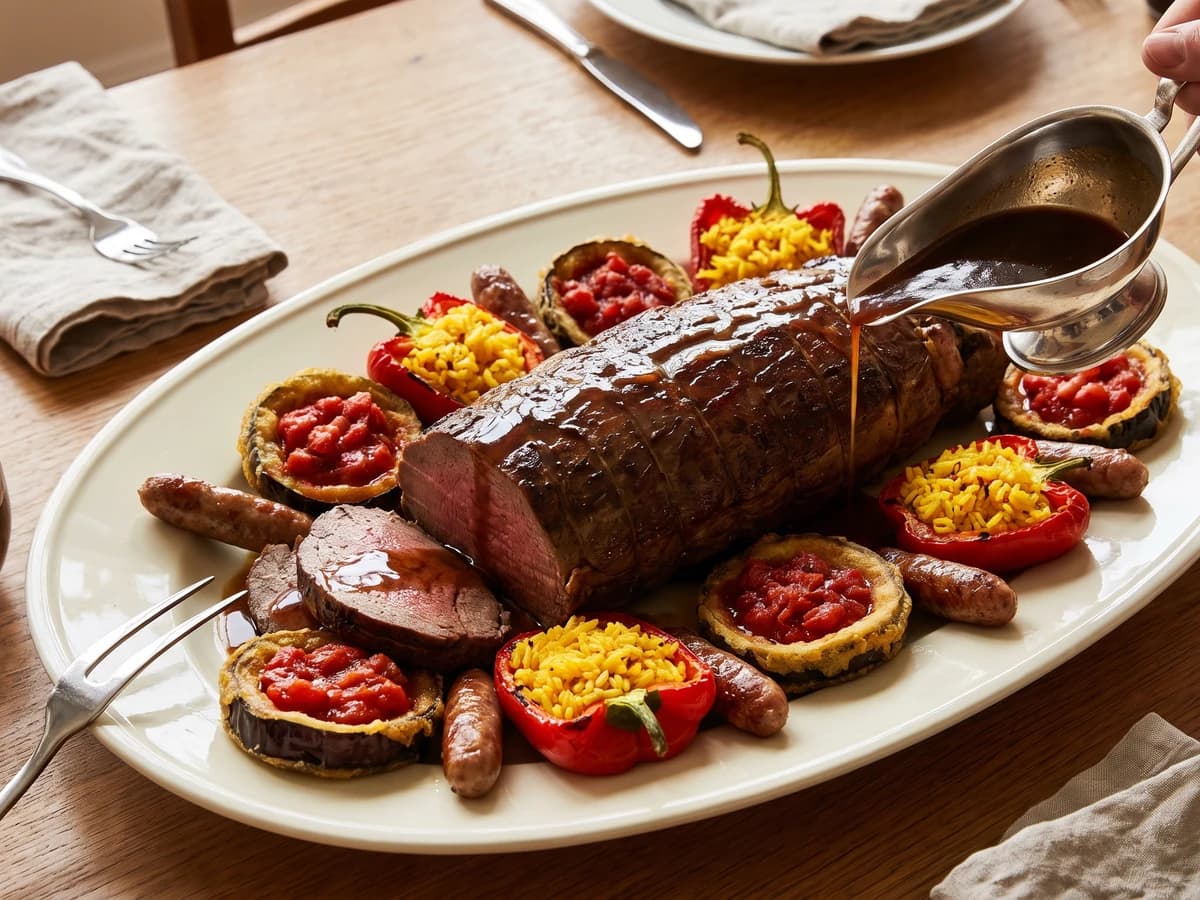
A larded fillet glazed at the last moment, surrounded by rice-filled peppers, crisp aubergine cases, tomato concassée, and chipolatas: a grand garniture brought within reach of one attentive home cook.
Chef Juliette
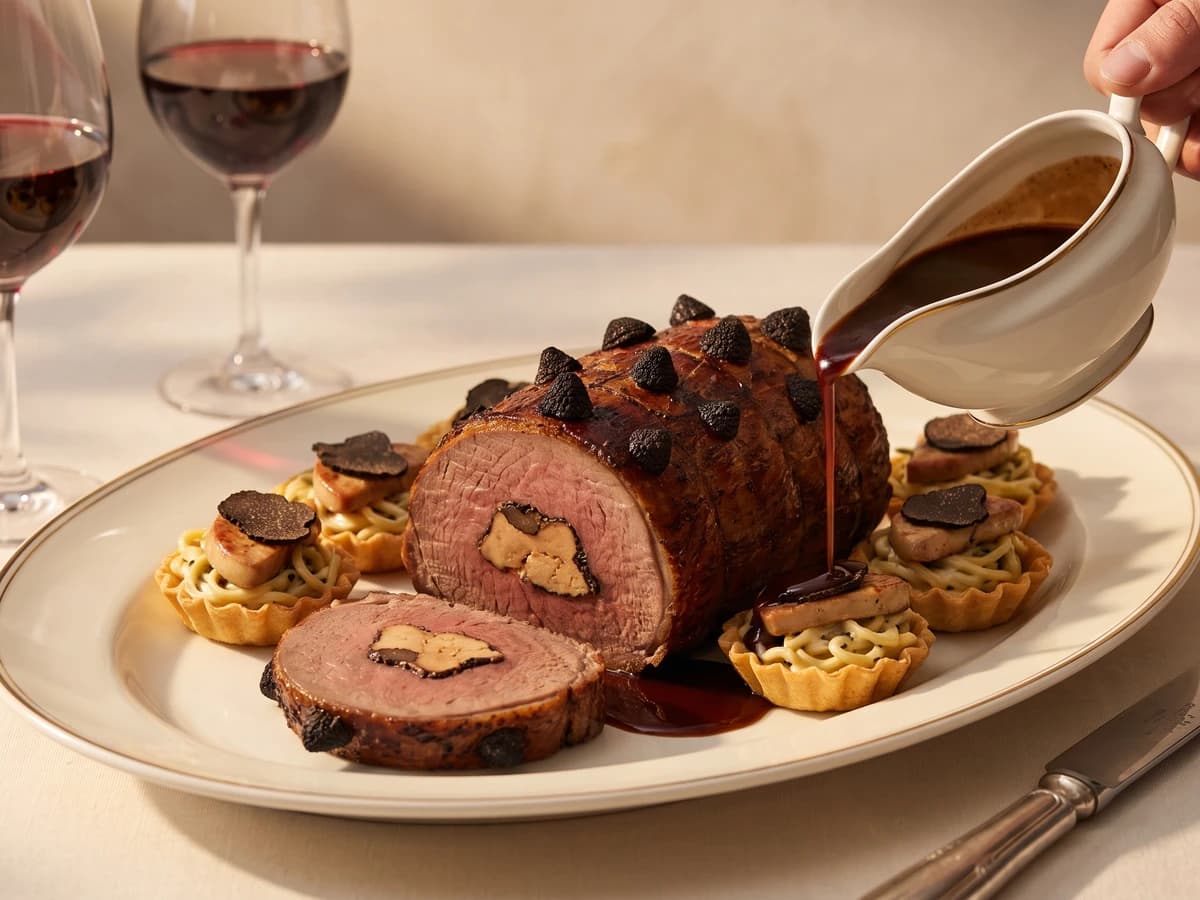
Beef fillet hollowed and rebuilt around foie gras, cream, and truffle, then poêled until the center is just set and the roast gleams under Périgueux sauce and four garnished tartlets.

Chef Juliette
A whole beef fillet poêled in butter, ringed with Soubise-filled artichokes, chestnuts, and bronzed potatoes, then glazed and served with Madeira sauce built from its own aromatic roasting liquor.