
Chef Juliette
John Dory (St. Pierre)
John Dory has the delicacy of sole and the firmness of turbot. A light flouring, a quick butter sauté, and nut-brown beurre noisette show exactly why looks never mattered.
A cooking platform built around craft, culture, and the stories behind what we eat.
Created by Chef Juliette
Based on No. 1029, Morue à la Créole, from Le Guide Culinaire (1907) by Auguste Escoffier
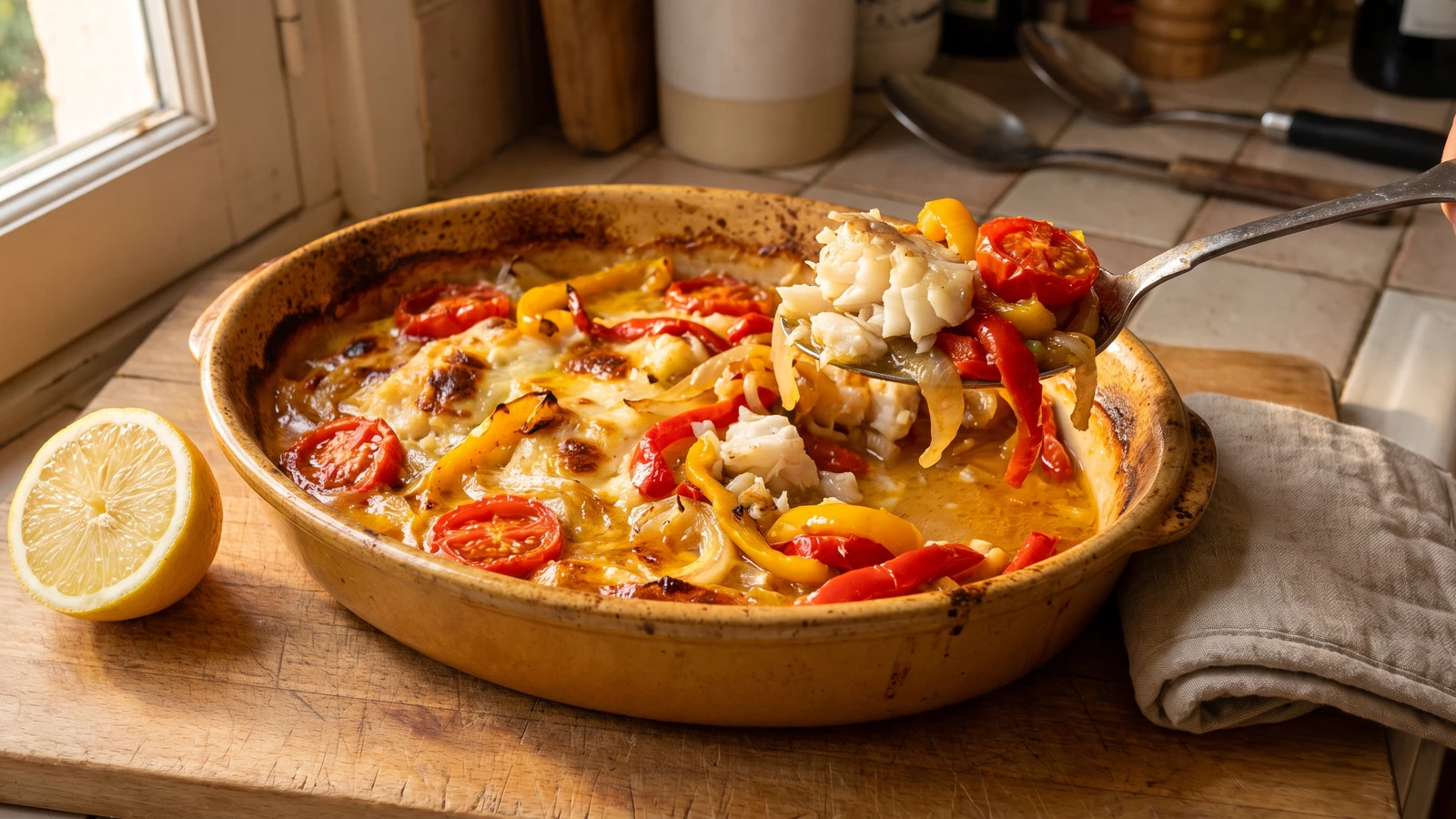
Morue à la Créole layers gently poached salt cod over golden onion and Provençal tomatoes, then crowns it with broiled sweet peppers, lemon, and beurre noisette: a weeknight lesson in restraint, sequence, and heat.
Morue à la Créole (salt cod with Provençal tomatoes and broiled sweet peppers) teaches composed cooking: every layer must be correct before it enters the dish, because the final oven warms and marries, it does not cook away mistakes. The one true thing to know before touching a pan is that the morue must be fully desalted. If the fish is still harsh, butter and tomatoes will only carry that salt into every bite.
The original assumed desalted cod in the larder, Tomates Sautées à la Provençale (No. 2268) finished by the vegetable cook, and a salamander hot overhead. It asks for neither a saucier nor a perpetual stockpot, so none is invented. At home, the broiler replaces the salamander, a 1½-quart oval gratin dish fixes the little professional serving dish at four generous portions, and the components are prepared in sequence. The brigade's separate hands were scaffolding and can go. The layered order is the dish and stays exactly where it belongs. One cook, one stove, one evening.
When it is right, the onion is soft and gold beneath juicy tomatoes, the cod remains in pearly flakes, the capsicums lie supple across the top, and beurre noisette gathers at the bubbling rim. Desalt and taste-test the morue before you meet the pan. Get that right, and the assembly is calm.
Morue à la Créole sits in the Parisian classical repertoire, where North Atlantic salt cod was paired with tomatoes, mild capsicums, and lemon under the broad menu term à la Créole. The fish arrived through French Atlantic trade from Newfoundland or Iceland, while the tomatoes are explicitly Tomates Sautées à la Provençale (No. 2268), a separate southern preparation folded into the composition. The name reflects the grand kitchen's Creole vocabulary, not proof that this exact butter-finished dish belonged to any one Caribbean household tradition.
Quantity
1 pound (454 g)
cut into 4 large pieces
Quantity
1 medium (about 1 cup / 240 ml / 150 g)
finely minced
Quantity
3 tablespoons (45 ml / 42 g)
divided
Quantity
3 medium Tomates Sautées à la Provençale (No. 2268)
prepared as a finished component
Quantity
3 small
halved lengthwise, cored, and seeded
Quantity
¼ teaspoon (1.25 ml / 1.25 g)
| Ingredient | Quantity |
|---|---|
| salt cod (morue)cut into 4 large pieces | 1 pound (454 g) |
| yellow onionfinely minced | 1 medium (about 1 cup / 240 ml / 150 g) |
| unsalted butterdivided | 3 tablespoons (45 ml / 42 g) |
| Tomates Sautées à la Provençaleprepared as a finished component | 3 medium Tomates Sautées à la Provençale (No. 2268) |
| mild capsicums, red, yellow, or a mixturehalved lengthwise, cored, and seeded | 3 small |
| fresh lemon juice | ¼ teaspoon (1.25 ml / 1.25 g) |
Rinse the morue under cold water, then place it in a nonreactive bowl and cover it generously with fresh cold water. Refrigerate for 24 to 36 hours, changing the water at least four times. Thick pieces may need the full 36 hours. Before cooking, shave off a small piece, poach it for two minutes in plain water, and taste it. If the salt still bites rather than seasons, return the fish to fresh cold water for another two to four hours. Ça se rattrape, but only before the fish enters the dish.
Set the capsicum halves skin-side up on a rimmed sheet pan and place them close beneath a hot broiler. Broil for 8 to 12 minutes, until the skins blister and the flesh becomes supple without collapsing. Transfer them to a bowl and cover for 10 minutes, then slip away the loosened skins. If a few skins cling, leave them rather than scraping the flesh to paste. The home broiler is the salamander here, and it does the work perfectly well.
Melt 1 tablespoon (15 ml / 14 g) of the butter in a 10-inch skillet over low to medium-low heat. Add the minced onion and cook gently for 12 to 15 minutes, stirring often, until soft and evenly golden rather than brown at the edges. If it begins catching before it softens, lower the heat and add a teaspoon of water. Let the water cook away completely; the onion must be sweet and golden, not wet.
Put the desalted morue in a saucepan and cover it by 1 inch with fresh cold water. Bring the water slowly to a bare tremble, about 170 to 180°F (77 to 82°C), then hold it there for 8 to 12 minutes, until the thickest part is opaque and separates under gentle pressure. Never let it boil. If the water surges, pull the pan off the heat and add a splash of cold water. Drain the fish as soon as it is ready, then remove every piece of skin and bone while it is still warm enough to handle. Separate it into large, moist flakes without crushing them.
Set the oven to 400°F (200°C). Spread the golden onion evenly across the bottom of a 1½-quart oval earthenware gratin dish. Arrange the finished Tomates Sautées à la Provençale (No. 2268) over the onion, cut sides up, then lay the drained morue flakes across the tomatoes. Cover the fish with the broiled capsicum halves. Keep the layers distinct and loose. Pressing or stirring them together would turn a composed dish into a wet hash, and the oven cannot undo it.
Sprinkle the lemon juice over the capsicums. Melt the remaining 2 tablespoons (30 ml / 28 g) butter in a small pale-lined pan and cook gently until the foam subsides, the milk solids turn light hazelnut, and the aroma becomes nutty. This is beurre noisette, browned butter. If it darkens too quickly, pour it immediately into a cool cup so the pan's heat cannot carry it further. Spoon the beurre noisette over the entire dish, then bake for 6 to 10 minutes, just until the layers are very hot and the butter bubbles around the rim. Serve at once, directly from the earthenware dish. À table!
1 serving (about 290g)
Culinary guides, cultural storytelling, and the editorial depth that makes cooking meaningful.
Discover Culinary ExplorerChef Juliette
John Dory has the delicacy of sole and the firmness of turbot. A light flouring, a quick butter sauté, and nut-brown beurre noisette show exactly why looks never mattered.

Chef Juliette
Fresh haddock proves its delicacy in the meunière pan: a fine flour crust, moist pearly flakes, and beurre noisette sharpened with lemon and parsley, ready from one skillet in half an hour.

Chef Juliette
Éperlans à l’Anglaise turns small fish into a lesson in disciplined coating: boned smelts under a close, crisp crumb, pan-fried in clarified butter and finished with bright, half-melted maître d’hôtel butter.

Chef Juliette
Tiny smelts, shallot, mushrooms, white wine, gratin sauce, and fine bread raspings meet a fierce oven, where the fish must turn tender in the same breath the buttered crust bronzes.