
Chef Juliette
Riz au Blanc (for Fowls and Eggs)
Riz au Blanc proves that plain rice is a technique, not an absence: parboil it in abundant salted water, drain it dry, then let butter and low oven heat separate every tender grain.
A cooking platform built around craft, culture, and the stories behind what we eat.
Created by Chef Juliette
Based on No. 2268, Tomates Sautées à la Provençale, from Le Guide Culinaire (1907) by Auguste Escoffier
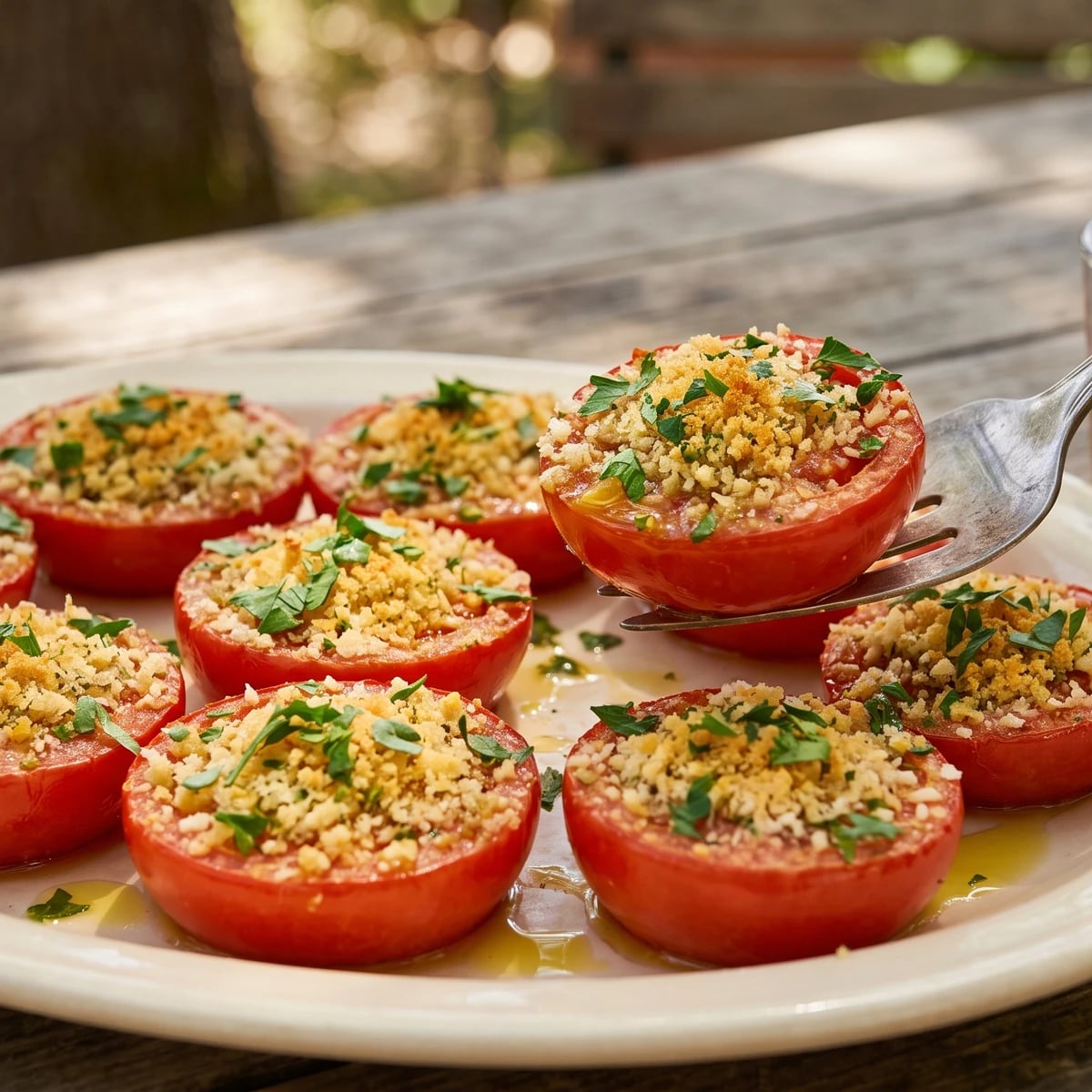
Ripe tomato halves meet very hot olive oil cut side down, then turn beneath parsley, a mite of garlic, and fine crumbs before a brief oven finish. The browned face is the whole lesson.
Tomates Sautées à la Provençale (Provençal pan-seared tomatoes) teach one true thing: a tomato browns only while its cut face is dry and the oil is properly hot. Let it leak before it colours and the pan becomes a shallow braise. Sear it decisively, and you get tender flesh beneath a browned face, with parsley, restrained garlic, and crumbs catching the seasoned juices.
The professional entry assumed an omelet pan, a moderate oven standing ready, and a cook who understood “a little” by eye. It calls for no saucier, stockpot, or salamander. For four at home, that becomes four medium tomatoes and one 12-inch ovenproof skillet that moves directly from burner to oven. The measurements are new because the entry supplied none; its proportions, flavourings, and sequence remain intact. Extra service hands are scaffolding. Pressing, searing cut side down, turning before the crumbs go on, and serving immediately are the dish.
The finished tomatoes should still hold their rounded shape, their fine crumb covering lightly golden and green with parsley, with only enough garlic to hum underneath. Your decisive step is the first sear: set the cut faces in very hot oil and leave them alone until they bronze.
Tomates Sautées à la Provençale belong to Provence and the Mediterranean French table, where tomatoes, olive oil, garlic, parsley, and yesterday’s bread form a practical summer larder. The classical repertoire carried that household combination into the sauté pan and oven; in this version, the tomatoes are not simply baked from raw, because sautées names the initial cut-face sear. That distinction preserves their shape and gives the crumbs seasoned juices to absorb without turning the dish into a stuffed tomato.
Quantity
4 (about 1¾ lb / 800 g)
Quantity
3 tablespoons (45 ml / 41 g)
Quantity
¼ cup (60 ml / 25 g)
Quantity
2 tablespoons (30 ml / 8 g)
finely chopped
Quantity
½ small clove (about 1.5 g)
minced to a paste
Quantity
¾ teaspoon (3.75 ml / 4.5 g)
Quantity
¼ teaspoon (1.25 ml / 0.6 g)
| Ingredient | Quantity |
|---|---|
| medium ripe but firm tomatoes | 4 (about 1¾ lb / 800 g) |
| extra-virgin olive oil | 3 tablespoons (45 ml / 41 g) |
| fine fresh breadcrumbs | ¼ cup (60 ml / 25 g) |
| flat-leaf parsleyfinely chopped | 2 tablespoons (30 ml / 8 g) |
| garlicminced to a paste | ½ small clove (about 1.5 g) |
| fine sea salt | ¾ teaspoon (3.75 ml / 4.5 g) |
| freshly ground black pepper | ¼ teaspoon (1.25 ml / 0.6 g) |
Set a rack in the centre of the oven and heat it to 375°F (190°C), or 340°F (170°C) with a fan. This is the moderate oven of the original method: gentle enough to finish the flesh before the breadcrumb covering grows too dark.
Cut the tomatoes in half crosswise. Cup each half in your palm and press it gently over a bowl until the loose seeds and watery juice fall away, without crushing the partitions or flattening the flesh. Blot the cut faces dry, then season them evenly with the salt and pepper. Cook them at once, since salted tomatoes begin giving up more water as they wait.
Combine the fine breadcrumbs, chopped parsley, and garlic paste, rubbing the garlic through the crumbs with your fingertips so no harsh clump lands on one tomato. Keep the garlic restrained. A mite means it supports the tomato rather than announcing itself.
Heat a 12-inch (30 cm) ovenproof skillet over medium-high heat until thoroughly hot. Add the olive oil and swirl it into a shimmering layer, then set in the tomatoes cut side down. Leave them undisturbed for 5 to 7 minutes, until the underside has bronzed and the flesh has softened about halfway up while the rounded tops remain firm. This first contact is the technique. If the pan floods with tomato liquid, raise the heat and spoon the liquid from between the halves, then give the cut faces another minute before turning. Ça se rattrape.
Slide a thin spatula beneath each tomato and turn it cut side up. If a browned face clings, wait another 20 seconds rather than tearing it away; a properly set crust releases more willingly. Divide the parsley and garlic crumbs over the cut surfaces in a thin, even covering. Do not pack them down.
Move the skillet directly to the oven and cook for 6 to 8 minutes, until the tomatoes yield to the tip of a knife but retain their outline, and the crumbs are lightly golden with green parsley still visible. If the crumbs colour before the flesh is tender, lay a loose sheet of foil over the skillet and give the tomatoes another 2 minutes.
Lift the tomatoes onto a warm platter the moment they leave the oven, keeping the crumbed faces upright, and spoon over only the small amount of seasoned oil left in the skillet. Serve immediately. Resting softens the crumbs and lets the tomatoes surrender their shape, so call everyone before the pan comes out. À table!
1 serving (about 190g)
Culinary guides, cultural storytelling, and the editorial depth that makes cooking meaningful.
Discover Culinary Explorer
Chef Juliette
Riz au Blanc proves that plain rice is a technique, not an absence: parboil it in abundant salted water, drain it dry, then let butter and low oven heat separate every tender grain.

Chef Juliette
Parboiled Carolina rice meets butter and rich white consommé, then finishes covered in the oven, each grain savory, separate, and gleaming. The consommé does the seasoning, so taste it first.

Chef Juliette
Riz à la Grecque turns disciplined pilaff into supper with pork sausage, ciseled lettuce, green peas, and red capsicum, all folded in for the final seven minutes.

Chef Juliette
Patna rice, boiled freely, washed until the water stays clear, then dried low and gentle. The washing is the dish: do it properly and every grain arrives light, dry, and separate.