Chef Jeong-sun
Amjuk (Dried-Grain Weaning Porridge)
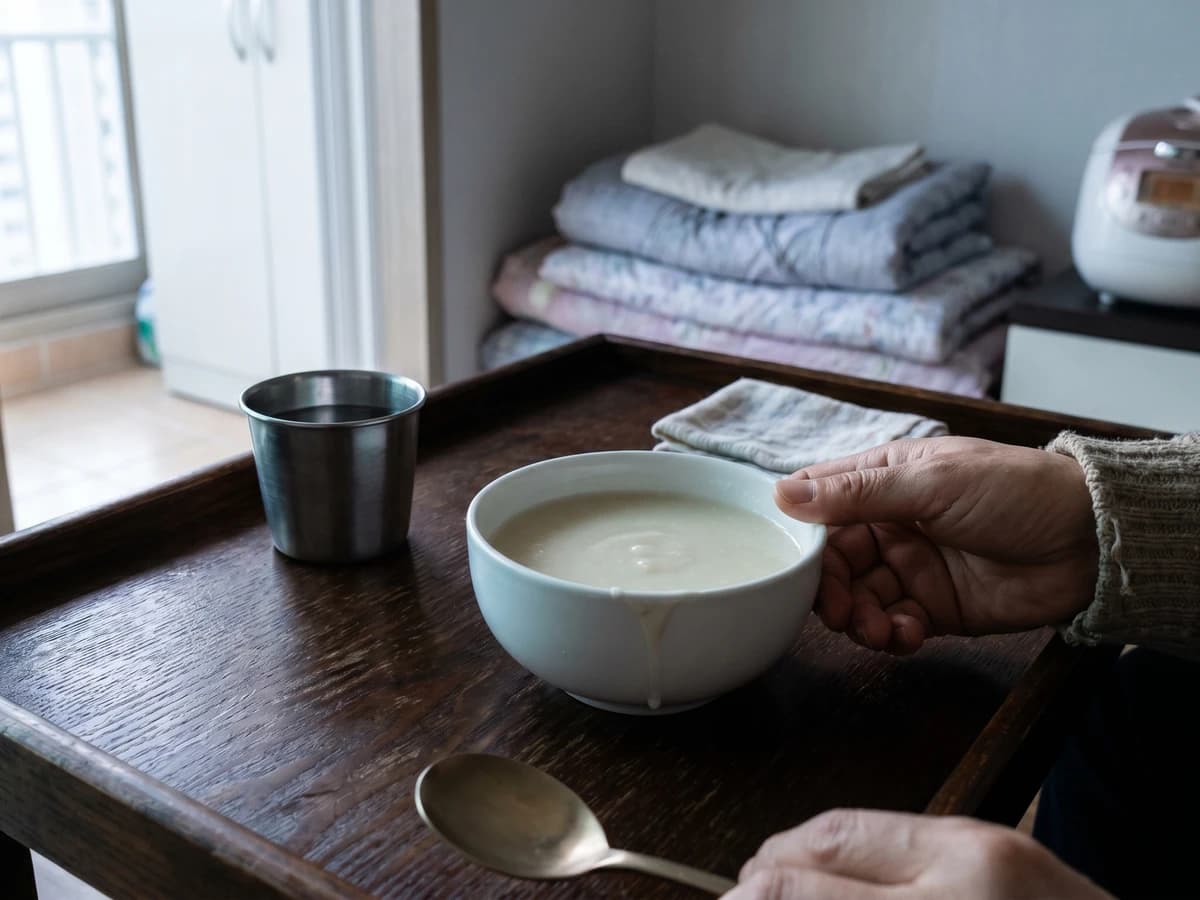
Powdered rice or dried baekseolgi cooked thin in cloudy rice water, an old Korean first-spoon porridge that asks for patience at the sieve and gentleness at the stove.
A cooking platform built around craft, culture, and the stories behind what we eat.
Created by
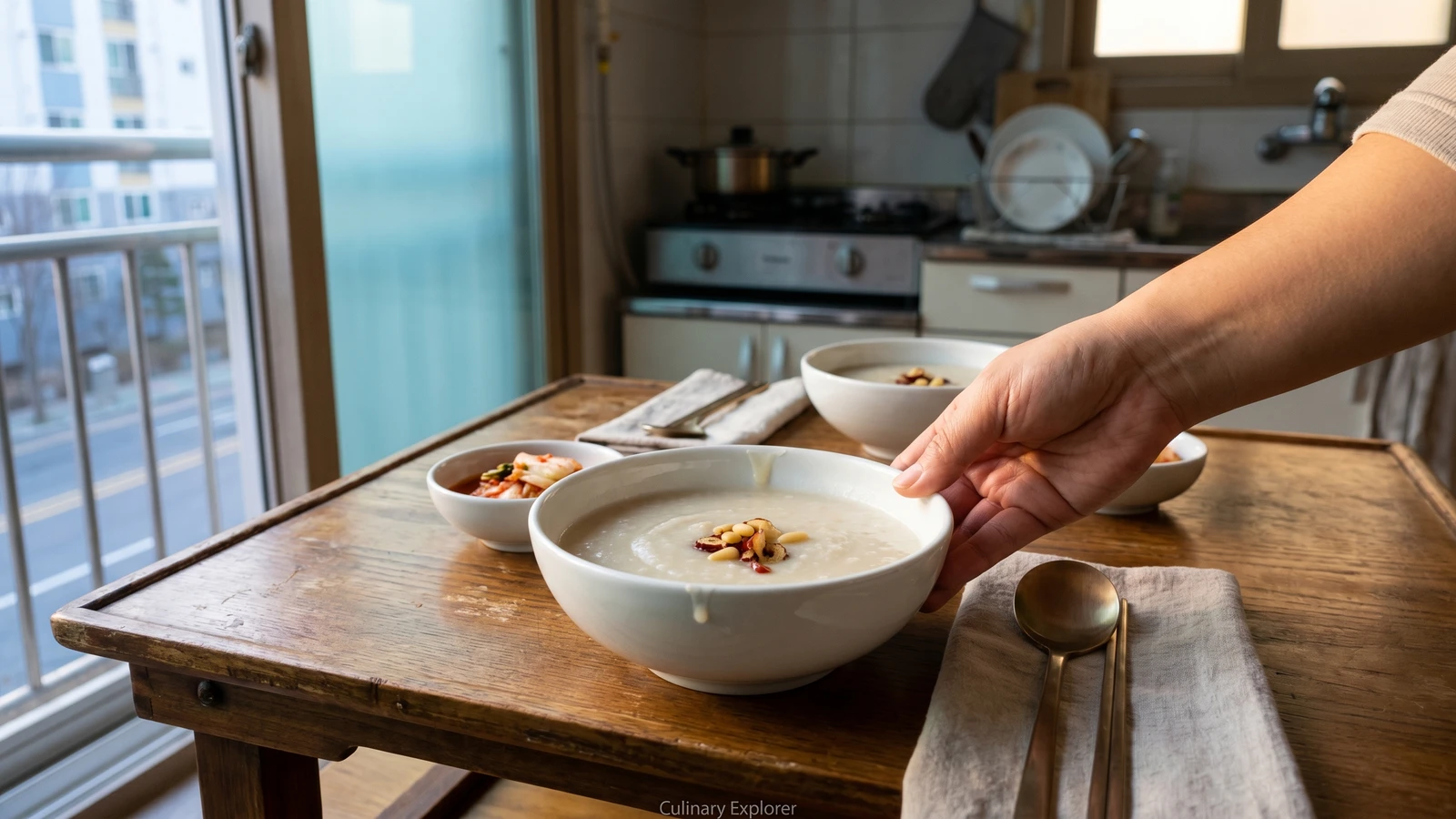
A quiet Korean breakfast porridge made from finely ground yulmu, cooked thin and patient until the grain turns creamy without losing its clean, earthy taste.
Yulmu-juk lives or dies by the grinding. If the yulmu, Job's tears, is left too coarse, the porridge eats like wet sand. Grind it fine, soak it long enough, and stir with patience, and it turns smooth in the bowl without needing milk, sugar, or a heavy hand.
My teacher Master Seong-nyeo served this when someone in the house needed a quiet meal. Not sickroom food exactly, and not a feast food either. It sits in that older Korean place where grain, medicine, and breakfast share the same spoon. The flavor is plain on purpose: nutty, a little earthy, clean enough that one extra spoon of sugar would make it lose itself.
Tonight this dish asks for time more than skill. Soak the grain, grind it with measured water, strain only if your mill leaves grit, then stir until the starch blooms and the porridge thickens lightly. 손맛 is real. I still measure it, so it can be handed on. For yulmu-juk, that means 1 cup yulmu to 1/4 cup rice and 5 cups water, with salt added at the end, not before.
Yulmu, also called uii or uiiin in older Korean medical writing, is Job's tears or adlay, a grain long used both as food and as a medicinal ingredient in East Asia. Dongui Bogam, the Korean medical text completed in 1613 under Heo Jun, records uiiin as a medicinal seed, and Joseon palace records also mention uiijuk, a Job's tears porridge, in the register of foods prepared for care rather than display. Modern Korean homes more often meet yulmu as roasted tea or mixed-grain powder, but the thin porridge preserves the older medicinal-leaning use of the grain.
Quantity
1 cup
rinsed
Quantity
1/4 cup
rinsed
Quantity
5 cups
divided
Quantity
1/2 teaspoon
plus more only if needed
Quantity
1 teaspoon
Quantity
1 tablespoon
Quantity
1 tablespoon
| Ingredient | Quantity |
|---|---|
| dried yulmu (Job's tears or adlay)rinsed | 1 cup |
| short-grain white ricerinsed | 1/4 cup |
| waterdivided | 5 cups |
| fine sea saltplus more only if needed | 1/2 teaspoon |
| toasted sesame oil (optional) | 1 teaspoon |
| pine nuts (optional) | 1 tablespoon |
| finely chopped jujube (optional) | 1 tablespoon |
Rinse the yulmu and rice separately until the water runs mostly clear. Put them together in a bowl, cover with plenty of water, and soak 8 hours or overnight. Yulmu is harder than rice, and soaking is not decoration here; it is what lets the grain grind fine enough to cook smooth.
Drain the soaked grains well. Put them in a blender with 2 cups of the measured water and grind for 1 to 2 minutes, until the mixture looks milky and fine. Rub a drop between your fingers. If it feels gritty, grind another 30 seconds. That little test saves the whole pot.
If your blender is strong and the mixture feels smooth, use it as it is. If you still feel coarse bits, pour it through a fine sieve into a heavy pot, pressing with a spoon, then rinse the sieve with 1 cup of the remaining water. Keep the strained liquid and fine pulp; discard only the hard grit that refuses to pass.
Add the remaining water to the pot, 5 cups total counting what went into the blender. Set the pot over medium heat and stir from the bottom with a wooden spoon. At first it will look too thin. Leave it thin. Yulmu thickens slowly, and a heavy porridge turns pasty before the grain tastes cooked.
When the porridge begins to tremble at the edges, lower the heat to medium-low and cook 25 to 30 minutes, stirring every minute and scraping the corners of the pot. Do not walk away. The starch settles first, then catches. The porridge is ready when it coats the spoon lightly and the raw grain smell has gone.
Stir in 1/2 teaspoon fine sea salt, then taste. Add more only a pinch at a time. Salt goes in at the end because the porridge reduces as it cooks, and early salt can become too strong. The finished bowl should taste of yulmu first, with the salt only making the grain clearer.
Ladle into warm bowls. Add a few pine nuts or a little chopped jujube if the table wants it, and a few drops of sesame oil only if you like a rounder finish. Serve with water kimchi or a small clean banchan, not a loud red side dish that bullies the porridge.
1 serving (about 320g)
Culinary guides, cultural storytelling, and the editorial depth that makes cooking meaningful.
Discover Culinary ExplorerChef Jeong-sun
Powdered rice or dried baekseolgi cooked thin in cloudy rice water, an old Korean first-spoon porridge that asks for patience at the sieve and gentleness at the stove.

Chef Jeong-sun
A soft summer rice porridge of kneaded mallow greens, dried shrimp, and careful doenjang broth, plain enough for breakfast and exact enough to keep the grit and bitterness out.
Chef Jeong-sun
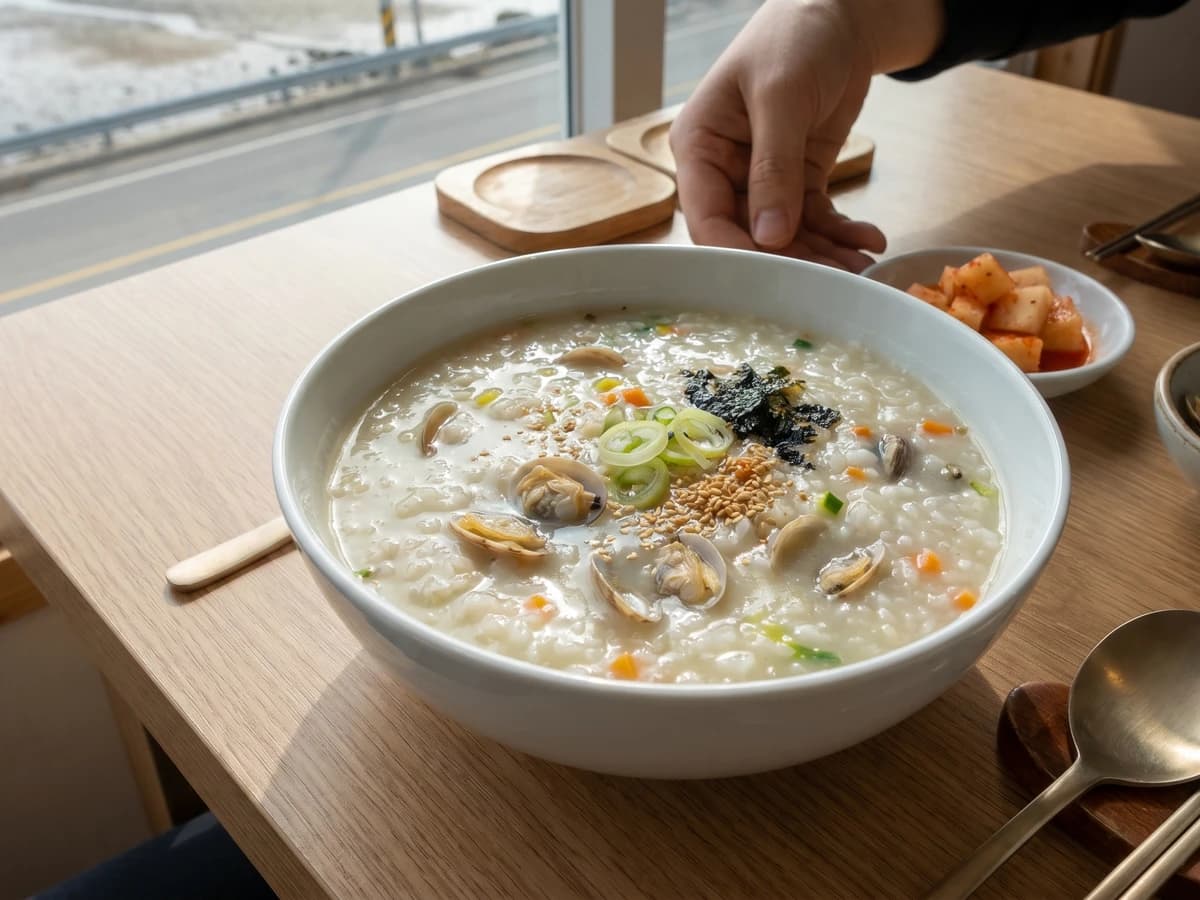
A west-coast clam porridge from Buan's tidal flats: live bajirak opened for their liquor, sesame-slicked rice toasted in the pot, and vegetables cut small enough to comfort without hiding the clams.

Chef Jeong-sun
An autumn juk of boiled chestnuts and soaked short-grain rice, simmered low until smooth and softly sweet, the kind of bowl you set before an elder, a child, or yourself.