Chef Jeong-sun
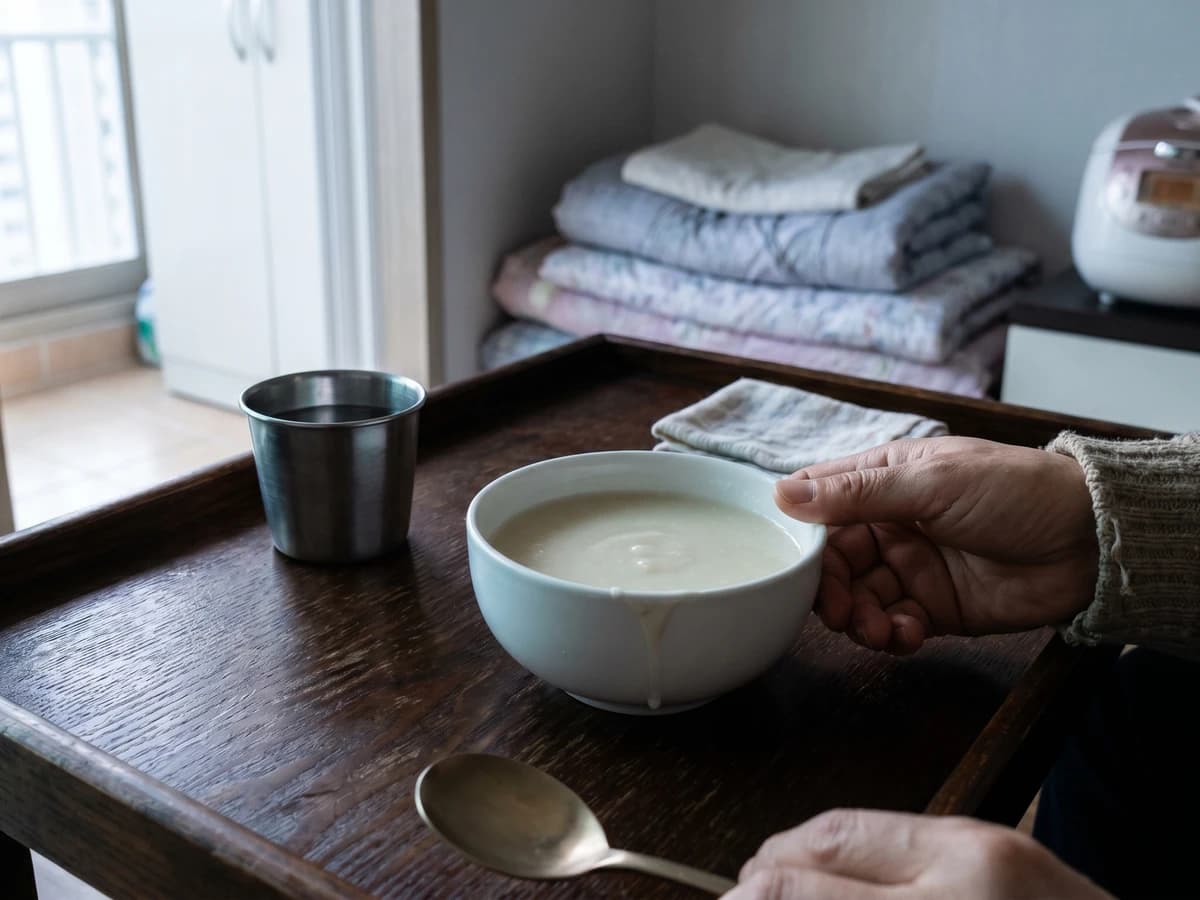
Amjuk (Dried-Grain Weaning Porridge)
Powdered rice or dried baekseolgi cooked thin in cloudy rice water, an old Korean first-spoon porridge that asks for patience at the sieve and gentleness at the stove.
A cooking platform built around craft, culture, and the stories behind what we eat.

Created by
An autumn juk of boiled chestnuts and soaked short-grain rice, simmered low until smooth and softly sweet, the kind of bowl you set before an elder, a child, or yourself.
Chestnuts tell you the month before the calendar does. In the autumn market they sit in brown sacks near the sweet potatoes, heavy in the hand, and the good ones don't rattle. My mother bought them by weight, not by beauty; a glossy shell means little if the nut has dried inside. Cook the month you're standing in: make bam-juk when chestnuts are new, or use plain peeled chestnuts when the season has gone.
Bam-juk (밤죽, chestnut porridge) is not the porridge you make to show off. It is the bowl for a tired person, an elder after dental work, a child who needs breakfast softened, or your own stomach after a hard week. The work is plain but not careless. Peel the brown inner skin cleanly, because it brings tannin. Soak the rice, because soaked rice breaks into cream. Sweeten only enough to point at the chestnut, not cover it.
Notebook 22 says 300 grams peeled chestnut to 100 grams rice and 5 cups water. That ratio gives body without glue. If your chestnuts are dry, you'll add hot water a little at a time; if they're sweet, you'll add no sugar at all. 손맛 is real; I measure it anyway, so this gentle bowl can be handed on.
Juk (죽), rice porridge, has been part of Korean foodways for centuries as breakfast, soft food for elders, and food for people recovering from illness; old household practice treated porridge as practical nourishment, not ceremony. Chestnuts (bam) are an old Korean autumn crop, especially associated today with places such as Gongju and Buyeo in Chungcheong, and they appear on ancestral rite tables as well as in rice cakes, sweets, and porridges. Bam-juk belongs to that home and convalescent line: seasonal, gentle, and valued for how softly chestnut and rice cook down together.
Quantity
1/2 cup (100g)
rinsed and soaked 2 hours
Quantity
500g in the shell, yielding about 300g peeled
boiled, peeled, inner skin removed
Quantity
300g
Quantity
5 cups for the porridge, plus enough to boil chestnuts
Quantity
up to 1 cup
kept nearby to loosen the porridge
Quantity
1/4 teaspoon
Quantity
2 teaspoons
Quantity
1 tablespoon
Quantity
1
seeded and cut into thin slivers
| Ingredient | Quantity |
|---|---|
| short-grain white ricerinsed and soaked 2 hours | 1/2 cup (100g) |
| fresh chestnuts (bam)boiled, peeled, inner skin removed | 500g in the shell, yielding about 300g peeled |
| unsweetened peeled cooked chestnuts (optional) | 300g |
| water | 5 cups for the porridge, plus enough to boil chestnuts |
| hot water (optional)kept nearby to loosen the porridge | up to 1 cup |
| fine sea salt | 1/4 teaspoon |
| honey or sugar (optional) | 2 teaspoons |
| pine nuts (optional) | 1 tablespoon |
| dried jujube (daechu) (optional)seeded and cut into thin slivers | 1 |
Rinse the rice in three changes of cool water, rubbing it gently, until the water runs mostly clear. Cover with fresh water by 2 inches and soak 2 hours, then drain well. Soaked rice breaks down into a soft cream; dry rice stays stubborn in the middle, and no amount of stirring will make it gentle.
Lay each chestnut flat side down on a folded towel and cut a shallow X through the shell on the rounded side. Put them in a pot, cover with water by 2 inches, and boil 20 to 25 minutes, until a skewer slides into one easily. Turn off the heat and lift out only a few at a time, leaving the rest hot in the water. Peel away both the shell and the brown inner skin while warm. You need 300g peeled chestnuts; that number matters because too much chestnut makes the porridge pasty, and too little makes it taste like plain rice.
Reserve 2 tablespoons of the peeled chestnuts and chop them finely if you want small pieces in the finished bowl. Put the drained rice in a blender with 1 cup of the measured water and pulse until the grains look like fine wet sand, not a perfectly smooth paste. Add the remaining chestnuts and 2 more cups water, then blend until the chestnuts are smooth. This gives the porridge body without making it gluey.
Pour the rice and chestnut mixture into a heavy 3-quart pot. Add the remaining 2 cups water and stir before the heat goes on, because rice starch settles quickly. Bring it to the first quiet bubbling at the edge over medium-low heat, stirring from the bottom with a wooden spoon or silicone spatula.
Lower the heat and simmer 25 to 30 minutes, stirring every minute and scraping the corners of the pot. Add the reserved chopped chestnut after 15 minutes if using. If the porridge thickens before the rice is fully tender, add hot water 1/4 cup at a time. It is ready when a cooled grain rubbed between your fingers has no hard center and the spoon leaves a soft trail through the porridge for a moment before it closes.
Stir in the salt and the honey or sugar, if using, and simmer 2 minutes more. Taste before adding more sweetness. Chestnut should lead, salt should only wake it up, and sugar should stay behind it. Rest off the heat for 5 minutes, then ladle into bowls. Garnish with pine nuts and jujube slivers if the bowl is for the table; leave them off for a convalescent or elder who needs it perfectly smooth.
1 serving (about 310g)
Culinary guides, cultural storytelling, and the editorial depth that makes cooking meaningful.
Discover Culinary ExplorerChef Jeong-sun
Powdered rice or dried baekseolgi cooked thin in cloudy rice water, an old Korean first-spoon porridge that asks for patience at the sieve and gentleness at the stove.

Chef Jeong-sun
A soft summer rice porridge of kneaded mallow greens, dried shrimp, and careful doenjang broth, plain enough for breakfast and exact enough to keep the grit and bitterness out.
Chef Jeong-sun
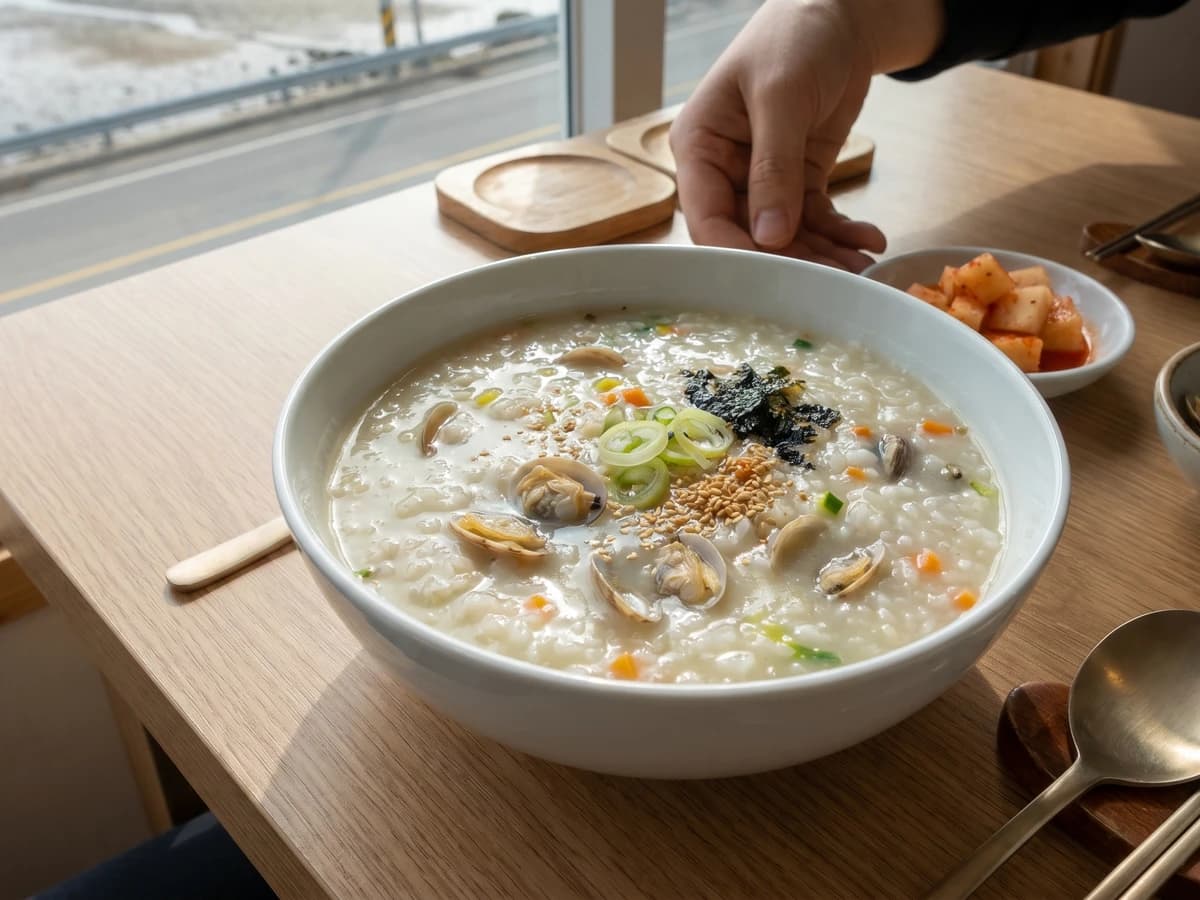
A west-coast clam porridge from Buan's tidal flats: live bajirak opened for their liquor, sesame-slicked rice toasted in the pot, and vegetables cut small enough to comfort without hiding the clams.
Chef Jeong-sun
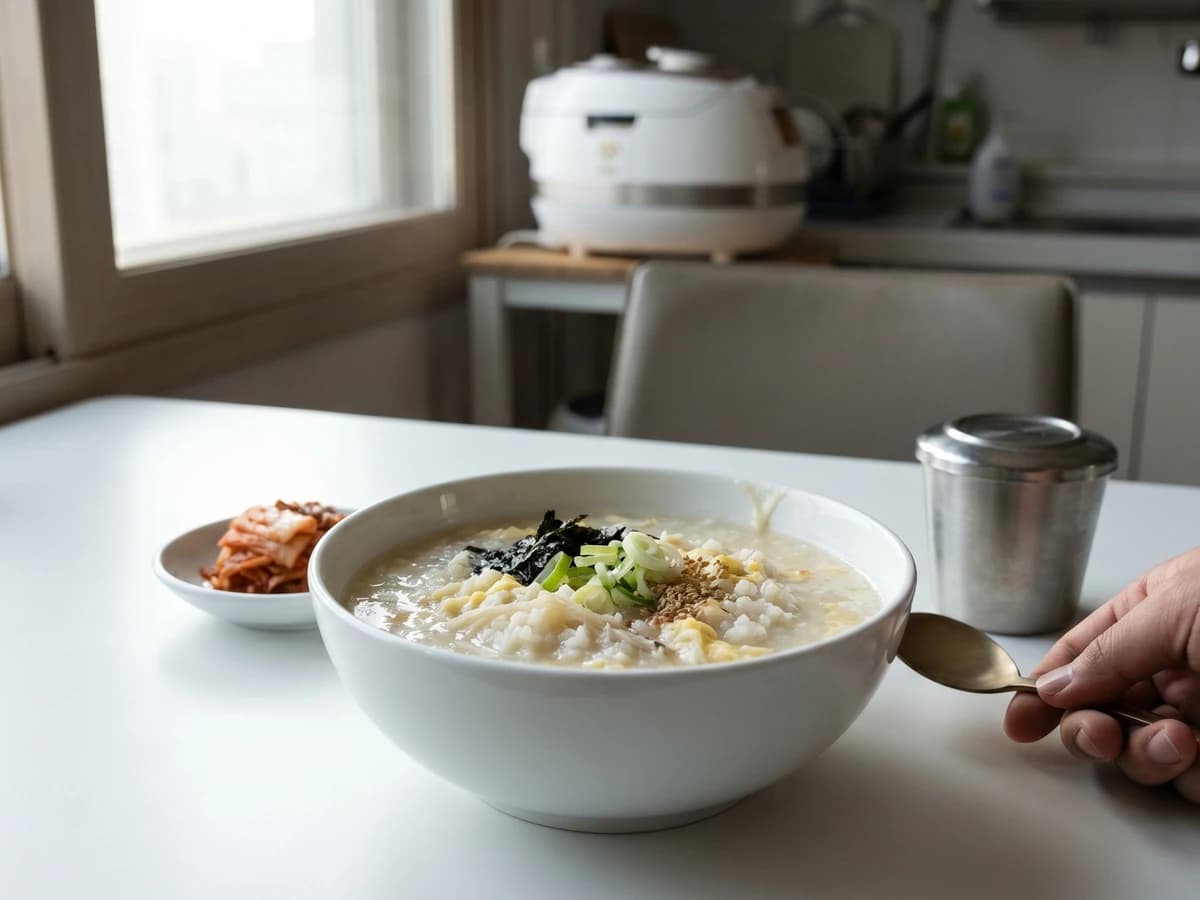
A clean, gently savory rice porridge with shredded dried pollock, slow-simmered until the grains soften and finished with a whisked egg, the bowl Korean homes trust after a hard night.