Chef Jeong-sun
Amjuk (Dried-Grain Weaning Porridge)
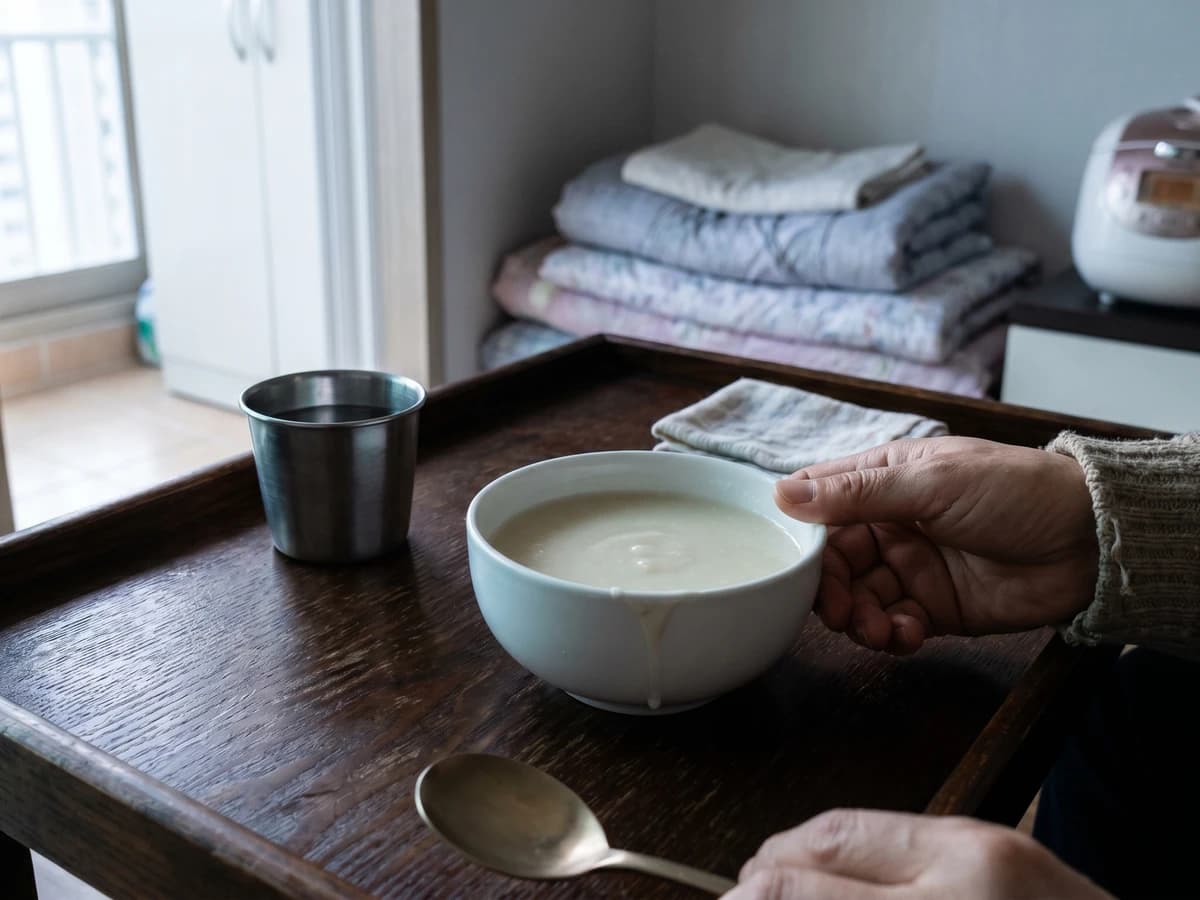
Powdered rice or dried baekseolgi cooked thin in cloudy rice water, an old Korean first-spoon porridge that asks for patience at the sieve and gentleness at the stove.
A cooking platform built around craft, culture, and the stories behind what we eat.
Created by
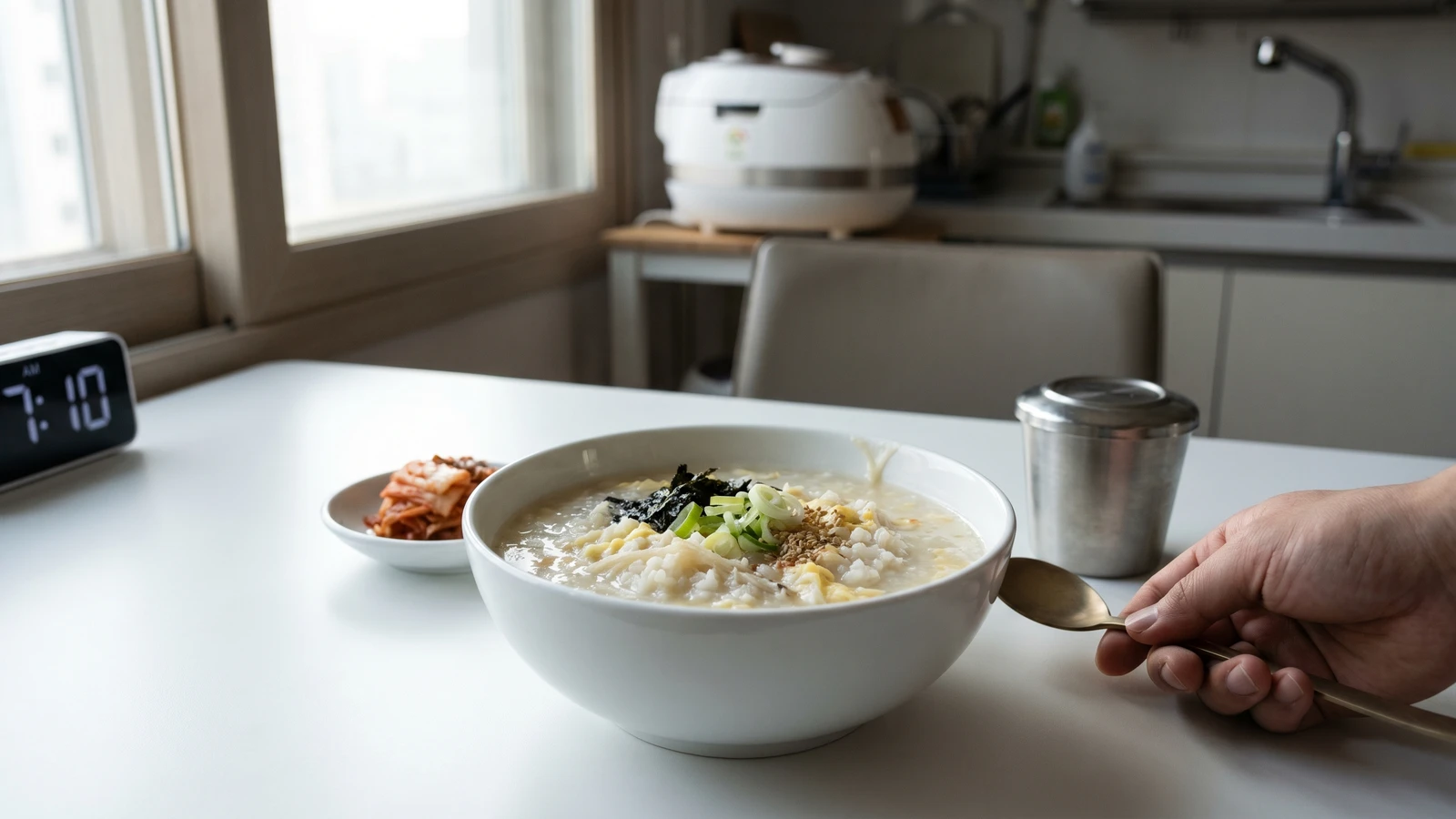
A clean, gently savory rice porridge with shredded dried pollock, slow-simmered until the grains soften and finished with a whisked egg, the bowl Korean homes trust after a hard night.
Bukeo-juk lives or dies in the first ten minutes, before the porridge looks like anything. Rinse the rice until the water runs mostly clear, soak it, drain it hard, then rub the grains and the shredded bukeo (dried pollock) in sesame oil until the rice turns glossy at the edges. That little frying is not decoration. It keeps the grains from breaking into paste and teaches the pollock to give itself to the broth.
My teacher Master Seong-nyeo made this after long market mornings and after nights when the household had eaten too loudly. She did not call it hangover food first. She called it a clean breakfast. The bowl should be pale and savory, with soft rice grains you can still recognize, egg running through it in tender ribbons, and scallion waking it at the end. Garlic stays quiet. Soy sauce stays measured. Let it taste like itself.
This is comfort food, but it still asks for attention: soak the rice, soften the pollock, simmer slowly, stir often enough that the bottom never catches. If you pour in all the liquid and walk away, you get a dull pot. Add broth in stages, taste before salt, and write down the final pinch. Memory is a borrowed bowl.
Myeongtae (Alaska pollock) is one of Korea's most named fish, sold as saengtae when fresh, dongtae when frozen, bukeo when dried, and hwangtae when repeatedly frozen and thawed in mountain winter air. After the Korean War, cold, dry villages in Gangwon-do, especially around Yongdae-ri in Inje, became closely tied to hwangtae drying, and dried pollock stayed valuable because it kept well and made broth quickly. Bukeo-juk belongs to the plain home table of recovery foods, close to bukeo-guk, made when rice needed to become gentle without becoming bland.
Quantity
1 cup (200g)
rinsed and soaked 30 minutes
Quantity
45g
checked for bones
Quantity
6 cups
divided
Quantity
1 piece, about 3 inches square
Quantity
1 tablespoon
Quantity
2 cloves
minced
Quantity
2 teaspoons
Quantity
1/2 teaspoon
divided
Quantity
2 large
beaten until no white streaks remain
Quantity
2
thinly sliced
Quantity
1 teaspoon
lightly crushed
Quantity
1 sheet
crumbled
Quantity
1/8 teaspoon
| Ingredient | Quantity |
|---|---|
| short-grain white ricerinsed and soaked 30 minutes | 1 cup (200g) |
| shredded dried pollock (bukeochae or hwangtaechae)checked for bones | 45g |
| waterdivided | 6 cups |
| dried kelp (dasima) | 1 piece, about 3 inches square |
| toasted sesame oil | 1 tablespoon |
| garlicminced | 2 cloves |
| guk-ganjang (Korean soup soy sauce) | 2 teaspoons |
| fine sea saltdivided | 1/2 teaspoon |
| eggsbeaten until no white streaks remain | 2 large |
| scallionsthinly sliced | 2 |
| toasted sesame seedslightly crushed | 1 teaspoon |
| roasted gim (seaweed) (optional)crumbled | 1 sheet |
| freshly ground black pepper (optional) | 1/8 teaspoon |
Rinse the rice in several changes of water until the water runs mostly clear, then soak it in fresh water for 30 minutes. Drain it well for 10 minutes. Soaking lets the grains swell evenly, and draining keeps the porridge from starting watery and dull.
Put the dried pollock in a bowl with 2 cups of the water and let it soften for 10 minutes. Lift it out, squeeze it gently, and tear any long strips into 2-inch pieces. Strain the soaking liquid through a fine sieve, then add enough fresh water to make 6 cups total. Drop in the kelp while the rice finishes draining, then remove the kelp before the liquid goes into the pot. Kelp that boils too long gives a slick bitterness this quiet porridge does not need.
Set a heavy pot over medium-low heat and add the sesame oil. Add the drained rice and softened pollock, then stir for 3 to 4 minutes, until the rice looks glossy at the edges and the pollock smells clean and nutty. Add the garlic for the last 30 seconds only. This little frying keeps the rice from collapsing into paste and helps the pollock give its savor to the broth.
Add 5 cups of the prepared liquid and bring it to a steady simmer. Lower the heat and cook 25 to 30 minutes, stirring every 3 to 4 minutes and scraping the bottom of the pot. Add the remaining 1 cup liquid in two splashes as the porridge thickens. The grains should bloom and soften, but you should still be able to recognize rice, not glue.
When the rice is tender, stir in the guk-ganjang and 1/4 teaspoon of the salt. Taste the porridge, then add the remaining 1/4 teaspoon salt only if the bowl tastes flat. Turn the heat to low. Stir the porridge in one slow circle while pouring in the beaten eggs in a thin stream, then stop stirring and cover for 1 minute. The egg should settle into soft ribbons, not disappear into crumbs.
Ladle the porridge into bowls and finish with scallion, crushed sesame seeds, crumbled gim if you like it, and a little black pepper if the stomach at the table can take it. Serve it with baechu-kimchi or a small dish of dongchimi, nothing too loud. This is a breakfast for recovery, not a contest.
1 serving (about 510g)
Culinary guides, cultural storytelling, and the editorial depth that makes cooking meaningful.
Discover Culinary ExplorerChef Jeong-sun
Powdered rice or dried baekseolgi cooked thin in cloudy rice water, an old Korean first-spoon porridge that asks for patience at the sieve and gentleness at the stove.

Chef Jeong-sun
A soft summer rice porridge of kneaded mallow greens, dried shrimp, and careful doenjang broth, plain enough for breakfast and exact enough to keep the grit and bitterness out.
Chef Jeong-sun
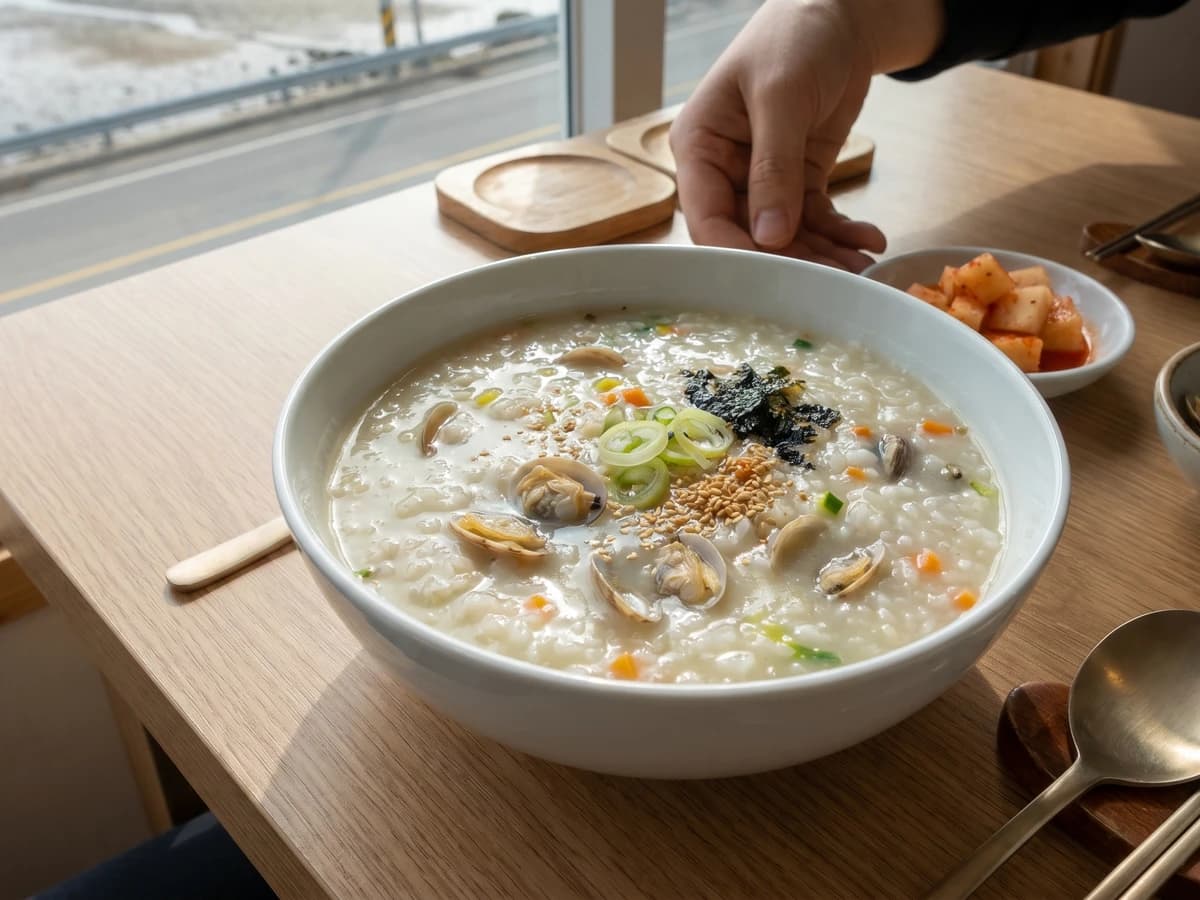
A west-coast clam porridge from Buan's tidal flats: live bajirak opened for their liquor, sesame-slicked rice toasted in the pot, and vegetables cut small enough to comfort without hiding the clams.

Chef Jeong-sun
An autumn juk of boiled chestnuts and soaked short-grain rice, simmered low until smooth and softly sweet, the kind of bowl you set before an elder, a child, or yourself.