Chef Jeong-sun
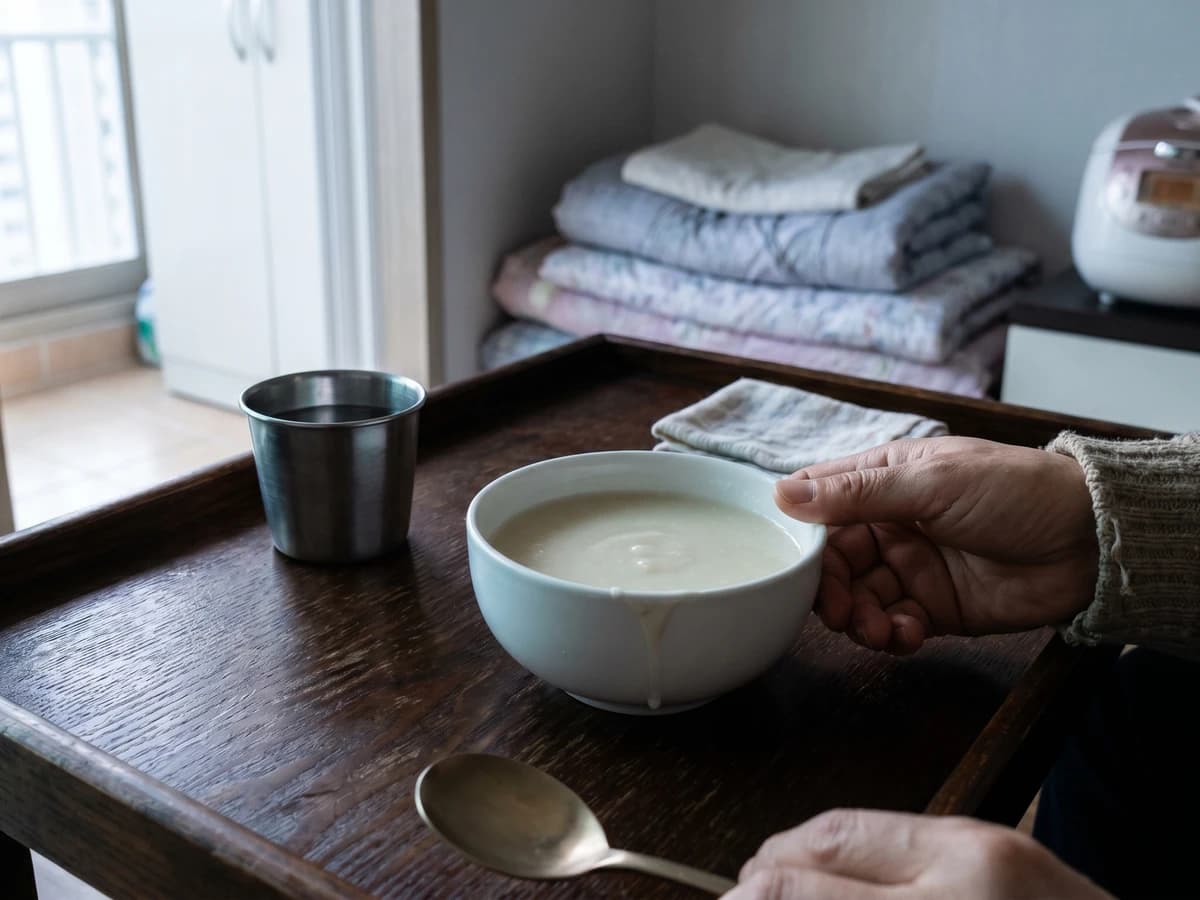
Amjuk (Dried-Grain Weaning Porridge)
Powdered rice or dried baekseolgi cooked thin in cloudy rice water, an old Korean first-spoon porridge that asks for patience at the sieve and gentleness at the stove.
A cooking platform built around craft, culture, and the stories behind what we eat.
Created by
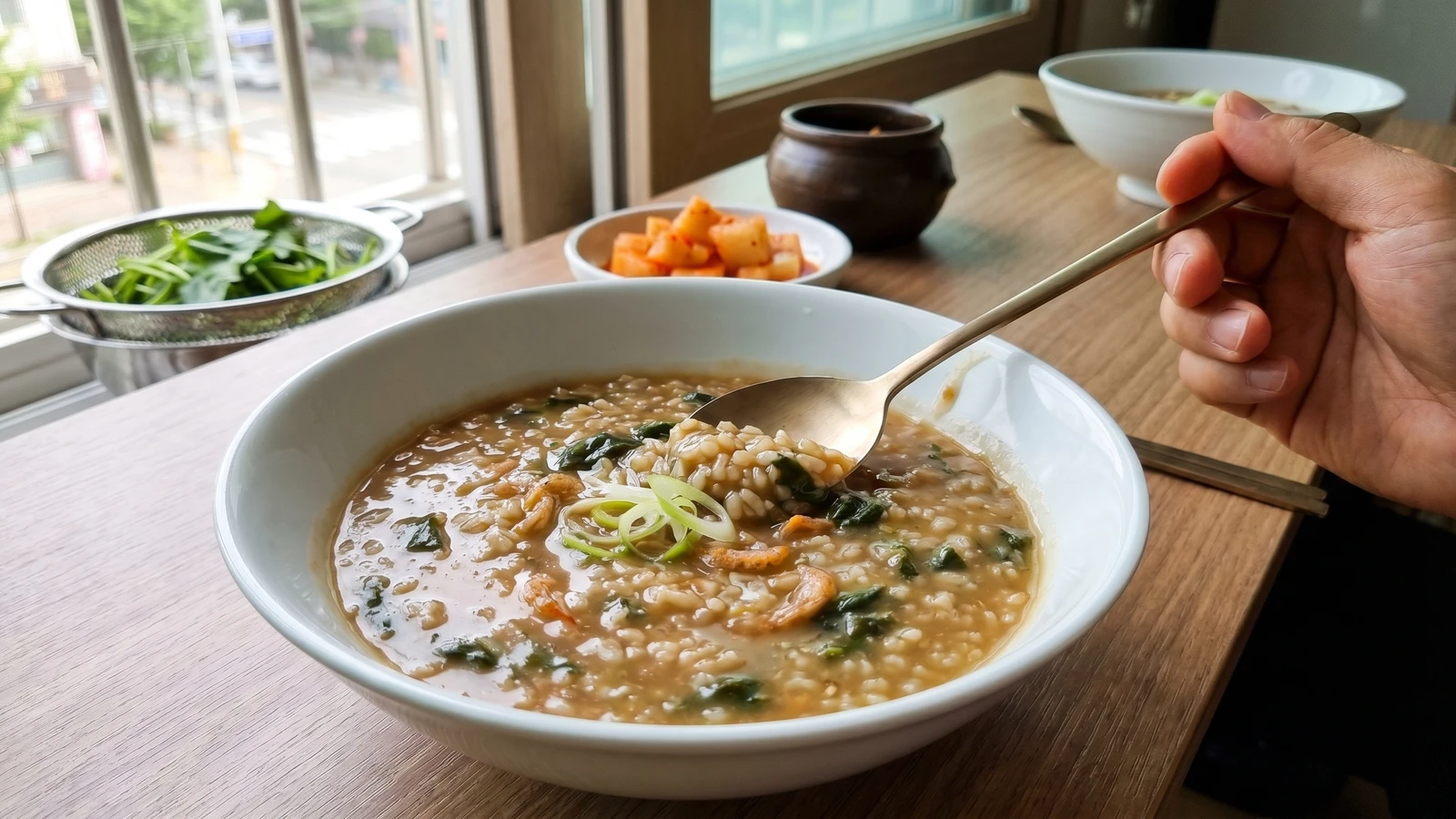
A soft summer rice porridge of kneaded mallow greens, dried shrimp, and careful doenjang broth, plain enough for breakfast and exact enough to keep the grit and bitterness out.
At the summer market, auk is not the prettiest bundle. The leaves look broad and soft, the stems a little stubborn, and there is always grit hiding where the leaf folds into the stalk. Buy it anyway when the leaves are green and supple. This is the porridge for a humid morning or a tired stomach, rice made gentle in a doenjang broth with dried shrimp doing the quiet work underneath.
Do not put the mallow straight into the pot. Knead it first with a measured spoonful of coarse salt, then rinse it until the basin is clean. That rubbing is not punishment. It loosens sand, removes the raw green edge, and tames the slickness so the porridge eats clean. My teacher Master Seong-nyeo made me do it in a basin so long I thought the leaves would disappear. They did not. They became food.
The doenjang makes or breaks the bowl. Too little and you have rice water with leaves; too much and every spoon tastes like paste. Start with 2 tablespoons for 7 cups of shrimp-kelp broth, then adjust with salt before you add more paste. 손맛 is real. I still measure it, so it can be handed on. Tonight this asks for clean hands, a heavy pot, and enough patience to stir the rice until each grain opens.
Auk (아욱, curled mallow, Malva verticillata) has been grown in Korea as a common garden green for centuries, and sayings about gaeul aukguk, autumn mallow soup, show how prized it was before year-round supermarket greens. Auk-juk belongs to the plain household juk family: rice stretched in broth for breakfast, illness, or a small table, seasoned with doenjang and often dried shrimp because those pantry foods gave body without meat. It is not a palace dish; its record is in markets, home kitchens, and the practical habit of turning a seasonal green into one warm bowl.
Quantity
1 cup (200g)
Quantity
7 cups
Quantity
1 piece, about 3 inches square
Quantity
1/3 cup (25g)
picked over and briefly rinsed
Quantity
250g
tough stems trimmed
Quantity
1 teaspoon
for kneading the mallow
Quantity
2 tablespoons (36g), plus 1 teaspoon more only if needed
Quantity
1 clove
minced
Quantity
1 small
thinly sliced
Quantity
up to 1/4 teaspoon
after tasting
| Ingredient | Quantity |
|---|---|
| short-grain white rice | 1 cup (200g) |
| water | 7 cups |
| dried kelp (dasima) | 1 piece, about 3 inches square |
| small dried shrimp (mareun saeu or bori saeu)picked over and briefly rinsed | 1/3 cup (25g) |
| fresh mallow greens (auk)tough stems trimmed | 250g |
| coarse saltfor kneading the mallow | 1 teaspoon |
| doenjang (Korean fermented soybean paste) | 2 tablespoons (36g), plus 1 teaspoon more only if needed |
| garlicminced | 1 clove |
| scallionthinly sliced | 1 small |
| fine sea salt (optional)after tasting | up to 1/4 teaspoon |
Rinse the rice in three changes of water, rubbing the grains lightly with your hand until the water turns less cloudy. Cover with fresh cool water and soak 30 minutes, then drain for 10 minutes. Soaking lets the grains open evenly in the broth; unsoaked rice makes you cook longer, and then the mallow waits too long for the rice to catch up.
Trim away tough stem ends and pull off any stringy skin from thick stems. Put the mallow in a large basin, sprinkle with 1 teaspoon coarse salt, and knead firmly for 2 minutes, folding and rubbing the leaves until they darken, soften, and give off green liquid. Rinse in three full changes of water, lifting the greens out each time so grit stays in the bottom of the basin. Squeeze gently and cut into 1 1/2-inch lengths.
Put the 7 cups water, kelp, and dried shrimp in a heavy pot. Bring it to a bare simmer over medium heat, then remove the kelp right away before it turns the broth bitter and slippery. Simmer the shrimp 10 minutes more. Strain the broth and reserve 2 tablespoons of the softened shrimp, roughly chopped. You should have about 6 1/2 cups broth; add water if you are short.
Return the broth to the pot and whisk in 2 tablespoons doenjang, or press it through a small sieve into the broth so no salty lumps remain. Taste the broth now. It should be savory and a little lighter than soup, because the rice will thicken and concentrate it. Do not add the extra teaspoon yet. Too much doenjang makes a small porridge taste heavy.
Add the drained rice and the reserved chopped shrimp to the doenjang broth. Bring it to a gentle boil, then lower the heat so it bubbles quietly. Cook 25 to 30 minutes, stirring the bottom every 2 to 3 minutes with a wooden spoon. The grains should swell and split at the edges, with no hard white center. If the porridge tightens before the rice is tender, add hot water 1/2 cup at a time.
Fold in the kneaded mallow and minced garlic. Simmer 8 to 10 minutes, stirring often, until the greens are tender and the porridge moves loosely from the spoon instead of sitting in a lump. Mallow should taste clean and green, with the dried shrimp underneath and the doenjang holding the bowl together. Let it taste like itself.
Taste before you season again. If the porridge is deep but flat, add up to 1/4 teaspoon fine sea salt. If it lacks soybean depth, dissolve 1 more teaspoon doenjang in a ladleful of hot porridge before stirring it back in. Add the sliced scallion, turn off the heat, cover, and rest 5 minutes. Serve warm with kimchi or a sharp radish banchan.
1 serving (about 475g)
Culinary guides, cultural storytelling, and the editorial depth that makes cooking meaningful.
Discover Culinary ExplorerChef Jeong-sun
Powdered rice or dried baekseolgi cooked thin in cloudy rice water, an old Korean first-spoon porridge that asks for patience at the sieve and gentleness at the stove.
Chef Jeong-sun
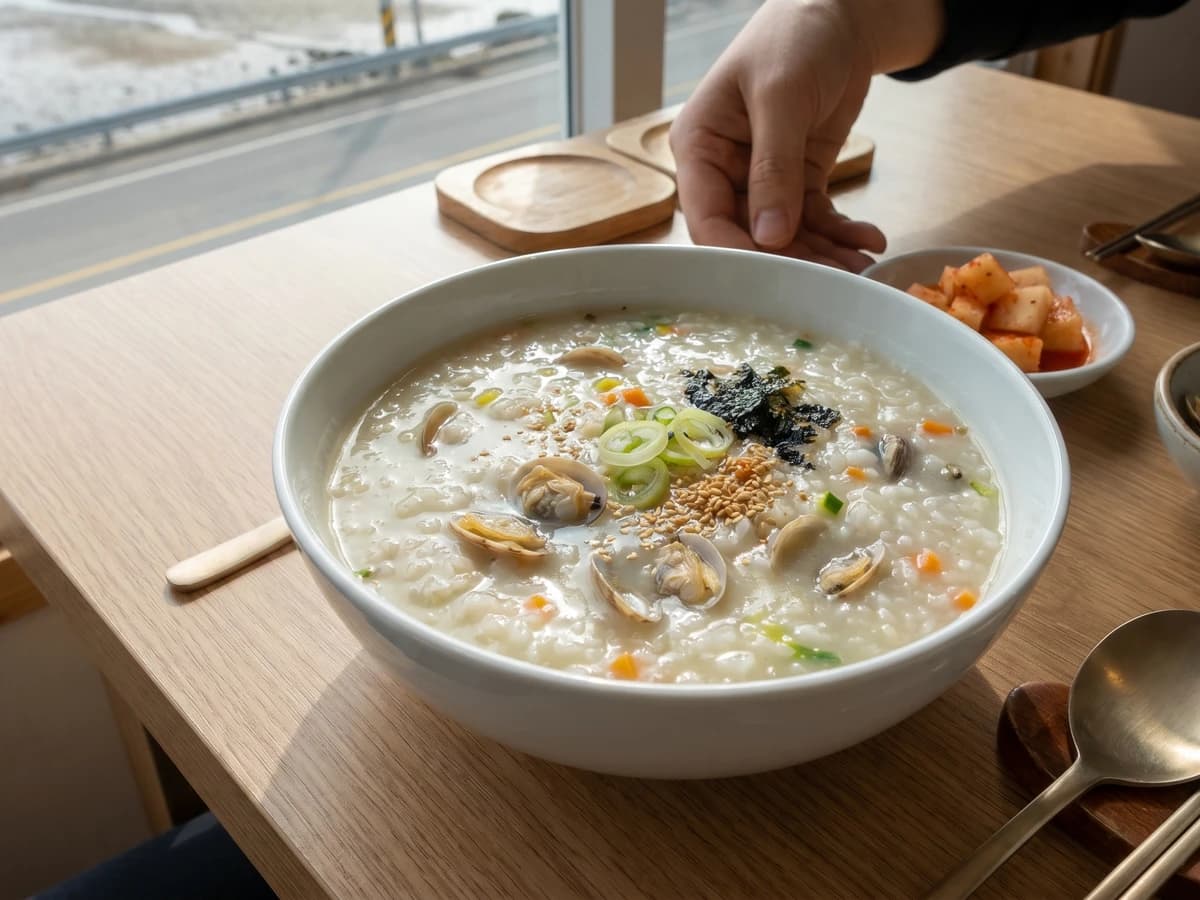
A west-coast clam porridge from Buan's tidal flats: live bajirak opened for their liquor, sesame-slicked rice toasted in the pot, and vegetables cut small enough to comfort without hiding the clams.

Chef Jeong-sun
An autumn juk of boiled chestnuts and soaked short-grain rice, simmered low until smooth and softly sweet, the kind of bowl you set before an elder, a child, or yourself.
Chef Jeong-sun
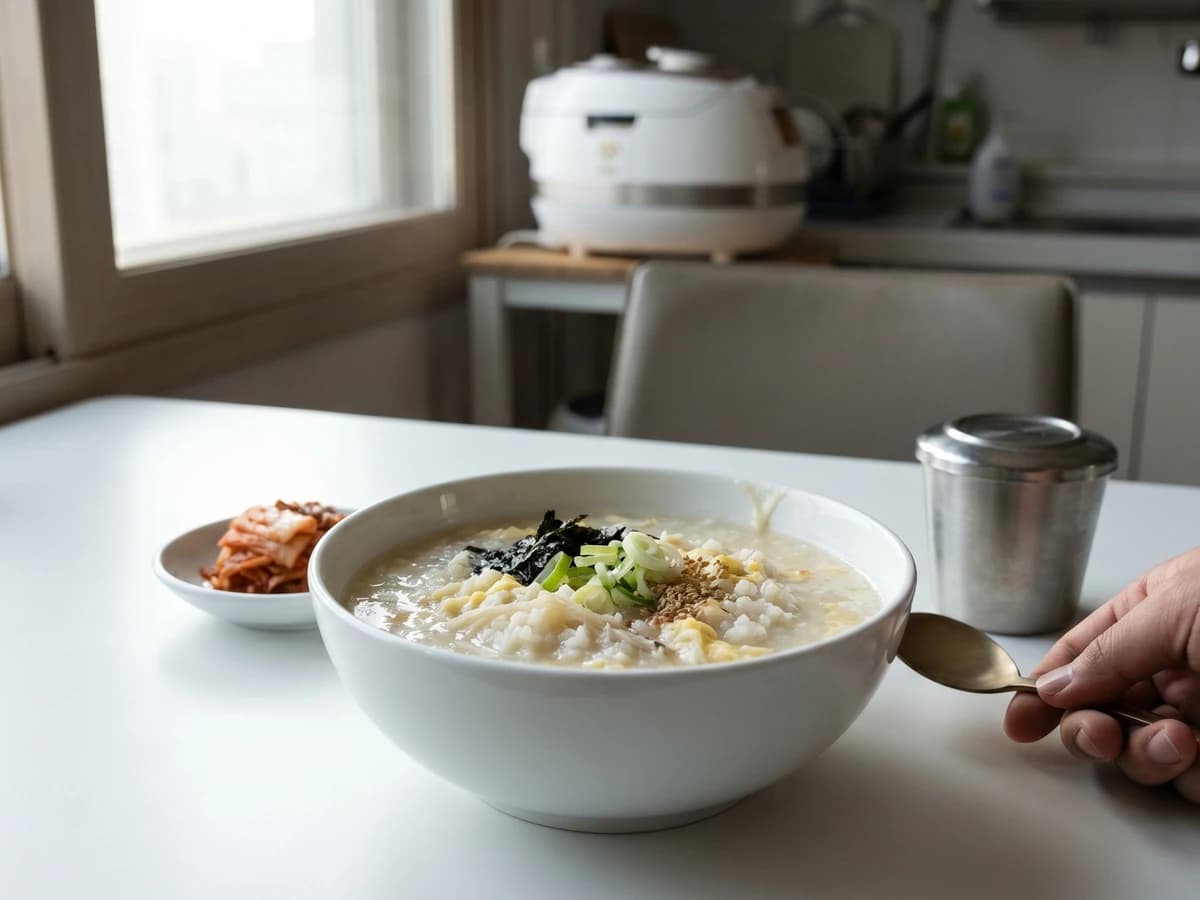
A clean, gently savory rice porridge with shredded dried pollock, slow-simmered until the grains soften and finished with a whisked egg, the bowl Korean homes trust after a hard night.