
Chef Takumi
Aji Fry (アジフライ, panko-fried horse mackerel)
Aji fry is weeknight fish with no mystery: fresh horse mackerel opened cleanly, breaded lightly, and fried until the panko crackles while the flesh stays sweet.
A cooking platform built around craft, culture, and the stories behind what we eat.

Created by
Vegetable tempura is not a restaurant trick. Keep the batter cold, the oil steady, and fry the slow vegetables first, the tender leaves last.
Tempura frightens people because oil makes its own opinions known. It splutters, it darkens, it punishes hesitation. But yasai tempura moriawase, a mixed plate of vegetable tempura, is simpler than its reputation. The vegetables tell you the order: sweet potato and kabocha first, eggplant and shiitake next, shiso at the very end.
The one detail that decides it is the batter. Keep it cold, mix it poorly on purpose, and use it at once. A smooth batter has too much gluten and fries up heavy. A lumpy, cold batter hits the hot oil and sets before it can drink, which is what gives tempura that pale, crisp coat without hiding the vegetable underneath.
Choose vegetables at their 旬 (shun), at their prime, and cut them so they cook quickly. Kabocha should be thin enough to soften before the coating colors. Eggplant wants shallow cuts so the heat can enter and the purple skin stays beautiful. Shiso needs only a breath in the oil. Nothing hidden. This is frying in service of the ingredient, not a cloak thrown over it.
For a meatless table, make the dipping sauce with konbu and dried shiitake dashi, the way the temple kitchens do. That is 本物 (honmono), not a compromise. Set the tempura high on a small sheet of paper, leave it room, and serve the tentsuyu with grated daikon beside it. The plate should arrive calm, not crowded, which is a useful lesson after standing near hot oil.
Tempura entered Japan in the sixteenth century through Portuguese traders and missionaries, whose Lenten frying practices left a mark on the port city of Nagasaki. By the Edo period it had become a popular street food in Edo, cooked quickly in front of customers and eaten hot with a dipping sauce. Vegetable tempura also belongs naturally to shōjin ryōri, the Buddhist vegetarian table, where seasonal plants are fried without egg and served with a plant-based dipping broth.
Quantity
1 piece (about 10g)
Quantity
4
soaked in 2 cups cold water
Quantity
1/2 cup
Quantity
1/2 cup
Quantity
1 teaspoon
Quantity
1 cup
grated and lightly drained
Quantity
1/4 small (about 300g)
seeded and sliced 1/4 inch thick
Quantity
1 small (about 250g)
scrubbed and sliced 1/4 inch thick
Quantity
2 small
halved lengthwise and lightly scored
Quantity
8
stems removed, caps patted dry
Quantity
8
washed and dried very well
Quantity
1 1/4 cups, plus more for dusting
Quantity
1/4 cup
Quantity
1 1/2 cups
Quantity
enough for 2 inches in the pot
Quantity
for serving
| Ingredient | Quantity |
|---|---|
| konbu (dried kelp) | 1 piece (about 10g) |
| dried shiitake mushroomssoaked in 2 cups cold water | 4 |
| soy sauce | 1/2 cup |
| mirin | 1/2 cup |
| sugar | 1 teaspoon |
| daikongrated and lightly drained | 1 cup |
| kabocha squashseeded and sliced 1/4 inch thick | 1/4 small (about 300g) |
| Japanese sweet potatoscrubbed and sliced 1/4 inch thick | 1 small (about 250g) |
| Japanese eggplantshalved lengthwise and lightly scored | 2 small |
| fresh shiitake mushroomsstems removed, caps patted dry | 8 |
| shiso leaveswashed and dried very well | 8 |
| hakurikiko or low-protein all-purpose flour | 1 1/4 cups, plus more for dusting |
| potato starch | 1/4 cup |
| ice-cold water | 1 1/2 cups |
| neutral frying oil | enough for 2 inches in the pot |
| fine sea salt (optional) | for serving |
Put the konbu and dried shiitake with their soaking water in a pot and warm slowly over low heat. Pull the konbu just before the water boils, when small bubbles climb the sides. Boiling konbu makes the broth bitter and slick, and this sauce needs clean depth, not noise. Simmer the shiitake gently for 10 minutes, then strain.
Combine 1 1/2 cups of the shiitake-konbu dashi with the soy sauce, mirin, and sugar. Bring it just to a simmer, then take it off the heat. The mirin needs heat to settle, but hard boiling dulls the fragrance. Taste it: the sauce should be stronger than soup because the grated daikon and fried vegetables soften it at the table.
Slice the kabocha and sweet potato about 1/4 inch thick so they cook before the coating colors too deeply. Halve the eggplants lengthwise and make shallow diagonal cuts in the flesh, which lets heat enter quickly and keeps the pieces from turning heavy. Remove shiitake stems, and dry the shiso carefully. Water on leaves makes oil spit, and oil has poor manners already.
Line a tray with a rack or fresh paper. Set flour for dusting in one shallow bowl. Sift the remaining flour with the potato starch in another bowl, but don't add water yet. Tempura rewards readiness: once the batter is mixed, you fry, not search for tongs.
Heat 2 inches of neutral oil in a heavy pot to 170 to 175 C, or 340 to 350 F. If you don't have a thermometer, drop in a little batter. It should sink slightly, then rise at once with small lively bubbles. Oil too cool makes a greasy coat. Oil too hot browns the batter before the vegetable is tender.
Pour the ice-cold water into the flour and starch and stir with chopsticks only a few times. Leave lumps. This is not cake batter, thank heaven. Overmixing develops gluten, and gluten makes tempura thick and chewy. Keep the bowl cold, and make a second small batch later if the batter warms or turns smooth.
Dust the kabocha and sweet potato lightly with flour, tap off the excess, dip in batter, and lower them into the oil. Fry in small batches for 2 to 3 minutes, turning once, until the coating is pale and crisp and a skewer slips into the vegetable with little resistance. Crowding drops the oil temperature, so give each piece space.
Dust and batter the eggplant and shiitake next. Fry the eggplant cut-side down first so the batter sets around the flesh, then turn once. The shiitake should stay juicy, not collapse. Lift each piece when the bubbles grow quieter and the coating feels light against the chopsticks.
Hold each shiso leaf by the stem, dust only the underside, and drag that side through the batter. Fry batter-side down for 15 to 20 seconds. If you coat both sides, the leaf disappears inside paste. Shiso is there for fragrance and green color, so treat it like a leaf, not a plank.
Stand the tempura briefly on the rack, then arrange it while still crisp. Set the slower vegetables at the back, the shiso in front, and keep the pieces slightly upright instead of piled. Serve with warm tentsuyu and a small mound of grated daikon, plus salt for anyone who wants the first bite plain.
1 serving (about 430g)
Culinary guides, cultural storytelling, and the editorial depth that makes cooking meaningful.
Discover Culinary ExplorerChef Takumi
Aji fry is weeknight fish with no mystery: fresh horse mackerel opened cleanly, breaded lightly, and fried until the panko crackles while the flesh stays sweet.
Chef Takumi
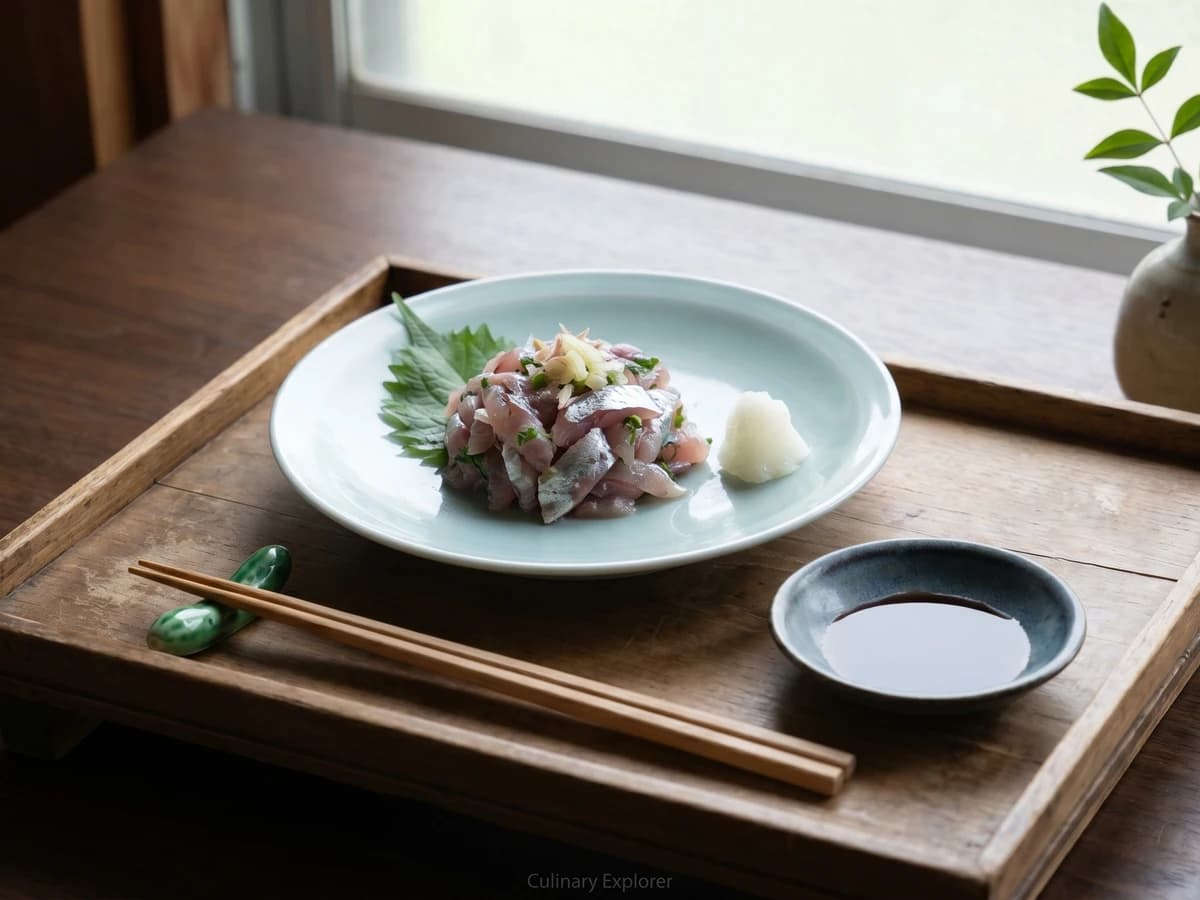
Summer horse mackerel, chopped just enough to catch ginger and scallion, becomes a cool, clean main dish with rice. The secret is fresh fish and a knife that does not bruise it.
Chef Takumi
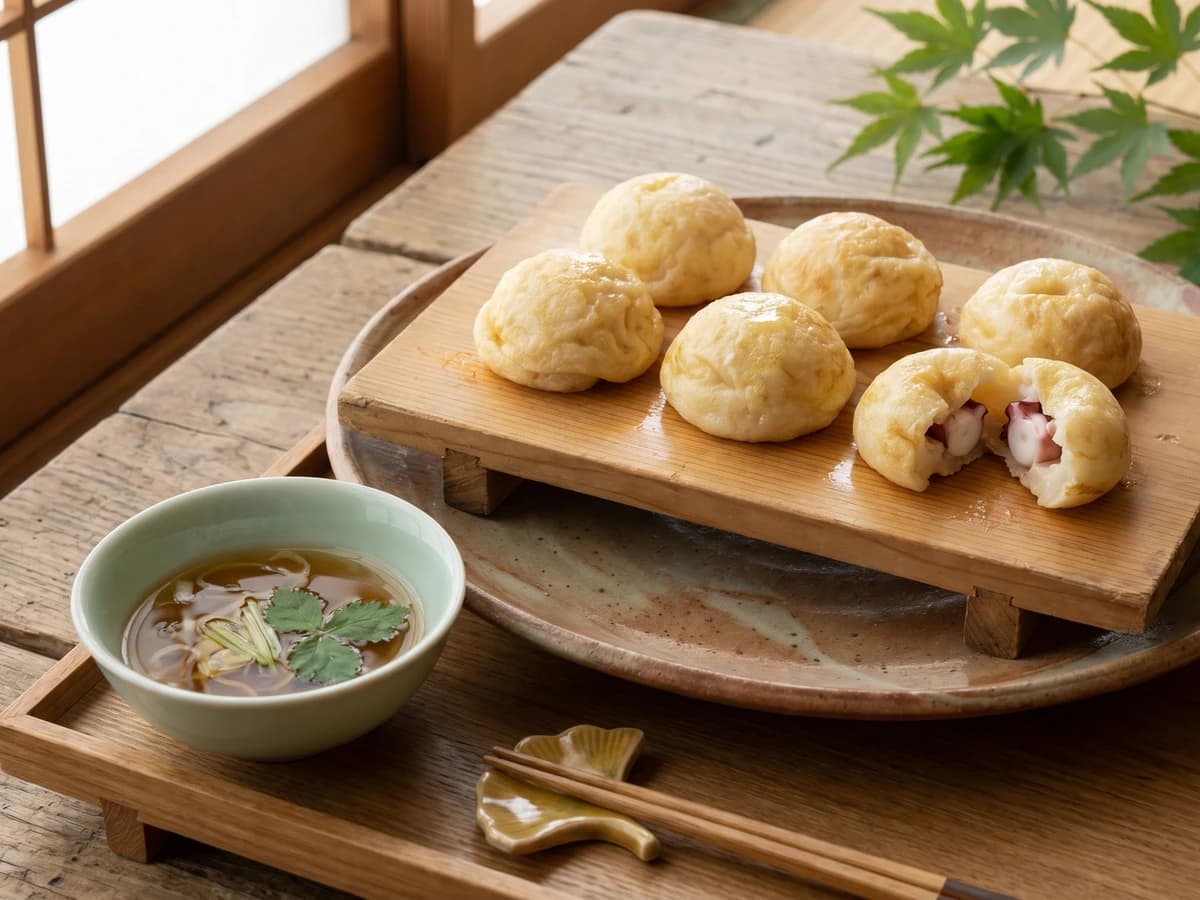
Akashi-yaki is not sauced takoyaki. It is egg-rich batter, tender octopus, and clear dashi, cooked pale and soft so each ball can be dipped like a small custard dumpling.

Chef Takumi
A whole anago looks like a test of nerve. It is mostly good sourcing, a dry skin, cold batter, and oil hot enough to leave the eel sweet under its lace.