Culinary Explorer

A cooking platform built around craft, culture, and the stories behind what we eat.
Discover Culinary Explorer
Chicken Katsu (チキンカツ)

Chicken Katsu (チキンカツ)

Created by

Chicken katsu is the weeknight cutlet: even chicken thigh, dry panko, clean oil, and the patience to fry it until the crust is gold and the meat stays juicy.

Main Dishes
Japanese
Weeknight
Comfort Food
Meal Prep
20 min
Active Time
15 min cook35 min total
Yield4 servings

Chicken katsu looks like a dish that belongs to a shop with a fryer and a serious man behind the counter. It doesn't. The deciding work happens on the board, before the oil is hot: open the thigh to an even thickness, then season it plainly. A cutlet that cooks evenly is already halfway home.

We use chicken thigh because it forgives you a little. Breast can be used, but thigh stays juicy under the panko crust and has enough flavor that nothing needs hiding. The sauce comes after, not as camouflage. Good chicken, salt, flour, egg, panko, clean oil. That is the whole list of secrets, and it is not a very long list.

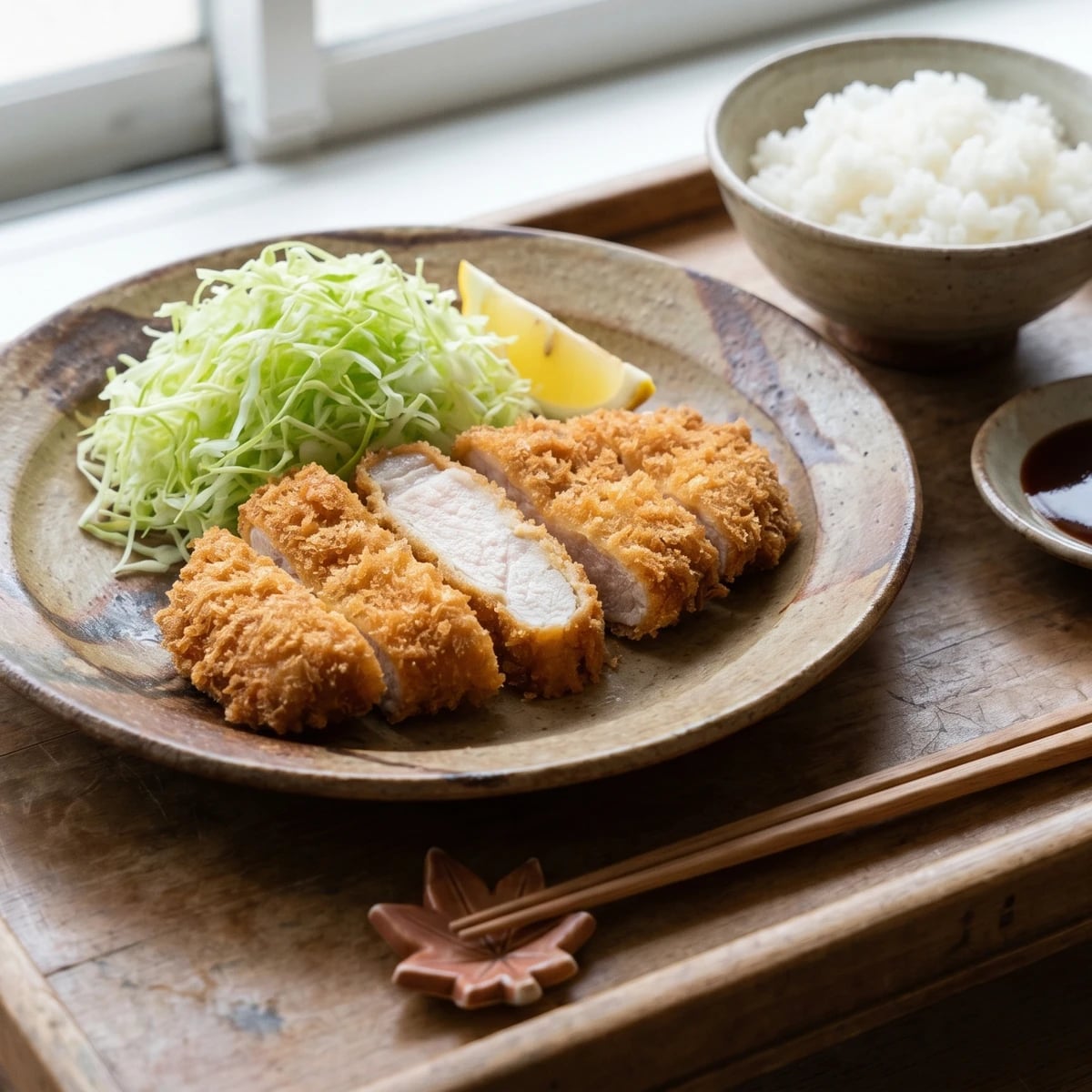
The one detail to watch is the crust. Press the panko on firmly, then let the breaded chicken rest for a few minutes so the coating settles and clings. Fry in oil hot enough to make the crumbs dance at once, but not so fierce that the outside browns before the center is done. You want a dry, crisp, golden shell and meat that rests before you cut it, because even a cutlet needs a little dignity.

At the table, chicken katsu sits easily with rice, shredded cabbage, and a small pour of tonkatsu sauce. This is yōshoku, Japanese Western-style cooking, folded into the everyday meal until it feels completely at home. Serve it sliced, leave a little space on the plate, and let the crisp edge do its own talking.

Katsu belongs to yōshoku, the Japanese style that adapted Western dishes during the Meiji period and made them part of the local table. The word comes from katsuretsu, a rendering of cutlet, and Tokyo's Rengatei is often credited with serving an influential pork version in 1899. Chicken katsu follows the same panko-breaded method, commonly served with shredded cabbage, rice, and a sweet-tart tonkatsu sauce.

The technique, the tradition, and the story behind every dish.

Discover Culinary Explorer

Ingredients

boneless skinless chicken thighs

Quantity

4 thighs (about 600g total)

sea salt

Quantity

1 teaspoon

freshly ground black pepper

Quantity

1/4 teaspoon

all-purpose flour

Quantity

1/2 cup

large eggs

Quantity

2

water

Quantity

2 teaspoons

Japanese panko

Quantity

2 cups

neutral oil

Quantity

about 3 cups

for frying

green cabbage

Quantity

4 cups

finely shredded

tonkatsu sauce

Quantity

for serving

cooked short-grain rice

Quantity

for serving

lemon wedges (optional)

Quantity

for serving

Equipment Needed

  • Heavy pot or deep frying pan
  • Deep-fry thermometer
  • Wire rack set over a tray
  • Shallow trays for flour, egg, and panko
  • Sharp knife for butterflying and slicing

Instructions

  1. 1

    Shred the cabbage

    Slice the cabbage as finely as you can and set it in cold water for ten minutes, then drain it well. The water crisps the cabbage and washes away the harsh edge, which is why it tastes clean beside the fried cutlet instead of heavy.

    Dry the cabbage thoroughly after soaking. Wet cabbage makes the plate tired and softens the crust where it touches.
  2. 2

    Butterfly the chicken

    Lay each thigh smooth-side down. Open the thicker parts with shallow horizontal cuts so the meat unfolds into an even piece, about 1/2 inch thick. Don't cut all the way through. Even thickness is the first secret here, because the whole cutlet can finish cooking just as the panko turns gold.

    If a piece still looks thick, cover it loosely and tap it with the flat side of a knife or a small pan. You're evening it, not punishing it.
  3. 3

    Season and rest

    Pat the chicken dry, then season both sides with the salt and pepper. Let it stand for ten minutes while you set up the coating. Salt needs a little time to move into the surface of the meat, and a dry surface takes the flour cleanly.

  4. 4

    Set the coating

    Put the flour in one shallow tray. Beat the eggs with the water in a second tray until loose and even. Put the panko in a third tray and crush a few handfuls lightly between your fingers. The flour gives the egg something to hold, the egg gives the crumbs something to hold, and the panko gives the cutlet its airy crispness.

  5. 5

    Bread the cutlets

    Dredge each chicken piece in flour and shake off the excess. Dip it in egg, let the extra drip away, then lay it in the panko and press firmly on both sides. Set the breaded cutlets on a rack for five minutes. That short rest helps the coating settle, so it stays on the chicken instead of floating away in the oil.

    Too much flour makes a pasty layer under the crust. A thin, dry coat is enough.
  6. 6

    Heat the oil

    Pour the oil into a heavy pot or deep pan to a depth of about 1 1/2 inches and heat it to 340°F to 350°F. If you don't have a thermometer, drop in a few panko crumbs: they should sink slightly, then rise and bubble at once. Oil that's too cool soaks the crust; oil that's too hot browns the crumbs before the chicken is cooked.

  7. 7

    Fry until gold

    Fry two cutlets at a time, turning once, until the panko is deep golden and the chicken reaches 165°F at the thickest part, about 4 to 5 minutes total. Keep the oil lively but steady, and skim loose crumbs between batches so they don't burn and mark the next cutlet with bitterness.

  8. 8

    Drain and rest

    Lift the cutlets to a rack, not a flat plate, and rest them for five minutes. A rack keeps the underside crisp, and the rest lets the juices settle so they don't run out the moment you cut.

  9. 9

    Slice and serve

    Cut each katsu crosswise into wide strips with a sharp knife, pressing straight down rather than sawing. Set it with shredded cabbage, rice, and tonkatsu sauce on the side or lightly spooned over. Serve while the crust is still crisp, with lemon if you like its clean bite.

Chef Tips

  • Use fresh Japanese panko if you can. The flakes are larger and drier than ordinary breadcrumbs, which gives the crust its light, crisp bite without a thick bready shell.
  • Chicken thigh is the better weeknight choice because it stays juicy while the crust browns. If you use breast, butterfly it carefully and pound it evenly, or the thin end will dry before the thick end is done.
  • Don't drown the cutlet in sauce. Tonkatsu sauce is sweet, tangy, and useful, but the crust should still taste of clean frying and good chicken. Nothing hidden.
  • A thermometer is a sensible tool, not a crutch. Once you know what 345°F oil looks and sounds like, you can cook by eye, but the thermometer gets you there honestly.

Advance Preparation

  • The cabbage can be shredded up to one day ahead. Keep it covered in the refrigerator, then soak briefly in cold water and dry well before serving.
  • The chicken can be butterflied and seasoned up to four hours ahead. Keep it covered and refrigerated, then pat it dry again before coating.
  • Bread the cutlets no more than thirty minutes ahead. Longer than that and the panko begins to take on moisture, which dulls the crust.
  • Cooked chicken katsu keeps two days refrigerated. Reheat it on a rack in a 375°F oven until hot and crisp again; microwaving softens the panko.

Frequently Asked Questions

Nutrition Information

1 serving (about 430g)

Calories
830 calories
Total Fat
31 g
Saturated Fat
5 g
Trans Fat
0 g
Unsaturated Fat
26 g
Cholesterol
225 mg
Sodium
1300 mg
Total Carbohydrates
92 g
Dietary Fiber
4 g
Sugars
12 g
Protein
41 g

Note: Chef personas and recipes are created with AI assistance. Cook with care: follow safe food-handling practices, check doneness with a thermometer when needed, and adapt for allergies and your kitchen.

Where cooking meets culture.

Culinary guides, cultural storytelling, and the editorial depth that makes cooking meaningful.

Discover Culinary Explorer

More from Agemono: Tempura, Tonkatsu, Karaage

Browse the full collection