Chef Takumi
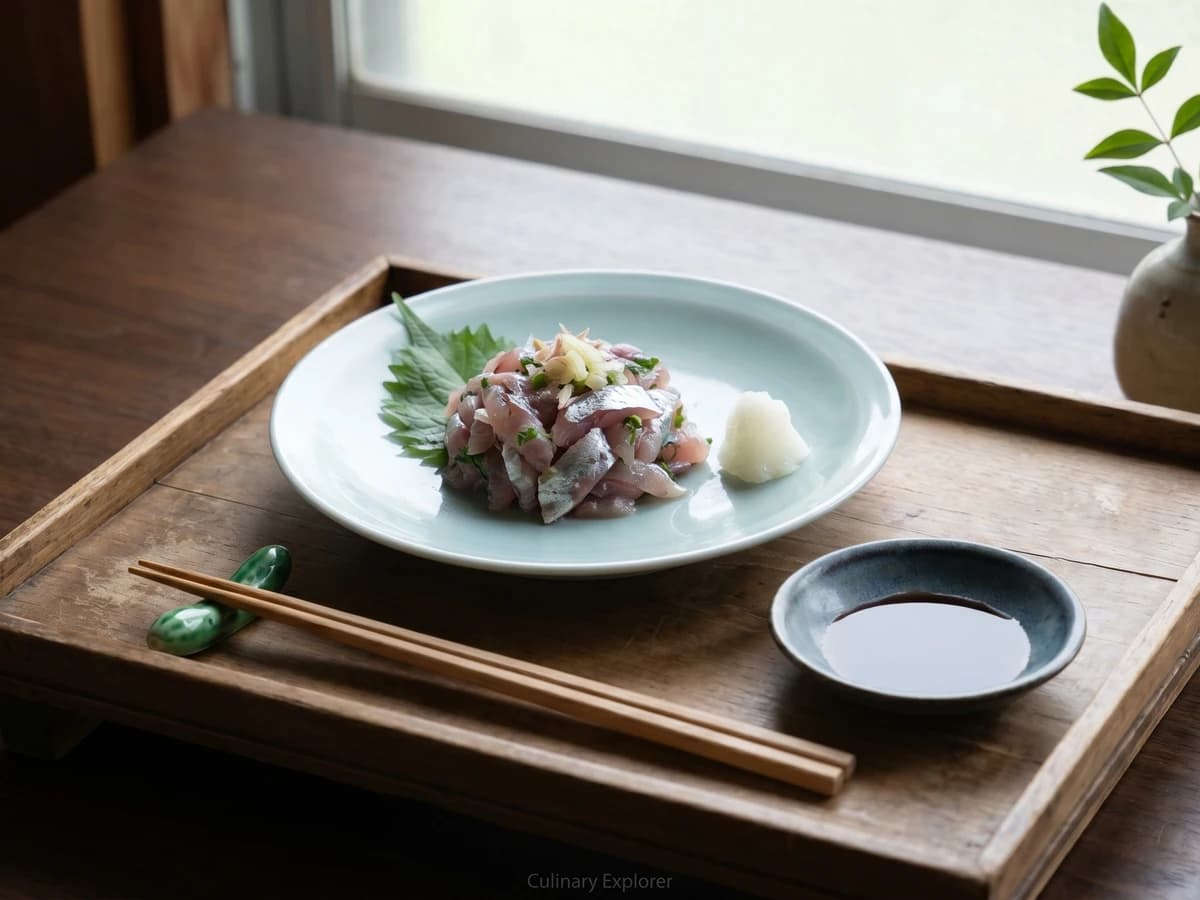
Aji no Tataki (鯵のたたき, Boso chopped horse mackerel)
Summer horse mackerel, chopped just enough to catch ginger and scallion, becomes a cool, clean main dish with rice. The secret is fresh fish and a knife that does not bruise it.
A cooking platform built around craft, culture, and the stories behind what we eat.
Created by
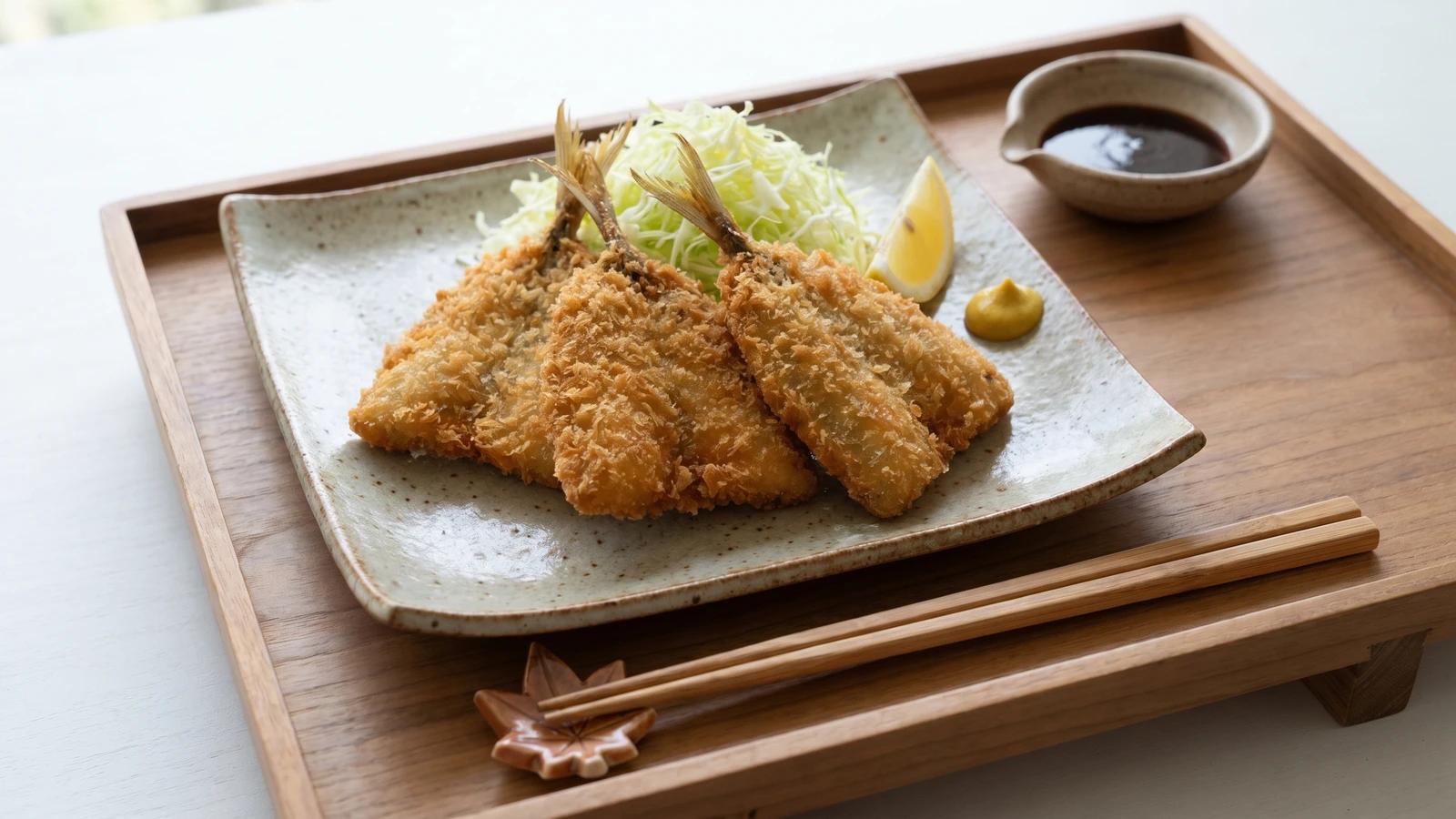
Aji fry is weeknight fish with no mystery: fresh horse mackerel opened cleanly, breaded lightly, and fried until the panko crackles while the flesh stays sweet.
People hesitate over aji fry because it begins as a whole fish, silver, bright-eyed, and a little accusatory on the board. Good. It should look alive enough to make you pay attention. In early summer, when ma-aji is at its prime, this dish asks for very little beyond freshness, a clean butterfly cut, and oil held steady. Not difficult, just unfamiliar with a tail.
The one detail that decides it is dryness. Salt the opened fish briefly, wipe away the beads of moisture, then give it flour, egg, and panko in a thin coat. Water makes breading slide and oil sulk; a dry surface lets panko stand up in little ragged edges. Those edges are why aji fry feels light instead of armored.
We fry it quickly because aji is small. Long cooking would punish the sweet flesh for the sake of the crust, which is poor manners. At the right heat, the panko browns just as the fish turns opaque at the hinge. If you saved the center bone, fry it separately until it snaps crisp; if it bends, it isn't food yet.
At the table, aji fry belongs to the teishoku rhythm: rice, miso soup, shredded cabbage, lemon, and a dark slosh of tonkatsu sauce. Don't drown it. The sauce is a companion, not a disguise. When the fish is glistening fresh, honmono needs less hiding than people think.
Furai comes from the English word fry, and breaded fried dishes entered the urban yōshoku repertoire in the Meiji era (1868-1912), when Western-style cutlets were adapted to Japanese rice meals. Aji fry became a common twentieth-century sōzai and teishoku dish because horse mackerel was affordable, quick to cook, and neatly suited to the se-biraki butterfly cut. Seki-aji from Ōita's Saganoseki coast is one famous regional brand, valued for firm flesh from the fast currents of the Bungo Channel, a reminder that even a humble fry begins with place and handling.
Quantity
4 small fish (120-150g each)
cleaned, se-biraki butterflied, center bones removed, tails left on
Quantity
from the fish
for hone senbei
Quantity
1 teaspoon
divided
Quantity
1/4 teaspoon
Quantity
1/3 cup
Quantity
1
beaten with 1 tablespoon cold water
Quantity
1 1/2 cups
Quantity
about 3 cups
enough to fill a pot 1 1/2 inches deep
Quantity
1/4 small head
shredded very fine
Quantity
1
cut into wedges
Quantity
4 tablespoons
for serving
Quantity
to taste
Quantity
for serving
| Ingredient | Quantity |
|---|---|
| fresh horse mackerel (aji)cleaned, se-biraki butterflied, center bones removed, tails left on | 4 small fish (120-150g each) |
| reserved center bones (optional)for hone senbei | from the fish |
| fine sea saltdivided | 1 teaspoon |
| white pepper (optional) | 1/4 teaspoon |
| all-purpose flour | 1/3 cup |
| large eggbeaten with 1 tablespoon cold water | 1 |
| fresh Japanese panko | 1 1/2 cups |
| neutral frying oilenough to fill a pot 1 1/2 inches deep | about 3 cups |
| green cabbageshredded very fine | 1/4 small head |
| lemoncut into wedges | 1 |
| tonkatsu saucefor serving | 4 tablespoons |
| karashi (Japanese mustard) (optional) | to taste |
| hot cooked short-grain rice (optional) | for serving |
Shred the cabbage as finely as you can, then put it in cold water for five minutes. Drain it very well, and dry it in a spinner or clean towel. The cold water makes the cabbage curl and crisp; the drying keeps the plate from turning watery under the fried fish.
If your fishmonger has done the se-biraki, inspect the work: the hard zeigo scutes along the tail should be gone, the center bone lifted out, and the two sides still joined at the belly with the tail attached. If you're doing it yourself, scrape the zeigo off from tail toward head, remove the head and guts, rinse the cavity quickly, and pat the fish dry. Open from the back along both sides of the backbone, then snip the bone free at the tail and lift it out. This cut gives you one broad, even piece, so the thin fish cooks before the crumb gets too dark.
Lay the opened fish on a tray and sprinkle the flesh sides with about 1/2 teaspoon of the salt and the white pepper. Rest for ten minutes, then wipe away every bead of moisture. Salt draws out surface liquid and firms the fish just enough for frying; leave that liquid there and the flour turns pasty.
Put the flour, beaten egg, and panko in three shallow trays. Keep the panko loose and uneven. That ragged texture is the pleasure of furai, and crushing it flat turns a light crust into a coat of armor.
Dust each fish lightly in flour, tapping off anything that looks thick. Dip it in the egg, let the excess drip away, then lay it in the panko and pat gently so the crumbs cling. Flour is the dry bridge, egg is the glue, and panko is the air. Keep each layer thin and the finished fry stays clean.
Pour oil 1 1/2 inches deep into a heavy pot and heat it to 170-175°C (340-350°F). If you don't have a thermometer, drop in a panko crumb: it should sink halfway, rise quickly, and bubble brightly without darkening at once. Too cool and the crust drinks oil; too hot and the panko browns before the hinge of the fish cooks through.
Lower in one or two fish at a time, tail facing away from you, skin side down first so the butterfly stays flat. Fry for about 90 seconds, turn once, and fry another 90 seconds to 2 minutes. The panko should be clear gold, the bubbles should grow smaller and quieter, and the thickest part near the hinge should be opaque. Don't crowd the pot. Oil needs room to recover.
If you saved the center bones, fry them after the fish for 4 to 6 minutes, turning once, until deep golden and brittle enough to snap. Drain and salt lightly. Eat only bones that are fully crisp; if they bend, they need more time.
Drain the aji fry on a wire rack for one minute. Paper towels trap moisture under the crust, and that is a sad ending for good panko. Plate the fish with a restrained mound of cabbage, lemon wedges, karashi if you like, and tonkatsu sauce on the side. Add the sauce at the table, not before, so the crust stays crisp.
1 serving (about 330g)
Culinary guides, cultural storytelling, and the editorial depth that makes cooking meaningful.
Discover Culinary ExplorerChef Takumi
Summer horse mackerel, chopped just enough to catch ginger and scallion, becomes a cool, clean main dish with rice. The secret is fresh fish and a knife that does not bruise it.
Chef Takumi
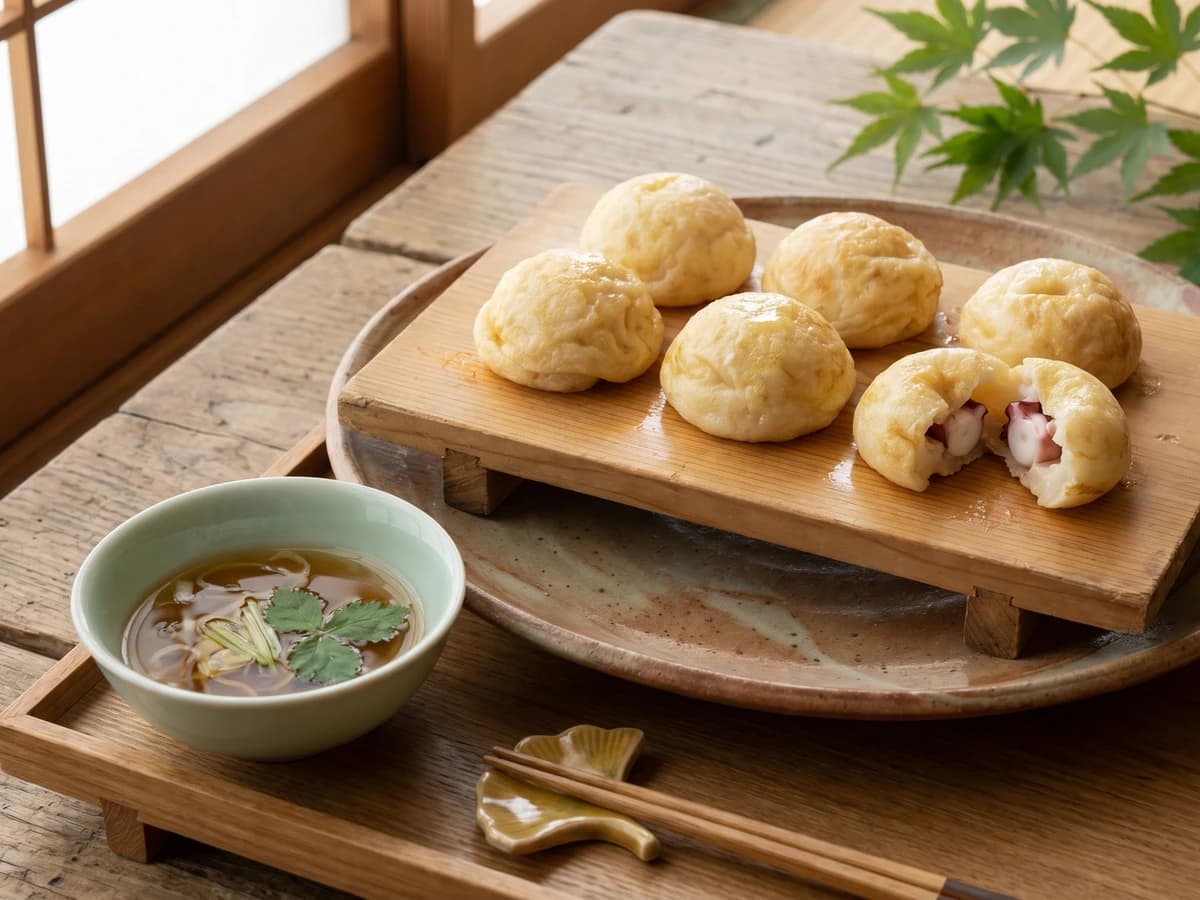
Akashi-yaki is not sauced takoyaki. It is egg-rich batter, tender octopus, and clear dashi, cooked pale and soft so each ball can be dipped like a small custard dumpling.

Chef Takumi
A whole anago looks like a test of nerve. It is mostly good sourcing, a dry skin, cold batter, and oil hot enough to leave the eel sweet under its lace.

Chef Takumi
Aomori's ika-menchi is thrift with a clean crackle: chopped squid, cabbage, and onion fried into small patties, sweet from the vegetables, springy from the squid, and honest beside rice.