
Chef Takumi
Aji Fry (アジフライ, panko-fried horse mackerel)
Aji fry is weeknight fish with no mystery: fresh horse mackerel opened cleanly, breaded lightly, and fried until the panko crackles while the flesh stays sweet.
A cooking platform built around craft, culture, and the stories behind what we eat.

Created by
A whole anago looks like a test of nerve. It is mostly good sourcing, a dry skin, cold batter, and oil hot enough to leave the eel sweet under its lace.
Awhole anago in batter looks like restaurant work, which is how a simple thing gets dressed up and frightens people. The fish is long, yes. It curls if you let it. But the method is not difficult, only unfamiliar: salt lightly, dry the skin well, flour it thinly, and fry it in batter cold enough to stay loose around the flesh.
The one detail that decides this dish is dryness before the batter. Anago is tender and a little sweet, with skin that can carry moisture. If you batter it wet, the coating slides away and the oil sulks. Pat it dry, dust it with flour, and the batter clings in a thin, uneven veil. That unevenness is what you want. Tempura should not wear armor.
In the rhythm of a meal, anago no tempura is a fine main dish for a small gathering, served with grated daikon and tentsuyu, the dipping broth of dashi, soy, and mirin. Buy the fish glistening fresh and already split if you can. No sauce will rescue tired eel, and here we hide nothing. When the ingredient is right, the work is mostly to keep from spoiling it.
Anago, or conger eel, has long been associated with Edo and Tokyo Bay, where it became a favored fish for sushi, simmered dishes, and tempura. Unlike unagi, which is usually grilled with a sweet tare, anago is often treated more lightly because its flesh is softer and milder. Tempura itself entered Japan through Portuguese contact in the sixteenth century and became a common Edo street food by the eighteenth century, when seafood fried in light batter suited the busy city appetite.
Quantity
4 butterflied fillets (about 120g each)
pin bones removed
Quantity
1/2 teaspoon, plus more to finish
Quantity
1 cup, plus 3 tablespoons
kept separate for batter and dusting
Quantity
1
cold
Quantity
3/4 cup
Quantity
enough to fill a pot 2 inches deep
for deep-frying
Quantity
1 cup
Quantity
3 tablespoons
Quantity
3 tablespoons
Quantity
1 tablespoon
Quantity
1/2 cup
grated and lightly squeezed
Quantity
4 small wedges
| Ingredient | Quantity |
|---|---|
| anago (sea eel) filletspin bones removed | 4 butterflied fillets (about 120g each) |
| sea salt | 1/2 teaspoon, plus more to finish |
| all-purpose flourkept separate for batter and dusting | 1 cup, plus 3 tablespoons |
| large eggcold | 1 |
| ice-cold water | 3/4 cup |
| neutral oilfor deep-frying | enough to fill a pot 2 inches deep |
| dashi | 1 cup |
| soy sauce | 3 tablespoons |
| mirin | 3 tablespoons |
| sugar | 1 tablespoon |
| daikongrated and lightly squeezed | 1/2 cup |
| sudachi or lemon wedges (optional) | 4 small wedges |
Lay the butterflied anago skin-side down and run your fingers along the flesh. Pull any pin bones with tweezers. If the fillets are very long, cut each in half crosswise so they fit your pot without folding. Folding traps batter and cooks unevenly, which is how a graceful fish becomes a lump.
Sprinkle the eel lightly with the sea salt and rest it for 15 minutes. The salt firms the surface and draws out a little moisture, which helps the batter cling. Pat both sides very dry with paper towels, especially the skin side. This is the first secret.
Combine the dashi, soy sauce, mirin, and sugar in a small pot. Bring just to a simmer, stirring until the sugar dissolves, then turn off the heat. This is tentsuyu, the dipping broth. Keep it warm, not boiling, because boiling drives off the clean dashi aroma you made it for.
Heat the oil in a deep pot to 175 C, or 350 F. If you have no thermometer, drop in a bit of batter. It should sink slightly, rise at once, and float with small lively bubbles. Oil too cool makes the coating greasy. Oil too hot browns the batter before the eel turns silky inside.
Beat the cold egg lightly with the ice-cold water, then add 1 cup flour and stir only a few times with chopsticks. Leave lumps. A smooth batter has been worked too much, and gluten gives tempura a heavy bite. Cold, lazy batter fries into lace.
Dust each eel piece very lightly with the reserved flour and shake off the excess. Flour is the dry hand that lets the batter hold on. Too much makes a paste, so use only a veil.
Dip one or two pieces of anago into the batter, let the excess drip once, and slide them into the oil skin-side down. Hold each piece with chopsticks for a moment if it wants to curl. Fry 2 to 3 minutes, turning once, until the batter is pale gold and crisp and the eel feels tender when lifted. Do not crowd the pot. Crowding drops the oil temperature and turns delicacy into heaviness.
Lift the tempura to a rack, not paper towels, and let the oil fall away for a minute. Paper traps oil against the crust and softens the work you just did. Serve at once with warm tentsuyu, grated daikon, and a wedge of sudachi or lemon. A pinch of salt is also enough, if the fish is very good.
1 serving (about 250g)
Culinary guides, cultural storytelling, and the editorial depth that makes cooking meaningful.
Discover Culinary ExplorerChef Takumi
Aji fry is weeknight fish with no mystery: fresh horse mackerel opened cleanly, breaded lightly, and fried until the panko crackles while the flesh stays sweet.
Chef Takumi
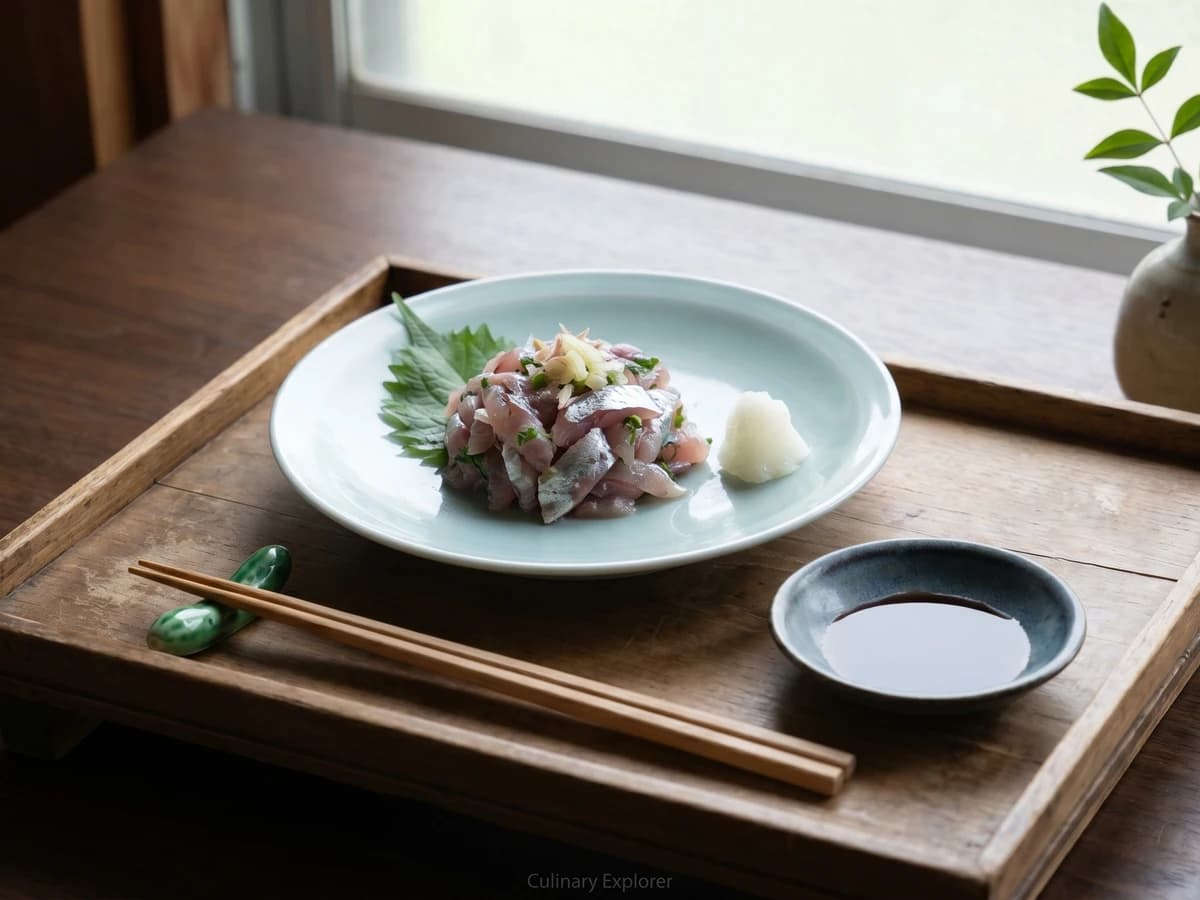
Summer horse mackerel, chopped just enough to catch ginger and scallion, becomes a cool, clean main dish with rice. The secret is fresh fish and a knife that does not bruise it.
Chef Takumi
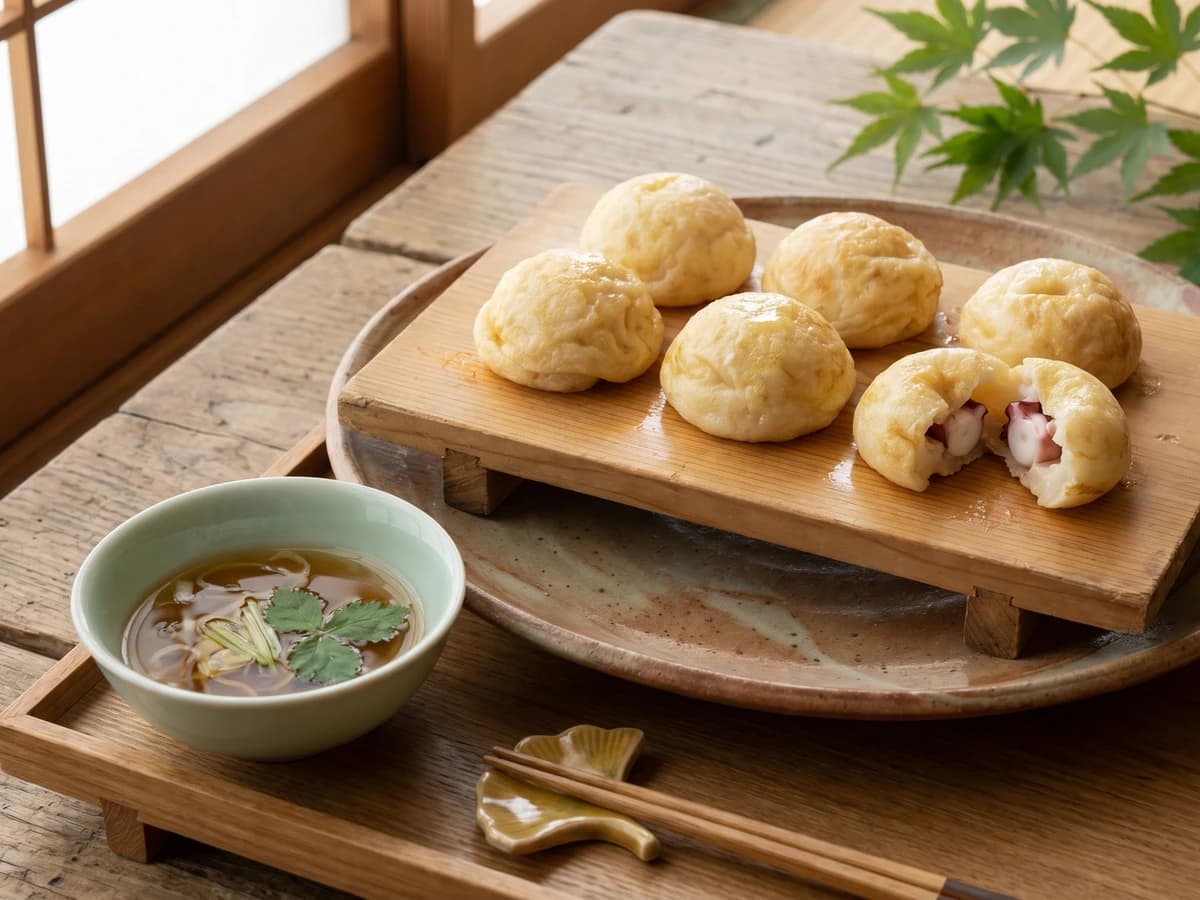
Akashi-yaki is not sauced takoyaki. It is egg-rich batter, tender octopus, and clear dashi, cooked pale and soft so each ball can be dipped like a small custard dumpling.

Chef Takumi
Aomori's ika-menchi is thrift with a clean crackle: chopped squid, cabbage, and onion fried into small patties, sweet from the vegetables, springy from the squid, and honest beside rice.