
Chef Takumi
Aji Fry (アジフライ, panko-fried horse mackerel)
Aji fry is weeknight fish with no mystery: fresh horse mackerel opened cleanly, breaded lightly, and fried until the panko crackles while the flesh stays sweet.
A cooking platform built around craft, culture, and the stories behind what we eat.

Created by
Chicken Nanban is not a difficult fry. Keep the chicken juicy, dip it while hot in sweet vinegar, then let the tartar bring brightness, not disguise.
Chicken Nanban looks like a restaurant plate pretending to be troublesome. It isn't. The dish has three plain movements: fry the chicken, dip it hot into sweet-sharp nanban-su, then spoon tartar over the top. If you can keep those three in order, you're already very near the real thing.
The detail that decides it is timing. The chicken must meet the vinegar sauce while the crust is still hot, because hot crust drinks quickly. Wait too long and the sauce sits on the surface. So fry in small batches, listen for the bubbling to quiet, then move each piece straight into the nanban-su. The crust softens slightly, as it should, but it doesn't collapse into sadness. That is the balance.
Use good chicken, because nothing is hidden here, not even under tartar. Thigh gives you forgiveness and juiciness; breast is closer to the older Nobeoka style and needs a little more care. The tartar should be lively with egg, onion, and pickle, not a heavy blanket. Serve it with rice, shredded cabbage, and one quiet side dish, and you have comfort food that still knows its manners.
Chicken Nanban is closely tied to Nobeoka in Miyazaki Prefecture, where it developed in the 1960s from fried chicken dipped in a sweet vinegar sauce called nanban-su. The version at Naochan in Nobeoka is often associated with the older breast-meat style without tartar, while Ogura in Miyazaki City helped popularize the now-familiar tartar-topped version. The word nanban once referred to foreign traders arriving in Japan from the south, and in cooking it came to suggest dishes seasoned with vinegar, chili, and onion.
Quantity
600g
trimmed; or use boneless chicken breasts
Quantity
1/2 teaspoon
Quantity
1/4 teaspoon
Quantity
2 tablespoons
Quantity
1
beaten
Quantity
1/2 cup
Quantity
1/3 cup
Quantity
for deep-frying
Quantity
1/3 cup
Quantity
3 tablespoons
Quantity
3 tablespoons
Quantity
2 tablespoons
Quantity
1
seeded
Quantity
2
hard-boiled
Quantity
1/4 cup
Quantity
2 tablespoons
finely chopped, rinsed, and squeezed dry
Quantity
2 tablespoons
finely chopped
Quantity
1 teaspoon
Quantity
1 teaspoon
Quantity
1 pinch
Quantity
for serving
Quantity
for serving
| Ingredient | Quantity |
|---|---|
| boneless chicken thighstrimmed; or use boneless chicken breasts | 600g |
| sea salt | 1/2 teaspoon |
| freshly ground black pepper | 1/4 teaspoon |
| sake | 2 tablespoons |
| large eggbeaten | 1 |
| all-purpose flour | 1/2 cup |
| potato starch | 1/3 cup |
| neutral oil | for deep-frying |
| rice vinegar | 1/3 cup |
| soy sauce | 3 tablespoons |
| sugar | 3 tablespoons |
| mirin | 2 tablespoons |
| dried red chili (optional)seeded | 1 |
| large eggshard-boiled | 2 |
| Japanese mayonnaise | 1/4 cup |
| onionfinely chopped, rinsed, and squeezed dry | 2 tablespoons |
| cucumber pickle or rakkyofinely chopped | 2 tablespoons |
| rice vinegar | 1 teaspoon |
| sugar | 1 teaspoon |
| sea salt | 1 pinch |
| shredded cabbage | for serving |
| cooked Japanese short-grain rice | for serving |
Cut the chicken into large bite-size pieces, or leave each thigh in one broad piece if you want the Miyazaki plate style. Sprinkle with salt and pepper, then rub with the sake and let it stand for 10 minutes. The sake lightly seasons the meat and helps it fry cleanly, but it is not a marinade meant to hide tired chicken.
Combine the rice vinegar, soy sauce, sugar, mirin, and chili in a small pan. Warm just until the sugar dissolves, then turn off the heat. This is nanban-su, the sweet vinegar sauce. Do not boil it hard, because you want the vinegar bright enough to cut the fried chicken and the tartar.
Chop the hard-boiled eggs, then fold them with the mayonnaise, onion, pickle or rakkyo, rice vinegar, sugar, and salt. Rinse and squeeze the onion first so it keeps its bite without taking over the sauce. The tartar should taste tart and clean, not merely rich.
Pat the chicken lightly dry. Dip each piece in beaten egg, then coat with the mixed flour and potato starch, pressing gently so the coating clings. Flour gives the crust body, potato starch keeps it light, and the egg helps the coating hold when it meets the vinegar.
Heat the oil to 170 C. Fry the chicken in small batches until pale golden and cooked through, about 4 to 6 minutes for bite-size thigh pieces, a little longer for larger pieces. The oil should bubble steadily, not violently. Crowding drops the temperature, and a low, tired fry gives you a greasy crust before the sauce ever has a chance.
Lift the chicken from the oil, drain for a moment, then dip it straight into the warm nanban-su for 10 to 20 seconds, turning once. Hot crust drinks the sauce quickly. Leave it too long and the crust becomes heavy; barely touch it and the vinegar won't reach the meat.
Set the sauced chicken on a plate with shredded cabbage and rice alongside. Spoon tartar over the chicken, leaving some of the lacquered brown surface visible. That little restraint matters. The sauce crowns the dish; it doesn't bury it.
1 serving (about 450g)
Culinary guides, cultural storytelling, and the editorial depth that makes cooking meaningful.
Discover Culinary ExplorerChef Takumi
Aji fry is weeknight fish with no mystery: fresh horse mackerel opened cleanly, breaded lightly, and fried until the panko crackles while the flesh stays sweet.
Chef Takumi
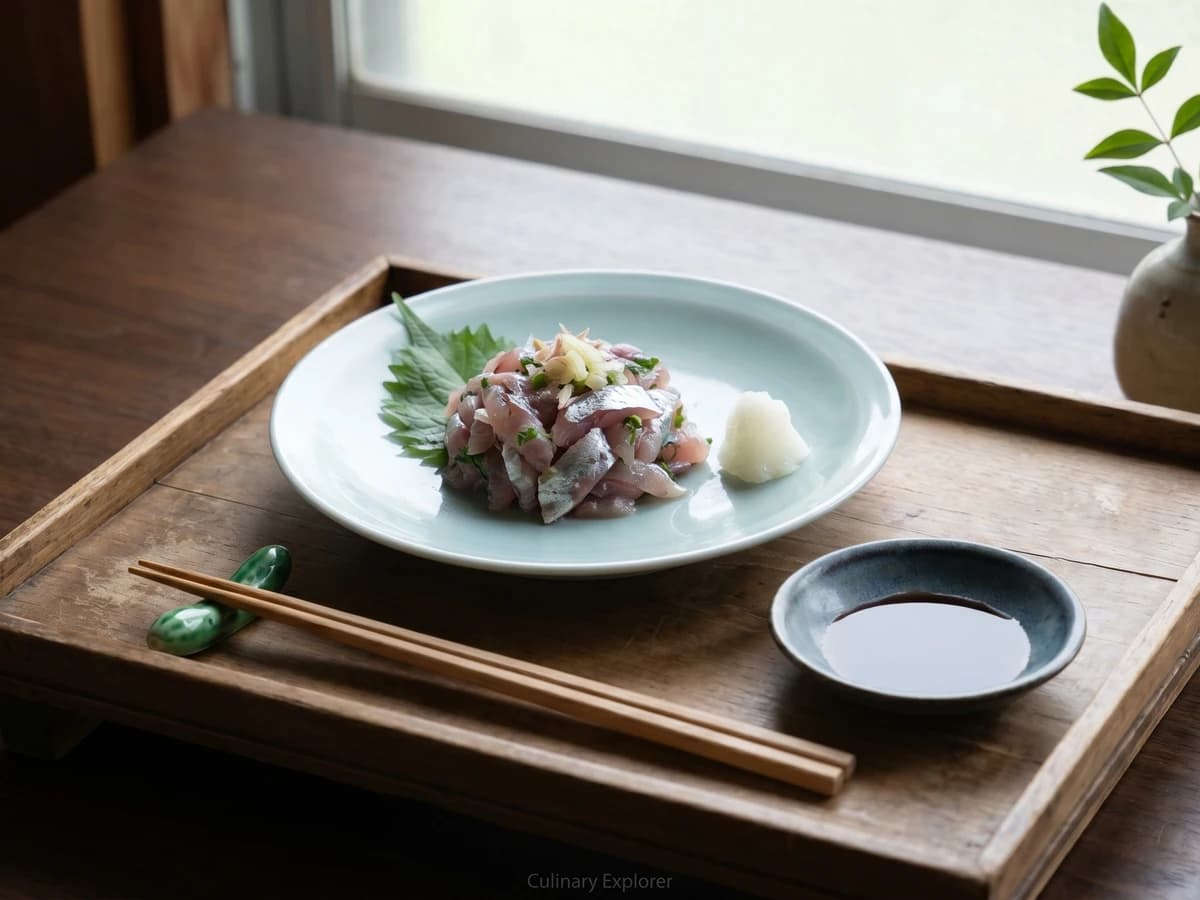
Summer horse mackerel, chopped just enough to catch ginger and scallion, becomes a cool, clean main dish with rice. The secret is fresh fish and a knife that does not bruise it.
Chef Takumi
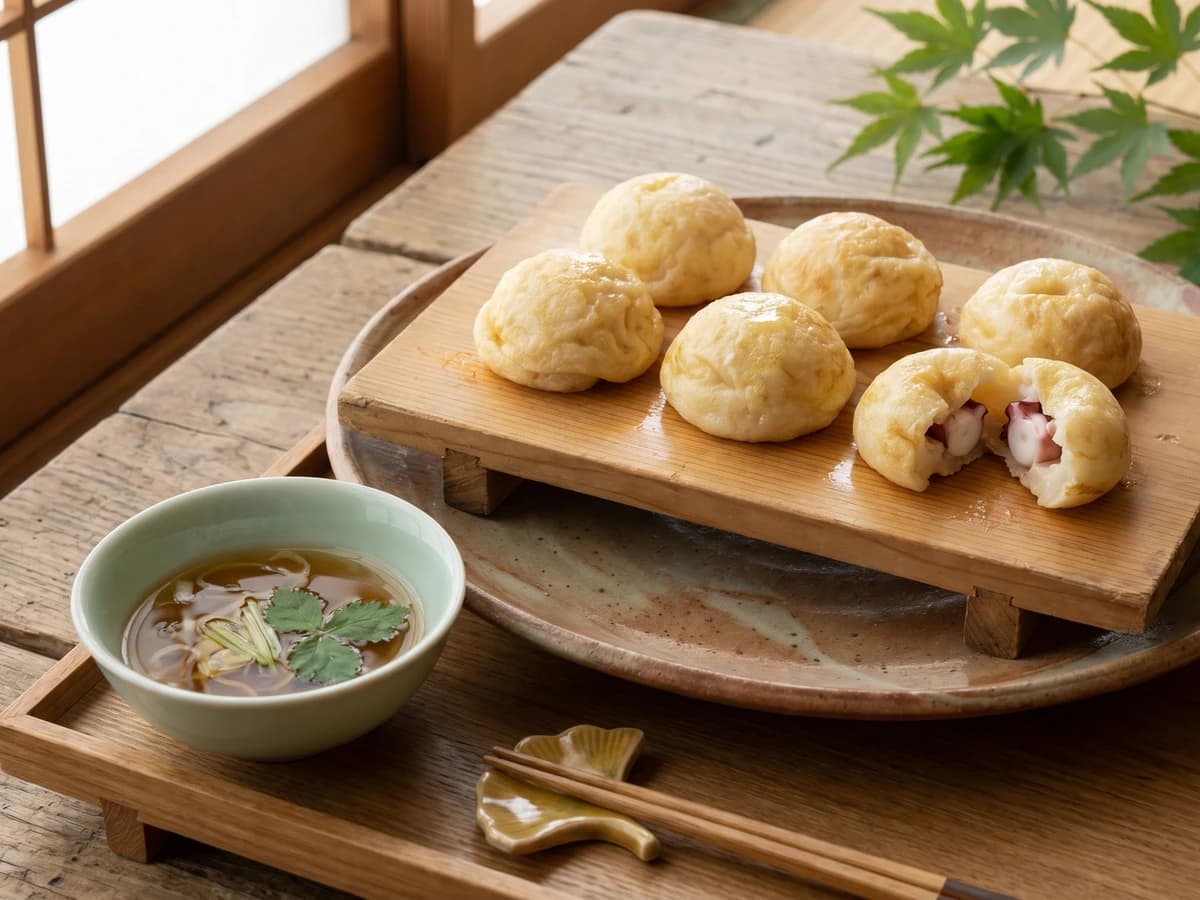
Akashi-yaki is not sauced takoyaki. It is egg-rich batter, tender octopus, and clear dashi, cooked pale and soft so each ball can be dipped like a small custard dumpling.

Chef Takumi
A whole anago looks like a test of nerve. It is mostly good sourcing, a dry skin, cold batter, and oil hot enough to leave the eel sweet under its lace.