
Chef Takumi
Agar Jelly with Anko and Fruit (あんみつ, Anmitsu)
Anmitsu looks like a tray of small tasks, but the work is calm: dissolve the kanten fully, chill the pieces clean, then let fruit, anko, and kuromitsu do the speaking.
A cooking platform built around craft, culture, and the stories behind what we eat.
Created by
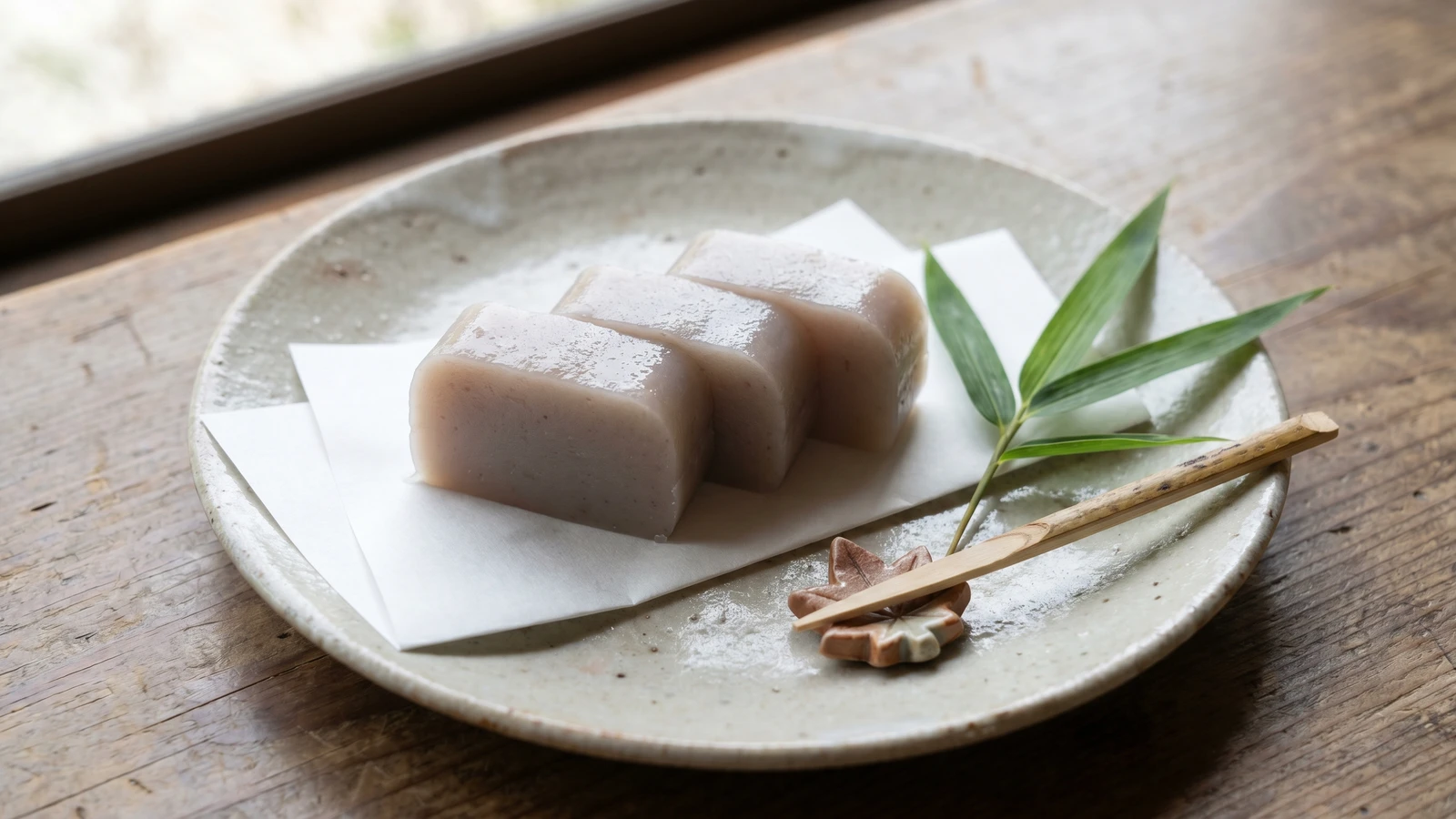
Yamaguchi uirō shares a name with Nagoya's sweet, then quietly disagrees. Warabi starch and azuki set into a tender, translucent log that slices cleanly after a patient steam.
The surprise in Yamaguchi uirō is that it isn't really a cake. Nagoya's uirō has the firm, pale body of rice flour. Yamaguchi's is softer, darker, and a little translucent, because warabi starch does the work. Same name, different hands.
People are often nervous around wagashi, Japanese sweets, as if every one requires a lacquered box of secret tools. This one asks for a bowl, a pan, a mold, and attention. The first secret is the slurry. Warabi starch sinks quickly and clumps if it's bullied, so you whisk it smooth, strain it, then warm it gently until it thickens just enough to hold the azuki evenly. That small step keeps the finished log tender from top to bottom.
Steam finishes what the pan begins. You aren't trying to make it bounce like rubber, and you aren't making a Western cake with a crumb. You're setting starch until it turns glossy and calm, with the red bean flavor showing plainly. Nothing hidden. Let it cool completely before you cut it, because the sweet needs time to gather itself. We slice it small, usually three pieces on a plate, with room left around them. A confection should invite the hand, not exhaust it.
The name uirō is shared by several regional Japanese sweets and is linked to the Uirō family, whose medicine and confections were known in medieval Japan. Yamaguchi connects its local uirō to the culture of the Ōuchi clan, which made the city a western center of courtly arts during the Muromachi period. The Yamaguchi style is now distinguished from Nagoya's rice-flour uirō by its use of warabi starch and azuki, giving it a softer, more translucent body.
Quantity
50g
Quantity
80g
Quantity
1 small pinch
Quantity
400ml
Quantity
220g
Quantity
1
rinsed and dried
| Ingredient | Quantity |
|---|---|
| hon-warabiko (pure bracken starch) | 50g |
| granulated sugar | 80g |
| fine sea salt | 1 small pinch |
| cool water | 400ml |
| koshi-an (smooth sweet azuki paste) | 220g |
| fresh sasa leaf (optional)rinsed and dried | 1 |
Line a small nagashi-kan, a rectangular metal confection mold, with parchment, or use a small loaf pan about 8 by 4 inches. Leave a little overhang so the soft uirō lifts out cleanly. Set up a steamer with plenty of water and wrap the lid in a clean cloth so drops of condensation don't mark the surface.
Put the warabi starch, sugar, and salt in a bowl and whisk them together. Add the cool water a little at a time, whisking until no dry pockets remain. Add the koshi-an and whisk again until the mixture is even, thin, and grayish-purple.
Pass the mixture through a fine-mesh strainer into a heavy saucepan, pressing gently with a spatula. This catches tiny starch lumps and any coarse bits from the bean paste. The finished sweet should feel smooth on the tongue, not sandy.
Set the pan over medium-low heat and stir constantly with a heatproof spatula, scraping the bottom and corners. At first it will be thin. After five to eight minutes it will thicken, turn glossy, and leave a soft trail behind the spatula. Stop there. You are only suspending the starch and azuki so they won't settle in the mold; cook it too far and the texture turns heavy before the steamer has done its work.
Scrape the thickened mixture into the lined mold while it is still warm. Smooth the top with a wet spatula, then tap the mold once or twice on the counter to settle hidden air pockets. Cover the mold loosely with foil if your steamer lid is not cloth-wrapped.
Place the mold in the steamer, cover, and keep the water at a steady simmer for 25 to 30 minutes. The uirō is ready when the surface looks glossy and slightly translucent, the center springs back softly, and there are no milky patches. Keep the heat moderate; a hard boil rattles the mold and toughens the edges before the center has settled.
Lift the mold out and let the uirō cool to room temperature, then chill it for at least 1 hour so it cuts cleanly. Unmold it, remove the parchment, and slice with a wet knife, wiping the blade between cuts. Serve small pieces, three to a plate if you like the old rule of odd numbers, with a cup of green tea.
1 serving (about 90g)
Culinary guides, cultural storytelling, and the editorial depth that makes cooking meaningful.
Discover Culinary ExplorerChef Takumi
Anmitsu looks like a tray of small tasks, but the work is calm: dissolve the kanten fully, chill the pieces clean, then let fruit, anko, and kuromitsu do the speaking.

Chef Takumi
A cool square of almond-scented milk, set softly and served with mikan in thin syrup, is dinner-party food without theater. The only stern demand is restraint with the fragrance.

Chef Takumi
Azuki bar asks for patience twice: once while the beans soften, and once while the frozen bar yields. That hardness is not a flaw. It is the character of the thing.
Chef Takumi
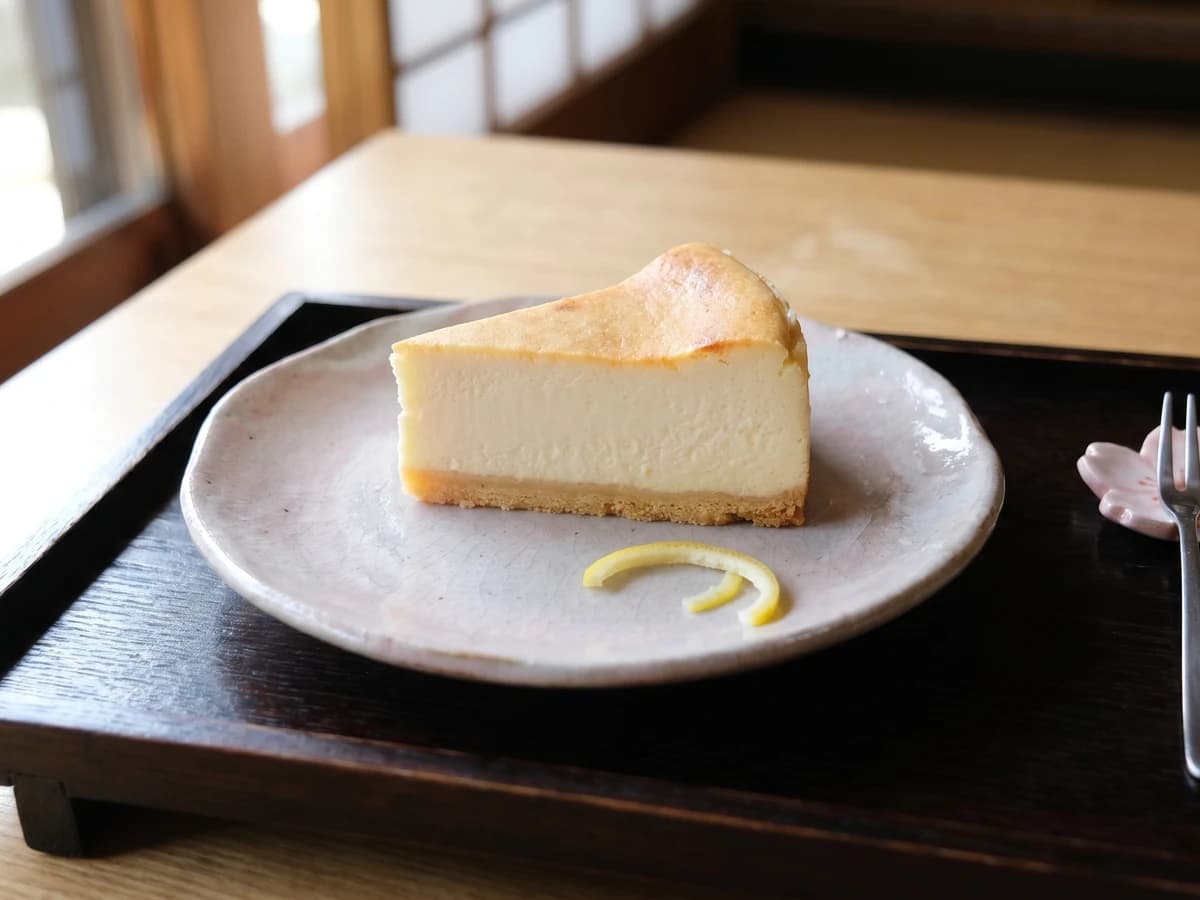
A Japanese baked cheesecake is not trying to float away. It is dense, smooth, and quietly tart, with a clean slice doing the work of decoration.