
Chef Lupita
Aceite de Chiltepin Bajacaliforniano
Baja California's wild chiltepin steeped in olive oil with garlic, orejon, and lime peel, until the oil turns ruby-amber and carries the slow, sneaky burn of the desert coast.
A cooking platform built around craft, culture, and the stories behind what we eat.
Created by
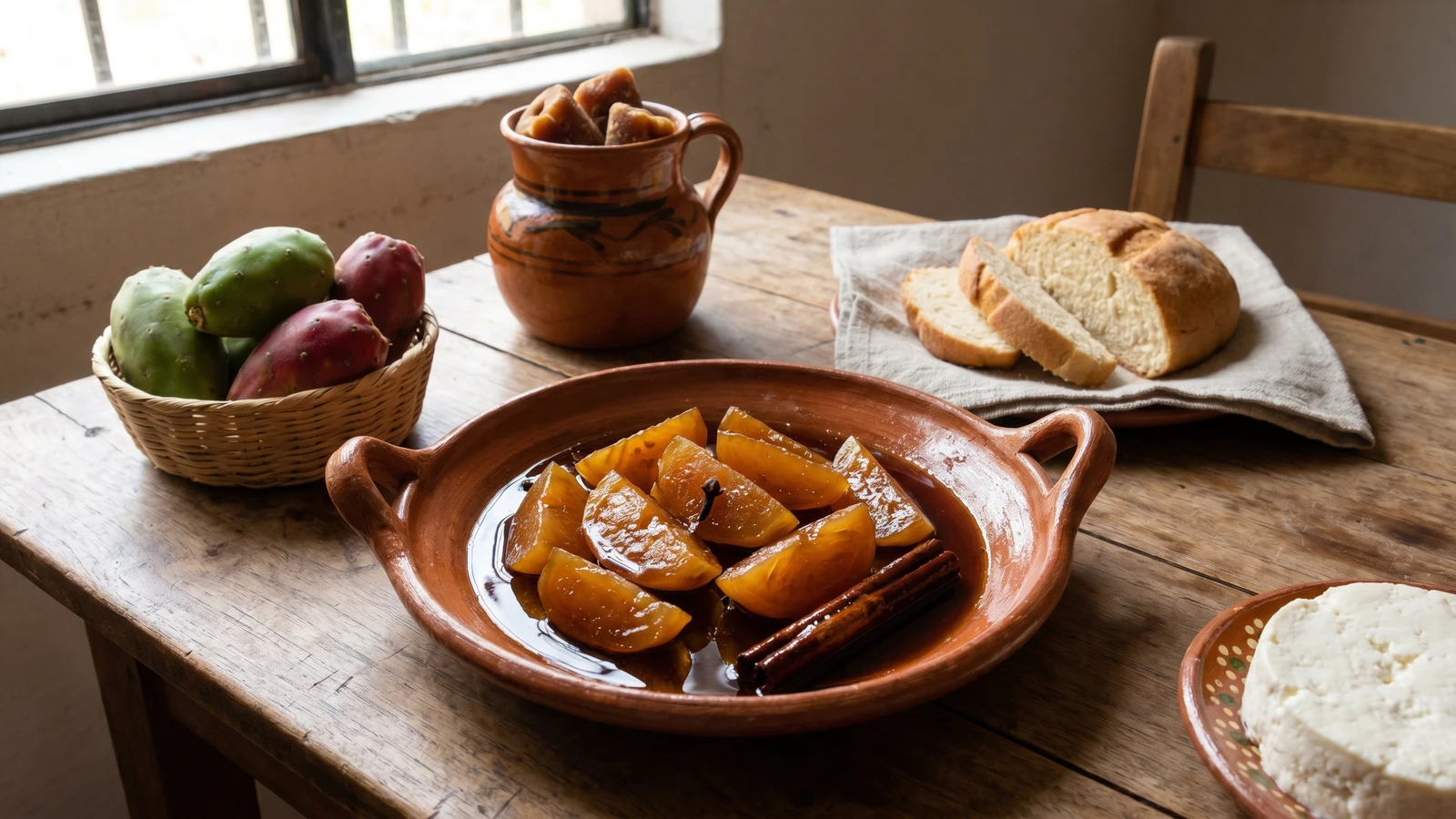
Guanajuato's Bajío preserve of sour xoconostles cooked slowly in piloncillo, canela, and clavo until the fruit turns amber, firm, and ready for queso ranchero or pan de feria.
Guanajuato, in the Bajío, knows what to do with sour fruit. Xoconostle grows on the nopal in the dry central highlands, where the land gives you acidity before sweetness and expects you to know the difference. This preserve belongs to that kitchen: fruit from the cactus, piloncillo from the old sugar trade, canela, clavo, and patience.
I learned this style from a señora near Dolores Hidalgo who served the xoconostles in a shallow clay dish beside queso ranchero, not as dessert with whipped cream or some nonsense like that. The fruit stays firm. The syrup turns dark and glossy. The bite should be sour first, sweet second. If it only tastes like sugar, you cooked the Bajío out of it.
The work is in the peeling and the slow simmer. Xoconostle has a thick skin and seeds clustered in the center, unlike the sweet tuna that stains your fingers magenta. You peel it clean, leave the flesh whole or in thick wedges, and let the syrup enter slowly. No me vengas con atajos. A hard boil breaks the fruit and muddies the syrup.
This is comida de conserva, the old household intelligence of making the market last. Serve it with fresh queso ranchero, requeson, or a slice of pan de feria. Cada estado, su propia cocina.
Xoconostle comes from Nahuatl, from 'xococ' meaning sour and 'nochtli' meaning cactus fruit, and it has been used in central Mexico since pre-Columbian times for sauces, stews, and preserves. The piloncillo syrup method reflects colonial-era sugar production that expanded through the Bajío and gave home cooks a way to preserve seasonal fruits without losing their local character. Guanajuato, Queretaro, Hidalgo, and San Luis Potosi all cook xoconostle, but the Bajío versions often keep the fruit firm and serve it with fresh cheese to balance its sharp acidity.
Quantity
2 pounds
firm, unbruised
Quantity
4 cups
plus more for holding the peeled fruit
Quantity
1 pound
chopped
Quantity
1 stick, about 3 inches
Quantity
4
Quantity
1 strip
white pith removed
Quantity
1/4 teaspoon
Quantity
2 tablespoons
Quantity
for serving
Quantity
for serving
| Ingredient | Quantity |
|---|---|
| ripe xoconostlesfirm, unbruised | 2 pounds |
| waterplus more for holding the peeled fruit | 4 cups |
| piloncillochopped | 1 pound |
| Mexican canela stick | 1 stick, about 3 inches |
| whole cloves | 4 |
| orange peelwhite pith removed | 1 strip |
| kosher salt | 1/4 teaspoon |
| fresh lime juice | 2 tablespoons |
| queso ranchero (optional) | for serving |
| pan de feria or bolillo (optional) | for serving |
Rinse the xoconostles well and rub off any tiny spines with a clean kitchen towel. Do this carefully. The cactus protects itself even after it reaches your kitchen. Trim the ends, then make a shallow slit from top to bottom and peel away the thick skin with a small knife.
Cut each peeled xoconostle in half lengthwise. Scoop out the seed cluster with a spoon, keeping the firm flesh intact. Drop the cleaned fruit into a bowl of cool water as you work so it does not dry out. The flesh should feel dense, not mushy. Mushy xoconostle belongs in salsa or the compost, not in almibar.
In a wide heavy saucepan or clay cazuela, combine 4 cups water, piloncillo, canela, cloves, orange peel, and salt. Bring to a gentle simmer over medium heat, stirring until the piloncillo dissolves. The syrup should smell like canela and dark sugar, not like burned candy.
Drain the cleaned xoconostles and slide them into the syrup. Lower the heat so the liquid barely trembles. Cook uncovered for 45 to 60 minutes, turning the fruit now and then, until the pieces turn amber at the edges and a knife enters without resistance. Do not boil hard. A hard boil tears the fruit apart and gives you cactus jam. That is another recipe.
When the fruit is tender but still holding its shape, stir in the lime juice. Simmer 5 minutes more. The syrup should coat the back of a spoon in a thin glossy layer. If it is watery, lift out the fruit and reduce the syrup another 10 minutes, then return the fruit to the pot. The acidity must stay alive under the sweetness.
Pack the xoconostles into clean jars and pour the hot syrup over them, making sure the fruit is covered. Let cool, then refrigerate at least overnight before serving. The second day is better. The syrup enters the fruit slowly, the way preserves are supposed to work. Saber cocinar es saber vivir.
Serve the xoconostles chilled or at room temperature in a shallow clay dish, with queso ranchero or requeson on the side and pan de feria to catch the syrup. Do not bury it under cream. Do not add chile powder. This preserve is about sour cactus fruit and piloncillo. Así se hace y punto.
1 serving (about 130g)
Culinary guides, cultural storytelling, and the editorial depth that makes cooking meaningful.
Discover Culinary ExplorerChef Lupita
Baja California's wild chiltepin steeped in olive oil with garlic, orejon, and lime peel, until the oil turns ruby-amber and carries the slow, sneaky burn of the desert coast.

Chef Lupita
Puebla's Lenten convent adobo, a brick-red vinegar chile paste of ancho, guajillo, garlic, oregano, and comino made to dress fish for the meatless calendar.
Chef Lupita
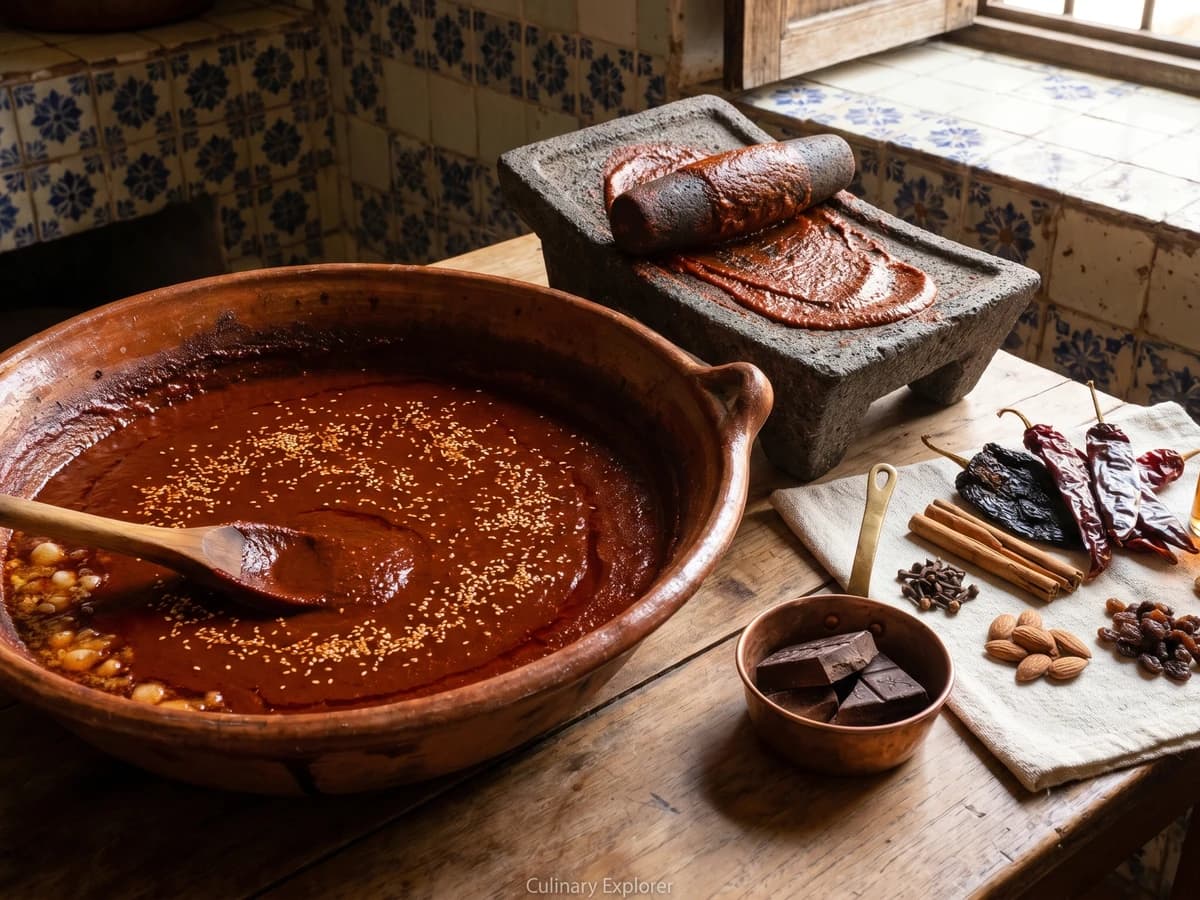
Zacatecas' wedding-table adobo, built from toasted guajillo and ancho, piloncillo, sour orange, chocolate, canela, clavo, almonds, sesame, and lard.

Chef Lupita
Puebla's convent kitchens built this adobo with ancho, guajillo, jerez, almonds, raisins, clove, and lard, a baroque marinade that stains pork loin and finishes as the sauce.